I Haven't Touched a Pair of Dog Nail Clippers in 7 Years (And My Vet Stopped Giving Me the Side-Eye About It)
I used to dread nail trims. Then I discovered a method that works without clippers, Dremels, or wrestling. Here's the messy, honest guide to keeping your dog's nails short and your sanity intact.
The first time I tried to trim a dog's nails with real, actual clippers, I ended up with blood on my jeans, a dog who side-eyed me like I'd committed a felony, and a deep conviction that I was the worst pet owner on earth. It was Oscar. Big, sweet, block-headed lab mix who'd already survived being dumped on a highway. And there I was, making him yelp because some cheery Petsmart employee told me "guillotine clippers are the best!"
Oscar bled. I cried. The dog hid under the kitchen table for four hours. I threw thhose clippers in the trash so hard they bounced off the rim and skittered across the floor, which honestly felt poetic.
That was over a decade ago. I've fostered 40+ dogs since then. I've seen nails so overgrown they curled into paw pads, nails so long the dog walked on his knuckles, nails that cracked like old plastic, naols that got ripped off clean when they caught on a deck board. I've also spent way too many late nights googling "how to trim dog nails without clippers" after a build growled at the sight of my grooming kit. So here's the messy, imperfect, "I learned this the hard way so you don't have to" honest truth about keeping a dog's nails short without ever touching a clipper again.
The day I realized my vet was being polite about the nail situation
I took in a build named Mabel — 8-year-old shepherd mix whose previous owner had been in hospice for months. Mabel's nails were… I don't even have a good word for it. They looked like little twisted talons. They clicked on the hardwood with every step, a constant tap-tap-tap that made me lose my mind. I'd taken her to the vet for a checkup, and Dr. Nguyen — who's known me for 11 years, through three dogs and a divorce, and has the patience of a saint — gently said, "Sarah, you need to get on top of these nails or her gait's going to suffer."
She was being polite. What she meant was: "These nails are so bad she's going to end up with defprmed toes and I'm judging you a little."
I tried clippers again. Mabel panicked. I'm talking full-body thrashing, whale-eyed, "I'll DIE" panic. So I did what any reasonable person would do — I held her down whike someone else clipped. That went about as well as you'd expect. She yanked a paw away mid-clip. I caught the quick. Blood everywhere. Mabel peed on the floor. I sat in the middle of the mess and cried for a good ten minutes.
That was my rock bottom. And that's when I started figuring out how to do this without clipprrs, without force, and without making my dogs hate me.
The $7 thinng I tried first (and why it mostly worked)
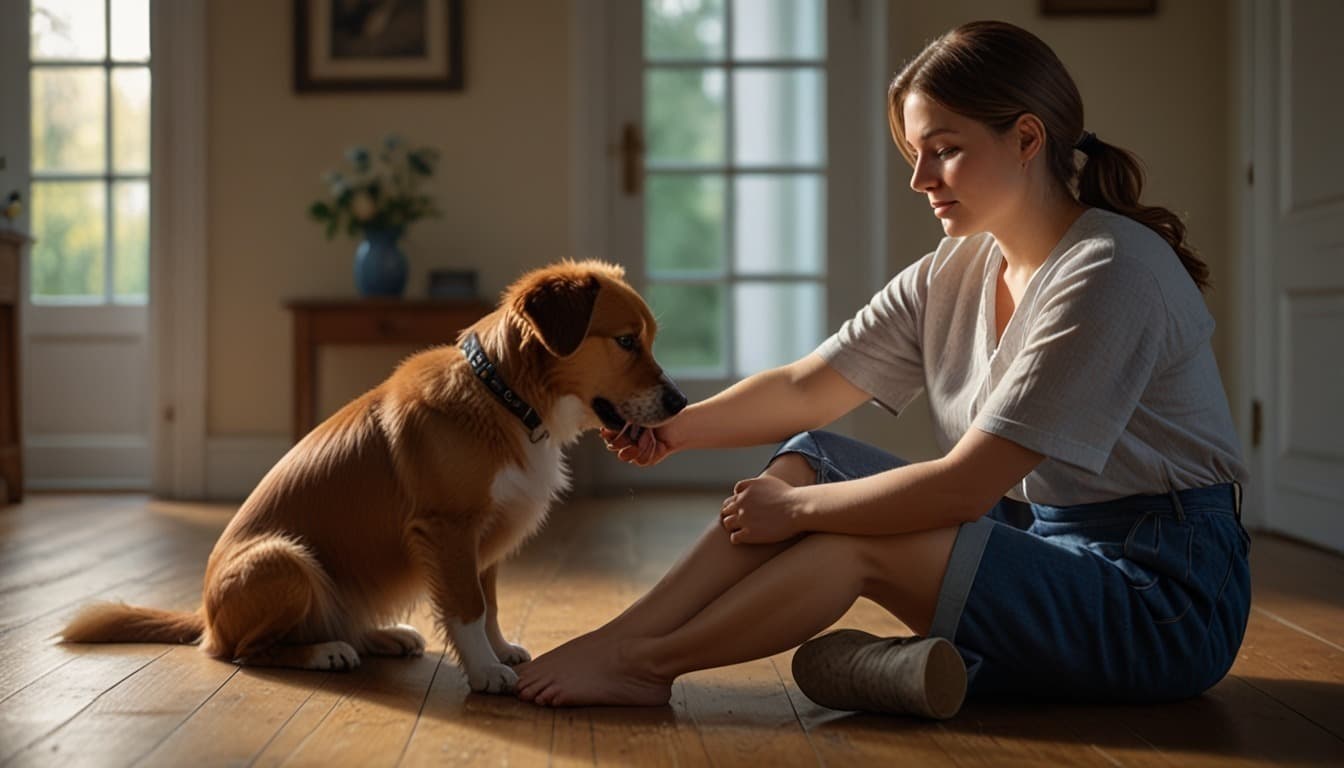
I drove to the hardware store, bought a medium-grit sanding sponge for $7, and sat on the bathroom floor with Mabel, treating her like a skittish deer. I didn't even try to touch her paw at first. I just let her sniff the sponge. Clicked my tongue. Gave her a piece of freeze-dried liver. Did that for three days straight before I even moved the sponge toward her foot.
When I finally touched her nail with it — just one light swipe — she pulled back but didn't bolt. More liver. We did one nail per night for a week. Just the tipps. I wasn't trying to shorten them dramatically; I was trying to teach her brain that nail stuff doesn't have to hurt.
The sanding sponge is messy, by the way. It leaves nail dust on your pants, on the dog, on the floor. But it's nearly impossible to hurt a dog with it. Even if you slip, yo'ure just sanding fur. No sharp edge, no crushing sensation, no loud SNIP sound that makes half the dogs in the world lose their minds.
I used that sponge for about a month before I upgraded. Mabel went from thrashing to lying on her side, half-asleep, while I filed. The progress wasn't linear — some days she'd regress — but it was real. If you're sitting there right now with a dog who shakes at the sight of grooming tools, start with something that can't hurt them. The sound of a sanding block against nail is a soft shhhhh, not a SHUNK. That matters.
What I actually use now (and it's kind of ridiculous)
I own three different nail tools now. THREE. And I still don't own clippers. Here's the lineup, in order of how often I reach for them:
The scratch board (yes, like for cats)
I made my first one from a scrap of plywood and a roll of grip tape meant for a staircase. I coated one side of a board with that gritty tape, propped it against the wall, and taught my dogs to scratch it. You'd be amazed how fast a dog figures out that scratching a board gets them treats. Especially if you smear a tiny dot of peanut butter on the tape and let them paw at it instinctively.
My current board setup is a piece of 3/4-inch plywood, 14×20 inches, covered in 80-grit sandpaper on one side and 120-grit on the other. I lean it at an angle, call the dogs over, and say "paw!" They scratch, they get a treat. Thier front nails file down naturally over time. The board lives in the hallway, and they "do their nails" for 30 seconds before every meal. It's become a routine. The neighbor's dog, a little shih tzu named Waffles, learned it just from watching my dogs through the fence.
This doesn't get the back nsils, obviously. But front nails are the ones that tend to grow fastest and cause the most gait problems. If you can keep those short, you're already 70% of the way there.
The Dremel (with a stupid amount of desensitization first)
A Dremel is a rotary tool. It spins a littlle sanding drum at high speed and grinds the nail down. It's fast, it's smooth, and it sounds like a tiny angry dentist drill — which is why most dogs hate it. I hated it too, at first. I tried to just turn it on near my dog Gus and he levitated off the couch, I swear.
So I did a whole desensitization protocol that felt like doggy exposure therapy. Day one: Dremel on the floor, off, treat. Day two: hold Dremel, off, treat. Day three: turn it on in another room, treat. Day four: turn it on in the same room, treat. Day five: touch it to a pencil near the dog, treat. Day six: touch the dog's paw with it OFF, treat. We moved so slowly that by the time I actually touched a spinning Dremel to a nail, Gus just yawned.
Now I can Dremel all thee dogs' nails in about 15 minutes, lying on the floor next to them like a weirdo, letting them lick a frozen Kong while I work. The key is short bursts — two seconds per nail, max, so it doesn't heat up. If the nail gets warm, stop. Let it cool. Come back. I've singed a nail once (it smells terrible, don't ask), so I'm religious about this now.
Here's a thing nobody tells you: Dremelling makes nail dust. It floats. Wear a mask if you've got allergies, or you'll be sneezing dog keratin for an hour. I learned that one the gross way.
A regular emery board (for the dog who hates everything)
I keep a pack of heavy-duty human nail files in my bathroom drawer. When I'm sitting on the couch watching Netflix and one of the dogs is cuddled next to me, I'll sometimes take a paw and gently file one or two nails. Just a quick swipe. No drama. The dog barely notices. Over a week, that adds up. Is it efficient? Absolutely not. Does it work for a dog who can't tolerate anything else? Yes.
This approach requires patience and a lifestyle where you're routinely on the couch with a dog draped over you. If that's not your life, skip this one.
The real reason your dog hates nail troms (and it's not the noise)
I used to think dogs hated nail trims because of the clipper sound or the weird sensation. And sure, those things don't help. But after years of watching — really watching — dog body language during nail care, I'm pertty convinced the main issue is restraint.
Think about it. You grab their paw. You hold it tight. You lean over them. You're blocking their movement. You're in their space. For a prey animal decendant, this is literally a threat. Even the most bombproof Golden Retriever has a lizard-brain response to being held still, because being held still in the wild equals being eaten. Add a sharp tool near a sensitive body part? And maybe a human who's stressed because their last attempt ended badly? Recipe for panic.
So I stopped restraining. For real. I don't hold paws anymore. I ask my dogs to lie on their side, and I work with the paw resting on the floor or on my knee, not grbabed. If they pull away, I let them. I wait 10 seconds, ask them to lie back down, try again. Sometimes we only get one nail that session. That's fine. I'd rather do one nail a day for 18 days than have a dog who flinches every time I reach for their foot.
There was this build dog I had once, a hound mix named Buddy, who wouldn't leave the bathroom for four days because he was so shut down. That dog taught me more about trust than any training book. When I look back at how I handled nails in those early days, I wince. I was so focused on getting the nails short that I forgot the dog was a sentient creature with a whole history of fear I didn't know about. So now cooperation is the goal, not short nails. The nails will get short eventually. But only if the dog feels safe.
Let's talk about the quick (and what happens if you hit it)
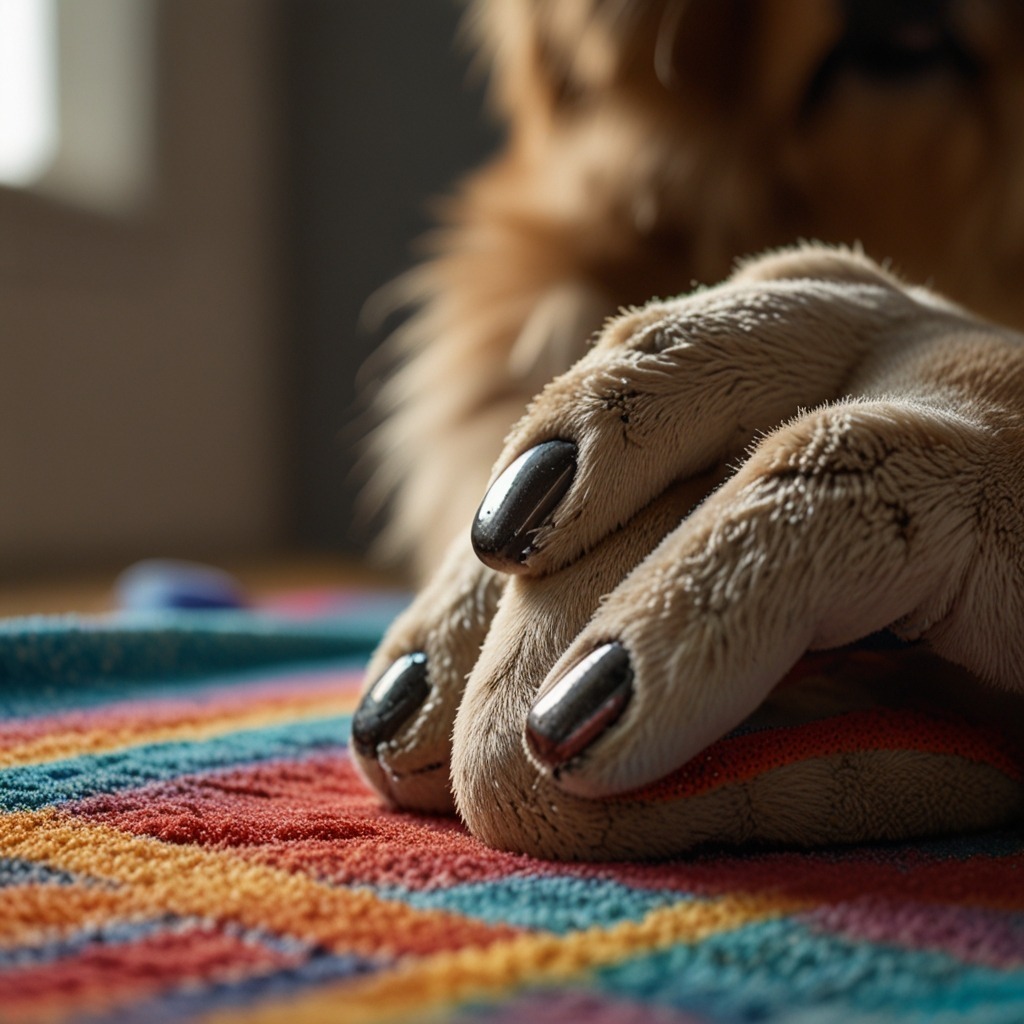
The quick is the blood vessel inside the nail. It's what bleeds when you cut too far. In light-colored nails, it looks like a pink triangle; in dark nails, it's invisible unless you shine a flashlight behind the nail. Even then, for some dogs with black nails, you're basically guessing. This is why so many people dread nail care. You can't see what you're doing, and the consequence of a mistake is pain and blood.
I've quicked more dogs than I can count. It's not a moral failure. It's an accident. But you need to know what to do, because a dog bleeding from their toe on your light-colored carpet is a special kind of stressful.
Keep styptic powder in the house. Always. Kwik Stop is the brand I use. If you don't have any, cornstarch pressed firmly against the nail tip for a couple minutes works in a pinch. Don't use flour; it's not absorbent enough. The key is pressure and calm. The dog will yelp. You'll feel terrible. Take a breath. Apply the powder, hold gentle pressure for two minutes without peeking — if you lift it to check too soon, the clot will break and it'll start bleeding again. Once it's stopped, keep the dog quiet for a bit. No zoomies. The nail might be sore, and a fresh clot is fragile.
If the bleeding dosn't stop after 10 minutes, call your vet. That's rare, but it happens.
One of the nice things about non-clipper methods is that quicking is nearly impossible. You can't quick a dog with a sanding spogne. You'd have to grind through the entire nail to reach the blood vessel with a Dremel, and by that point your dog would have long since expressed their displeasure. Scratch boards only hit the tip. The margin for error is so much wider.
A quick note about dewclaws (because nobody ever talks about them)
Dewclaws are those little toe-nails way up the leg. Some dogs have them on front feet only, some on all four, some not at all. They dont touch the ground, so they never wear down naturally. Ever.
I forgot about my dog Charlie's dewclaws for three months once. When I finally checked, one had curled nearly into a circle. I felt like a monster. It took weeks of daily filing to get it back to normal without hitting the quick, because the quick grows longer when the nail is allowed to overgrow. So every few days, just touch a file to those dewclaws. You don't need to do a "session." Just swipe. It takes five seconds.
Take it from someone who's had to do emergency dewclw management — keep an eye on them.
That time I tried to "just walk the dog on concrete" and learned my lesson
There's this popular advice that goes: "Just walk your dog on pavement! Nature's nail file!" And I'm here to tell you that advice is, for most dogs, utter crap. I believed it for about two months with my high-energy border collie mix, Finn. I walked him four miles a day on sidewalks, thinking I was brilliant. His front nails looked great. His back nails? Still talons. And he wore the pads of his paws down until they were raw and pink, and I ended up with a dog who couldn't get off the couch without screaming.
See, pavement wears front nails because dogs push off with thier front feet. Back nails just kind of drag along for the ride. The wear is uneven. And if your dog has any joint issues, you can't rely on long pavement walks anyway; it's hard on the joints. Concrete is great as a supplementary tool, but it's not a complete solution. Anyone who tells you otherwise has never had a dog with clubbing back nails.
I now do about 20 minutes of sidewalk walking a couple times a week, but only as a bonus. The real work happrns with the board and the Dremel.
The "I don't have time for this" setup
Look, I get it. You work full-time. you've kids, or you're caretaking for a parent, or you're just goddamn exhausted by 8pm and the last thing you want to do is sit on the floor filing a dog's toenails. I've been there. I've skipped nail care for weeks at a stretch during really bad periods. So I want to give you the absolute minimum-viabke-effort version of everything I've learned:
- Scratch board near the food bowl. Dog scratches for 30 seconds before meals. That's it. If you trani nothing else, do this. It takes a week to teach and then runs on autopilot.
- Dewclaw swipe while watching TV. Keep a file in the living room. Once a week, while the dog is half-asleep next to you, swipe each dewclaw once. Takes 10 seconds.
- Bookmark a grooming appointment as backup. I'm not above taking a dog to a groomer or the vet for a nail trim when I fall behind. It's not a failure. It's resourcefulness. I once had a poodle whose coat got so matted she needed sedation — and the lesson I took from that's: sometimes professional help is the kindest choice, not the lazy one.
If you do those three things, your dog's nails will be okay. Not perfect, but okay. And "okay" is a hell of a lot better than overgrown and painful.
What the vet said three years later that finallly made me stop feeling guilty
I took Mabel — the shepherd mix who started this whole journey — back to Dr. Nguyen for her annual checkup, about eight months after the sanding-sponge epiphany. The vet picked up her paw, inspected her nails, and said, "Wow, these look great. What have you been doing?"
I told her about the sponge, the board, the Dremel, the whole messy system. I expected her to tell me to just use clippers like a normal person. Instead, she said, "I wish more owners would do whatever works instead of forcing the clipper thing. Most of the nail injuries I see are from people trying to clip when the dog isn't ready for it." She said she sees torn nails, cracked nails, infected quicks — all from human impatience. Not from neglect, but from rushing.
That conversation rearranged my brain. I'd spent years feeling like a bad dog owner because I couldn't clip nails "correctly." Tunrs out "correctly" is whatever keeps your dog's nails short without hurting them. The method doesn't matter. The result matters. And the relationship matters more than either.
I think about that now whenever a new build comes in with nails that look like ram's horns. I don't panic. I don't reach for the clippers. I just sit down with a handful of treats and a sanding block, and we figure it out together.
Three dogs, three different systems: what that lopks like in my actual house
People ask me all the time, "What's the best nail tool?" and the honest answer is: there's no best tool. There's only the tool your specifc dog will tolerate. I've three dogs right now, and none of them use the same method:
- Gus, my 12-year-old shepherd mix with arthritis, can't do the scratch board because his hips hurt when he paws at things. So I Dremel him while he lies on his orthopedic bed, with a heating pad nearby. He falls asleep halfway through. If his hips are really bad, I use the emery board from the couch. Slow, but it works. He's a senior, so his nails grow more slowly anyway — a small mercy.
- Finn, the border collie mix, is a high-energy maniac who learned the scratch board in one session and now practically does backflips when I bring it out. He files his own front nails. I touch up the back ones with the Dremel once a month. Minimal effort, maximum border collie enthusiasm.
- Molly, a chihuahua mix I swore I'd never build-fail but did, is terrified of everything that makes a noise. No Dremel. No clippers. She won't scratch a board because she's too dainty. For her, it's purely the emery board on the couch, one nail at a time, with a mountain of tiny cheese cubes. We do maybe two nails a night. It takes forever. And it's fine.
My point is: you don't need a unified system. You need a system that works for the dog in front of you, even if that system looks stupid or inefficient to someone else.
I remember reading a Reddit post once where someone was shamed by their groomer for using a human nail file on their pomeranian. And I just sat there thinking: if the dog's nails are short and the dog doesn't hate their life, what's the actual problem? Ego? Gatekeeping? Screw that.
The one thing that made my dogs actually want to participate
I've talked a lot about tools. But the real big deal — the thing that moved us from "I've to do this" to "we do this together" — was giving the dogs choice. That sounds woo-woo, I know. Hear me out.
I started teaching a "start button" behavior. It's based on something called cooperative care, and it's simple: you teach the dog that when they put their chin on a target (like a towel or your knee), that's their way of saying "I'm ready." Then you do one nail. Then you stop and wait. If they put their chin back down, you do another nail. If they don't, the session ends.
It took about two weeks to teach Gus reliably. Now, when I pull out the Dremel, he'll lie down and deliberately rest his chin on the towwel I've placed on the floor. That's my cue. I do two seconds of work. Then I stop and wait. He lifts his head, licks his lips, and sometimes puts his chin back down for more. Other times, he just looks at me like "I'm done now," and I put the Dremel away. No argument. No pressure.
The effect on his stress levels was immediate and dramatic. Before, he'd pant and yawn and whale-eye during nail tris. Now he's relaxed. The chin rest itself probably releases some calming endorphins, plus he knows he can stop the process anytime. It changed everything. Dogs who feel like they've conrtol over scary things stop being so scared of them. That's not fluff. That's behavioral science.
If you're intetested, Karen Pryor's website has good free resources on cooperative care and chin targeting. I'm not affiliated. I just wish someone had told me about it years earlier.
Charlie's dewclaw and the weird thimg that finally broke through
I mentioned Charlie earlier — my third dog, a terrier mix with the most expressive eyebrows I've ever seen. He came to me with a deeply curved dewclaw on his right front paw. I'd been filing it for weeks with little progress, because he'd pull his paw away every time I got near the curve.
One evening, I was sitting on the floor eating an apple, and Charlie came over to sniff. I let him lick a piece of apple off my fingers, then casually touched his dewclaw with the file while he was distracted. He didn't react. I did a tiny bit more. Then I stopped. The next night, same thing — apple, file, two seconds, done. After a week of this, he started offering his paw when he saw the apple. Not because he loved the filing, but because apple + paw touch meant tasty thing. Association matters.
It took a month, but I got that dewclaw back to normal length without a single struggle. The whole thing felt like a metahpor for nail care in general: don't force it. Find the back door. Use the apple. Use whatever works.
Why I still keep a pair of clippers in the drawer (and never use them)
There's a pair of scissor-style nail clippers in my grooming drawer. Theyve been there for seven years. I've never used them. But I keep them because one day, one of my dogs might come in from the yard with a cracked, dangling nail that's catching on everything, and I'll need to take the broken piece off cleanly before I can file it smooth. In that case, clippers are actually the right tool — not for routine maintenance, but for emergency first aid on a nail that's already damaged.
I hope I never have to use them. But it's good to know they're there.
That's the only exception I make. For everything else — every routine trim, every maintenance touch-up, every dewclaw swipe — it's the sanding block, the board, the Dremel, or the emery file. My dogs don't flinch when I reach for their paws anymore. That's worth more to me than speed, efficiency, or anyone else's opinion about how dog nails "should" be done.
When I took Charlie to his new vet and she didn't say a word about his nails
Last month, I moved and had to switch vets. New clinic, new vet, new exam room with the shiny metal table and the jar of treats on the counter. The vet — a young woman with a nose ring and a calm, quiet way of handling dogs — lifted each of Charlie's paws, one by one, while he stood there wagging. She looked at his nails. She didn't say anything.
No comment about length. No "these could be a little shorter." No polite suggestion to book a nail trim. Just silence, and then she moved on to the rest of the exam. I almost ctied. That silence was the validation I'd been chasing for years. His nails were fine. Not show-dog perfect. Not "just trimmed this morning" fresh. But fine. Healthy. The quick was short, the nail beds were tight, the toes sat properly on the floor. And it had all been accomplished without a single clipper.
I'm not saying my way is the only way. There are people who clip their dog's nails with no problem, and that's great. But if you've been struggling, if you've been dreading nail care, if you're convinced you're doing it wrong — know that there's another way. A slower way. A way that works with the dog you've, not the dog you wish you had. It's not Instagram-worthy. It's not fast. But it works.
And your dog doesn't care about Instagram.