I Haven't Brushed My Dogs' Teeth in Years — Here's What Actually Keeps Their Gums From Going to Hell
I tried brushing my dogs' teeth exactly twice before giving up. Here's what I use instead — dental chews, water additives, raw bones, and the one seaweed powder that actually slowed the tartar buildup.
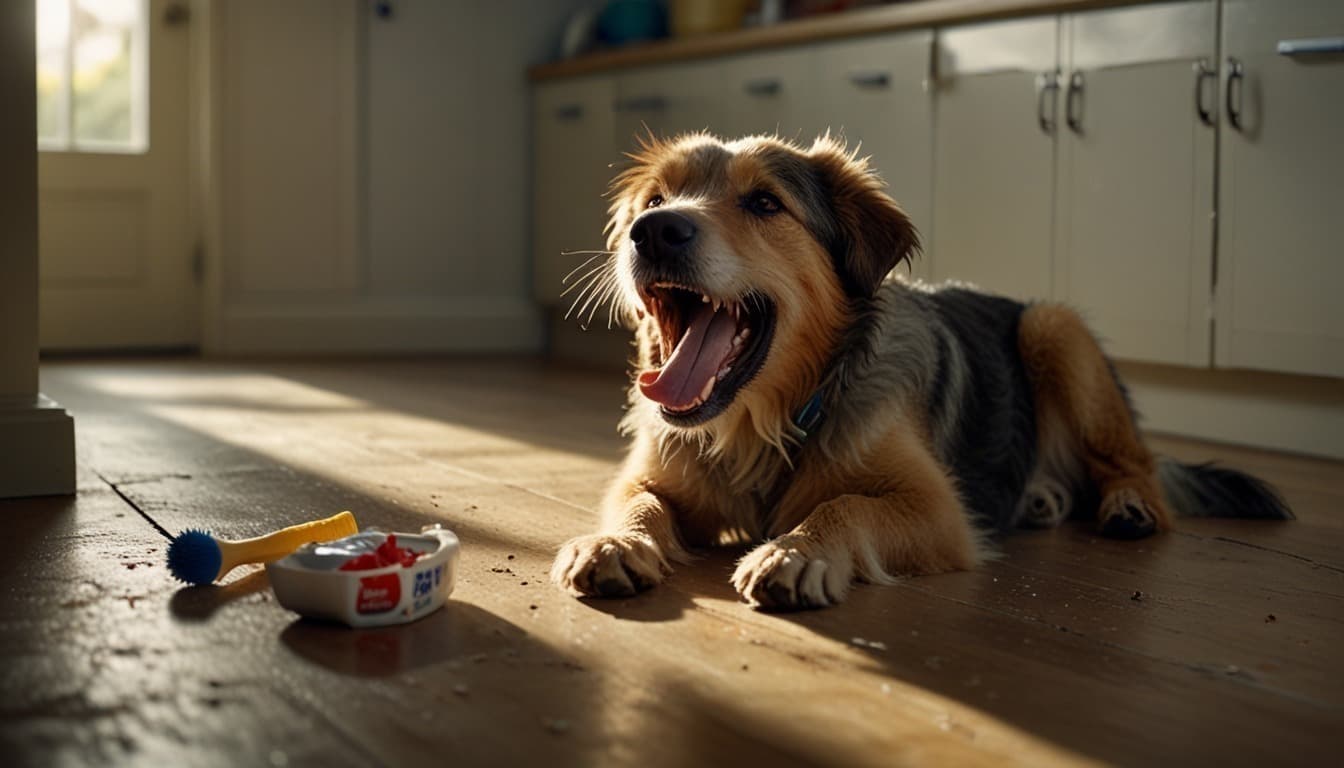
It was 2016, maybe 2017. I was fostering this massive shepherd mix named Roscoe, and his breath could strip paint. The kind of stench that makes you lean away when the dog yawns, and then you feel guilty for leaning away, so you lean back in and immediately regret it. One morning he yawned right in my face — I was sitting on the floor, he was standing over me — and I gagged. Like, actually gagged. I'd been doing rescue work for years at that point and thought I'd smeled everything. But this was different. This smell had structure. Layers. A top note of dead fish, something sour underneath, and a weird sweetness that made it worse.
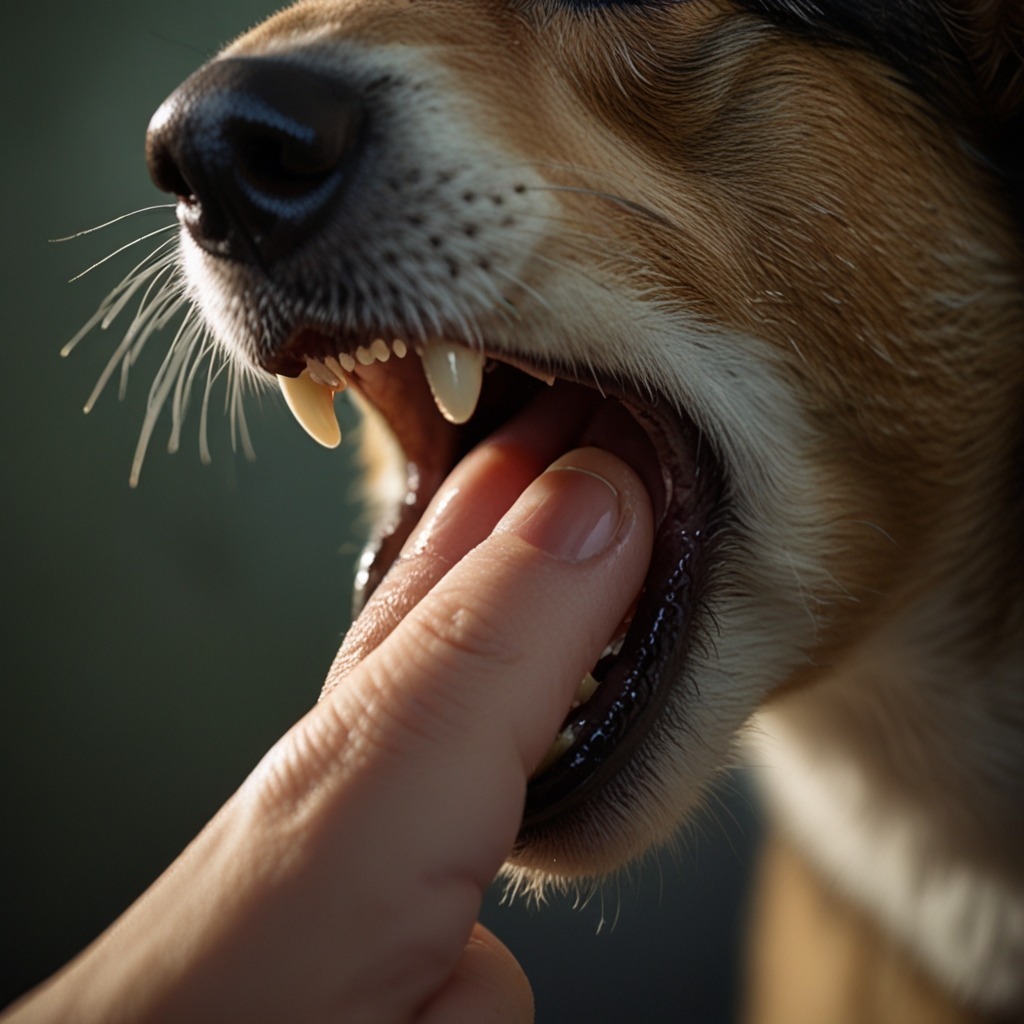
I pried his mouth open — gently, he was a good boy — and saw what looked like a grey-green cement blob caked onto his back molars. That wasn't plaque. That was calculus so thick it had become a geology project. I'd been telling myself for months that his teerh were "fine" because he ate kibble and chewed on a rope toy sometimes. They weren't fine. The vet later pulled three of them.
And that's when it really hit me: I'm terrible at brushing dog teeth. I always have been. I've owned dogs for 14 years, fostered over 40, and I could count on zero finegrs the number of times I've successfully brushed any of their teeth for more than a week straight. I try, I fail, the finger brush ends up under the couch, I feel like crap, I give up. And I know I'm not alone. So if you're reading this because you've also given up, or you're about to give up, or you're a new dog owner who just wants to skip the guilt part entirely — I've been there. I'm still there. And I've found a bunch of stuff that actually helps, even though none of it's a toothbrush.
The build dog who tasted like a sewer when he yawned
Roscoe was a surrender — his owner had passed away — and he came to me with almost no vet history. Just a bag of cheap food and a collar that smelled like cigarette smoke. He was maybe 8 years old, fat, and sweet as hell. The first week I had him, I noticed he'd eat his kibble weird: he'd mouth it, drop half of it on the floor, then sort of lick the pieces back up. Not a picky eater. It looked like it hurt.
I did the stupid thing I always do when I'm avoiding something: I googled it. "Dog dropping food while eating," "dog chewing on one side only," "dog bad breath serious?" Every result said the same thing: dental disease. So I finally opened his mouth — properly, with a flashlight — and that's when I saw the grey-green horror show. I felt like the world's worst caretaker. This dog had been in my home for seven days and I hadn't even checked his teeth. I'd been too busy taking cute photos for his adoption listing.
Here's a tangent, because this reminds me of something that makes me furious: most adoption listings don't include dental status. They'll say "good with kids," "house trained," "needs a fenced yard," but they won't mention that the dog's mouth is a ticking time bomb. I used to write listings at the shelter, and we were told not to mention dental issues unless they were "severe" because it might scare people off. Screw that. A dog with untreated periodontal disease is in constant low-grade pain. They just don't show it the way humans do. This is a hill I'll die on.
Anyway, I got Roscoe into my vet — Dr. Nguyen, the same vet who's dealt with my paic calls for 11 years — and she took one look and scheduled a dental. Under anesthesia. Because that's the thing nobody tells you: once tartar hardens into calculus, you can't brush it off. No amount of finger wipes or "dental" treats will remove it. It has to be scaled off, usually under anesthesia, and it's expensive. For Roscoe it was around $600, and the rescue covered it, but I've since had to pay that bill myself for my own dogs and it stings every single time.
That experience kickstarted my whole obsession with non-brushing dental care. Because I realized I needed to prevent that buildup from ever happening again, and brushing clearly wasn't gonna be my thing.
Why I stopped worrying and leaarned to accept I'd never be a toothbrushing person
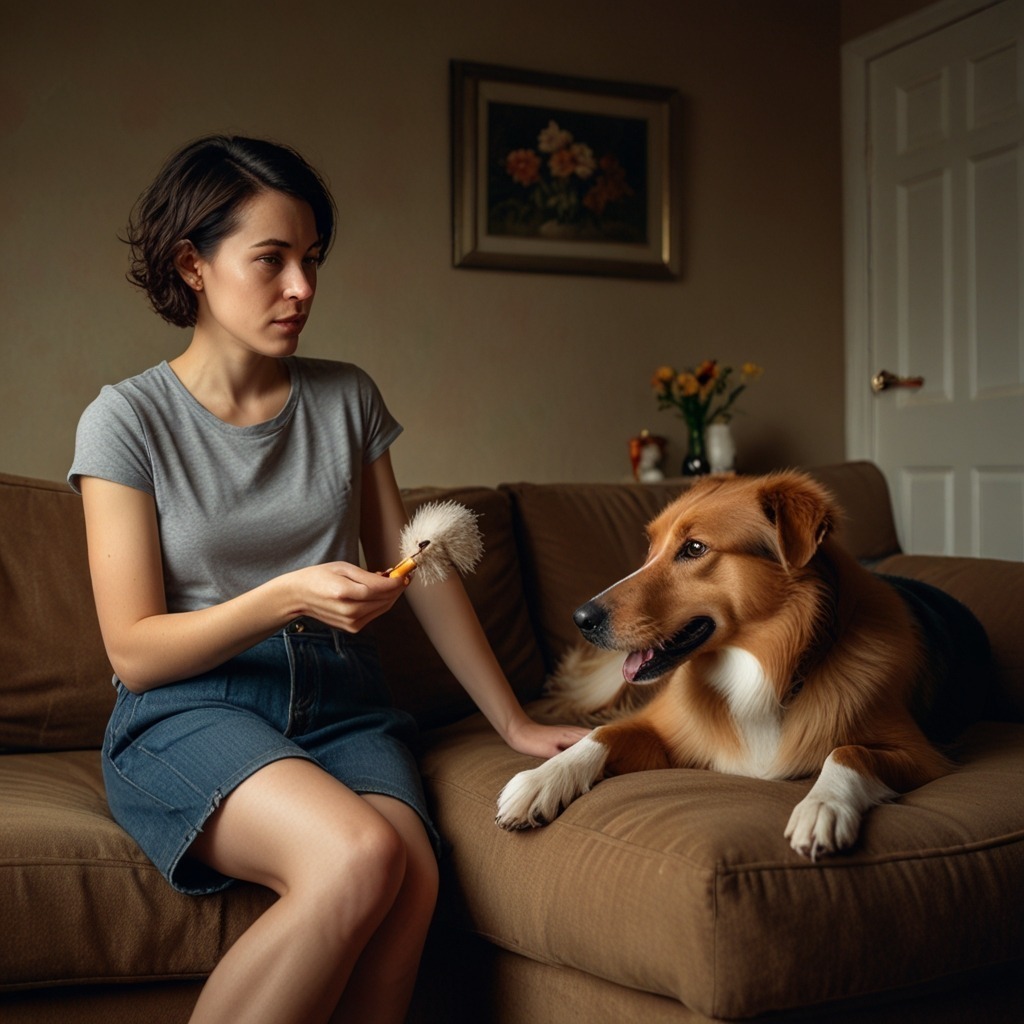
I tried. I really did. I bought the little finger caps with rubber bristles. I bought the chicken-flavored enzymatic toothpaste my vet recommended. I watched YouTube videos of golden retrievers sitting calmly while their owers scrubbed their molars like they were polishing a vintage car. One Saturday morning I decided: this is it. I'm going to become a person who brushes her dogs' teeth.
Day one: My oldest dog, Mack, a 12-year-old lab mix, let me get about three swipes in before he huffed dramatically and walked away. Day two: He saw the finger brush and hid behind the couch. Day three: I cornered him in the kitchen and managed maybe ten seconds before he started doing that thing where he licks his lips frantically to push the brush out. Day four: I was too tired. Day five: I forgot. Day six: The finger brush was under the couch. Day seven: I admitted defeat and felt like a failure for approximately four hours, then got over it.
Here's the thing I've learned after 14 years: some dogs tolerate toothbrushing, and that's great. Some owners are disciplined enough to do it every single day, and I genuinely admire those people. But for the rest of us — the ones with squirmy dogs, or busy lives, or executive function issues, or all three — beating ourselves up about it doesn't clean any teeth. It just makes us feel bad while our dogs' mouths get worse. So I decided to redirect that guilt into figuring out what does work, even if it's not the gold standard.
And listen, I'm not saying brushing is worthless. It's the single most effecctive thing you can do, mechanically scraping off plaque before it hardens. I'm not anti-brushing. I'm pro-reality. The reality is, a lot of us won't do it, and our dogs still need dental care. So here's what I've cobbled together instead.
Dental chews: the good, the bad, and the ones that are basically candy
Walk down the pet store dental aisle and you'll see a wall of promises. "Clinically proven to reduce tartar!" "Veterinarian recommended!" "Freshens breath!" Most of them are shaped like toothbrushes, which I find hilarious. As if the dog cares what shape the treat is. As if the toothbrush shape makes it work better, like a placebo for the owner.
I've tried maybe two dozen different dental chews over the years, and yeah, some of them help. But there's a massive quality range, and some are basically junk food that happens to be somewhat abrasive. Here's my rundown.
What actually works: the VOHC seal matters
The Veterinary Oral Health Council (VOHC) is a group that actually tests these things. If a product has their seal, it means there's data showing it reduces plaque or tartar. Not just marketing fluff. The VOHC-accepted chews are your safest bet. Greenies (for dogs that aren't allergic to wheat — more on that in a sec), some of the Purina Dentalife chwes, certain Virbac CET chews. I'm not naming brands to be a shill; I'm naming them because I've seen them work.
My current build dog, a pit mix named Blue, came to me with mild tartar and breath that could wilt lettuce. I gave him one Greenie per day for two weeks. Not a miracle cure, but the tartar softened noticeably — I could scrape some off with my thumbnail, which is gross but true — and his breath went from "please back up" to just normal dog smell. Dr. Nguyen confirmed at his next visit that the gum inflammation had improved. That's not a scientific study; that's one dog. But I'll take it.
Important thing a lot of people miss: the chew has to actually be chewed. If your dog swallows it whole in three seconds, it's doing nothing for their teeth. My lab Mack inhales everything, so I've to hold the chew while he gnaws on it, which is annoying but necessary. Otherwise it's just an expensive calorie bomb.
The ones I threw away
Anything that's basically a glorified milk-bone with "dental" on the bag. If the texture is the same as a regular biscuit, it's not scrubbing anything. There's a brand — I won't name them but you've seen them, the bright green ones shaped like toothbrushes — that are mostly cron, wheat, and sugar. My dogs loved them because they were basically cookies. Their breath got worse after a week on those. I threw the rest of the bag out and felt scammed.
Also, be careful with dogs who have grain sensitivities. A lot of dental chews are wheat-based. My previous dog, Gus, would get ear infections and itchy paws from wheat, so Greenies were out. I ended up using a grain-free enzymatic chew from a brand called Whimzees. The VOHC list has some options now. If your dog is on a grain-free diet, check the ingredients before you buy a $30 bag of inflammation.
Water additievs: I wanted to believe, but then I looked into it
Water additives sound like magic. You pour a capful into the water bowl and it freshens breath and reduces plaque while the dog drinks. No effort. No wrestling. Just dental care on autopilot. I tried several. The first one I bought smelled like minty chemicals and turned my dogs' water bowl into a science experiment where they'd take one sniff and walk away. I ended up putting out a second bowl of plain water, which entirely defeated the purpose.
The second one was unflavored, which was better, but after a month I saw zero difference. So I actually, for once in my life, read the ingredient list and did some research. Most of these additives use something called chlorhexidine or zinc gluconate or cetylpyridinium chloride — antimicrobial agents that can reduce bacteria in the mouth. The theory is fine. The problem is, a dog drinks water like a cat walking through a puddle: splashing, getting it everywhere, and only a small amount actually makes contact with the teeth for long enough to do anything. Dr. Nguyen once told me, "It's better than nothing, but it's not a substitute for mechanical action." Which is the vet equivalent of "this is a wish, not a plan."
I still use one occasionally, but only as a supplement to other stuff — never as the main event. If you're going to try one, look for something with zinc ascorbate or stabilized chlorine dioxide (the latter is what's in some human mouthwashes, and it's effective), and make sure your dog actually drinks the water. If they avoid it, you're wasting money and possibly dehydrating them. Also, don't use additives in a fountain unless the fountain instructions speccifically say it's okay — some ingredients can gunk up the pump motor, and cleaning a clogged fountain at 11pm is a level of rage I don't wish on anyone.
The raw bone disaster that cost me $1,200
Okay, time for a story that still makes me cringe. This was about five years ago, with my late dog Jax. He was a boxer mix, all muscle and enthusiasm and zero impulse control. I'd read that raw meaty bones are nature's toothbrush — dogs gnaw on them, the scraping action removes plaque, and the enzymes in raw meat help with gum health. Makes sense. Wolves don't brush. So I went to the butcher, got a beautiful raw beef marrow bone, gave it to Jax in the backyard, and felt smug about how natural and ancestral I was being.
Twenty minutes later, I heard a sound I can only describe as a crunch-scream. Jax had cracked a slab fracture on his upper premolar trying to get the marrow out. The tooth split vertically, exposing the nerve. He was in agony. Cue the emergency vet, $1,200, and a very humbling conversation with Dr. Nguyen about how domestic dogs aren't wolves, and their teeth aren't as solid, and weight-bearing bones from large animals are one of the most common causes of dental fractures she sees.
So here's the nuance that gets lost in all the "raw feeding fixes everything" Facebook groups: raw bones can be amazing for dental health — but only the right type. Sofft, edible bones from poultry (chicken necks, duck feet, turkey necks) are generally safe for most dogs. Recreational bones from beef or bison, especially weight-bearing bones like femurs or knuckles, are too hard and can crack teeth. Marrow bones are basically dental grenades disguised as treats. And even with poultry bones, you've to supervise, because there's a choking risk and a risk of gastrointestinal obstruction if they swallow big chunks.
I still give raw bonees occasionally, but only duck necks or chicken feet, and only under direct supervision, and I take them away after 15-20 minutes. The dental benefits are real — my dogs' teeth are noticeably cleaner after a good raw gnawing session — but the risk is real too. If you're not comfortable with raw, there are alternatives that get some of the same mechanical action without the bone-breaking danger.
Something about diet that nobody adequately explains
This is going to be a little rambly, but stick with me. There's a connection between what a dog eats and how fast their teeth get nasty, and it's not just about kibble vs. wet food. It's about the whole metabolic picture. I learned this the hard way with Gus, my senior lab who I fed "light" kibble for eight months and he turned into a sausage. But the dental side of it was just as frustrating.
Gus ate a high-carb, low-quality kibble for most of his early life, and his teeth were terrible — chronic tartar, inflamed gums, breath that could peel wallpaper. When I switched him to a better food — higher protein, fewer fillers — his dental health improved noticeably within a few months. I asked Dr. Nguyen why, and she explained something I'd never thought about: the bacteria that cause plaque feed on carbohydrates. A diet heavy in starches and sugars essentially bathes the teeth in bacterial fuel all day. Wet food, especially the gravy-heavy kind, sticks to teeth and feeds those bacteria even more aggressively. Kibble, at least, has some abrasive action when chewed, but if it's high-carb, you're still feeding the enemy.
This doesn't mean you'be to feed raw or grain-free (and grain-free has its own problems, as I learned when my build dog pooped crayon orange for three straight days). But it does mean you should look at your dog's food ingredients. If the first few ingredients are corn, wheat, or rice, and your dog's teeth are a mess, there might be a connection. Switching to a food with more meat protein and fewer simple carbs won't replace brushing, but it might slow down how fast the plaque builds up. That's been my experience, anyway.
Also, don't overlook the texture. Canned food is soft and sticky; it clings. If you feed wet food exclusively, you'll probably need to be more aggressive with other dental measures. Some people add a small amount of crunchy kibble just for the mechanical cleaning effect, even if the main diet is wet. I do a mix of wet and dry for my current three, partly for that reason.
That time I tried dental sprays and my dog looked at me like I'd betrayed our entire relationship
Dental sprays are another category where marketing vastly outpaces reality. The idea: spritz a mist into your dog's mouth and it kills bacteria, freshens breath, maybe even reduces plaque. I tried a well-reviewed one a couple years ago. You're supposed to lift the lip and spray directly onto the gums and teeth. My dog Mack — the lab who hides from the finger brush — took one look at the spray bottle and ran. When I finally cornered him and got one quick spritz in, he flinched, licked his mouth frantically, and then refused to come near me for an hour. I felt like a monster.
The spray did have some effect on breath for maybe 20 minutes, but the application process was so stressful for both of us that it wasn't sustainable. If you've a bombproof dog who'll let you do anything, sprays might be a useful adjunct. For the rest of us, they're just another tool gathering dust under the sink.
One thing I'll say: avoid anything that contains alcohol or artificial sweeteners (xylitol is toxic to dogs, but you'd be surprised how many "natural" pet products slip questionable stuff in). Stick to enzymatic sprays with ingredients like glucose oxidase or lactoperoxidase, which are the same enzymes in some toothpastes. But again, the contact time matters, and a quick spritz isn't giving those enzymes much chance to work. It's a lot like spraying a dirty dish and calling it washed.
The weird little things that actually helped: seaweed, chewing, and a surprising toy
This section is the grab-bag of stuff I've tried that had modest but noticeable effects. None of thhese are magic. None replace actual dental care. But they moved the needle enough that I still use them.
Ascophyllum nodosum — yes, seaweed powder
There's a specific type of kelp called Ascophyllum nodosum that's been studied for its ability to reduce plaque in dogs. It's usually sold as a powder you sprinkle on food. The mechanism is interesting: certain compounds in the seaweed interfere with the bacteria's ability to form the biofilm that becomes plaque. It doesn't scrub anything; it changes the oral environment. There's a brand called ProDen PlaqueOff that uses it, and it actually has some VOHC acceptance for tartar reduction.
I tried it on Blue (the pit mix build) for about a month. His teeth didn't get dramatically whiter, but the tartar buildup slowed noticeably. He'd previously been getting grimy within a week after a dental cleaning; with the seaweed powder, it took three weeks before I started seeing significant new accumulation. I'll take slower buildup over nothing any day. The powder is practically tasteless, so even my picky eater didn't notice it. It's one of the few supplements I'll actually spend money on.
Chewing in geeneral — any safe chewing is dental exercise
This seems obvious, but I've noticed that dogs who are heavy chewers naturally have cleaner teeth. The mechanical scraping action of chewing — whether it's a bully stick, a Himalayan yak chew, a sturdy rubber toy, or even a frozen carrot — helps rub plaque off before it hardens. I make sure all my dogs have something appropriate to chew on daily. Not just for mental stimulation, which matters too, but because it's like a low-effort toothbrushing session they choose to do themselves.
A word of warning: not all chews are created equal. I once gave my dogs those cheap rawhide chips from the bulk bin at the feed store, and one of them swallowed a chunk whole. Three hours later, I was in the emergency vet with a blockage scare. I've written before about my arms looking like I'd wrestled a piranha, but the chewing debacle was a whole different kind of disaster. Now I stick to digestible chews (bully sticks, esophagus srrips, No-Hides) or hard rubber toys like Kongs, which won't shatter into sharp shards.
A toy I ignored for years that actually works
This is going to sound dumb, but I need to mention it. There's a line of dental toys — I'm thinking of the Kong Dental Stick and similar textured rubber toys — that have little nubs and ridges designed to scrape teeth as the dog chews. I wrote these off as gimmicks for years. Then a friend gave me one for Mack, who is a dedicated chewer, and I noticed after a couple weeks that his front teeth were noticeably whiter. The nubs were actually reaching the spots his molars weren't getting. It's not a substitute for cleaning the gum line, but for the visible surfaces, it helped. I now have one of these in the toy rotation, though I'm still annoyed that it costs $15 for a piece of rubber with bumps.
A tangent about the "natural" pet dental industry that makes me want to scream
Can we talk about how many products market themselves as "natural" dental solutions that are basically just water, glycerin, and peppermint oil? I fell for this years ago, bought a $22 bottle of "full oral care gel" that promised to cure bad breath and dissolve tartar. The ingredients were literally aloe vera, vegetable glycerin, and "a proprietary blend of essential oils." I put it on my dog's gums and he drooled for ten minutes. Nothing changed. Not one thing.
The pet industry knows we feel guilty about not brushing. They know we'll pay almost anything for a shortcut. And they're happy to sell us feel-good nonsense at premium prices. I've wasted so much money on this stuff that I now have a rule: if a product doesn't have either a specific mechanism of action (enzymatic, antimicrobial with named active ingredient, or mechanical abrasion) or some actual third-party testing, I'm not buying it. "Natural" isn't a mechanism. It's a vibe. And vibes don't clean teeth.
This rant brought to you by the $40 bottle of "allergy relief chews" I therw in the trash after day three — that story is over here. Point is, be skeptical of anything that feels too easy. If there was a simple gel that dissolved tartar, vets wouuld recommend it and we'd all be using it. The fact that we're not should tell you something.
What I actually do now, with three dogs and zero toothbrushes
So where does this leave me? I've three rescue dogs — Mack (12, lab mix), Blue (4, pit mix, currently fostering), and a little terrier mix named Scout who's about 7 and has teeth like a tiny piranha. None of them tolerate brushing. I've accepted this. Here's what I do instead, and it's kept their mouths in decent shape according to Dr. Nguyen — not perfect, but decent.
- Every dog gets a VOHC-accepted dental chew 4-5 times a week. For Mack, it's a dental stick that's large enough he has to actually chew it. For Scout, it's a tiny version. Blue gets whatever the rescue provides, but I supplement with my own stash when I can.
- I sprinkle the seaweed powder on their food — morning mela, every day. It's not exciting, but it seems to slow things down.
- They get something to chew on daily. Bullly sticks, frozen carrots (Scout loves these), or a durable dental toy. I rotate so they don't get bored.
- Once a week, I do a "mouth check" — basically just lift their lips, look at the gum lne, sniff their breath. If something's off, I catch it early. That's how I found the start of a cracked tooth on Mack last year before it got infected.
- I stopped feeling guilty abput the toothbrush. I threw it away. The finger brush is still under the couch, probably.
One thing I haven't tried yet, and I'm honestly scared to, is the dental wipes. They're like little pre-moistened pads you wrap around your finger and rub along the gums. The mechanical action is supposedly comparable to brushing, but easier because there's no bristle sensation. I've heard good things from other rescue people, but my first attempt with Mack ended with him backing into a corner and giving me the whale eye — that look dogs give when they're anxious but trying not to esclaate. I backed off. Maybe I'll work up to it. Maybe not. The point is, I'm not going to force something that traumatizes him just to meet some ideal standard of dental care. we've enough tools in the toolbox.

The $340 vet bill that explained everything I'd been ignoring
Last year, Scout — the terrier — started pawing at her mouth. It was subtle at first, just an occasional swipe like she was wiping her face. Then she got picky about food, which for a terrier who once ate a used tissue off the sidewalk is a serious red flag. I checked her mouth and saw redness along the gum line on one side. No visible fracture, no swelling, just angry pink gums. I made the appointment.
Dr. Nguyen found a slab fracture on her upper premolar. Same thing Jax had, five years earlier. Scout had been chewing on an antler — one of those "long-lasting natural chews" that are supposed to be safe and good for teeth. Antlers are basically bones, but harder. I should have known. The fracture wasn't as severe as Jax's — no nerve exposure yet — but the tooth needed to come out. $340, a round of antibiotics, and a very hard conversation with myself about letting history repeat.
Here's the thing this whole journey has taught me: dental care isn't about finding one perfect solution. It's about layering a bunch of imperfect solutions and staying aware. If I'd been checking Scout's teeth more regularly, I might have noticed the tiny crack before it became a fracture. If I'd been rotating chews differently, maybe the antler wouldn't have been in the rotation at all. The goal isn't perfection. The goal is slowing down the damage enough that your dog doesn't spend their senior years in chronic mouth pain or losing teeth at every cleaning.
And for what it's worth, even with all my half-measures and failed toothbrushing attempts, Dr. Nguyen told me at Scout's last checkup that her remaining teeth looked "surprisingly good for her age." I'll take "surprisingly good" over "ideal" any day. I'm not a perfect dog owner. I'm just a tired person with a lot of dogs who's learned to stop aiming for the gold standard and start aiming for whatever actually sticks.
One more thing, and then I'll stop because Scout is whining at the back door and the build cat — Miso, a judgemental tortie — is staring at me from the windowsill like I'm the laziest humna alive. If your dog has terrible breath, don't just assume it's a dental problem. It usually is, but sometimes it's something else entirely — GI issues, kidney disease, something lodged in the throat. I once fostered a dog whose horrific breath turned out to be a piece of stick wedged in his gums for who knows how long. That story is its own nightmare. So if the breath changes suddeenly or gets dramatically worse, see a vet. Don't do what I did and assume a dental chew will fix everything.
Okay, the cat is starting to knock things off the desk, which means I've ignored her for too lomg. You know how it goes.