
I Haven't Brushed My Dog's Teeth in Years and the Vet Says They Look Great — Here's What I Do Instead
Guilt-tripped about skipping toothbrush time? Same. After years of fostering, I've found the products and chews that actually clean teeth — plus the one thing vets never tell you.
OK listen. I'm about to say something that's going to make every vet tech on Instagram want to fight me. I don't brush my dogs' teeth. Haven't for about four years now. And yes, I've had three separate vets look in their mouths during annual exams and tell me things like 'whatever you're doing, keep it up.' I'm not saying you should never brush. I'm saying that the dental care industry has convinced us that if we aren't pinning our dogs down with a tiny toothbrush every night, we're failing. And that's just… not true.
The guilt alone is enough to make you feel like a terrible owner. I've been there. Standing in the pet store aisle at 8pm, holding a $12 tube of chicken-flavored toothpaste and a finger brush that looks like a medieval torture device, wondering why I can't just be a normal human who remebers to brush their dog's teeth every day. But I've tried. Oh, I've tried. And what I've learned after 14 years, 40+ fosters, and a whole lot of dental vet bills is that there are ways to keep your dog's mouth from turning into a bacteria hellscape without ever picking up a toothbrush. That's what I'm going to talk about today — the stuff that actually works, the stuff that's complete crap, and the one thing I wish someone had told me a decade ago.
The Day I Alnost Took a Toothbrush to the Face Over Chicken-Flavored Toothpaste
Let me tell you about Hank. Hank was a 75-pound coonhound I fostered back in 2017 — big floppy ears, the saddest eyes you've ever seen, and breath that could peel paint. He came to me from a hoarding situation, and his teeth looked like someone had dipped them in butterscotch pudding and left it to harden. I was determined to fix them. So two days in, I sat on the kitchen floor with a blob of enzymatic toothpaste on one of those rubber finger brushes, lifted his lip, and went for it.
Hank didn't appreciate the effort. He jerked his head back, let out this low growl, and snapped at my hand — not hard enough to break skin, but hard enough that I dropped the brush and it skittered across the floor. He then proceeded to pick up the finger brush in his mouth, chew it twice, and spit it out on my foot. Message received. I never tried to brush his teeth again. Later, during a vet visit — after I'd spent two months working on his trust — I found out he had a cracked premolar that had abscessed and was probably causing him a world of pain every time I touched it. I'd been trying to brush a mouth that was basically a live wire of agony. That cracked tooth ended up being one of the most disgusting things I've ever seen extracted, and the smell when it finally came out… I wrote about that whole saga here. Suffice it to say, Hank taught me that sometimes the mouth you're trying to clean is a ticking time bomb, and no toothbrush in the world is going to fix it.
That experience pushed me to stop trying to be the perfect toothbrush mom and start looking for what actually works when you can't — or won't — brush your dog's teeth. And I've never looked back.
Why Brushing Is the Gold Srandard (But Also, Let's Stop the Guilt Trip)
Before I go any further, I want to say this: brushing is still the most effective way to mechanically remove plaque from teeth before it hardens into tartar. Vets aren't lying about that. Plaque is this sticky, colorless film of bacteria that fprms on teeth within hours of eating. If you don't remove it, it calcifies into rock-hard tartar (calculus) within about 24 to 48 hours. Tartar is what you see as that brown gunk along the gumline, and once it's there, no toothbrush is getting it off — that requires a professional cleaning under anesthesia. So the idea behind daily brushing is to disrupt the plaque before it has a chance to calcify. That's the science.
But here's the thing. The whole reason I started writing about pets in the first place is because so much of the advice we get is technically correct and completely useless in real life. Most dogs don't sit still for brushing. They squirm, they bite the brush, they lick all the toothpaste off before you've even touched a tooth. And if you adopt an older dog or a dog with a traumatized past, like Hank, trying to stick your fingers in their mouth can actually set back trust and trigger a fear response. I'm not going to traumatize my dog just to scrape off some plaque that I can address in other ways. I'm just not.
Dr. Nguyen — she's been my vet for 11 years, through three dogs and a divorce — once told me something that changed my whole perspective. I was in the exam room with my senior golden mix Gus, who had just gotten a dental exam, and I confessed, almost apologetically, that I'd stopped brushing his teeth years ago. She looked at his mouth, looked at me, and said, 'His teeth are some of the cleanest I've seen in a dog his age. Whatever you're doing with chews and diet, keep doing it. Brushing is great, but consistency with anything that reduces plaque is what actually matters.' I almost cried. The relief was immense.
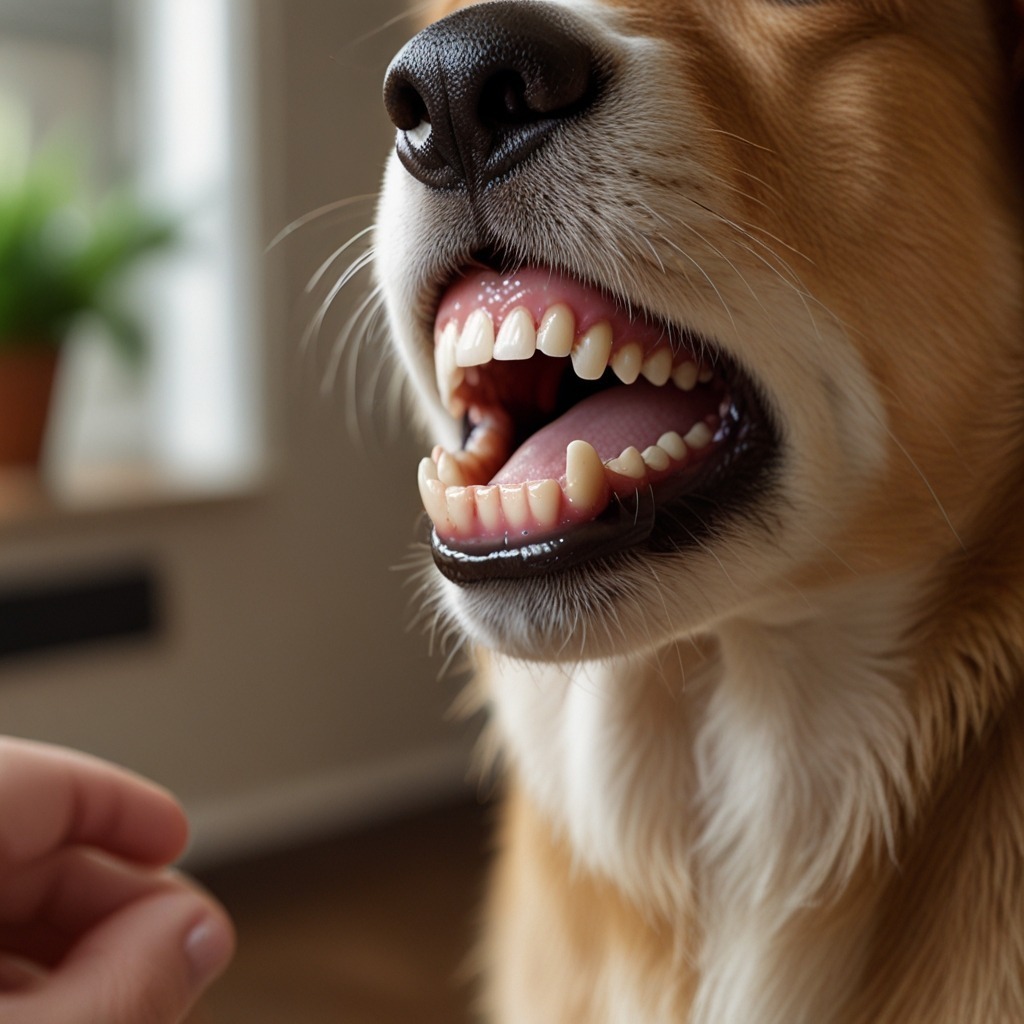
There's a weird moral hierarchy in pet care where peeople brag about brushing their dog's teeth twice a day like it's a personality trait. I'm not here for it. If you can brush, great. If you can't, you aren't a bad person, and there are other ways to keep your dog's mouth healthy. The key is to do something regularly. That something might be a combination of things. But the guilt? Throw it in the trash with the finger brush Hank spit at me.
The Chew Strategy That Actually Keeps My Dogs' Teeth From Looking Like a Chalky Mess
So what's the something? For me, it's chews. Specifically, a rotation of different types of chews that my dogs actually enjoy, that they'll gnaw on for a decent amount of time, and that have some scientific backing — or at least enough anecdotal evidence from my own lived experience that I trust them.
I've three dogs right now: Gus (the senior golden mix, 12 years old and arthritic but still insists on his daily chew session), Olive (a 5-year-old pit mix who could destroy a cinder block if I let her), and a current build, a little terrier named Pippin who arrived with teeth so caked in tartar I could practically read the expiration date on his last kibble. Chews are the backbone of their dental care. But not all chews are the same, and if you're just grabbing whatever's on sale at the big box store, you might be doing more harm than good.
The VOHC seal: that litttle blue stamp I ignored for years (like an idiot)
For the longest time I had no idea what the VOHC seal meant. I'd see it on certain dental chews and think it was just marketing. Turns out, it's one of the few legit indicators that a product actually does what it claims for oral health. VOHC stands for Veterinary Oral Health Council, and they award their seal to products that have undergone actual clinical trials (or ones that meet pre-existing standards) showing they reduce plaque and/or tartar. Brands like Greenies, OraVet, and certain Purina dental chews carry it. It's not a guarantee of perfection, but it's a hell of a lot better than random 'dental' treats made of compressed potato starch and vague promises.
I started paying attention to that seal after Gus had a dental cleaning about five years ago, and the vet recommended an OraVet chew once a day to extend the results. I was skeptical because Gus is picky and I'd tried dental chews before that he'd just take in his mouth and then drop on the carpet like a furry little insult. But he actually ate the OraVet ones. And six months later, when the vet looked at his teeth, they were still relatively clean. I've been cycling through VOHC-approved chews ever since — alternating between Greenies and OraVet because Olive gets bored of the same texture every day and I swear she'll stage a hunger strike if I don't switch it up.
The important thing about these chews is that they're designed to let the tooth sink into the material before it breaks, so there's a mechanical scrapnig action as they chew. They're not just treats. They're treats that do a job. And if you're not brushing, these are your first line of defense.
Bully sticks: the miracle I use (and the 20-minute rule that keeps me sane)
Bully sticks are my absolute favorite dental tool, and also the one I've to be most careful with. They're dried beef pizzle — yes, I know what that's, let's not think about it — and they're fully digestible, unlike rawhide. When a dog gnaws on a bully stick for a sustained period, they're grinding plaque off their teeth the same way chewing a raw bone would, but without the risk of splintering or blockages from hard cooked bones. Olive especially will sit with a bully stick for half an hour, grinding her back molars into it, and her teeth are sparkling after.
But here's where I get strict. I limit bully stick time to about 20 to 30 minutes a day. Not because of dental reasons — because of calorie reasons. A single 6-inch bully stick can have anywhere from 80 to 120 calories, and if I let Olive free-feed on them all day, she'd be shaped like a toaster within a month. Plus, back when I was more lax, Gus once took his bully stick, carried it under the couch, and guarded it for three days. I had to get on my hands and knees with a spatula to fish out a slobber-soaked, half-chewed piece of beef that had started to smell like a dead animal. Not my finest moment. So now they get bully sticks in a bully stick holder (looks like a little rubber cage) and they only get them while I'm in the room. The holder also prevents them from swallowing the last inch and choking, which is a real thing that's happened with fosters before.
One more thing: some dogs are allergic to beef. Pippin, the terrier I'm fostering right now, broke out in hives the first time I gave him a bully stick. So I had to switch him to a braided fish skin chew instead. It's still a long-lasting chew, just from fish, and it's surprisingly effective. The point is, you've to watch your individual dog and not assume one magic chew will work for everyone.
Raw meaty bones: I know I'm ging to get emails for this
OK, I can already feel the angry comments forming. Raw feeding is controversial, and raw bones especially. I'm not a vet, I'm not telling you what to do, and I'm fully aware that many veterinary organizations advise against raw bones because of the risk of dental fractures, bacterial contamination, and GI obstructions. But I'm also going to tell you what I've done with my own dogs for over a decade, with the blessing of my vet, and it works for us. I feed raw meaty bones — turkey necks, chicken feet, and occasionally beef rib bones that are raw, never cooked, and never the dense weight-bearing bones like knuckle bones from cows. Those can crack teeth, and I learned that the hard way when I gave Gus a smoked marrow bone once (not raw) and he chipped a molar. I felt like the world's biggest idiot. We had to have that tooth pulled, and I'm certain that's where some of my dental vigilance started.
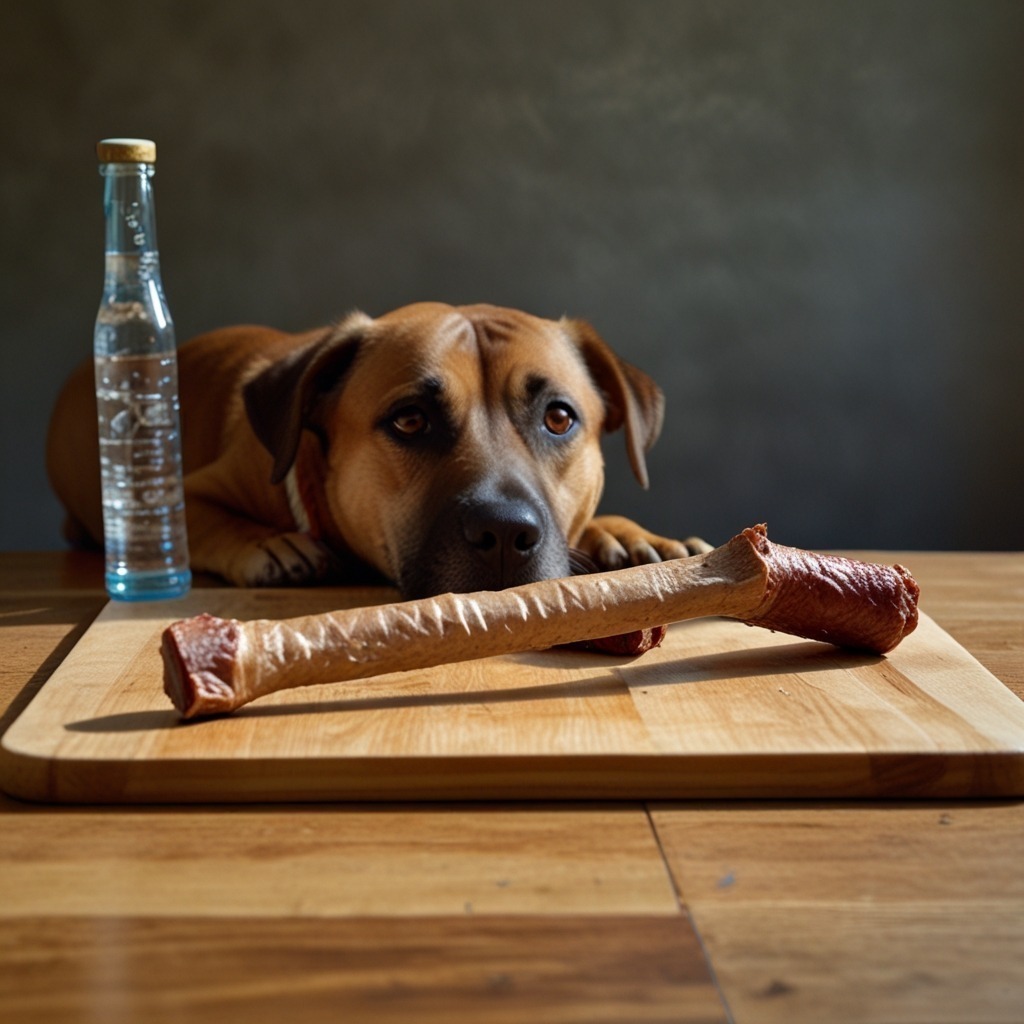
But raw poultry necks and feet? They're soft enough to be safe for most dogs, and the act of crushing and grinding the bones scrapes plaque off molars like a power washer. I give my dogs one turkey neck a week, outside, on a designated towel, and they'll spend a good 30 minutes working on it. Pippin, who came to me with the worst teeth of any build I've had in a long time, had a visible reduction in tartar after two weeks of daily raw bones (I started with chicken wings, actually, because his mouth was so sore). I'm not saying you should do this. I'm saying it's an option for dogs who are good candidates — strong chewers, no resource guarding, no history of pancreatitis — and you should absolutely talk to your vet first. But if your vet is open to it, it's one of the most effective natural toothbrushes out there.
The dnetal chew that turned my build's poop orange (and other failures)
Not every chew is a winner. I once bought a bag of a popular brand of dental sticks that promised 'fresh breath and cleaner teeth in 14 days.' What I got instead was a build dog — a sweet little beagle mix named Daisy — who started pooping a shade of orange that looked like a highlighter exploded. I panicked, of course. Rushed her to the vet, had her stool tested, the whole nine yards. Turns out, the chew was loaded with dyes and some weird vegetable protein isolate that her system just couldn't handle. It wasn't dangerous, but it was definitely not what I'd call 'healthy.' I threw the whole bag out and swore off any dental chew that has a list of ingredients longer than my arm. That whole orange-poop incident actually led me down a rabbit hole of reading about dog food additives, which I wrote about here. Suffice it to say, I now sitck to chews with minimal, recognizable ingredients.
I've also tried those enzyme-coated rawhide chews that are supposedly safer. Nope. I once had a build dog swallow a chunk of 'compressed' rawhide whole and spent the entire night at the eemrgency vet while they made him vomit. That dog ended up fine, but I aged about five years. After that, any type of rawhide — even the allegedly digestible ones — is banned from my house. The risk just isn't worth it when there are so many better alternatives.
Water Additives: I Wanted Them to Work So Badly
Water additives seem like the easiest solution in the world: just squirt some magic liquid into your dog's water bowl and poof, cleamer teeth. I tried three different brands over the years. The first one made the water smell like a dentist's office and none of my dogs would drink it for two days. The second one turned the water a faint blue and Pippin straight up tipped the bowl over with his paw. The third one — a chlorhexidine-based rinse — actually seemed to help with bad breath for a week, but then Olive developed diarrhea so spectacular I had to skip work to steam-clean the rug. I stopped. My vet later told me that chlorhexidine can be rough on the GI tract if the dog drinks too much of it, and since Olive drinks like a camel, that was probably the issue.
These days I just change their water twice a day and call it good. Fresh water itself helps flush bacteria and food particles, and that's about as complicated as I'm willing to get with the water bowl.
Dental Diets. Yeah, I Was Skeptical Too.
When Gus started getting older and his teeth started looking a little more worn, my vet mentioned that there are prescription dental diets — kibvle that's formulated to scrub teeth as they chew. I rolled my eyes so hard I think I pulled a muscle. I've been around long enough to know that most 'medical' claims on dog food fall apart under scrutiny. But I was curious enough to try, and I'll begrudgingly admit that some of these diets actually do something.
Hill's t/d: the kibble that lokos like it could be used as packing material
Hill's Prescription Diet t/d is basically giant, fibrous kibble pieces that are designed not to shatter on the first bite. Instead, the tooth has to penetrate the kiibble and the scrubbing happens as the dog chews. It's mechanically the same concept as a dental chew, but delivered in every meal. I fed it to Gus for about eight months alongside his regular senior food (mixed in, because doing a full diet switch would have been a nightmare with his sensitive stomach). The difference was genuinely noticeable — not dramatic, but his gum line looked less red and the vet noted that the tartar buildup on his back molars had plateaued instead of getting worse. It's not cheap, and you need a prescription, but if your dog is a gulper who doesn't chew, this forces them to chew. It's not a replacement for everything else, but it's a helpful tool.
The sardine experiment that accidentally fixed his gums
This is where I've to bring up Gus again, because this dog has been my dental case study without knowing it. A couple years ago, I was dealing with his joint pain and tried an expensive senior mobility kibble that made him wobble — that story is here. In the process, I started adding a sardine to his dinner every other day because the omega-3s were supposed to reduce inflammation. What I didn't expect was that his gums would get noticeably less red within about three weeks. His teeth were still a bit yellow, but the gum tissue — which had been angry and receding in spots — calmed down. My vet confirmed that systemic inflammation from poor gum health can be affected by diet, and omega-3s are anti-inflammatory. So now all my dogs get a sardine or some fish oil a few times a week. It's not a toothbrush, but it reduces the inflammation that leads to periodontal disease. It's a piece of the puzzle I never considered until I stumbled on it by accident.
The dental kibble my dog refused to eat (so I gave it to a build)
I also tried a bag of another dental diet — I won't name the brand because my dogs hated it and I don't want to be sued — that claimed to have a special coating that reduces plaque. The kibble pieces were the size of my thumb and rock hard. Gus would pick one up, crunch it once, and then just stare at me like I'd betrayed him. Olive wouldn't even touch it. I ended up using it as treats for my build cat, who had no teeth anyway and just batted them around the kitchen floor. I gave the rest of the bag to a friend who runs a senior dog sanctuary, and even their dogs were unimpressed. Lesson learned: the best dental diet in the world is useless if the dog won't eat it.

The One Time I Almost Killed My Dog With a Rawhde (And Why I'll Never Buy One Again)
This is the part where I give you a horror story about rawhide, and I'm not sorry. Years ago, when I was still working at the shelter, I brought home a three-legged pitbull named Ernie who'd been surrendered afer getting hit by a car. Sweetest boy on earth, but he had this obsessive chewing habit because he'd been crated all day in his previous life. I gave him a big rawhide bone because that's what everyone did back then. He chewed on it contentedly for about 20 minutes, and then I heard this strangled, gagging noise. I looked over and Ernie had a chunk of rawhide lodged in his throat the size of a golf ball, and he was pawing at his mouth and struggling to breathe.
I don't want to relive every detail because I still get sweaty thinking about it, but I had to reach into his throat with my fingers while my neighbor drove us to the emergency vet. The vet got the rest out, Ernie was fine, but I was a wreck. They told me that rawhide is notorious for causing blockages because it swells in the stomach and doesn't digest. And yet, so many 'dental' dog chews are made of rawhide because it's cheap and dogs like to gnaw on it. I threw out every rawhide product in my house that day and never looked back. There are so many safer alternatives. don't give your dog rawhide. I don't care what the packaging says. That's a hill I'll absolutely die on.
Tangentially, that same night, Ernie was also dealing with fleas because it was July in Georgia and the fleas were biblical that year. I'd just discovered a flea infestation, and I remember sitting at the emergency vet at 2am, checking his gums for color because I was paranoid, and nticing that they were red and inflamed. I wrote about that flea nightmare here. It's funny — well, not funny — but that's the night I started paying real attention to my dogs' mouths because I realized that inflammation there can be a sign of bigger problems. Dental disease isn't just about teeth. It's about the whole body. And keeping a dog's mouth healthy is one of the cheapest, most impactful things you can do for their quality of life.
The Apple Slices Incdent That Made Me Laugh in the Vet's Office
One time, I took Gus to his annual checkup, and the vet tech was looking in his mouth and said, 'His teeth are really clean for his age. Does he get a lot of cruncyh treats?' and before I could answer, Gus — who had been waiting patiently — reached up and snagged an entire apple slice off the counter and crunched it like a horse. The tech laughed and said, 'That'll do it.' I started giving him and the other dogs thin slices of apple and carrot as a daily treat after that. The crunch genuinely seems to help, and it's a cheap, healthy addition. Not a miracle, but a nice little daily scrub.
The Fostering Lesson I'll Never Fotget (And It Still Makes Me Cry)
I need to tell you about Mabel. Mabel was a 10-year-old lab mix I fostered back in 2019. She came from a home where her owner had passed away and no one had looked at her teeth for years. When I picked her up from the shelter transport, the first thing I noticed was the smell — a thick, rotting, metallic odor that hit me as soon as she opened her mouth. Her teeth were coated in thick, brown tartar, and her gums were red and puffy. She was still wagging her tail, still trying to eat her dinner, still acting like a normal dog, but I knew.
At the vet, they put her under for a dental cleaning and ended up extracting 13 teeth — most of her molars and a couple of incisors. The vet called me while she was still on the table and said, 'Sarah, this dog has been in pain for a long time. These teeth were rotting from the inside out. The infection had reached the bone in some spots.' I just stood in my kitchen and cried. I cried because Mabel had been suffering silently, and I cried because I knew how many other dogs were out there just like her — gums on fire, teeth crumbling, and no one noticed because dogs are stoic as hell.
After the surgery, Mabel was a different dog. She played. She ate with enthusiasm instead of picking at her food. Her entire personality bloomed. And it wasn't because of brushing. It was because someone finally noticed her mouth was a disaster and did something about it. I tell you this story not to scare you, but to make a point: your goal isn't a perfect set of pearly whites. It's preventing the kind of silent agony Mabel lived with for years. And you can do that without a toothbrush. It just requires paying attention and taking some kind of action. Whether that's chews, diet, water additives, or eventually a professional cleaning, you've options. You aren't a failure if you never brush. you're a failure only if you ignore the mouth entirely.
By the way, if your dog is suddenly licking their paws raw, don't assume it's allergies. Dental pain can manifest as weird behaviors, and I've been down that road. I threw out a $40 bottle of allergy chews before I reakized my dog's mouth was the problem. That whole saga is here. The point is, the mouth is connected to everything. Don't ignore it.
What I'd Tell You at My Kitchne Table Right Now
If you were sitting here with me right now, with my three dogs snoring under the table and my build cat glaring from the window, I'd tell you this: check your dog's mouth once a month. Just lift a lip, look at the gums — they should be bubble-gum pink, not red or pale. Look for brown buildup along the gumline. Smell their breath. If it suddenly goes from gross to necrotic, something's wrong. You can catch problems so early just by looking.
And then, pick a method you can actually stick with. Maybe it's a daily dental chew. Maybe it's adding a raw turkey neck once a week. Maybe it's a prescription dental diet. Maybe it's all of the above. Whatever it's, do it consistently. The plaque that builds up today is the tartar that will need to be scraped off under anesthesia in two years. And I'm not going to pretend that professional cleanings aren't sometimes necessary. My own dogs have had them. There's no shame in that. But if you can delay or reduce how often they're needed, you're saving money and saving your dog from unnecessary sedation.
I know there are people who will read this and still think I'm a neglectful owner for not brushing. That's fine. I'll be over here with my chicken feet and sardines and dental chews and my vet's approval. You just keep your dog's mouth as healty as you can, with whatever tools you've, and ignore the guilt. That's all any of us can do.