I Groomed My Foster Pit Bull With the 'Best' Sensitive Skin Shampoo and His Skin Flamed Up Like a Sunburn — Here's the Grooming Routine That Actually Calmed Him Down
I turned my foster pit bull into a hive-covered wreck with a 'sensitive skin' shampoo. Here's the grooming routine that finally calmed his skin down, including a brush I almost didn't buy and a kitchen rinse that beat a $38 spray.
I still remember the way Blue smelled after that bath. Not bad — that's the weird part. He smelled like lavender and vanilla and false promises. I'd just lathered him up with a shampoo that had "sensitive skin" stamped across the front in big, reassuring letters, the kind of bottle that costs more than a decent bottle of wine and makes you feel like a responsible dog parent. I was being so careful.
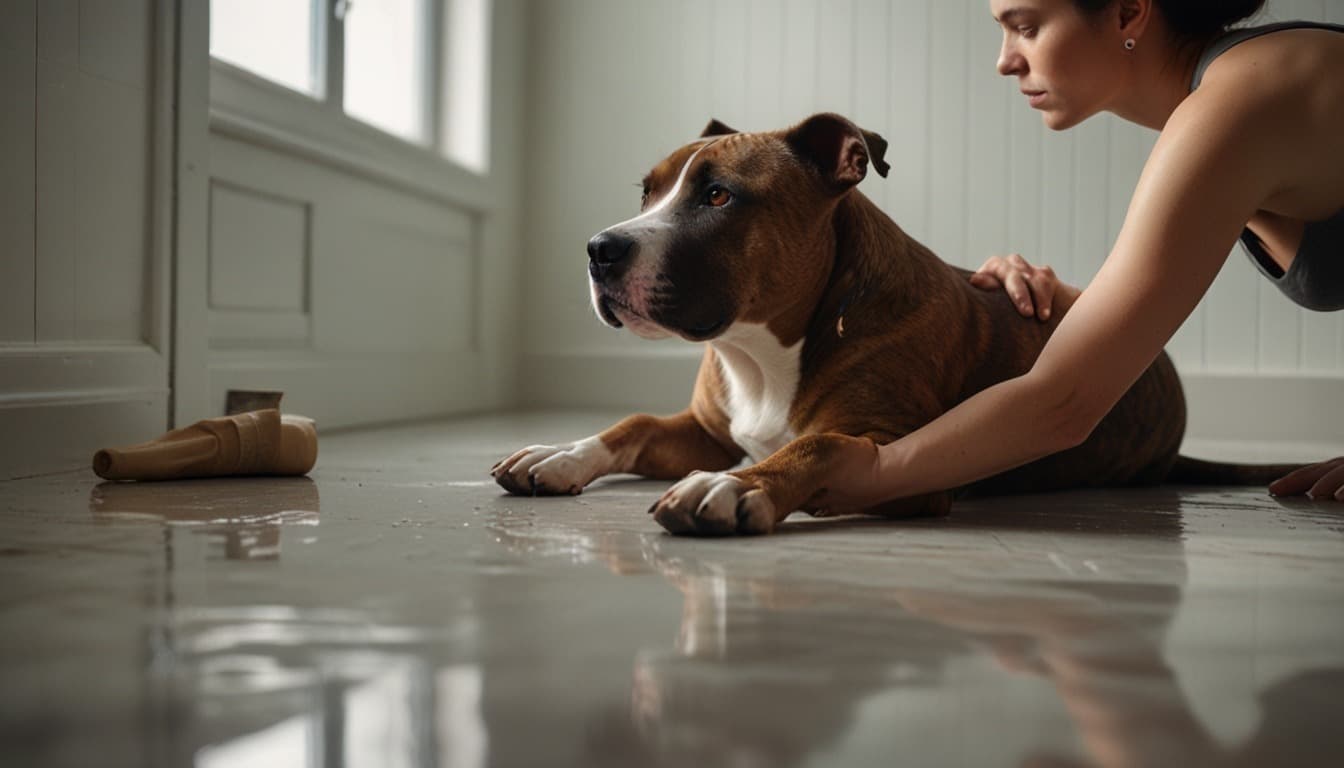
Twenty minutes later I was on the phone with Dr. Nguyen, hollding back tears while Blue — my big block-headed build pit bull — scratched his belly so hard his back leg thumped the floor like a jackhammer. Red welts. Everywhere.
Yeah. I caused that.
If you've got a dog with skin that throws a tantrum at the mere thought of bath time, you already know the guilt. You know the frantic Googling at midnight, the piles of half-used shampoo bottles in the laundry room, the vet visits where they say things like "try this medicated one" and you walk out $87 poorer with a 50/50 chance it'll make things worse. I've been there. A lot. Over 40 fosters, six years at a shelter, three of my own dogs who've cycled through allergies and hot spots and mystery rashes — I've made every damn grooming mistake there's with sensitive skin. This is the stuff I wish someone had told me before I turned my build into a hive-covered wreck.
The Blue Disaster
Blue came to me with skin that was already a mess. The shelter had him on a generic kibble and whatever shampoo they had in bulk — you know the industrial stuff that smells like a hospital floor. He had dry, flaky patcjes on his flanks and behind his ears, and his belly was this angry pink. I thought, I'll fix this. I'll get the nice shampoo, the coconut-oil-enriched, oatmeal-infuesd, gentle-as-a-lullaby stuff that the pet store employee promised would "calm the redness overnight." I spent $24 on a 12-ounce bottle.
Scratch that. I spent $24 to make his skin worse.
What actually happened when I used that 'gentle' shampoo
I bathed him in lukewarm water — I even tested it with my elbow like people do for babies, because I'm that person. I massaged the shampoo in gently, avoided his fce, rinsed it out until the water ran clear. He shook off, I towel-dried him, and then we went outside in the sun. Within ten minutes, the flaky patches were brighter. Within half an hour, those bright patches had spread into raised, hot welts that he couldn't stop scratching. He was miserable. I was horrified.
I called Dr. Nguyen — the vet who has tolerated my panicked voicemails since 2011 — and she asked me to read her the ingredients list. There was aloe vera, oatmeal, chamomile… but also something called methylisothiazolinone, a preservative that's a known skin irritant. "It's in a ton of those 'natural' shampoos," she said, and I could hear the tiredness in her voice. She'd seen this a hundred times. Probably more. "Bring him in if the hives don't settle by morning. And Sarah? Stop using that shampoo."
I stopped. Obviously. But the damage was done, and I spent the next two weeks trying to undo it. That was the moment I realized: most of the stuff marketed for sensitive skin is just marketing.
Stop Believing the 'Hypoallergenic' Label
I'm going to say something that'll make pet store owners hate me. The word "hypoallergenic" on a dog shampoo bottle means almost nothing. There's no regulation around it. It's not like the FDA is sitting there testing every batch of oatmeal shampoo before it hits shelves. Companies can slap that word on anything that doesn't contain the top five allergens they decided to avoid that year, while still packing it full of fragrances and preservatives and detergents that'll light up a dog's skin like a Christmas tree.
Blue's "soothing" shampoo had fragrance. Like, srong fragrance. My bathroom smelled like a spa for three days. A dog with sensitive skin doesn't need a spa — they need a shampoo that does the absolute bare minimum: clean gently, rinse cleanly, and leave nothing behind to start an immune-system riot.
After that disaster, I started reading labels like a paranoid person. Sulfates? Nope. Artificial fragrances? Nope. Phthalates, paarbens, formaldehyde-releasing preservatives? Absolutely nope. I now look for shampoos that have like five ingredients, and if I can't pronounce three of them, I put the bottle back.
The Brush That Didn't Set His Skin on Fire
While Blue's skin was healing, Dr. Nguyen told me to keep him clean without bathing him for at least two weeks. That meant brushing. A lot of brushing. And here's the thing about dogs with sensitive skin: the wrong brush can be just as bad as the wrong shampoo. I learned that the hard way with a previous build, a golden retriever mix named Tessa who had the thinnest, most delicate skin I've ever seen on a dog. One wrong pass with a slicker brush and she'd have scratches that looked like I'd dragged a fork across her side.
For Blue, I had to find something that would remove loose fur and distribute oils without scraping his skin raw. I tried four different brushes over about ten days. Some of them were so bad I'm still annoyed I spent money on them.
The one that lopked gentle but was a torture device
There's a popular silicone curry brush that's supposed to be great for short-coated dogs. It's soft, it's squishy, it has little nubs. I used it on Blue and he tolerated it, but after a few days I noticed his skin looked flakier, not less. The nubs were just pushing dead skin cells around and not actually doing anything productive. It's like exfoliating with a wet sponge — it feels nice but does zero.
The one that worked (and why I almost didn't buy it)
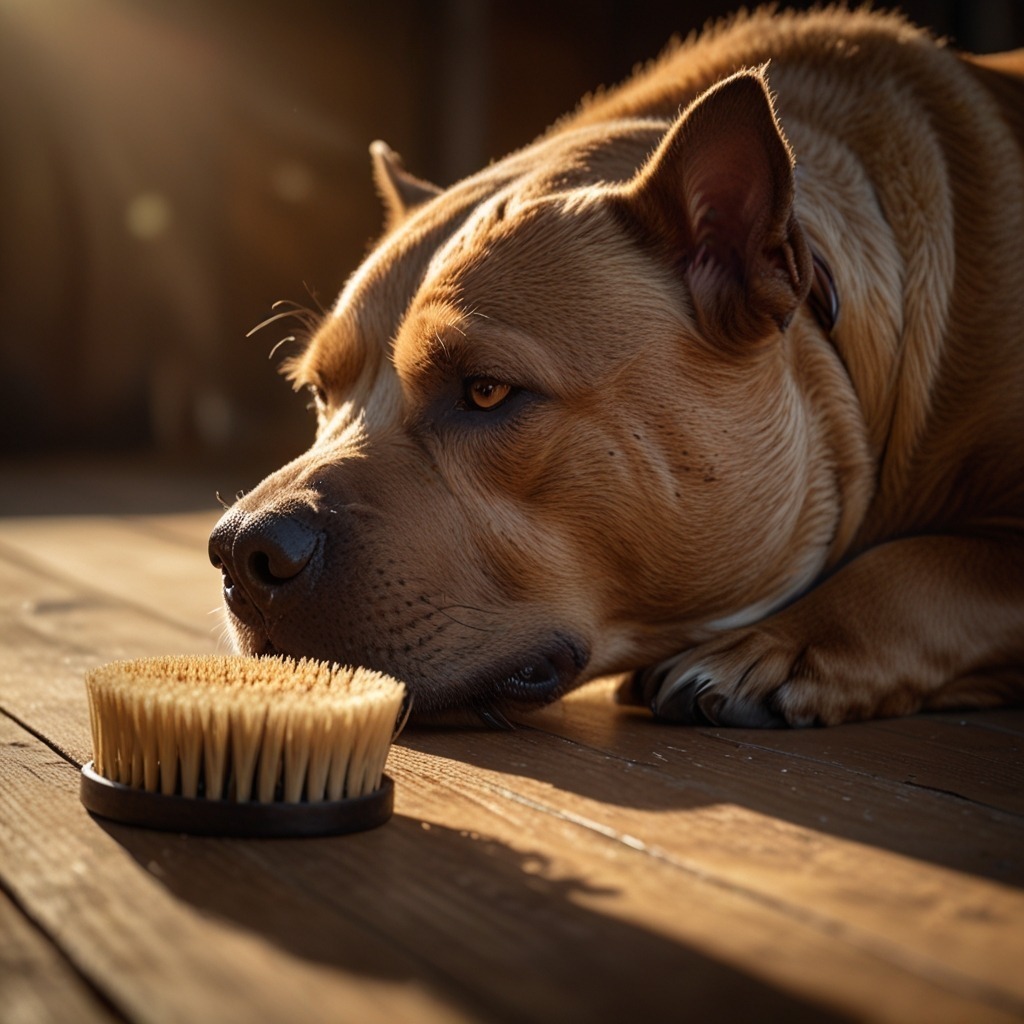
I ended up using a boar bristle brush — the kind that looks like an old-fasshioned hairbrush your grandma might've had. I nearly didn't buy it because it was $18 and I'd already wasted enough money, but it turned out to be the gentlest thing I've ever used on a raw-skinned dog. The bristles are soft enough that they don't scratch, but firm enough to actually move through the coat and pick up loose hair. I'd do short, light strokes in the direction of hair growth, and Blue would lean into it like he was getting a massage. No redness afterward. No flaking. Just a calm dog and a coat that slowly started to look less like a dust storm.
If you're dealing with a dog whose skin can't handle anything aggressive, skip the pin brushes and the slicker brushes for a while. Try the softest boar birstle you can find. It won't solve everything, but it'll keep the coat and skin in decent shape between those very, very rare baths we're about to talk about.
Actually, wait. Let me back up. There's something else that happened during all this that still makes me cringe, and I've to tell you about it because it's exactly the kind of dumb thing people do when they're desperate to fix a skin problem. I'm going to go off on a tangent for a moment. Bear with me.
The Human Conditioner Incident (Don't Ask)
So about six years ago, before I knew anything, I had this build dog — a little terrier mix named Pippin — who had dry, itchy skin. And someone on a Facebook grooup, some well-meaning stranger with a profile picture of a golden retriever in sunglasses, told me that human conditioner could help "moisturize" a dog's skin. Just a little bit, she said. The kind with argan oil, she said. It'll make the coat so shiny.
I was 32, I was dmub, and I did it.
Pippin smelled like a tropical rainforest for about four hours. Then he started shaking his head and rubbing his back against the couch, and by morning he had a greasy, clumpy coat and a rash on his belly that made me want to crawl under the floorboards. I had to bathe him three times with a gentle cleanser just to get the residue off, and his skin was stripped and flaring for a week. Dr. Ngyen didn't even get mad that time — she just sighed and said, "Please stop taking advice from Facebook." I still think about that occasionally when I'm trying to fall asleep.
The point — beyond the obvious fact that I'm an idiot — is that dog skin and human skin aren't the same. Their pH is different. Their skin is thinner. What feels "moisturizing" to you can clog a dog's follicles, trap bacteria, and cause exactly the kind of disaster you were trying to avoid. So the next time someone suggests baby shampoo or conditioner or coconut oil straight from the jar, just… don't. Or do, and then call me, and we'll cry together.
Okay, back to Blue. The brush was a good start, but eventually he did need a real bath. The question was: how often, and with what?
How Often Is Too Often? (And What 'Too Often' Looked Like on My Dog)
For a normal dog, the old rule is "bathe them when they're dirty or stinky" — once a month, maybe once every two motnhs. But a dog with sensitive skin? That schedule can be a fast track to a flare-up. I learned that the hard way with a husky build years ago (I wrote about that whole mess here, and it still makes me shudder). Every time you bathe a dog, you're stripping oils from the skin barrier, even if you're using a "moisturizing" shampoo. For a dog whose skin is already compromised, that's like scrubbing a sunburn.
With Blue, after the hive incident, I waited three weeks before he touched watrr again. And even then, it wasn't a full bath — it was what I'll call a strategic rinse.
What a 'strategic rinse' looks like
I filled a bucket with lukewarm water. No shamoo at all — just water. I used a soft washcloth and gently wiped down the areas that actually needed cleaning: his paws, his belly, his back end. That was it. Two minutes, no soap, and a thorough towel dry. His skin didn't flare. He didn't scratch afterward. He just went back to his bed and fell asleep like nothing happened.
For the next full bath, I waited until his skin had been calm for a solid week — no redness, no flaking — and then I used a shampoo that my vet actually recommended, one that had about four ingredients and none of them were fragrances. I'll talk more about that in a minute. But the key was that I'd stopped bathing him on a human schedule. I was listening to his skin, not the calendar.
The absolute maximum (in my experience)
For most dogs with sensitive skin, I now bathe them no more than once every six to eight weeks. Sometimes less. If they roll in something foul, I spot-clean with a damp cloth or a tiny dab of diluted shampoo on the dirty part only. The rest of the time, I rely on brushing and a healthy diet to keep them clean from the inside out. I know that sounds like something a full Instagram influencer would say, but it's actually true — a dog with a good gut and a strong skin barrier doeesn't get greasy and stinky the same way a dog being fed garbage kibble does. I went through that whole saga with my lab and wrote about the probiotic nightmare here, but the short version is: skin heath starts in the gut. If you're constantly battling dandruff and odors, it might not be a grooming problem at all.
The Water Temperature Thing
I'm embarrassed to admit I didn't think about this for years. I just filled the tub with waater that felt "warm" to my hand. But dog skin is more sensitive to heat than ours, and water that's too warm can strip oils and inflame already-irritated skin. Too cold and the dog tenses up, which makes the whole experience stressful, and stress makes skin worse. It's a cycle.
Now I use lukewarm water — so lukewarm it barely feels like anything on the inside of my wrist. I test it and then make it even slightly cooler. Tepid. That's the word. And I don't run the water directly onto the dog's back because the pressure can be uncomfortable. I use a cup or a detachable showerhead on the gentlest settong, if I've one. Yeah, it's finicky. But my dogs don't flinch anymore, and their skin doesn't look angry afterward. Worth it.
A Rinse I Fouund in My Kitchen That Outperformed a $38 Spray
I've wasted money on anti-itch sprays. Oh, I've wasted so much money. There was one that smelled like cucumber and promised "instant relief" and Blue literally sneezed for 20 minutes after I sprayed it on his back. It wasn't instant relief — it was instant regret, wrapped in a $16 receipt.
Then one afternoon, while I was dumping chamomile tea down the sink (long story short: I bought a giant box of chamomile tea bags because a friend said it would help me sleep, and it gave me weird dreams), I remembered something a shelter volunteer had told me years ago. She said chamomile tea could soothe irritated skin. I figured, what the heck — it's tea. It's been around for thousands of years. If it gives my dog weird dreams, I'll stop.
How I made a chamomile rinse that actually helped
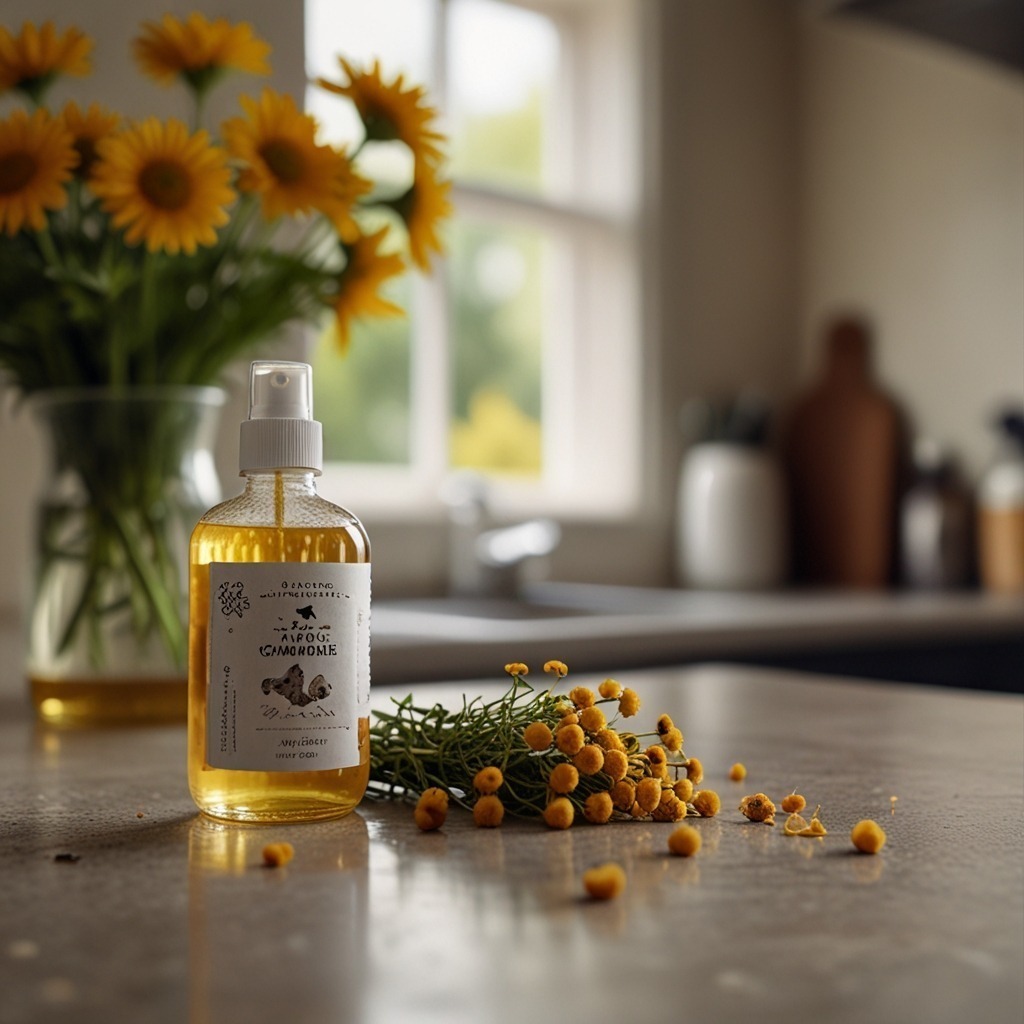
I brewed two chamomile tea bags in about four cups of boiling water, let it steep until it was dark gold and the kitchen smelled like a fancy spa (not the aggressive kind, the calm kind). Then I let it cool completely — like, completely, to room temperature. I poured it into a clean spray bottle and spritzed it onto Blue's flakiest spots after a very gentle bath. I didn't rinse it off. I just let it air-dry while I fed him treats and told him he was the bravest boy.
The next day, the redness had faded. Not gone, but noticeably calmer. I did it again after his next bath, and again, and every time I saw a little improvement. It's not a miracle cure — don't expect it to fix a raging hot spot or a yeast infection — but for mild irritation, dry skin, and general post-bath comfort, it costs about eight cents per rinse and it doesn't make anything worse. Sometimes that's all you need.
Another kitchen thing I tried (and this one was less successful)
Someone told me to try diluted apple cider vinegar as a rinse. The theory is that it balances the skin's pH and has antimicrobial properties. Maybe it dooes. But I must have gotten the ratio wrong because Blue smelled like a salad for two days and his skin looked a little pinker, not less. I'm not saying it doesn't work for some dogs, but if you're going to experiment with vinegar, start ridiculously diluted — like one tablespoon to two cups of water — and patch test a tiny spot first. I didn't do that. Of course I didn't.
I've also heard of people using green tea rinses, colloidal oatmeal soaks (the kind you grind yourself, not the pre-packaged stuff with fragrance), and even plain aloe vera gel from the plant. I keep an aloe plant on my windowsill now, mostly for sunburns, but I've dabbed a little on a dog's irritated elbow before and it seemed to soothe it. Just make sure it's pure aloe — nothing with added alcohol or lidocaine or weird chemicals.
Why My Vet Told Me to Quit Grooming So Much
Several months into this whole saga — after the hives, after the brush trial and error, after the tea rinses and the careful, infrequent baths — Blue's skin was finally, finally looking like a normal dog's. The flaking was gone. The pink belly had faded to a healthy pale. He wasn't scratching himself raw at night. I'd worked so hard, and I was so proud of myself.
Then I went to the vet for a routine checkup, and I told Dr. Nguyen everything: the boar bristle brush, the chamomile rinse, the obsessive label-reading. I expected a gold star. Instead, she looked at Blue, looked at me, and said, "You know, dogs in the wild don't get groomed. Sometimes the best thing you can do for sensitive skin is leave it alone."
I think about that a lot.
I'm not saying never bathe your dog. I'm not saying never brush them. But I'm saying that I spent years treating grooming like a medical intervention — like if I just found the right product, the right routine, I could solve the skin problem entirely. And sometimes, the skin just needs time to heal on its own, without me fussing over it. For Blue, the biggest improvements happened when I did almost nothing except offer good food, clean water, and the occasional gentle brush. The baths were a tiny part of the picture, and they were only helpful once I'd stopped trying to fix everything all at once.
So if you're in the middle of a grooming nightmare with your own dog — if you've bought the expensive shampoos and the anti-itch sprays and the special microfiber towels — maybe give yourself permission to step back. Let the skin rest. Let the dog be a little stinky for a few weeks. It's okay. You're not failing. You're just learning, like I did, that sometimes less really is more.
And if you're still struggling, I can't recommend enough that you talk to a vet who actually listens. Not the kind who just hands you a medicated sjampoo and rushes you out the door. A vet like Dr. Nguyen, who once sat on the floor of her exam room with me and Blue and said, "Let's figure this out together." Because that's the thing with sensitive skin — it's rarely just about the grooming. It's about the diet, the environment, the stress levels, the laundry detergent you use on their bedding. It's a puzzle. And you're not supposed to solve it alone.
The last bottle of "soothing" shampoo I bought is still in my laundry room, half full. I keep it tere to remind myself that expensive labels don't mean squat, and that my dog's skin tells me exactly what it needs if I'm willing to pay attention. Or maybe I just keep it because I'm too cheap to throw away a $24 bottle. Hard to say. Either way, Blue's skin is calm now, and that's all I really wanted.