I Gave a Siberian Husky Three Baths in One Month and His Coat Went Straight to Hell
I gave my foster husky three baths in a month and turned his coat into a dry, flaky disaster. Here's what I wish I'd known about how often — or how rarely — you should actually bathe a Siberian Husky.
I used to think frequent baths were a sign of a committed dog owner. You walk the dog, you pick up the crap, you scrub the dog down when they get stinky. That's the contract. So when I fostered my first Siberian Husky — a big, wolfy-eyed rescue named Kona who'd been surrendered because he 'shed too much' — I did what I always do. I gave him a welcome-home bath with a nice oatmeal shampoo, spent four hours brushing him, and sent him off smelling like a lavender candle. Two weeks later, his coat had the texture of a hay bale and he was shedding in sheets so thick I could practically fold them.
I panicked and bathed him again. Then again. By the end of the month, I had a husky with dry, flaky skin, a coat that wouldn't stop dumping fur, and a look of absolute betrayal every time I so much as glanced at the bathroom door. My vet at the time — Dr. Cheng, who's seen me through some truly stupid decisions — took one look at him and said, 'Sarah, you're stripping his coat. Stop washing him.' I had no idea that was even a thing. So if you're googling 'how often should I bathe my Siberian Husky' because your dog smells like a corn chip and you're not sure whether to reach for the shampoo or just light a candle, I've got the messy, slightly embarrassing answer. Mostly I've got the answer I wish someone had given me before I turned Kona into a flaky disaster.
The Time I Bathed a Husky and Regretted Everything
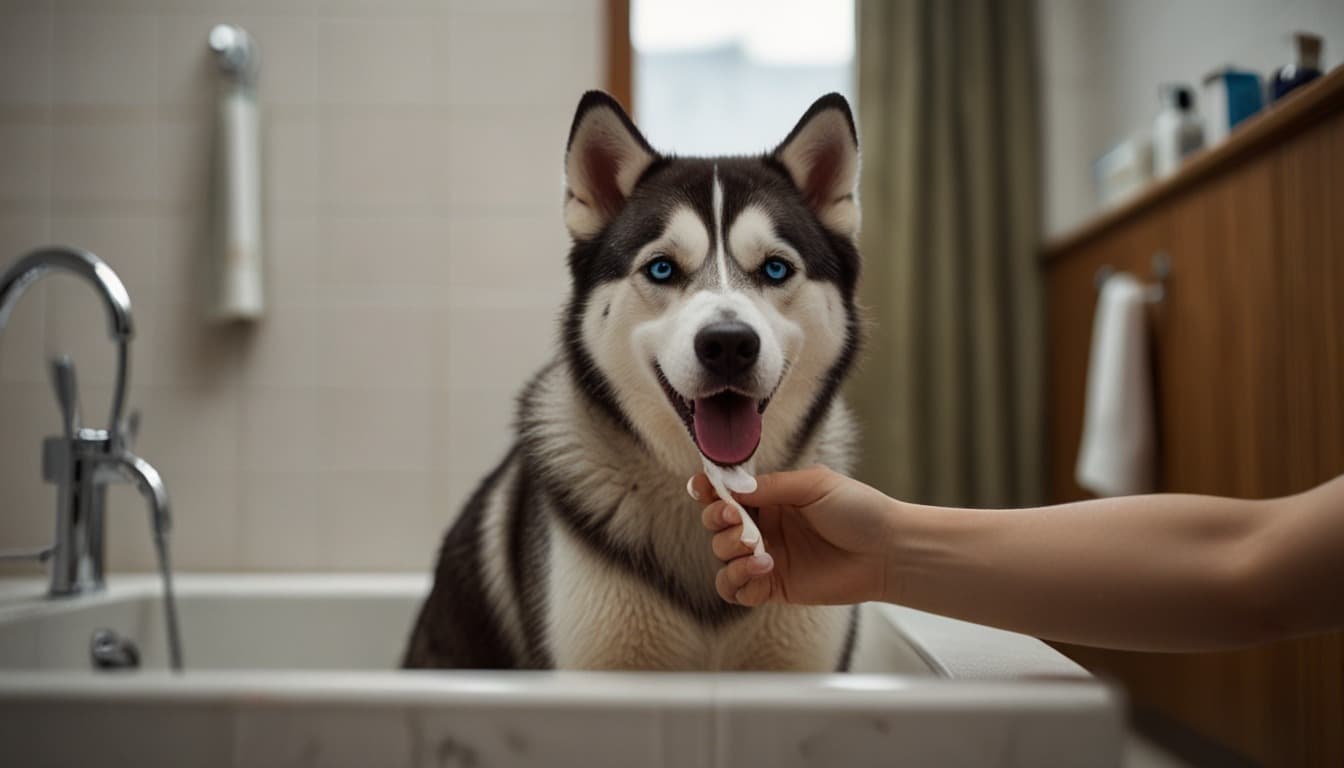
I didn't just bathe Kona. I bathed him with intention. I'd read somewhere that huskies required minimal grooming — something about self-cleaning coats — but I figured that was a suggestion for lazy owners. I was a build parent. I wanted to give this dog a fresh start. So I filled the tub, mixed the shampoo until it was sudsy and promising, and spent 20 minutes working that lather into every layer of his coat. Kona stood there like a statue, not fighting it, which I mistook for cooperation. It was actually resignation.
After the bath, I towel-dried him and let him aird-ry because I didn't own a high-velocity dryer. Big mistake. A husky's undercoat can stay damp for hours if it's not blown out properly, which I didn't know at the time. Kona spent the next six hours damp and miserable, and by the next day his coat had developed this weird wavy texture, like crimped hair gone wrong. He also started itching. Not a little. A lot. He was chewing on his flanks and rubbing against furniture like something was crawling under his skin. I worried about fleas. I even did the white-towel test, which is a whole other indignity for a dog who's already been betrayed by his build mom. No flras. Just a coat that was slowly drying into a cracker.
That bath set off a chain reaction I kept trying to fix with more baths. It's the exact same logic that made me throw a $40 bottle of allergy relief chews in the trash after three days when my dog licked his paws raw — sometimes your attempts to help are the actual problem. I wasn't listening to what the dog's body was telling me. I was listening to my own anxiety about being a 'good' owner.
Why Huskies Don't Need Baths Like Your Lab Does
Here's what I should have knowwn before I ever turned on the faucet: Siberian Huskies aren't Labs. They aren't Goldens. They don't produce the same kind of oils, they don't have the same kind of coat, and they definitely don't have the same relationship with water. A Lab's coat is designed to repel water and dry fast. A husky's double coat — that thick, insulating undercoat and the longer guard hairs on top — is designed to regulate temperature in extremes, block UV rays, and shed debris. The guard hairs are slightly oily. That's not dirt. That's function.
The coat literally cleans itself. I'm not being poetic. Dr. Cheng explained it to me like this: those guard hairs have a cuticle structure that makes dirt and mud slide off once the dog shakes or the coat dries. You've probably seen a muddy husky look pristine an hour later and thought it was a miracle. It's not. It's biology. The dog's coat is working exactly the way it evolved to work in Siberia, where a wet coat could mean death. Washing a husky too often strips the protective oils from those guard hairs, which makes the coat more permeable to moisture and less effective at its job. You're basically un-waterproofing a dog that spent 5,000 years evolving to handle arctic conditions. Smart move, Sarah.
The Double Coat isn't a Lie
I used to think 'double coat' was just breeder jargon for 'this dog sheds a lot.' It's not. It's a physical reality you can see if you ever part a husky's fur and look at what's going on underneath. There's a dense, wooly undercoat close to the skin — soft, almots cottony — and then a layer of longer, coarser guard hairs on top. These two layers work together in ways that are honestly kind of beautiful. The undercoat traps air for insulation. The guard hairs protect the undercoat from moisture and dirt. Between them, they regulate temperature so well that huskies can be comfortable in both freezing snow and summer heat, as long as you don't go shaving them like some kind of lunatic.
Bathing disrupts this whole system. When you soak a husky down to the skin, the undercoat gets waterlogged and ckumps together. If it doesn't dry completely — and I mean completely, to the very roots — you risk hot spots, fungal infections, and a dog who smells worse than before the bath. That's what happened to Kona the first time. I created a tiny swamp ecosystem in his fur and then couldn't figure out why he smelled like a wet towel that had been left in the washing machine for three days.
Here's a tangent: I once spent an entire afternoon at a grooming salon watching a professional try to deshed a husky with some fancy 'ozone treatment.' The dog came out smelling like a swimming pool and dropped a snowdrift of fur in the lobby within 15 minutes. The owner paid $90 for that. I'm not knocking groomers — good ones are worth their weight in gold — but a lot of wht's sold as 'husky grooming' is built on the assumption that bathing is necessary and shedding is something you can conquer. Neither of those things is true.
What Happens When You Over-Bathe a Husky (Ask Me How I Know)
So what actually goes wrong? I'll give you the Kona timeline because I kept absurdly detailed notes — I was an aspiring vet tech once, and old habits die hsrd. Here's what three baths in four weeks did to a perfectly healthy dog.
The itching that wouldn't quit
After bath number two, Kona started scratching behind his ears raw. I thought it was the shampoo. I switched brands — from the oatmeal stuff to a 'hypoallergenic' coconut-based one that smelled like a smoothie. No change. The issue wasn't the shampoo ingredients. It was the fact that I was stripping his skin's natural moisture brarier with every wash. Dogs have a thin acidic layer on their skin called the acid mantle that helps keep bacteria and yeast in check. Overbathing — especially with harsh shampoos, even 'gentle' ones — washes that mantle right off. It takes about 3-4 days to regenerate. If you're bathing every two weeks, the skin never gets a chance to recover. I was essentially dunking Kona in mild detergent and then wondering why his skin was freaking out.
Dandruff like a snow globe
By week three, Kona's coat looked dusty even right after a bath. I'd pet him and little white flakes would scatter. It wasn't lice or mites — the vet checked. It was straight-up dandruff from dry, irritated skin. Huskies already produce less sebum than many other breeds; their skin is naturally a little drier. So when you degrease them on purpose, you get a husky that looks like he's been rolling in powdered sugar. Not cute.
The shedding got worse, not better
This is the one that really messed with my head. I thought baths would loosen the dead undercoat and make it easier to brush out. That's actually true in theory, if you do it right — a thorough bath with a high-velocity dryer can blow out loose fur like a snow machine. But I wasn't doing it right. I was half-drying him with towels, letting damp undercoat clump together, and then brushing knots into the remaining fur. Every bath made the shedding more chaotic because I was matting the undercoat that hadn't fully shed. The fur that would have naturally fallen out was getting trapped in littke tangles, and then it would all break loose at once in these dramatic dumps. My couch looked like a husky had exploded on it.
A Husky Bath Calendar Is a Fantasy
Everyone wants a number. 'Once a month? Once a season?' I get it. I wanted a number too. But the real answer is 'almost never, until something forces your hand.' For most huskies, that's maybe two or three times a year. Total. Some husky owners I know — the ones who actually show their dogs or do competitive sledding — bathe once a year, during the big seasonal shed, and only because they're already going to be blowing out so much fur that a bath speeds the process along. They're not doing it for cleanliness. They're doing it as a shedding mamagement tactic, and they're using high-velocity dryers and proper technique the whole time.
For the average pet husky who doesn't roll in dead things or get skunked, you could go six months or more between baths and the dog would be fine. Better than fine, actually. Kona went from my obsessive bathing schedule to two baths a year, and he smelled better, shed less, and stopped scratching. That wasn't a coincidence.
When a Bath Is Acually Necessary (Put the Shampoo Down Until These Happen)
Okay, so I've spent a thousand words telling you not to bathe your husky. But there are times when you don't have a choice. Here's where I finally leanred to reach for the shampoo, and what I did differently the second time around.
The skunk situation
I haven't personally dealt with a skunked husky — thank god — but I've talked to enough owners to know that the classic hydrogen peroxide/baking soda/dish soap mixture is the only thing that works, and you'll need to bathe the dog thoroughly because skunk oil loves a double coat. The key difference? You're not doing this on a routine schhedule. It's an emergency. You treat it like one, rinse like your life depends on it, and then let the coat recover for months afterwards.
Poop rolling (why do they do this)
Huskies, like many dogs, occasionally decide that a nice fresh pile of something disgusting is the perfect cologne. If your husky comes home smelling like a barn, you're probably going to want to bathe them. Spot-cleaning is ideal — just wash the affected area with dog-safe wipes or a rinse-free shampoo — but sometimes the damage is too widespread. In that case, a targeted bath with warm water and the gentlest shampoo you can find is fine. Once. Don't make a habit of it.
Skin infections or medical reasons
Sometimes a vet prescribes medicated baths for yeast or bacterial infections. That's a whole different category. You follow the vet's instructions, use the medicated shampoo as directed, and accept that the coat might take a temporary hit while the skin heals. This isn't the kind of bathing I'm warning against. That's medicine. I'm talking about the well-intentioned 'he smells like dog' baths that so many of us do out of misplaced guilt.
One thing I learned from my days washing itchy rescue dogs — and I wrote a whole article about which shampoos acrually helped and which made everything worse — is that most commercial dog shampoos are too harsh for dogs with sensitive skin. Huskies often fall into that category. If you must bathe your husky, pick a soap-free, pH-balanced formula and don't fall for anything labeled 'de-shedding shampoo.' Those are almost always gimmicks loaded with silicones that coat the hair and make it look sleek for a few days before everything falls apart. I tried one on a build Lab once and his coat felt like plastic. Never again.
What I Wish I'd Known About Washing a Husky Before I Ruined Kona's Coat
There's a right way to do this, and it's not the way I did it. Here's the honest, ungkamorous protocol that I eventually settled on after way too much trial and error.
Wet the dog down to the skin, or don't bother
A husky's coat is so dense that water often beads on top and never reaches the undercoat. You think you're bathing the dog, but you're just washnig the outer guard hairs. To actually clean a husky, you need to soak them thoroughly. This takes patience and a removable showerhead or a cup. Lukewarm water, never hot. Hot water strips oils faster and makes the dog uncomfortable. Spend 5-10 minutes just getting the coat completely saturated before you even think about shampoo.
Dilute the shampoo like you're feeding a preemie kitten
Straight shampoo on a husky's coat is overkill. Mix it 50/50 with water in a squeeze bottle and apply it that way. You'll get better coverage with less product, and you'll rinse it out faster. Work it in with your fingers, not a brush, because wet undercoat is fragile and prone to brealage. Be gentle around the hindquarters and tail, where matting tends to start.
Rinse until you thonk you're done, then rinse five more minutes
Shampoo residue is the silent killer of a husky's coat. If there's any soap left in the undercoat, it'll attract dirt, irritate the skin, and cause that weird wavy texutre I mentioned. I rinse Kona — now permanently my dog because I failed fostering 101 — for at least 10 minutes after I've stopped seeing suds. I use a high-velocity dryer immediately after the bath, partly to blast out loose fur and partly to confirm there's no hidden soap. If you see any bubbles in the dryer stream, you're not done rinsing.
Dry completely, or sentence your dog to the itch dimension
This is the part I screwed up the first six times. A damp husky is a miserable husky. The undercoat hlods water like a sponge and can stay wet for 24 hours if left to air-dry. In that time, you've got a perfect breeding ground for bacteria and yeast. Use a high-velocity dryer — the kind groomers use, that blasts air without heat — and work it through the coat in sections until the skin is bone dry. It's loud. It's time-consuming. Kona hates it. But it's non-negotiable. If you don't own a dryer, make friends with someone who does, or take your dog to a self-wash station that has one. Towel drying alone isn't enough. I learned that the hard way, and I'm still picking undercoat fluff out of my bath towels three years later.
Why I Stopped Worrying About My Husky's Smell
Let's talk about odor, because that's what drives most people to the shampo bottle. Your husky smells vaguely like a dusty barn. Maybe a little like outside. It's not a strong smell. It's not a Lab-after-a-swim smell. It's just… dog. Neutral. Clean even, in a wild way. That's the natural state of a healthy husky coat, and it took me an embarrassingly long time to accept that what I was trying to fix wasn't actually a problem.
I used to think that dog smell was a sign of poor hygiene. Then I lived with three dogs and a rotating cast of build cats, and I realized that a certain level of 'animal presence' is just part of the deal. You can vacuum twice a day, run air purifiers, and bathe your dogs weekly — which is terrible for their skin — and your house will still smell like a dog lives there. Because a dog lives there. The goal isn't to eliminate scent entirely. It's to maintain a heallthy coat that doesn't add unnecessary funk to the equation.
Kona on his two-baths-a-year schedule smells better than he did when I was washing him monthly. His coat is shinier. The guard hairs lie flat and smooth instead of standing up like he's perpetually startled. He's not producing excess oil to compensate for what I was stripping away. It's a little humbling to realize your dog was regulating himself just fine before you started meddling.
On a related note: I stopped brushing Kona's teeth obsessively too, and his gums are still in great shape. There's a lot of stuff we do to dogs out of love that they actually don't need. Realizing that has saved me a small fortune in grooming products and vet visits.
The $90 Grooming Session That Taugt Me Less Is More
Before I figured all this out, I tired outsourcing the problem. I booked Kona in with a groomer who specialized in double-coated breeds, thinking the pros would have some secret technique I was missing. The groomer was lovely. She spent two hours on him, used all the right tools, and sent him home with a bandana and a coat so poofy he looked like a stuffed animal. I was thrilled. For exactly four days.
Then the undercoat, which had been blown out and fluffed into submission, started its revenge shed. I'm talking tufts of fur comng out in my hand when I just pet him. The bath and blowout had loosened everything that was about to shed anyway, and now it was all coming out at once, with no filter. My house looked like a snowglobe for a week. The $90 didn't buy me a non-shedding dog. It bought me a week of concentrated chaos and a dog who was overstimulated and slept for the next 12 hours from the stress.
I'm not saying never use a groomer. A good groomer can be a lifesaver during coat-blowing season if you don't want to DIY the drying and deshedding. But it's not a maintenance activity. It's a twice-a-year intervention, timed to the big seasonal sheds. If you take your husky to the grooomer every month, you're just recreating my overbathing disaster, but with a professional price tag attached.
Nail trimming is a different story — go read about the time I threw clippers at a wall if you want to know how badly that can go — but for the coat? Hands off as much as humanly possible.
The Shedding Is Going to Happen Anyway
Here's the thing I really wish someone had told me before I adopted a husky: the shedding isn't a hygiene problem. It's not something you can bathe away. It's a biological process. Huskies blow their undercoats twice a year — usually spring and fall — and during those periods, the fur comes out in handfuls. Not a little bit. Handfuls. You can bathe them before, during, aftrr — doesn't matter. The fur is coming out. The only things that actually help are regular brushing (daily during coat-blowing season, weekly otherwise), a good undercoat rake, and a vacuum cleaner with a warranty.
I wasted so much energy trying to preempt shedding with baths. I thought if I could just wash all the loose fur out in one dramatic session, the shedding would stop. That's not how it works. The fur that's ready to shed is attached to follicles that are already releasing. It's going to fall out whether you wash it or not. A bath and blow-dry can accelerate the process in a controlled environment — which is nice if you'd rather have the fur in a drain trap than on your sofa — but it doesn't reduce the total volume. Your husky is still produicng the same amount of dead hair. You're just choosing where it lands.
One Last Thing About That Blow Dryer
If you take exactly one thing from this entire mess of an article, make it this: never air-dry a husky. The damp undercoat is a perti dish. I've seen hot spots blossom on a dog's hip within 24 hours because the owner gave them a bath, towel-dried hastily, and let the dog lounge in the sun to finish drying. The skin stayed damp underneath and the bacteria had a party. It was ugly. It required a vet visit and shaving. On a husky. Which is its own tragedy because that undercoat grows back slowly and weirdly, and you'll be explaining to strangers for months that no, your dog doesn't have mange, you just made a bad choice.
Get the dryer. Borrow it if you've to. But if you're going to wet the dog all the way through, you're committing to drying the dog all the way through. There's no middle ground. That's the husky bargain.
The Day I Cancelled Kona's Grooomer Appointment and Never Booked Another
I had him on a quarterly grooming schedule for a while. Nice lady, very patient with his dramatic sighs. But every time we went, Kona came home exhausted and his coat took a week to settle down. One appointment in late spring, I was running late, the car wouldn't start, and I just… didn't go. I called to cancel and never rescheduled. Kona didn't seem to notice. His coat didn't fall apart. If anything, it got better. Less dandruff. Sleeker texture. He smelled like a dog, which is to say, like nothing offensive at all.
I'm not saying you should neglect your dog. I'm saying that for this breed, the maintenance everyone told you was essential might actually be making things worse. It took me a fried coat, a confused vet visit, and a lot of apologetic ear scratches to figure that out. If I can save you from the same sequence of mistakes, this whole article was worth writing.