I Found the Empty Chocolate Wrapper and My Dog Was Licking His Lips — Here's the Real, No-BS Guide to What Happens Next
I found the empty wrapper at 2 AM. My dog looked way too pleased. Here's everything I learned about chocolate poisoning, from that first panicked vet call to what I keep in my emergency kit today.
The night my dog ate a chocolate bar and I lost my absolute mind
It was 1:47 AM on a Tuesday. I'd been editing an article about the brownie pan incident — the one where my dog Bailey (a 55-pound mutt with zero remorse) polished off a pan of chocolate brownies in the 15 minutes it took me to take a shower. I thought I'd learned my lessson. Teh chocolate was in a high cabinet. The counters were clean. I was vigilant.
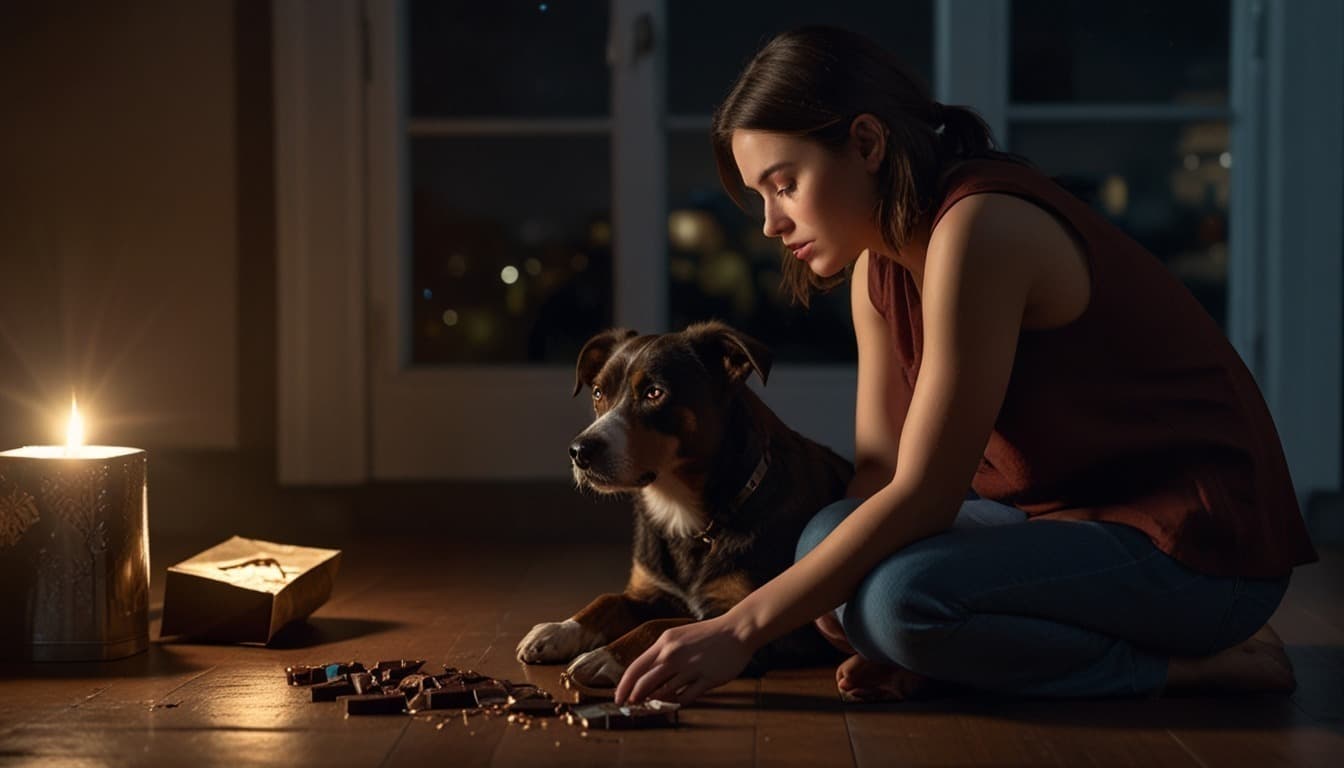
Then I saw the wrapper. A Ghirardelli 72% dark chocolate bar, empty, torn into a dozen tiny foil shreds scattered across the kitchen rug. And Bailey, lying on his bed with his head on his paws, looking up at me with that specific expression — the one that says "I regret nothing but I'm also terrified of your reaction." My heart stopped. Actually stopped for a second. I could feel the panic starting in my chest, that cold electric zing that makes your fingers tingle.
I've fostered over 40 dogs. I've worked in a shelter. I dropped out of vet tech school because the anatomy portion made me queasy, but I still know the basics. Yet in that moment, every rational thing I'd ever learned just… evaporated. I was a puddle of pure adrenaline and worst-case scenarios.
What I actually did in the first five minutes
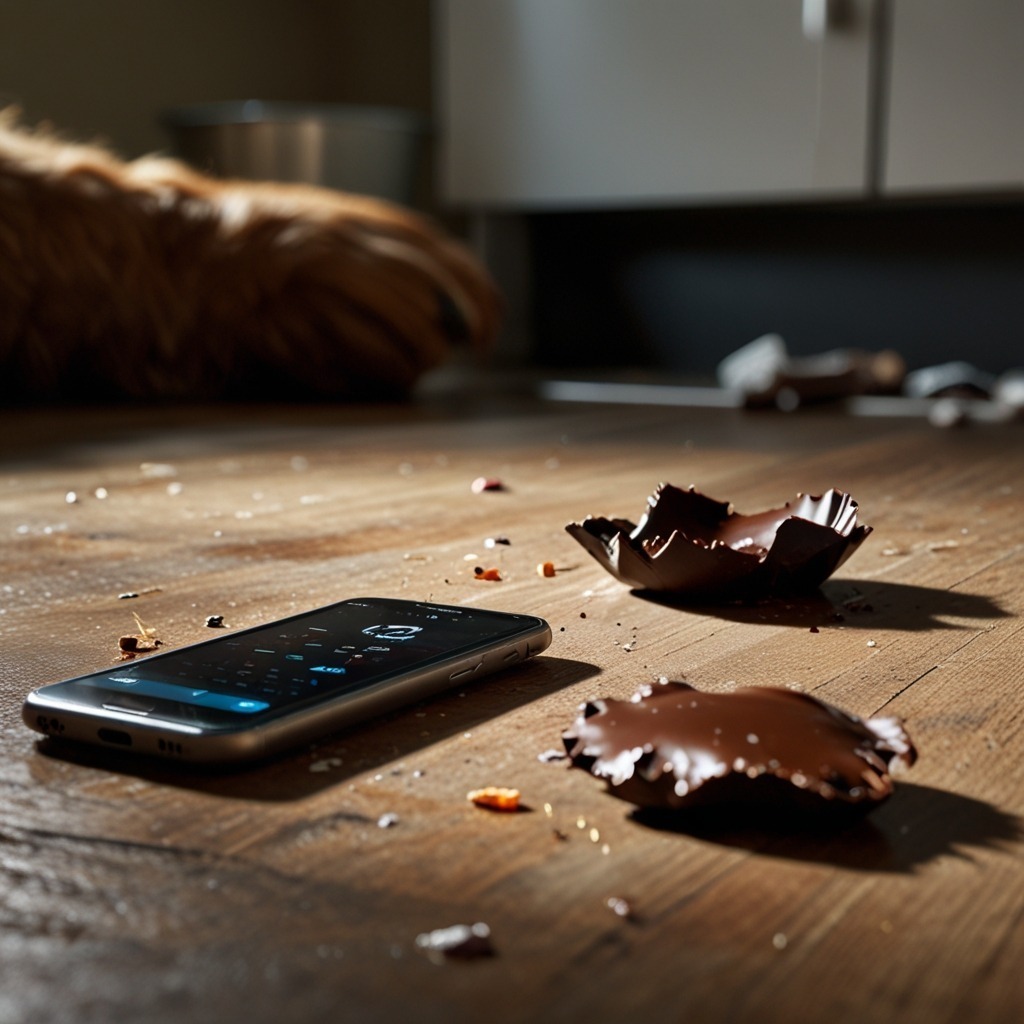
First, I grabbed the wrapper and saw how much was left. Teh bar was 3.5 ounces. I'd eaten two squares earlier — so maybe two-ish ounces were missing. Then I started googling "dog ate dark chocolate calculator" while my phone was at 6% battery, which added a whole extra layer of panic. The emergency vet's number was in my contacts, but my hands were shaking so badly I kept dialing wrong. I ended up opening the Pet Poison Helpline app — $85 charge just to talk to someone, which is its own kind of insult when you're already imagining your dog seizing on the rug.
Bailey's weight was 55 pounds. Two ounces of 72% dark chocolate. I did the math (wrong, at first) and called my regular vet's after-hours line. Dr. Nguyen — shr's been my vet for 11 years, through three dogs and a divorce — answered on the fourth ring with that tired-but-calm voice that I swear can lower my blood pressure by 20 points. She asked me three things: what kind of chocolate, how much, and how long ago. I blurted out everything, including the part where I'd almost dialed 911 by mistake. She told me to bring him in, and that she'd meet me there in 20 minutes.
The vet's voice on speaker at 2 AM
Here's what Dr. Nguyen said while I was frantically searching for my keys: "Sarah, I need you to breathe. Bailey is probably going to be fine, but I want to induce vomiting now. Dark chocolate is bad news, and the sooner we get it out, the less chance of serious issues. don't try anything at home — no peroxide, no salt, nothing — just get in the car." That "don't try anything" part? That's crucial, and I'll get to why later.
The drive took 18 minutes. Bailey sat in the passenger sat, tail wagging occasionally, completely oblivious to the fact that he'd just ingested enough theobromine to make a smaller dog very, very sick. I kept one hand on the wheel and the other on his chest, checking his heart rate by feel like some kind of lunatic. He was fine. Annoying steady rhythm, which I took as a good sign.
So what the heck is actually in chocolate that's so dangerous?
You've probably heard that chocolate is toxic to dogs because of something called theobromine. And that's right, but also there's caffeine in there too, which makes everything worse. Dogs metabolize both incredibly slowly — what would give you a mild buzz can sit in their system for hours and hours, building up to a toxic level. Theobromine is the big one, though. It's in the same family as caffeine but dogs just can't break it down efficiently. Their liver is like, "what's this molecule? I'm gonna just let it hang out and cause chaos."
The result? It overstimulates their central nervous system and heart. They get jittery, their heart rate shoots up, they might vomt or have diarrhea (the body's way of trying to get rid of it, honestly), and in severe cases, they can seize, go into arrhythmias, or worse. The scary thing is that symptoms might not show up for 6 to 12 hours, so you can't just assume your dog is fine because they're acting normal right now. That's what makes chocolate poisoning so sneaky — and why waiting to see is a terrible idea.
I've had a few fosters who got into chocolate over the years, and there's this weird thing where they act completely normal for hours and then suddenly start pacing and panting like they've run a marathon at midnight. If you've ever seen a dog with a heart rate of 200, you don't forget it. It's not something you want to witness in your living room at 3 AM.
Baker's chocolate: the worst-case scenario
When I worked at the shelter, we'd sometimes get calls about dogs eating baking chocolate. That stuff is the most concentrated form you can buy — one square of unsweetened baker's chocolate can contain as much theobromine as an entire milk chocolate bar. Same with cocoa powwder. I had a build once, a 15-pound terrier, who licked a bowl of brownie batter (the raw dough, which itself is a whole other issue with the eggs) and ended up with tremors within four hours. We got him to the vet, and he pulled through, but the vet tech told me it was touch-and-go for a bit. The lesson stuck: if you bake with chocolate, treat teh bowl, the spoon, and every inch of counter like a biohazard zone.
Milk chocolate vs. dark chocolate
Milk chocolate is the least dangerous per ounce, but that doesn't mean it's ssfe. I've seen people say things like "Oh, my dog ate a Hershey's bar and he's fine." Their dog might have been fine, but that's because the dose matters more than the type. You eat a whole bag of milk chocolate chips and your 80-pound Lab might get diarrhea and that's it. But feed half a bar of 85% dark chocolate to a 20-pound dachshund? That's an emergency. The higher the cocoa percentage, the more theobromine. Dark chocolate, semisweet, and especially baking chocolate are the ones that keep vets up at night.
A quick tangent — I once had a build fail (that's when you adopt your own build) named Miso, a cat who was insanely food-motivated. She knocked a bag of chocolate chips off the top shelf, ate maybe ten chips, and spent the next six hours projectile vomiting on my laptop. Cats are even more sensitive to theobromine than dogs, so the same rules apply, but nobody seems to panic about cats and chocolate. Anyway, that's a story for another post. Back to dogs.
Just a quick tanngent — my build puppy and the Halloween candy nightmare
Last October, I was fostering a litter of four puppies. One of them — a tiny beagle mix with the brain of a potato and the nose of a bloodhound — got into a trick-or-treat bag. He ate two mini Snickers, three mini Milky Ways, and a whole roll of Smarties (which, thankfully, is mostly sugar). The chocolate was milk chocolate, but the sheer volume plus the sugar and wrappers meant we spent the night at the emergency vet. $610 later, all he needed was fluids and a lot of activated charcoal. The vet told me, "At least it wasn't dark chocolate." I'll never forget that. So if you've got Halloween candy lying around — just throw it in a locked safe. Or don't have dogs. One or the other.
That same puppy, by the way, later ate a patch of grass and threw up on my couch, which I wrote about over on that expensive, embarrassing grass-eating post. Some dogs just have a death wish, I swear.
How much chocolate is too much? The math that calmed me down (a little)
After that dark chocolate incident, I sat down and actually learned the numbers. It's not complicated, but your brain won't work when you're panicking, so I keep a chart on my phone now. The toxic dose of thebromine for dogs is roughly 100-200 mg per kilogram of body weight. That's a range because some dogs are more sensitive than others. For mild signs, you might see symptoms at around 20 mg/kg. For severe, life-threatening issues, it's closer to 40-50 mg/kg. But vets usually start worrying at 20 mg/kg — especially with dark or baking chocolate.
The simple weight chart I keep in my phone
Here's the cheat-sheet I reference when someone messages me at 10 PM with "my dog ate half a chocolate bar." It's rough estimates based on common chocolate types:
- Milk chocolate: about 60 mg theobromine per ounce. So a 10-pound dog would need to eat roughly 1-1.5 ounces of milk chocolate to hit a concerning level (around 20 mg/kg). That's about 2-3 Hershey's Kisses.
- Semisweet chocolate chips: about 150 mg per ounce. A 20-pound dog eatng half a cup of chips (maybe 4 ounces) could be in serious trouble.
- Dark chocolate (70-85% cocoa): around 300-400 mg per ounce. That 55-pound dog of mine with 2 ounces? That was 600-800 mg, which was around 25-30 mg/kg — definitely vet territory.
- Baker's chocolate (unsweetened): 400-450 mg per ouncce. One square (1 ounce) could kill a small dog. Not exaggerating.
Obviously, these are averages. I'm not a vet. I'm just a person who's had to do this math in the dark while crying. Please double-check with a poison control hotline or your vet because cocoa percentages vary, and some "chocolate" products have cocoa powdr or chocolate liquor that mess with the calculations. Can't hurt to overreact.
Signs to watch for before you drive to the emergency vet
Symptoms can sneak up. In the early hours, you might notice vomiting, diarrhea, restlessness, or excessive panting. If you see those, the train's already left the station and you need to move fast. As it progresses, you'll get increased heart rate, muscle tremors, and in bad cases, seizures or collapse. Bailey never got past the first stage because we induced vomiting within two hours. That's the golden window: if your dog ate chocolate less than 2 hours ago, inducing vomiting can prevent most of the toxin from being absorbed. After 4 hours, it's already in the bloodstream, so vomiting won't help much, and you're looking at supportive care like activated charcoal, IV fluids, and heart monitoring.
I remember reading a post on my dog shaking at 2 AM — different situation, but the feeling is the same. You see your dog's muscles twitch and everything in you goes cold. Don't wait for the shaking to start. If you suspect chocolate ingestion, call your vet immediately, even if your dog looks fine.
The one tjing you should absolutely NOT do at home
I've said it once, but it bears repeating: don't, under any circumstances, try to make your dog vomit unless a vet or poison control tells you to. I know, I know — you'll read about using 3% hydrogen peroxide, 1 teaspoon per 10 pounds, and it's true that vets sometimes use it. But getting the dose wrong can cause aspiration pneumonia or burns in the esophagus. Plus, some dogs shouldn't vomit — if they're already showing neurological signs, they could inhale the voimt. Just don't be a hero at home. Let the vet decide. The $85 for the poison control call is worth it.
What the vet did (and why the bill was $340)
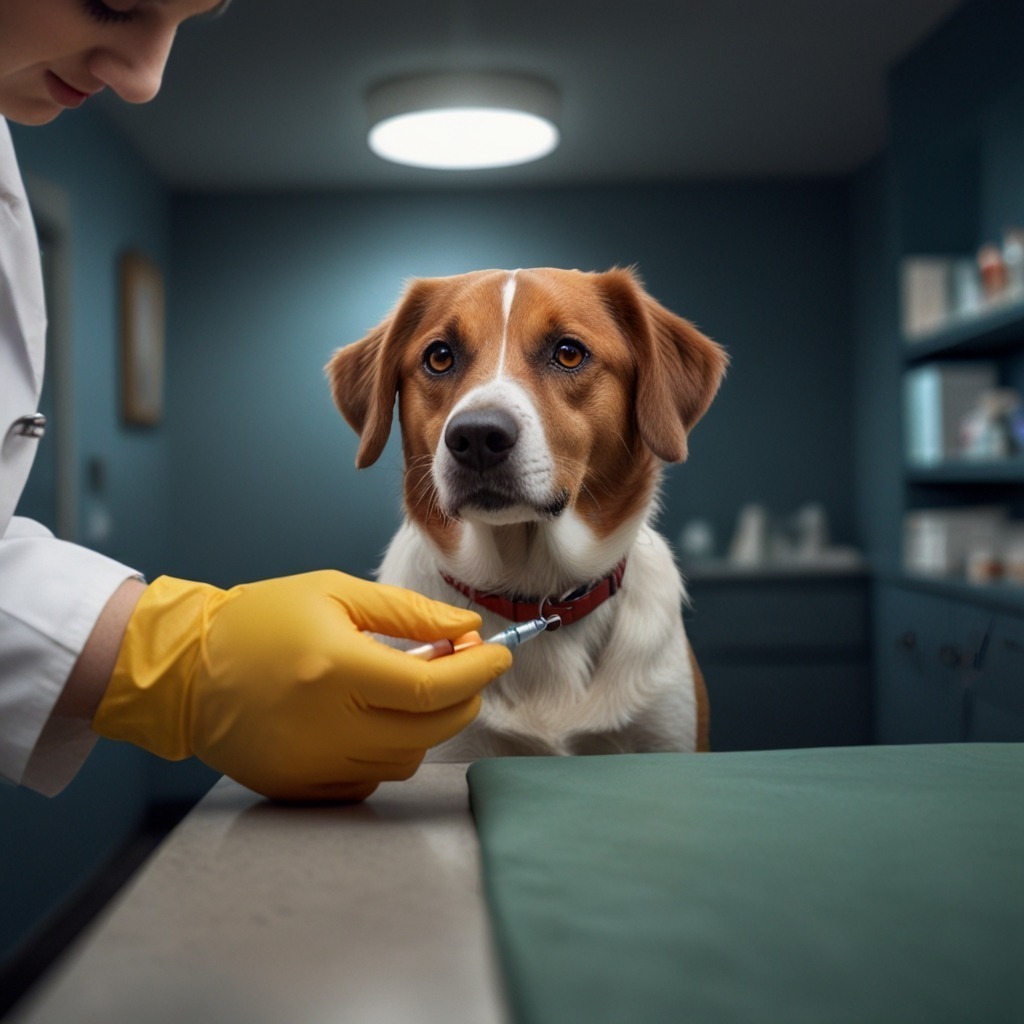
When I got to the clinic, Dr. Nguyen already had a syringe of apomorphine ready. That's the drug vets use to indduce vomiting, and it works within minutes. She injected it into Bailey's inner eyelid (the conjunctiva, if you want to be fancy), and within about 90 seconds he was heaving. I held a kidney dish under his mouth while he emptied his stomach. It was gross and undignified and I nearly gagged, but there it was: a goopy pile of half-digested kibble and unmistakable dark brown chocolate. The relief was so immediate I almost laughed.
The activated charcoal situation
After that, she gave him a slurry of activated charcoal mixed with water and some kind of sweetener to make it palatable. That black junk binds to any remaining theobromine in the gut and keeps it from being absorbed. Bailey looked like he'd been snacking on a campfire log, black drool hanging from his jowls. I had to keep him in the bathroom for a few hours because the charcoal gets everywhere. But it works.
IV fluids and the overnight stay
Because dark chocolate is so potent, Dr. Nguyen recommended keeping him on fluids overnight to flush everything out faster and keep his kidneys happy. That was the bulk of the cost — the IV catheter, the fluids, the monitoring. Total bill: $343. I've paid more for less, honestly. Last year I spent that much on probiotics that turned out to be expensive dust, so a life-saving intervention felt like a bargain.
That time I accidentally called poison conttrol instead of the vet (and why it's not a bad idea)
About four years ago, one of my build dogs (a neurotic cattle dog mix named Rooster) ate half a bag of semi-sweet chocolate chips. I was so flustered that I called the ASPCA Animal Poison Control Center instead of my local emergency vet. The phone tree took forever, and when I finally got a human, they asked for my credit card info before any advice. $65 just to get a case number. I was furious in the moment, but honestly, that case number got me direct access to a board-certified veterinary toxicologist who told me exactly what to do, and they even followed up with my vet later. So now I just keep that numbre in my phone. It's: (888) 426-4435. Save it. Seriously.
The toxicologist walked me through the math, confirmed that Rooster was in the "moderate risk" zone, and told me to go to the vet. And because I had a case number, when I got there, the vet could call the poison control line and get a consultation without me paying again. It's a weird system, but it works when you're panicking and can't remember if 4 ounces of chocolate chips is a lot for a 35-pound dog (it's).
My emergency kit: the stuff I keep under my sink now
After three chocolate incidents and countless otjer "what did you eat" moments, I've put together a small emergency kit. It's not fancy, but it saves time and panic.
3% hydrogen peroxide… but don't use it unless told
I keep a fresh, unopened bottle of 3% hydrogen peroxide in the cabinet. The standard dose is 1 teaspoon per 10 pounds of body weight, given once. But I've never used it. I only have it because if I'm on the phone with poison control and they tell me to use it, I've it ready. The key is freshness — hydrogen peroxide loses potency over time, so replace it every 6-12 months. And if you ever use it, do it outside, because the vomiting will be violent and sudden. But again: only under explicit instruciton from a vet or toxicologist. I can't emphasize that enough.
The pet poison hotline number I taped to the fridge
I wrote it on a neon pink sticky note and stuck it next to the fridge handle, where I'll see it even at 2 AM. It reads: "ASPCA Poison Control: (888) 426-4435. Or Pet Poison Helpline: (855) 764-7661." Both charge, but they're 24/7 and have experts who deal with chocolate, grapes, xylitol, plants, everything. If you're debating whether to drive to the ER, they can often tell you if you even need to go, which might save you a $200 exam fee for nothing.

The calculator app I now pull up immediately
This is maybe the dorkiest thing, but I made a shortcut on my phone that opens a theobromine calculator website. There are a few free ones; I use the one from the Merck Veterinary Manual because it's straightforward. You plug in your dog's weight, the type of chocolate, and the amount eaten, and it spits out the mg/kg dose and a risk level. It's not a substitute for a vet, but it gives me enough info to sound semi-coherent when I call the clinic.
Wait — what about cocoa mulch?
Gardeners, listen up. Cocoa bean shell mulch smells like heaven (read: chocolate) to dogs, and it's just as toxic. I've known two different people whose dogs ate cocoa mulch and ended up in the ICU. The theobromine content in fresh mulch can be high, and dogs will gnaw it if they get the chance. If you use it in your garden, either fence it off completely or switch to pine bark. I know it's expensive and your tomatoes love it, but your dog's life matters more than a plant. My neighbor's goldendoodle spent three days on IV fluids because he dug into a fresh mulch bed. Not worth it.
Three chocolate incidents later, I'm still learning (but here's what I know for sure)
Bailey came home the next morning, still smelling faintly of charcoal, and immediately went to his bed and slept for six hours. I sat on the floor next to him, watching his chest rise and fall, and I realized something that I forget every single time: most dogs survive chocolate ingestion when you act fast. The panic clouds your judgment, but the numbers are on your side if you don't wait. My vet told me later that in 20 years of practice, she's only lost one dog to chocolate, and that was a chihuahua who ate an entire bag of baker's chocolate and didm't get treatment until he was already seizing. Those are the worst-case scenarios, and they're heart-breaking, but they're also preventable.
I still keep chocolate in my house because I'm human and I need it. But I treat it like a chemical weapon. It goes in a sealed container on the top shelf of the pantry, behind the oatmeal. I never leave a bar on the coffee table, not even for five minutes. And I've trained myself — through sheer repetition of terror — to do the math first, then panic. Panic is okay. Painc makes you move. Just don't let it freeze you into googling while your dog's heart rate climbs.
If your dog ate chocolate right now and you're reading this, stop. Go to your vet or call poison control. This article can wait. I'll still be here when you're back, ready to tell you about the time my build kitten ate a dryer sheet and cost me $700. But that's another panic attack for another day.