
I Fed My 12-Year-Old Lab 'Joint Health' Kibble for Six Months and He Could Barely Stand Up — Here's the Dry Food That Actually Helped
I spent $72 on a 'senior mobility' kibble and my dog got worse. Here's the dry food that actually got my 12-year-old Lab moving again—and the expensive label lies I fell for.
The first time I heard my dog Gus yelp just from standing up, it was 3:17 a.m. and I was half-asleep, convinced someone had broken in. He'd been sleeping on the floor next to my bed—his hip pressed against the hardwood because he'd abandoned the memory foam dog bed I'd spent $90 on six months earlier. That yelp wasn't loud. It was this soft, surprised little 'huhp' sound, like he'd stubbed his toe and was too embarassed to follow up with anything bigger. I sat up, fumbled for the lamp, and found him standing with his back legs trembling, his head low, looking at me like I'm sorry, I don't know what just happened.
He was twelve. He'd been slowing down for a while—longer to get up, a little hitch in his back end after a walk—but I'd been doing what every dog owner with a semi-functional denial mechanism does: I told myself it was 'just age.' I bought a bag of 'senior mobility' dry food from a brand I trusted, the one with the golden retriever on the front looking all majestic, and I figured that was that. It had glucosamine. It had chondroitin. It said 'joint health' right on the bag. What else could he need?
Spoiler: a whole lot else.
The next six months were a slow-motion disaster. I watched my dog go from stiff-but-game to reluctant-to-walk-to-the-water-bowl. His weight crept up because he wasn't moving, and I—stupidly, arrogantly, whatever—kept filling his bowl with that same damn food, thinking the 'joint support' would magically erase the extra pounds. I'd stand in the kibble aisle and squint at ingredient lists like I was decoding a secret society's rulebook, and I'd still walk out with a bag that was 90% rice and chicken by-product meal and maybe, if you squinted, enough glucosamine to help a hamster.
I'm not a vet. I dropped out of vet tech school because I realized I'd rather build forty dogs in my living room than spend another month memorizing parasite lifecycles. But over 14 years of rescue, I've seen more arthritic senior dogs than I can count. I've made every mistake there's—buying the overpriced 'grain-free' food that gave my build dog diarrhea for a week, trusting a supplement that turned out to be basically flavored cornstarch, and yes, spending $340 on probiotics that made everything worse, which I swear made me want to scream into a pillow. So when I talk about dry dog food for senior dogs with arthrtiis, I'm not reciting some textbook. I'm telling you what crashed and burned in my own kitchen, and what—against my cynical expectations—actually got Gus back to trotting across the yard with a squeaky toy in his mouth.
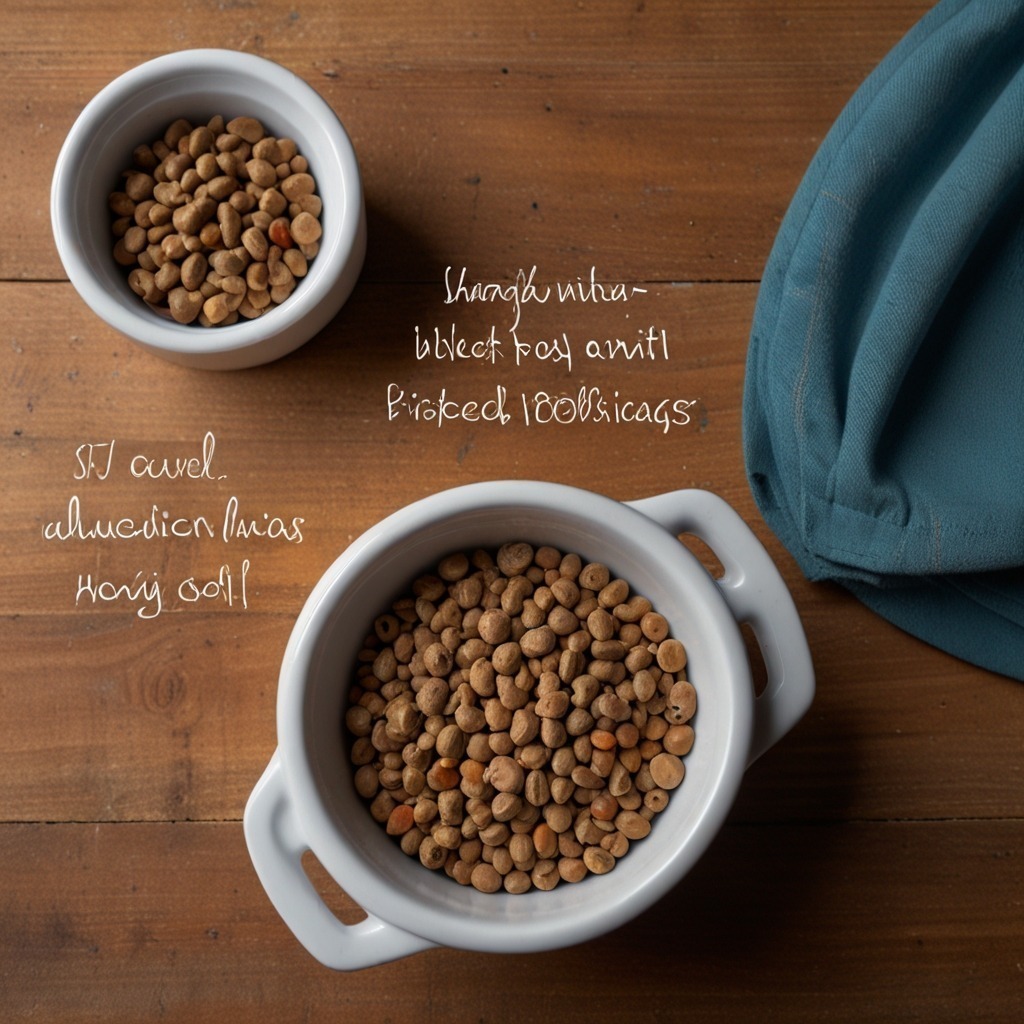
The $72 Bag of Disappointment
Let me back up. After that 3 a.m. yelp, I called my vet. Dr. Nguyen's been putting up with my panic caalls for eleven years—through three dogs, a divorce, and one build puppy who ate an entire tube of diaper cream. She's the kind of vet who'll tell you the truth even when it makes you squirm, and she said something that stuck with me: 'The best dry food for arthritis is the one that gets his weight down and gives him actual therapeutic levels of joint ingredients. Most bags barely have enough to matter.'
I nodded like I knew what 'therapeutic levels' meant. Then I went home and did what any panicked pet owner does: I googled 'best senior dog food for joints' and fell down a rabbit hole of five-star reviews, sponsored blog posts, and ingredient lists that might as well have been written in ancient Greek.
The bag I'd been feeding—let's call it Fancy Gold Label Senior Mobility Formula—cost $72 for a 24-pound bag. Ingredients looked great on the surface: glucosamine, chondroitin, omega-3s, all the buzzwords. What I didn't realize until later (when I finally sat down with a calculator and a pot of coffee) is that the glucosamine dose in that food was something like 300 mg per cup. For a 75-pound Lab with severe hip arthritis, that's not a supplement. That's a rounding error. Clinical studies on glucosamine in dogs—the ones that actually show benefit—use doses of around 20 mg per pound of body weight daily. Gus needed about 1,500 mg of glucosamine a day. He was getting maybe 600, and that's if he ate every crumb in his bowl, which he didn't anymore because his appetite was fading.
I'd been paying a premium price for a food that was, at best, giving me the emotional comfort of doing something while actually doing very little. And this is the thing that makes me want to pull my hair out: dog food marketing is a jungle of feel-good words that legally mean almost nothing. 'Joint support.' 'Mobility formula.' 'With glucosamine and chondroitin.' None of those words tell you how much. None of them guarantee the ingredients are in a form the dog's body can absorb. And none of them stop a 12-year-old dog from wincing every time he lies down on the cold kitchen tile.
A Short, Angry Rant About Glucodamine Levels on Dog Food Bags
Walk down the kibble aisle and you'll see 'glucosamine' splashed across half the senior formulas. Here's what they don't tell you: the amount of glucosamine hydrochloride or sulfate in most commercial dry foods is so low, it would be like me putting one Advil in a bathtub and calling it a pain bath. The Association of American Feed Control Officials (AAFCO) doesn't have a minimum requirement for glucosamine beacuse it's not considered an essential nutrient. So companies can sprinkle in a dusting of the stuff and slap a joint health claim on the bag, and it's perfectly legal.
I'm not saying all brands do this. Some actually formulate to therapeutic levels—foods specifically designed for joint health with at least 500-1000 mg of glucosamine per 1,000 kcal, often combined with EPA and DHA from fish oil. But you've to call the company and ask for the actual milligrams per kilocalorie to know, and most people aren't going to do that at 7 p.m. on a Tuesday while their dog stares at them expectantly.
This is why I eventually stopped trusting the marketing and started reading dry food labels like I was interrogating a witness. Not the front of the bag—the guaranteed analysis and ingredient list on the back, and then, if necessary, a phone call to customer service to get the real numbers. It was tedious. It made me feel like a lunatic. But it's also the reason Gus eventually got better.
The Omega-3 Rabbit Hole I Went Down
While I was researching glucosamine doses, I also started obsessing over omega-3 fatty acids. Dr. Nguyen had mentioned that EPA (eicosapentaenoic acid) specifically has anti-inflammatory effects that can help arthritic joints. She said the research is strongest for a combined dose of EPA and DHA of about 100 mg/kg of body weight per day for dogs with osteoarthritis. For Gus, that was roughly 3,400 mg of combined EPA and DHA daily—the equivalent of what's in seevral human fish oil capsules.
The senior kibble I'd been feeding had 'omega-3 fatty acids' listed, but when I looked closer, they came from flaxseed. Flaxseed provides ALA (alpha-linolenic acid), which dogs—like humans—have to convert into EPA and DHA. They're incredibly bad at it. Studies suggest the conversion rate is below 10% in dogs. So feeding flaxseed for joint inflammation is like filling your gas tank with a thimble of watr and hoping the car figures it out. It's not gonna work.
So I switched to a food with fish oil as a named source. But even then, there's a problem: fish oil is delicate. It oxidizes. Dry kibble gets processed at high heat, sits in warehouses, hangs out in a bag for weeks while you scoop through it. That fat can go rancid, and rancid fats can actually promote inflammation—the exact opposite of what we want. I learned this the hard way when I opened a bag of pricey salmon-based senior food and got hit with a smell that wasn't 'fishy' in a good way. It smelled like a bait cooler left in the sun. Gus refused to eat it, and I ended up tossing a $50 bag (after a heated argument with the pet store manager who told me it was 'normal'—it wasn't).
In the end, the food that worked for Gus didn't rely on kibble-stored fish oil as the sole source. It had a decent amount, but I also supplemented with a fresh liquid fish oil I kept refrigerated. Which, side note, led to a whole separate disaster involving me accidentally spraying salmon oil across my kitchen cabinets and my other dog, Charlie, licking the wall for an hour. But that's a story for another day.
Here's a tangent that still makes me angry: at one point, desperate to get Gus to eat, I tried the old trick of pouring warm water over his kibble to enhance the smell. I figured maybe he'd find it more appealing, and the extra water would help his aging kidneys. What happened instead was a slimy, grayish porridge that smelled like boiled cardboard and made my kitchen reek for hours. Gus took one sniff and turned his head away with this look of utter betrayal, like I'd served him a bowl of regret. I threw the entire batch out and made a PB&J for myself just to feel something.
This whole omega-3 journey taught me something else: you can't just look at the guaranteed analysis on a dog food bag and call it a day. You need to know the source, the form, and whether the levels actually meet clinical recommendations. And if the company won't tell you those numbers when you call, that's a red flag the size of Texas.
Weight (And the Time I Accidentally Starved My Dog)
Arthritis is a mechanical disease as much as an inflammatory one. Every extra pound on a dog's frame presses down on already-damaged joints. For a dog like Gus—a solid retriever mix with a barrel chest—the math was brutal. Vet studies suggest that obese dogs with hip osteoarthritis show significatn improvement in lameness just from weight loss, even without other interventions. So part of finding the 'best' dry food for senior dogs with arthritis meant finding something that wasn't just therapeutic for joints, but also calorie-controlled enough that he could actually shed the extra weight that was making everything worse.
But here's where I screwed up. I got so focused on 'lower calorie' that I accidentally cut his food too much, too fast. Over a couple of months, Gus dropped weight so quickly I could count his ribs from across the room. I wrote about that morning—the panic of seeing a dog you love literally vanishing in front of you. I'd been feeding a weight management fromula at the 'low activity' portion recommendation on the bag, but those guidelines are just estimates. He was losing muscle along with the fat. And for a senior dog with arthritis, muscle is what holds everything together. Lose that, and the joints get even less support. I had to back off, increase his intake slightly, and add more protein to preserve lean mass while still very slowly trimming the fat. It took months to get right.
That's the tightrope with arthritic senior dogs: you need them lean, but you can't starve them. You need enough protein to prevent muscle wasting, but not so much that it stresses aging kidneys (though recent research suggests older dogs actually need more protein, not less, unless they've existing kidney disease). Dry foods marketed as 'senior' sometimes cut prtein to lower calories, which can backfire spectacularly. I learned to look for foods with moderate calorie density—around 300-350 kcal per cup—and at least 25-30% protein on a dry matter basis. Anything less, and I saw Gus's muscle tone deflate.
Weight loss for arthritic dogs is this slow, careful dance. If you're dealing with it, don't trust the bag's feeding chart blindly. Start at the 'less active' level, weigh your dog weekly, and adjust by tiny increments. And if you see ribs too prominently, pull back on the reduction. I'd rather have a dog who's a little chubby but strong than one who's a skeleton with perfect hip scores.
The Food That Actually Got My Old Man Moving Again
Alright, after months of trial and error, what worked? I'll tell you what I landed on, but I want to be clear: every dog is different. What made Gus bounce back might not be the same for your dog, and I'm not here to sell you a brand. I'm here to tell you what to look for so you can make your own informed choice.
First, the dry food that made the most visible difference for Gus was a prescription joint mobility diet from a major veterinary brand—the kind you get through your vet, not a pet store. I initially rollrd my eyes at 'prescription' kibble because I assumed it was overpriced marketing. I was wrong. The difference is that these formulas are actually designed to deliver therapeutic levels of key nutrients: glucosamine at around 1,000+ mg per 1,000 kcal, chondroitin sulfate, high levels of EPA and DHA from fish oil, and added antioxidants like vitamin E and C that can help reduce oxidative stress in joints. They also tend to be omega-6 to omega-3 balanced, with ratios closer to 3:1 rather than the 20:1 you see in chicken-based grocery store foods, and that matters a lot for inflammation.
Now, I know prescription food is expensive. The 27.5-pound bag I bought cost about $90, which made me cringe every time I clicked 'checkout.' But here's the math I eventually did: I'd been spending $72 on a bag of senior kibble that did nothing, plus $30 a month on joint chews that I later learned had as much active ingredient as a piece of dried liver, plus sporadic vet visits for pain flare-ups. When I switched to the prescription diet and stopped the separate chews (because the food already had enough), my monthly cost actually went down. And Gus's improvement was dramatic enough that I'd've paid double.
Within a month, he was getting up without the trembling. At six weeks, he started following me to the kitchen again—not sprinting, but a deliberate, steady walk that didn't make my chest ache to watch. By three months, he actually initiated play. He'd grab his ragged old hedgehog toy and toss it in my direction, and I'd blink back tears because I hadn't seen him do that in over a year. I'm not saying the food was a miracle cure. He still had arthritis. Some days were harder than others. But the difference between barely functional and genuinely comfortable was the food.
If you can't afford or don't want to go the prescription route, there are non-prescription dry foods that come closer to therapeutic levels. Look for ones that contain glucosamine hydrochloride (at least 400 mg per cup, but ideally more), chondroitin sulfate, green-lipped mussel (a natural source of glycosaminoglycans that some studies have shown effective for canine arthritis), and marine-sourced omega-3s with specified EPA and DHA amounts. Some grain-inclusive formulas from brands like Purina Pro Plan, Hill's Science Diet, and Royal Canin have joint-support versions that don't require a prescription but still outperform the boutique 'senior' bags with a golden retriever on the front. Check the label and call the company for numbers. It's a hassle, but it's worth it.
One thing I stopped caring about entirely: grain-free marketing. The grain-free trend has nothing to do with joint health, and some grain-free formulas are actually higher in calories from legumes and potatoes, which can contribute to weight gain—the last thing an arthritic dog needs. Plus, there's the whole DCM issue with certain grain-free diets, which is a can of worms I won't open right now, but I personally avoid them for my dogs unless there's a diagnosed allergy.

Don't Just Dump the New Food in the Bowl Unless You Enjoy Scrubbing Carpets at 2 a.m.
I'm incapable of writing a dog food post without mentioning this, because I've done it wrong more times than I care to admit. When you switch an old dog's food—especially one with a sensitive digestive system and a penchant for soft-serve poops—you can't just pour the new kibble on top of the old and call it a day. Slow transitions matter. Over 7-10 days, gradually increase the proportion of new food. I start with 25% new for two days, 50% for two, 75% for two, then full. If Gus got the runs even slightly, I'd stretch it to two weeks.
Why I'm so paranoid about this: I once switched a build dog's food in three days because I was in a hurry, and the resulting diarrhea turned my living room into a hazmat zone. I was scrubbing at 2 a.m. while the dog looked at me like I'd betrayed his entire family. There's a reason I've written multiple posts about probiotics and poop disasters. Adding in a probiotic during the switch can help keep the gut calm. I keep a stash of FortiFlora or a good multi-strain probiotic on hand just for food transitions, especially for seniors whose digestive systems aren't as resilient.
Another note: old dogs sometimes get picky. Gus went through a phase where he'd turn his nose up at dry kbible unless I added a splash of warm water and let it sit for five minutes to soften. His teeth weren't great—I'll be real, I haven't brushed my dogs' teeth consistently in years, and the vet says they're okay but not stellar—and crunchy kibble was sometimes too much for his aging mouth. Softening the food didn't affect the joint benefits, and it got him eating again during those worrisome appetite dips. I also occasionally mixed in a spoonful of wet food (the same brand, joint formula) just to make the meal exciting. It didn't hurt.
So if your senior dog suddenly refuses the new joint diet, don't immediately assume the food is wrong. It might be texture, temperature, or just the fact that something is different. Old dogs are creatures of habit, and change can throw them off. Give it time, and bribe them a little. I'm not above that.
A $340 Mistake and the Thing I Now Keep in My Cabinet
Let me tell you about the supplement shopping spiral I went through while trying to fix Gus's joints without changing his food. Because before I accepted that his kibble was the problem, I tried every joint chew, powder, and tablet that Amazon could deliver in two days. I spent $340 in one particularly frantic month—and that's not an exaggeration, I added up the receipts. The glucosamine chews that were 'vet-formulated' but actually had 150 mg of glucosamine and a ton of sugar. The green-lipped mussel powder that cost $50 and smelled so strongly of low tide that Gus gagged. The 'advanced joint complex' that made him so gassy my other dog wouldn't sit near him on the couch.
This is when I learned the hard truth: expensive doesn't equal effective. It's the same lesson I learned with probiotics, and I stomached it with the same bitter resignation. If the base diet isn't right, no amount of supplemental powders will fix it. You'll just end up with expensive urinne and a dog who still limps.
Now, I keep two things in my cabinet that I know work alongside a good joint-support dry food. One is a human-grade liquid fish oil with high EPA/DHA that I dose based on my vet's calculation—I squirt it over the kibble right before serving so it doesn't oxidize. The other is a high-potency glucosamine/chondroitin tablet that I give only if I'm feeding a food that's borderline on glucosamine levels, not as a replacement for a good diet. That's it. I don't stock fifty different botltes. I learned the hard way that simplicity and accuracy beat a cupboard full of 'hope in a capsule.'
The Day Gus Jumped Up to Greet Me at the Door and I Cried Into His Fur
About four months after I'd switched his food, I came home from a build pickup—a scrawny terrier mix with skin issues and a bad attitude—and I wasn't expecting anything special. I unlocked the door, braced myself for the usual chaos of three dogs, and heard Gus's nails clicking on the hardwood. He rounded the corner from the living room, and before I could set down the carrier, he did something he hadn't done in at least a year: he jumped up. Not a full-body launch, but his front paws came off the ground and pressed against my thigh, and his tail was going in these wide, happy circles, and his face was all you're home you're home you're home.
I dropped the carrier. The terrier inside yelped. My other dogs started barking. And I just buried my face in Gus's neck and cried. Because this was the dog who, six months earlier, couldn't stand up without a yelp. This was the dog I'd nearly given up on, thinking I'd have to make that awful phone call sooner rather than later. The food didn't cure his arthritis—he still has bad days, and he moves stiffly when it rains, and I've rugs on every slippery surface in this house like a crazy person. But the difference between a dog who's suffering and a dog who's living—it came down to what I put in his bowl every morning.
If you're standing in the dog food aisle right now, overwhelmed and guilty and holding a bag of senior kibble you're not sure aout, here's what I want you to remember: the 'best' dry dog food for your arthritic senior dog is the one that delivers real, measurable levels of joint nutrients, helps him maintain a healthy weight without losing muscle, and comes with a company that's transparent about what's actually in their bag. Don't get seduced by the packaging. Don't assume 'senior' means anything. Look for hard numbers, not marketing promises.
And if you make a mistake—if you buy the wrong food or accidentally starve him or have a 2 a.m. diarrhea disaster—you're not alone. I've been there. We figure it out and we do better. That's the whole gig, with dpgs. They forgive us the mistakes because they know we're trying. The least we can do is feed them something that actually helps.