
I Brought Home a Rescue Puppy With Zero Clue and Ended Up Cleaning Diarrhea Off the Ceiling — Here’s What I Wish I’d Known
I brought home a rescue puppy with zero clue and ended up with diarrhea on the ceiling and a $340 vet bill for a swallowed sock. Here's what I wish someone had told me before I became a first-time dog owner.
The first night I had my dog, he peed on my pillw while I was still using it. I woke up at 3am to a warm, spreading dampness and a little terrier mix blinking at me like, "What? You were in my spot." I didn't have paper towels. I used a t-shirt I liked. That t-shirt ended up in the trash, and so did every shred of confidence I had about being a dog owner.
I had done zero research. I'd watched a few Instagram reels of golden retrievers being perfect and assumed dogs just… figured it out. They dom't. you've to figure it out, and most of us figure it out by failing spectacularly first. I've fostered over 40 dogs since then, worked in a shelter for six years, dropped out of vet tech school (long story), and run a small rescue on weekends. I'm still not an expert. But I've made every mistake there's — the kind that costs you sleep and money and dignity — and I'm going to tell you about them so you can at least make different mistakes.
I thought socialization ment letting every dog body-slam him at the park
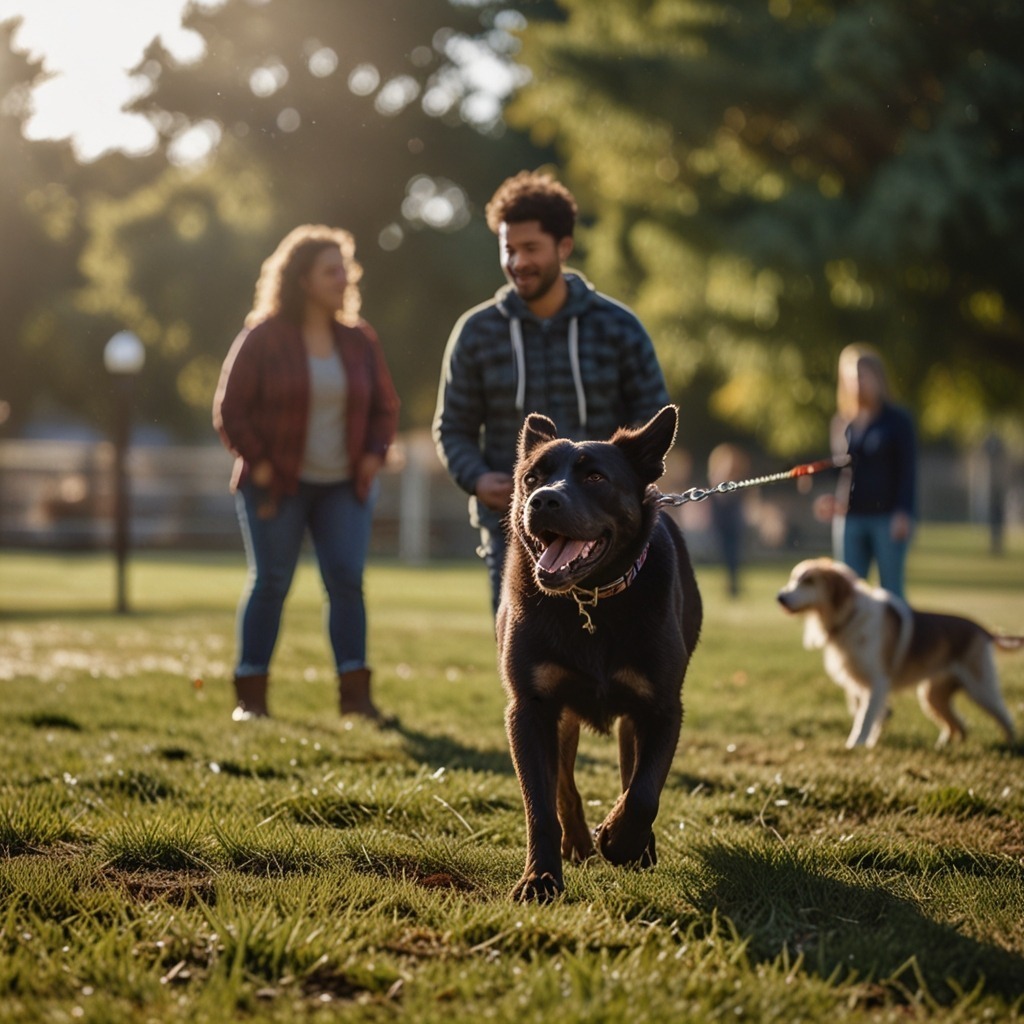
I'd read somewhere that puppies need to be soialized before 16 weeks or they'd turn into neurotic messes. So on day three of having this 10-pound terrier puppy, I took him to the local dog park. At 5pm. On a Saturday. The place was a mosh pit of off-leash labs and huskies, and I just unclipped his leash and let him go.
A 90-pound lab pinned him in under three seconnds. He didn't bite him — just stood over him, tail wagging, drool dripping onto my puppy's head. My dog screamed like he was being murdered. I had to wade in and scoop him up, my heart hammering, while the lab's owner yelled, "He's friendly!" from 50 feet away, not moving a muscle.
My puppy hid under a bench for the rest of the trip. He was trembling so hard I could feel it through my jacket. I thought I'd ruined him. And I had, kind of. For the next two years, he was terrified of big dogs. He'd bark and lunge and make a scene, and I'd be that person on the sidewalk apologizing to everyone. I wrote about the whole agonizing process of fixing that reactivity over here, and honestly, I'm still a little salty about the experience.
What I didn't understand then — and what I vehemently tell every new adopter now — is that socialization isn't about meeting every damn dog within a three-mile radius. It's about positive exposure to the world: sounds, surfaces, people of different ages, umbrellas, skateboards, the vet's office. A single terrifying encounter at the dog park can undo weeks of careful confidence-building. I learned that the hard way, and so did my poor terrier. These days, I follow the "look and dismiss" school of socialization — we see a dog, we look, we get a treat, and we move on. No forced greetings. No mosh pits. I wish I'd known that before I scarred my dog for life.
Tangentially, my mom raised dogs in the 80s by just throwing them in the backyard and hoping for the best. Her border collie turned out fine — but only because it spent all day herding chickens and never met a strange dog. I can't decide if that's proof that less is more or just dumb luck.
I fed the cheapest kibble I couuld find and then spent six months cleaning up liquid disaster
Money was tight. I was working part-time at the shelter and liiving off ramen, so when I saw a 40-pound bag of store-brand kibble for $18, I thought I'd hit the jackpot. The ingredient list started with corn, then chicken by-product meal, then more corn. I didn't know any better. I just figured food is food.
Within a week, my dog's poop turned into something I can only describe as a soft-serve nightmare. It would splatter when it hit the grass, and once — I'm not making this up — he had an accident in his crate that somehow launched a spray of liquid feces onto the ceiling of my bedroom. I had to stand on a chair and scub it off at 2am, crying, while he looked on, confused and probably deeply ashamed.
I went through four different probiotics trying to fix his gut. I spent money I didn't have on expensive "sensitive stomach" formulas that made things worse before I finally landed on a basic, high-quality kibble with a named protein and no corn filler. The change was almost immediate. Within three das, his poop was solid enough to pick up without gagging. I still regret every dollar I wasted on the cheap stuff — not to mention the cleaning supplies.
If you're new to this, please don't make my mistake. Your dog's gut is a delicate ecosystem, and chepa food is like pouring gasoline on a garden. I later wrote a whole post about the probiotic journey that taught me exactly what was wrng, but the real lesson was: don't skimp on the base nutrition to begin with.
I bought every "indestructible" toy I could find — and he destroyed them all in under 20 minutes
My terrier had jaws like a tiny alligator. The first toy I ever bought him was a plush squirrel with a squeaker. He disemboweled it in six minutes flat, then ate the squeaker. I found the squeaker two days later in a pile of vomit on my rug. That was a fun discovery at 6am.
Determined to find something he couldn't destroy, I went on an Amazon spree. I bought a $40 "indestructible" firehose-style toy that was supposed to survive even the most aggressive chewers. He shredded it in 17 minutes — I timed it. I sat there, stopwatch in hand, watching him methodically dismantle this thing like he was taking apart an engine. Stuffing everywhere. Threads dangling from his mouth like he'd eaten a rope ladder. I wrote about that disaster in detail here, but the short version is: there's no such thing as indestructible. There's only "this will take your dog slightly longer to destroy."
The mistake I made wasn't just wasting money — it was thinking that toys were entertainment. What my dog actually needed was enrichment: puzzle feeders, frozen kongs, snuffle mats, training games. A bored terrier is a destructive terrier. Once I started feeding him his meals in a wobble kong and doing 10-minute training sessions before work, the chewing stopped. He didn't need a tougher toy; he needed a job.
The use I used was basically a noose, and I didn't realize for two months
When I first got him, I bought whatever use was on sale at the big-box pet store. It was one of those thin-strap harnesses that sits right aross the dog's throat. Every time he pulled — and he pulled constantly because he was a terrier who'd never seen a leash before — it would choke him. He'd cough and gag, and I'd just keep walking, thinking he'd learn.
He didn't learn. He got worse. He started being reactive on leash because walking hurt and he was anticipating the pain. It took a trainer pointing out that my use was a "trachea-crusher" for me to finally switch to a front-clip, Y-shaped use that actually distributed pressure acros his chest. The difference was instant. I later found a $12 one that worked miracles on a build Chihuahua, and I swear by that style now.
If your dog pulls, don't just toghten the use or yank back. Get a well-fitted use that doesn't put pressure on the throat. Your dog will thank you, and so will your arm socket.
I bathed my dog every single week because he "smelled like dog"
It never occurred to me that dogs are supposed to smell like… dog. I thought a clean dog was a happy dog. My terrier had a short coat, but he still got a bath every Sunday, scrubbed with whatever shampoo was on sale. By week fuor, his skin was flaky and greasy at the same time — like an oily snowglobe. He scratched constantly, leaving little bald patches behind his ears.
My vet, Dr. Nguyen, actually laughed when I told her my bathing schedule. Not in a mean way, but in a "oh honey, no" kind of way. She explained that dogs have natural oils in their skin and coat, and over-washing strips them away, leaving the skin dry and irritated, which then triggers the overproduction of oil to compensate. Most dogs need a bath maybe every 2-3 months unless they roll in something foul. My terrier was a clean freak who avoided mud, so he probably needed it even less.

I stopped bathing him so oten, and within two weeks, the flakes disappeared and his coat got its healthy shine back. He still smelled like a dog, but that's sort of the point. I wrote about a similar disaster with a husky here — it's a universal lesson. Put the shampoo down. Step away from the tub.
Wait, I almost forgot: I once used dish soap because I ran out of dog shampoo and thought, "Soap is soap." Dn't do that. It's not the same. That was a separate vet visit, and the moral of that story is: don't be like me.
I skipped the vet for over a year because "he seemed fine"
Money was still tight, and my dog was young and energetic. I figured annual checkups were for old dogs or sick dogs. I skipped his one-year booster shots, didn't do a fcal test, and definitely didn't think about heartworm prevention. He seemed perfectly healthy.
Then one morning he vomited up a pile of grass and something that looked suspiciously like part of a sock. Then he did it again. Then he stopped eating. By the time I caved and took him to the vet, I'd spent three days hand-feeding him boiled chicken he wouldn't touch, and he'd lost a pound and a half. The vet found the rest of the sock — it had formed a partial obstruction — and he needed $900 surgery to remove it. That bill could have been avoided entirely if I'd had a baseline checkup and maybe a little more vigilance about what he was eating.
But even beyond the sock, I missrd some early warning signs. He had mild tartar buildup that could have been addressed with a dental chew routine, but by the time I finally got his teeth checked, he needed a dental with extractions. That was another $700. I also hadn't kept up with his heartworm meds, and he tested positive — thankfully a very mild case that we treated, but the treatment cost $1,200 and involved some scary injections.
I'm not saying you need to run to the vet for eveery sneeze. But skipping preventative care because you're trying to save a buck is the fastest way to end up with a four-figure emergency bill and a dog who's suffering unnecessarily. I learned that the incredibly expensive way. Oh, and get pet insurance before anything goes wrong. I didn't, and now everything is a pre-existing condition.
I thought a tired dog was a good dog — so I ran him into the ground
My terrier had endless energy. He'd pace the apartment, chew the baseboards, whine at the door. I read somewhere that a tired dog is a well-behaved dog, so I started taking him on five-mile runs every morning. I'm not a runner. I hate running. But I did it, gamely, for three weeks, until one day he just… stopped. Lay down on the sidewalk and refused to move. I had to carry him home, 40 pounds of dead weight, and my back hasn't been the same since.
The vet diagnosed him with overexertion and some minor joint inflammation. She told me, gently, that I'd been doing too much. That dogs — especially little terriers — don't need marathon training. They need mental stimulation and shorter, more frequent bursts of activity. A 20-minute sniffari (where you let them sniff everything at their own pace) tires them out more than a forced run. A puzzle toy or a training session works their brain in a way that physical exercise can't match.
I'd been confusing exhaustion with contentment. My dog wasn't sleeping because he was happy; he was passing out from sheer physical stress. I scaled way back, added in food puzzles, and he calmed down within a week. He stil chewed things occasionally, but he wasn't frantic about it. I wrote a bit about this realization with a build lab who taught me the same lesson all over again. Exercise is important, but it's not a cure-all. Don't run your dog ragged just because you think it'll make your life easier.
I let him bark for hours while I was at work, and my neighbor nearly called the cops
I worked 10-hour shifts at the shelter back then. I'd leave him in the apartment with a pee pad and a kong, and I'd come home to a note on my door: "Your dog barks nonstop from 9am to 5pm. Please do something." It wasn't signed, but I knew it was the woman next door. She'd already complained to the landlord twice.

I didn't believe her at first. My dog never barekd when I was home. I set up my laptop to record one day, and what I heard was… awful. He wasn't just barking; he was howling, crying, throwing himself against the door. He had full-blown separation anxiety, and I had been ignoring it for months.
I tried everything: a thundershirt, calming mudic, a crate (which he broke out of, tearing a claw in the process). What finally helped was a very slow, frustrating desensitization protocol where I'd leave for 30 seconds, come back, leave for a minute, come back, over and over for weeks. And medication — I was resistant at first, but a low dose of fluoxetine took the edge off enough that the training could actually stick. I detailed that whole mess in another post, and I'm still embarrassed about how long I let it go on.
If your dog is barking all day, don't be like me and pretend it's not happening. Your neighbors hate it. Your landlord hates it. And your dog is genuinely suffering. Get a camera, figure out what's happening, and find a trainer or behaviorist who works with separation anxiety. It's a long road, but it's better than an eviction notice.
I never clipped his nails until I had to take him to the emergency vet because one broke off
I was terrified of cutting the quick. So I just… didn't cut his nails. I figured they'd wear down on the sidewalk. They didn't. His dew claws grew into little spirals, and one day he caught one on the edge of the rug and ripped it clean off. The amount of blood was truly alarming. I rushed him to the emergency vet at 11pm, and the $187 bill was just to clean the wound and tell me to keep the nails shorter.
After that, I tried clippers and immediately nicled the quick — he yelped, I cried, it was a mess. I finally gave up and started using a Dremel, which takes longer but is way harder to mess up. I still don't use clippers. I wrote about my full nail care journey if you want the gritty details, but the lesson is: don't ignore your dog's nails. They're not optional.
The day I called a trainner and finally admitted I was in over my head
Six months into owning this dog, I was exhausted. He barked, he pulled, he destroyed things, he had accidents, he was scared of big dgos, and I'd spent a small fortune on emergency vet visits. I was sitting on my kitchen floor at midnight, sobbing into a cold cup of coffee, googling "how to surrender a dog" and hating myself for it.
I didn't surrender him. Instead, I called a frce-free trainer who specialized in reactivity. She came to my apartment, watched me interact with him for ten minutes, and then said, "You're doing great, but you're doing too much. He's overwhelmed. You're overwhelmed. Let's strip it all back."
She taught me that I didn't need to fix everything at once. We focused on three things: loose-leash walking, a solid recall, and a "look at me" cue. Everything else went on the back burner. We worked on confidence-building exercises, not just obedience. She also pointed out that my dog wasn't broken; he was just a terrier. Terriers are loud, stubborn, and bred to chase things. I was trying to make him into a golden retriever, and that was never going to happen.
That reframe changed everything. I stopped apologizing for his terrier-ness and started managing it. I gave him appropriate outlets for digging and barking and chasing. I stopped forcing him into situations that scared him. The progress was slow, but it was real. A year later, I could walk past a big dog without him losing his mind. He stll barked at the mailman, but I'd made peace with that.
The biggest mistake I made as a first-time owner wasn't the cheap kibble or the dog park disaster or the nail neglect. It was thinking I had to do it all alone. There's no prize for struggling in silence. Trainers, behaviorists, vets, even the really judgmental lady at the pet store — they're all resources. Use them. Your dog doesn't need you to be perfect; they just need you to keep showing up.