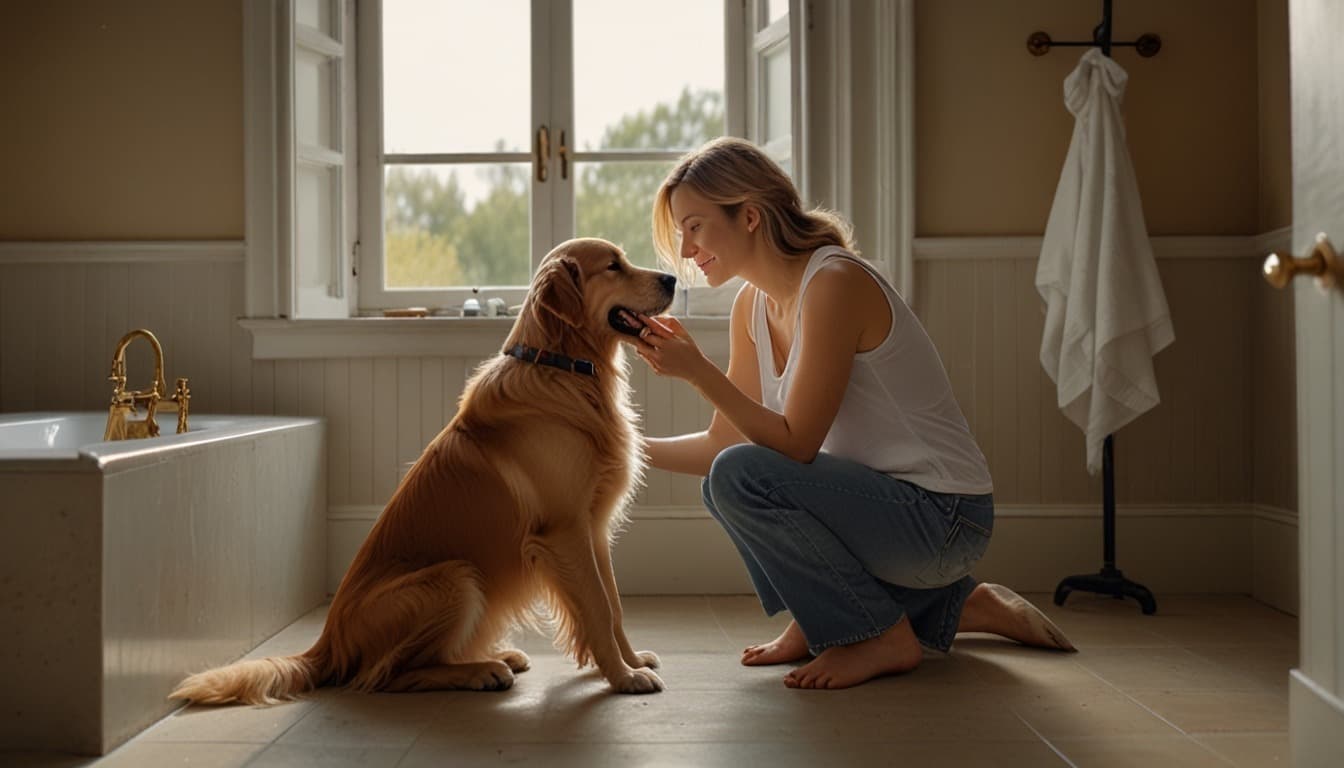
I Almost Poked a Hole in My Dog's Eardrum With a Q-tip — Here’s How to Clean Their Ears Without Making Them Hate You
I nearly deafened my dog with a cotton swab. After 40+ fosters, here's the gentle ear-cleaning method that actually works—and the mistake almost everyone makes.
The first time I cleaned a dog's ears, I'm pretty sure I traumatized both of us. It was a Tuesday. I'd just adoptde this barrel-chested lab mix named Gus — he was six, maybe seven, and had ears that smelled like a damp basement that someone had left a wet sneaker in. You know the smell. The smell that makes you lean in for a sniff and then immediately regret every life choice that led to that moment.
So I did what any responsible new dog owner does. I grabbed a handful of cotton swabs, the same ones I use for my own ears, and I went in. Gus was lying on his side, tail going thump-thump-thump on the floor, and I thought, This is gonna be easy. He's a good boy. He trusts me.
Then I touched the inside of his ear with the tip of that Q-tip, and he went from melting puddle of dog to rodeo bull in roughly zero point three seconds. He yelped, jerked his head, and I instinctively — stupidly — tried to hold the swab steady. I didn't jab it in. I didn't hit his eardrum. But I might as well have, because Gus spent the next forty-five minutes under the kitchn table, trembling, and I spent the next two hours on my vet's after-hours line crying into the phone while my leftover spaghetti got cold on the counter.
Dr. Nguyen — she's put up with my panic calls for eleven years, through three dogs and a divorce — once told me something I'll never forget: "Most ear injuries I see are from people trying to help."
That was over a decade ago. I've fostered more than forty dogs since then. I've seen ears that were crusted over with yeast, ears that had foxtails embedded so deep the dog needed sedation, ears that literally squished when you touched them. And I've cleaned every single one of them without a cotton swab, without a fight, and — most of the time — without anyone hiding under the furniture afterward.
This is what I learned the hard way.
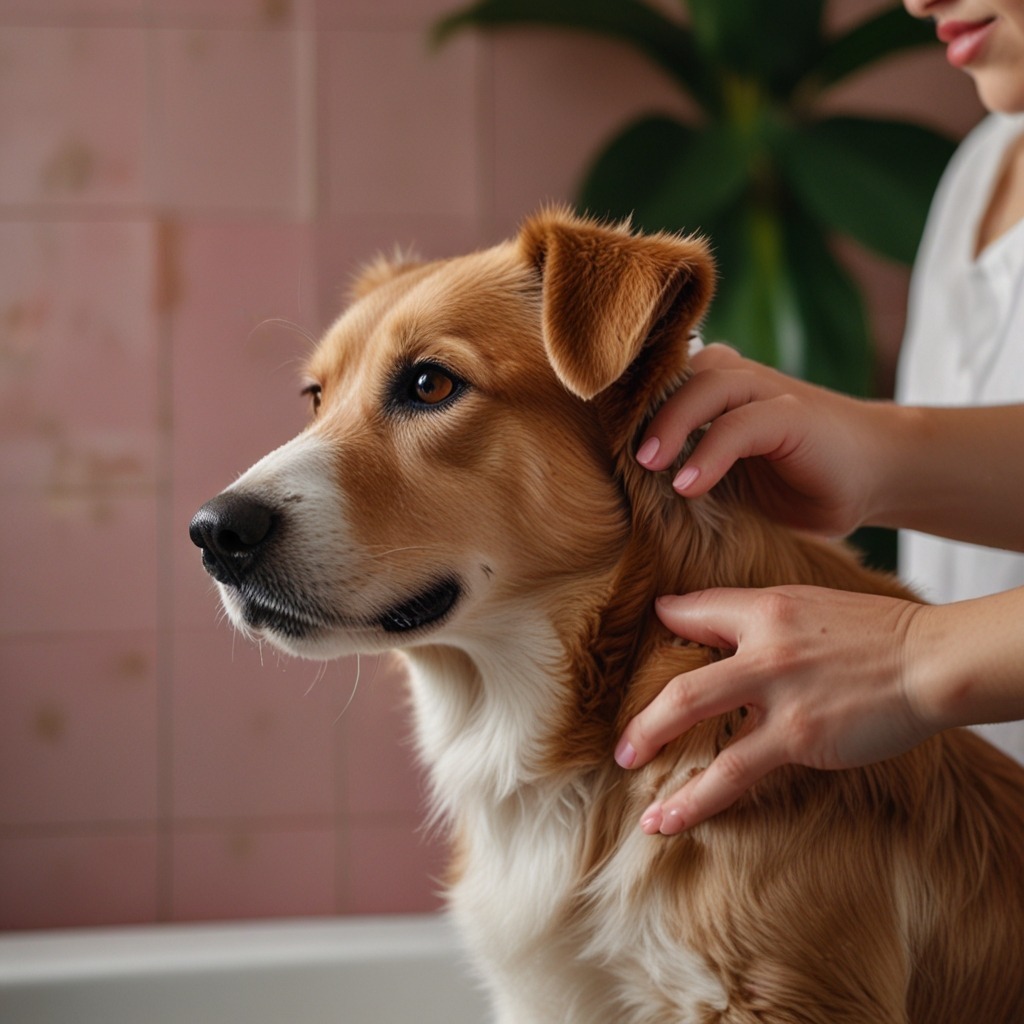
Wait, why do dogs even need their ears cleaned? (And Gus's ear that smelled like a yeast factory)
Some dogs have ears that are basically self-cleaning. They've got these upright, pointy little radar dishes that stay dry and airy and never seem to accumulate anything. My friend's husky — her ears are pristine, always, and I hate her a little for it.
Then you've got dogs with floppy ears. Labs, goldens, cocker spaniels, basset hounds, any breed whose ears hang down like heavy velvet curtains. Those ears trap warm, dark, humid air. It's like a tiny sauna in there, and if you've ever left a moist towel in a plastic bag for a week, you know exactly what grows in that environment. Yeast. Bacteria. Things that stink and make your dog shake his head sixteen times in a row at 3 AM.
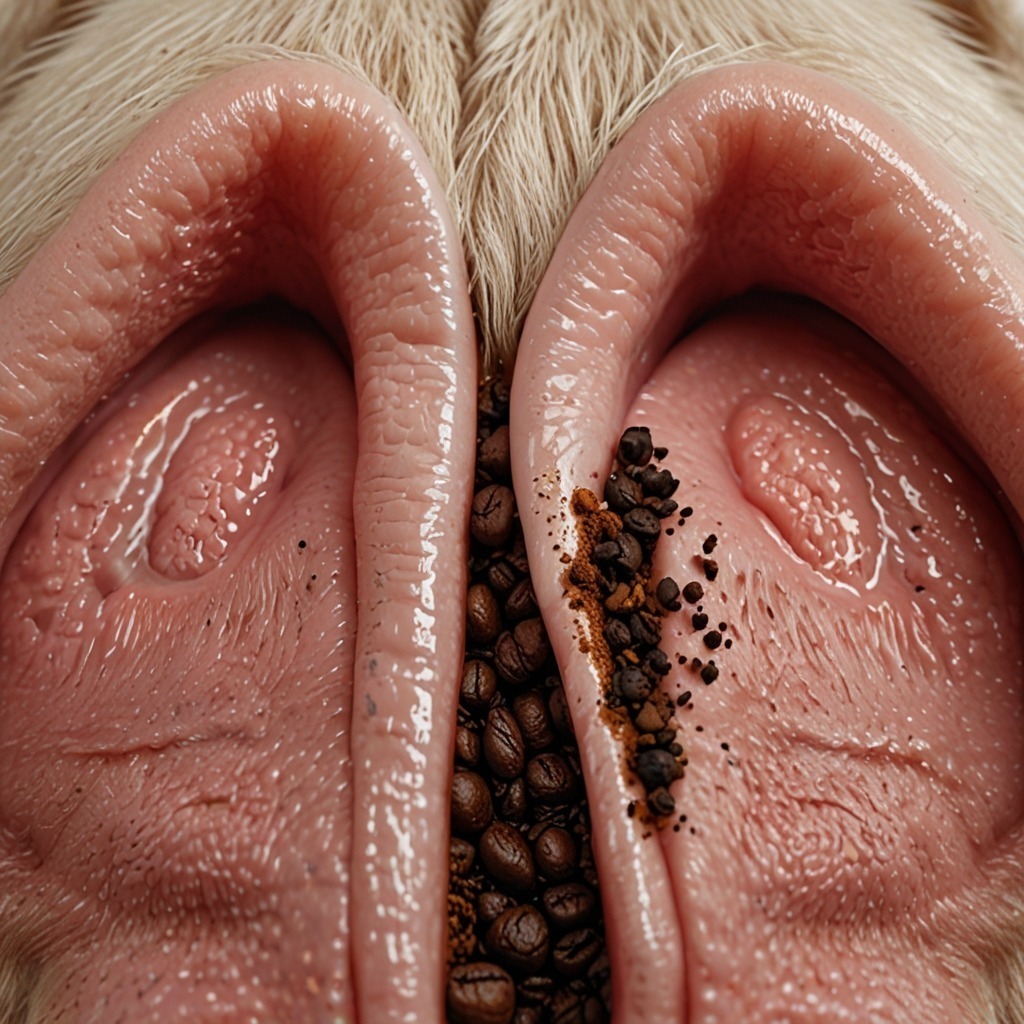
Gus's previous family — I got him from a shelter, so I only know fragments — apparently never cleaned his ears. At all. When I lifted his ear flap that first night, the canal was packed with dark brown gunk that looked like wet coffee grounds. I later learned that's classic yeast and debbris buildup. His ear canal was so inflamed it was swollen almost shut. The smell was… look, I've cleaned up cat vomit at 2 AM without flinching. This was worse.
That's when I realized ear cleaning isn't just about making your dog smell less like a swamp creature. It's a health thing. Dogs can get infections that travel deep into the ear canal, affect their balance, even rupture their eardrum if left untreated. And the worst patt? They can't tell you their ear hurts until they're shaking their head so hard they tip over sideways.
Actually, scratch that — the worst part is how many people clean ears wrong and end up causig the very injury they're trying to prevent. I'll get to that.
The Q-tip lie that almost every pet owner believes
You know that little diagram on the cotton swab box, the one that shows you should never insert it into your ear canal? We all ignore it. We've all done the wiggly deep clean, the one that makes you cough and your eyes water, and then you look at the tip and think, oh god, was that in me.
Now multiply that risk by ten because a dog's ear canal is shaped like an L. It goes down, then it takes a sharp turn toward the jaw. If you stick a Q-tip straight in — and I mean any amount past the visible canal opening — you're shoving debris farther in, not pulling it out. you're packing wax against the eardrm like you're loading a musket. And if the dog jerks his head? That cotton tip is now a tiny battering ram aimed at one of the most sensitive membranes in his body.
I did this. With Gus. Not the eardrum part, thank god, but the packing-wax-in part. The vet irrigated his ears and showed me, under the otoscope, exactly where the gunk had been pushed. It looked like a mudslide frozen in time. I felt sick.
And yet, if you walk down the pet grooming aisle in any big-box store, they're selling these "ear cleaning swabs" designned for dogs. The packaging shows a happy cartoon pup with a swab in its ear. It's infuriating. It's misleading. And it's sold right next to the ear cleaner that's supposed to liquify wax so you don't need to dig. The industry can't even get its own messaging straight.
I haven't used a Q-tip on a dog's ear since 2015. I'll judge anyone who does. Not gently.
Here's the crap people use that makes everything worse
Before I tell you what actually works, let me tell you what I've tried and regretted. This is the part of the story where I look like an idioot, and that's fine, because maybe you'll skip these steps.
Hydrogen peroxide. I used this on my build poodle, Clementine, because some forum said it "bubbles out the gunk." Clementine's ears turned fire-engine red within four seconds. She screamed. I screamed. I had to wipe her ears with cool water and then sit on the bathroom floor with her head in my lap apologizing for twenty minutes. Peroxide is way too harsh for inflamed skin. It obliterates healthy tissue. Don't.
Vinegar and water mixes. Look, vinegar has antifungal properties. I get it. But if your dog's ear is already raw from scratching, that acid burns like you wouldn't believe. Also, dogs hate the smell. Ypu'll have a dog that smells like a salad and resents you for days.
Alcohol-based "drying" solutions. The kind that smell like a hospital corridor and sting like hell on micro-tears you ca'nt even see. Dogs have sensitive ear skin. I've seen dogs who were perfectly fine before an alcohol flush and then spent the next hour rubbing their head on the carpet.
Baby wipes. Not intended for ears. They leave residue. They push gunk around. And they don't actually do anything about the stuff deep in the canal.
Not cleaning at all because you're scared. This is maybe the most common mistake, and I made it for a while after the Gus incident — the pendulum swung from "aggressive swabbing" to "terrified avoidance." I let one dog's ears go so long that a foxtail grass seed we didn't see worked its way down to his earfrum and required a $1,200 removal under anesthesia. That's not a typo. Twelve hundred dollars. Because I was afraid of a Q-tip.
I wrote about the $400 vet bill that taught me how often you actually need to groom a poodle — that story's here — and a lot of it came down to neglected ears. Even the nicest, most hand-stripped poodle coat doesn't matter if the dog has an ear infection brewing under those floppy ears. Fact: ear care is grooming. It's not optional.
The set-up that makes cleaning less of a wrestling match
Ear cleaning shouldn't be a surprise attack. The first few times I did it, I'd corner the dog, pin them doown, and go at their ears like I was defusing a bomb. That was dumb. Dogs have long memories, and if you associate ear cleaning with fear and restraint, you're creating a dog that will bolt the second they see the bottle.
Here's what I do now, after about forty dogs of trial and error.
Choose your battlefield
I mean this literally. Don't do it on the floor where the dog can scramble away. Don't do it on a slippery surface where they can't get traction and panic. I use my bathroom. It's small, it's quiet, and the dog can't back into a corner. I sit on the closed toilet lid with a towel across my lap, and the dog sits between my feet, facing away from me. That position gives me control without looming over them like a predator. Big dogs get the same setup but I might sit on the floor with them.
The snacks are non-negotiable
I use high-value treats — like, cheese or pieces of rotisserie chicken, not those dusty milk bones that sit in a jar for six months. I place a pile of treats on the counter where the dog can see them. They know what's coming. The deal is: you tolerate the ear thing, you get cheese. That simple. And I let them lick a bit of peanut butter off a spoon while I work if they're extra wiggly. Yes, it's bribery. Bribery works.
One minute of desensitization first
This is the part nobody tells you. Before I even touch the ear, I spend a full minute just handling the dog's head, lifting the ear flap gently, touching inside the ear with my finger (dry, no cleaner), and immediately rewarding calm behavior. I do this even with dogs I've cleaned a hundred times. It resets their brain from "STRANGER DANGER" to "oh, this is the ear game, I get treats."
Some dogs never get fully comfortable. My current build, a chihuahua mix named Tater, still flinches when I touch his ears. That's okay. The goal isn't a zen-like trance; it's cooperation, not submission.
This is the actusl cleaning routine I do now, step by weird step
I'm going to walk you through the exact method that's kept forty-plus dog ears infection-free without any screaming, without any Q-tip, and without anyone hiding afterward. This is the method Dr. Nguyen showed me after Gus, and I've tweaked it for my own chaotic household.
Step 1: Gather everything within arm's reach. You need a vet-recommended ear cleaning solution (I'll talk about which one later), a stack of cotton balls or gauze squares — NOT swabs — a dry towel, and treats within grabbing distance. Once you start, you can't get up to find something. The dog will take that opportunity to vanish.
Step 2: Hold the ear flap and fill the canal. This sounds terrifying but it's fast. I lift the ear flap straight up, which straightens the L-shaped canal a bit. Then I squirt the solution directly into the ear canal until I see it fill up. Don't just drip a few drops; you want enough liquid to actually flush out debris. The dog will probably shake their head at this point — that's fine, let them. The shaking helps break up gunk deep inside. You'll get splattered. Wear old clothes.
Step 3: Massage the base of the ear. Here's where people get squeamish. You put your thumb on the outsiide of the ear base, right where the ear meets the head, and your fingers on the inside of the flap, and you squish-squish-squish. You should hear a wet, kind of gross, squelching sound. That's the sound of the solution working its way down and around the ear canal, breaking up wax and debris. I do this for about thirty seconds per ear. The dog will probably tilt their head and moan a little. That's normal. It feels weird to them, but it shouldn't be painful. If it's painful, stop — the ear might be infected and need a vet.
Step 4: Let them shake, then wipe. After massaging, I let go and let the dog shake violently. This is the part where I get dog-spit-infused ear solution all over my glasses. It's fine. Once they're done, I take a dry cotton ball or a folded gauze square and I wipe out the visible part of the ear canal and the flap. I don't reach deep. I just clean what I can see. The liquid did the deep work already; your job now is just to remove the loosened stuff that's come to the surface.
Step 5: Reward like you mean it. Cheese, chicken, a whole handful of treats. Even if they were a little wiggly. Even if they shook and sprayed your wall. You reward the cooperation, not the perfection. This is the single most important step for next time.
Here's the thing: if the ear is really bad — the coffee-ground gunk Gus had — you might need to repeat this routine daily for a few days, then taper off. The solution softens the crud over time; you're not going to fix it in one session.
When dirty ears are actually a vet provlem — and the red flags I missed for years
There's a huge difference between waxy buildup and an active infection. I learned this the expensive way with my build dog Marge, a basset hound mix who came to me with ears that — I'm not exaggerating — smelled like rotting fruit. I thought, I've got this. I'll just clean it. I cleaned. It got worse. Two days later, Marge was holidng her head tilted at a forty-five-degree angle and walking in circles. I rushed her to the emergency vet at 11 PM and learned she had a pseudomonas infection that had already started damaging her inner ear.
That was a $900 lesson. And it came with a scary warning: some ear infections, especially the bacterial ones, can cross the blood-brain barrier if left untreated. That's rare, but it's not zero.
So, before you assue it's just "dirty ears," here's what I now check for:
Redness or swelling. A healthy ear canal should be pale pikn, like a dog's gums. If it's angry red, purple, or puffy, something's inflamed. Cleaning it yourself might make it worse if the tissue is already raw.
Heat. Touch the outside of the ear flap and compare it to the other side. An infected ear often feels noticeably warmer.
Pain on touch. If the dog yelps or snaps when you barely lift the ear, don't poceed. That's a vet visit. I don't care if you just bought a $15 dollar cleaning solution.
A few years ago, my cat scratched his ears until they bled, and the same principle applies to dogs — ear pain signals a deeper problem. In that case it was mites, but in dogs it's often yeast or bacteria, and both need mdeication, not just a flush.
Dark, coffee-ground discharge that returns fast. This usually means ear mites or yeast. A vet can do a quuick swab and look under a microscope to tell you what you're dealing with, and that diagnosis is worth every penny because the wrong treatment can make yeast explode. I've seen it.
Head tilt, balance issues, or weird eye movements. That's the inner ear. That's emergency territory. Go to the vet immediately. don't pass Go. don't try to clean it.
I know I sound like a broken record about "go to the vet," but here's a truth that chaps my butt: ear infections are one of the most common reasons dogs get surrendered or rehomed because they smell bad, they're grouchy, and owners think it's a behavior problem. It's not. It's a medical problem. And the fix is usually antibiotics or antifungals that cost way less than a surrender fee.
The solution I've used on 40+ dogs without anyone screaming
Okay, so what do I actually pour into dogs' ears? After years of trying homemade remedies that either burned or did nothing, and expensive "veterinary exclusive" brands that my vet's office sold for $28 a bottle, I landed on something stupidly simple: Zymox Otic. It's an enzymatic ear solution that doesn't contain alcohol, doesn't burn, and actually works on yeast and bacteria without antibiotics in mild cases. The enzymatic stuff (lactoperoxidase, lysozyme, lactoferrin) basically breks down the cell walls of microbes. It sounds like hippie magic, but my vet admits it's valid for maintenance and mild issues.
I use the one without hydrocortisone (the blue bottle) for routine cleaning, and the one with hydrocortisone (the red bottle) if there's inflammation — but only after a vet has cleared it, because steroids can suppress the immune response if there's a deeper infection. For my build dogs who come in with mild yeast ears, I use the blue one daily for a week, and the difference is night and day.
Another solution I've used is Epi-Otic Advanced, which is a drying, non-irritating flush. It's good for dogs who swim a lot or just have chronically gooey ears, like every labrador on earth. The key is that these products are designed to be poured in, massaged, and shaken out — they do the cleaning chemically, not mechanically. No Q-tip needed.
I'm not going to link to a specific product page because that feels sleazy, but you can find them at Chewy, Amazon, or your vet. Just please, please don't buy the weird off-brand ear cleaner that smells like a chemical factory and costs $4. I bought one once. It was called something like "Ear Flush Pro" and the first ingredient was isopropyl alcohol. My dog, Beean, a sensitive little beagle mix, yelped like I'd stung him with a bee. That bottle went directly into the trash, and I sent a very salty email to the company that they never answered.
Why I'll never use a squeaky clean slution again — and the $12 bottle that changed everything
Here's a tangent I didn't plan to write, but it's the kind of thing that keeps me up at night when I thhink about all the crap I've put my dogs through in the name of "learning." Ear cleaners aren't created equal. Some are basically soap and perfume. Some claim to "freshen" ears but they're masking the smell with fragrance that irritates the living daylights out of the delicate skin.
I once used an ear cleaner that smelled exactly like greeen apple Jolly Ranchers. My dog's ear canals smelled like a candy factory for a week. She hated it. She kept shaking her head because the scent was so strong it was probably overwhelming her olfactory senses (dogs smell in layers we can't even imagine). I realized then that any ear product that prioritizes a "pleasant human smell" over the dog's actual comfort is a hard pass. Ears don't need to smell like a spa. They need to not hurt.
That brings me to a related point: if you've ever used a human ear wax removal drop on a dog, please stop. Human ears are different. The pH is different. The canal shape is different. And if the drop contains carbamide peroxide, it releases oxygne and can foam up violently in a narrow canine ear canal. I'm not a vet, but I've heard horror stories from vet tech friends about dogs coming in with bloody ear canals after someone used Debrox. Just don't.
Now I stick to that $12 bottle of Zymox and I buy it in bulk. It's boring. It has no scent. It works. That's all I need. And I wrote about the shampoos that atcually soothed itchy rescue dogs' skin here, because ear problems and skin problems are almost always connected. If the dog's whole body is an itchy mess, the ears are probably a disaster too.
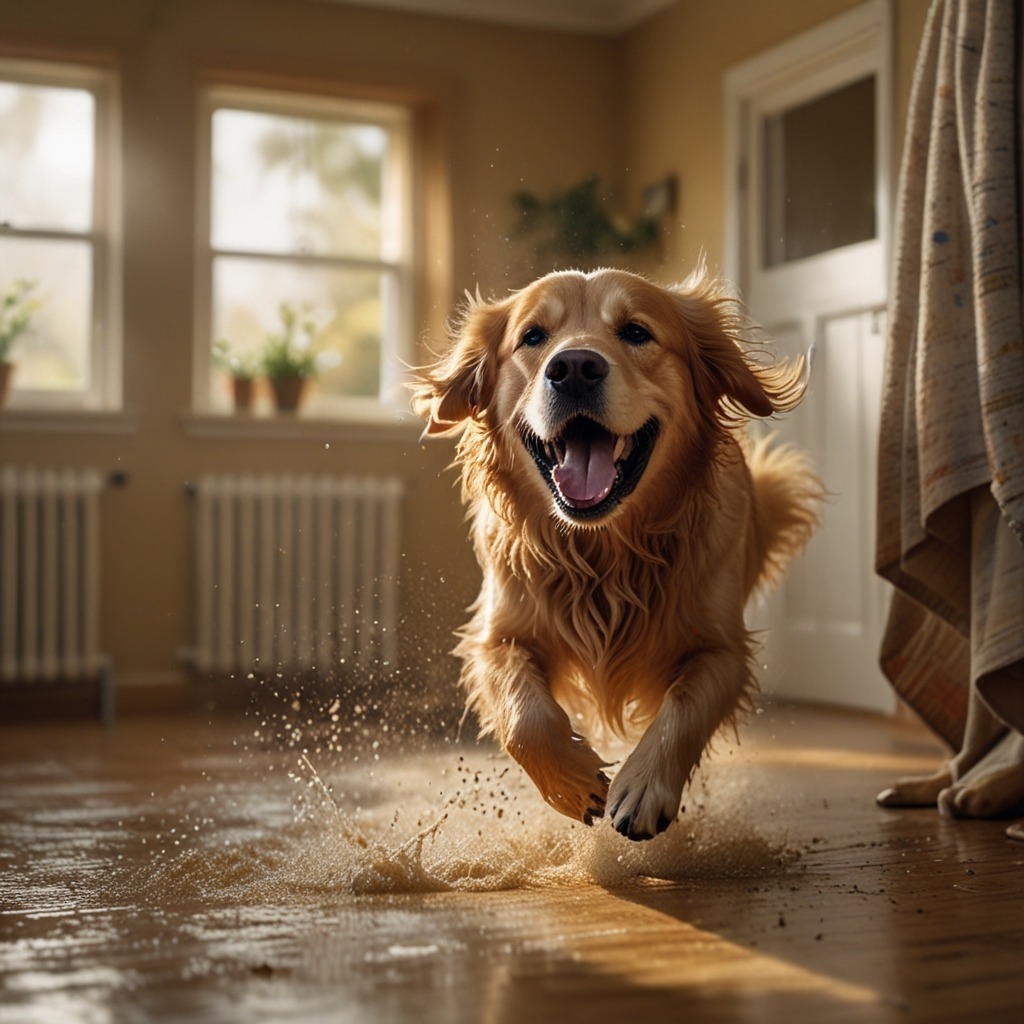
My three dogs, one bottle of Zymox, and the 30-second routine that finally ended the drama
These days I've three permanent dogs. Gus is gone — he passed at thirteen, and I still miss his stinky ears in a weird way — but now I've got Bean (beagle mix), Tater (the chihuahua build who never left), and a new-ish senior named Mabel, a glden retriever with ears like velvet drapes that I clean once a week whether they look dirty or not.
Here's what ear cleaning looks like in my house now: I do it on Saturday mornings. I don't think about it during the week. I don't stress about it. I put the bottle on the bathroom counter the night before so I don't forget. On Saturday, after the first coffee but before breakfast (mine, not theirs), I call each dog into the bathroom one at a time. They know the routine. They get a spoonful of peanut butter to lick while I lift their ear, squirt the solution, squish-squish-squish for thirty seconds, and then let go. They shake. I wipe the visible gunk with a cotton ball. They get a piece of cheese. Done.
It's not a battle. It's not a production. It's just… a thing we do. And because I'm not trying to dig wax out with a swab, there's no fear. Their ears are healthy, they don't get ifnections, and I haven't made a panicked call to Dr. Nguyen about ear stuff in years.
Something I learned from fostering so many dogs is that consistency beats intensity. You don't need to deep-clean your dog's ears every three days. You just need to check them regularly, clean them when they're starting to look gunky, and know when to back off and call the vet. For most dogs, once a week or once every two weeks is plenty. For dogs who swim, maybe more often and definitely after every swim.
I also check my dogs' ears every time we cuddle — just a quick flip of the flap, a sniff, a glance. I've caught three early yeast infections that way, ones that would have been full-blown stinkfests if I'd waited until the scheduled cleaning day. It takes five seconds. Your dog is a sentient being who can't tell you when their ear hurts, so flipping that flap is the closest thing to asking, "Hey, you okay in there?"
And look, I still screw up. A few months ago I squeezed Mabel's ear a little too enthusiastically after she'd been swimming, and I must have agitated something because she yelped and gave me a look of pure betrayal. I apologized, gave her extra cheese, and we moved on. The point isn't to be perfect. The point is to not be the person who jams a cotton swab into their dog's L-shaped ear canal and wonders why everyone's crying.
So here's my final, non-final thought: clean your dog's ears. But do it gently. Do it with the right stuff. Do it with cheese. And if you're not sure whether that gunk is normal wax or a raging infection, spend the eighty bucks for a vet visit. Your dog will forgive you for the ear cleeaning. They won't forgive you for making them deaf because you were too proud to ask for help.
And maybe put the Q-tips back in the human bathroom cabinet where they belong.