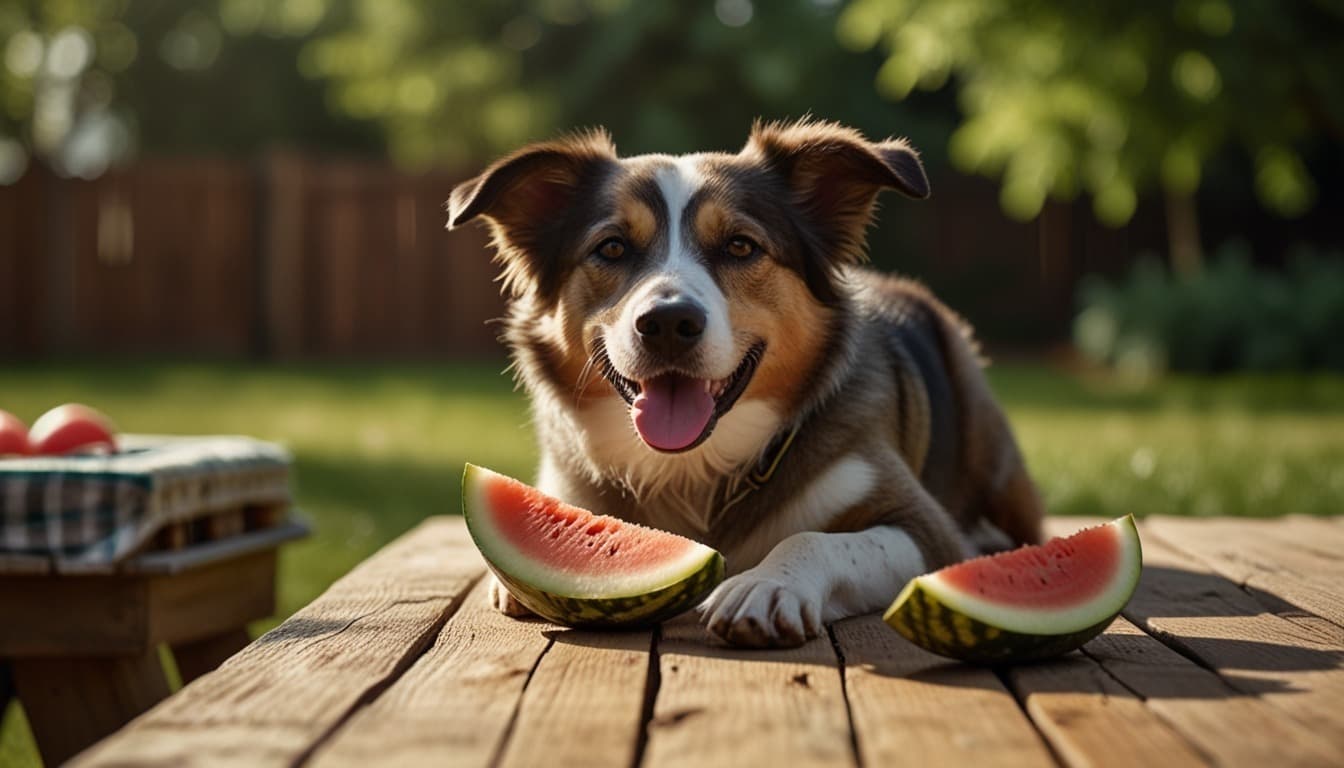
Can dogs eat watermelon?
Spoiler: yes, but the seeds and rind nearly gave me a heart attack. I'll tell you everything I learned the hard way, including the one summer afternoon that almost ended in a $400 emergency vet bill.
Last summer, my build Lab, Roo — a 90-pound goofball who once ate an entire loaf of bread, plastic bag and all — sat riveted as I cut into a watermelon on the kitchen counter. The knife barely broke the rind and he was drooling. Not the polite, single-drop drool. The kind where you need a mop. I watched a puddle form on my tile while I hacked away at the stupidly large melon, and I thought, Well, heck, can dogs even eat this? So with one hand gripping a slice and the other fending off a slobbering dog, I googled "can dogs eat watermelon" with sticky, juice-covered fingers. Because the internet has me paranoid that everything in my kitchen is poison.
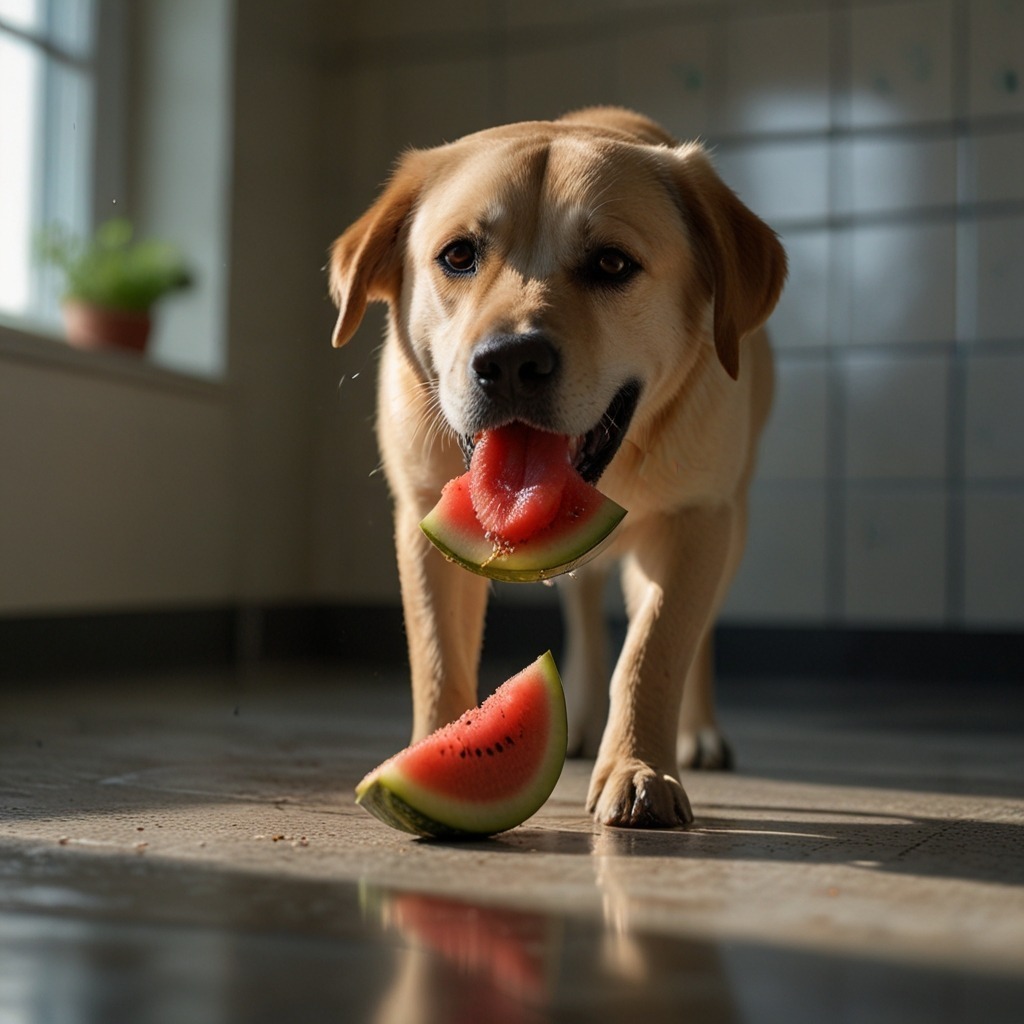
Turns out, the answer's yes. Mostly. But I've made some mistakes with watermelon over the years — including one that nearly landed me in the emergency vet at 11 p.m. — and I'm going to tell you about all of them so you don't repeat my stupidity.
The short answer (because you're probably panicking right now)
Yes, dogs can eat watermelon. The red flesh — the part you and I eat — is safe. It's not toxic like grapes or chocolate. It's hydrating, low-calorie, and full of vitamins that are actualy good for them.
But — there's always a but — the seeds and the rind are a different story. And if you give your dog half a mellon like it's a bowl of kibble, you're going to wind up cleaning diarrhea off your rug at 2 a.m. This is the tweet-sized version. Now let's get into the details, becuase I've learned some of them the hard, carpet-cleaning way.
Why watermelon is actually pretty great for dogs
I used to think of fruit as a weird human thing that dogs didn't need. But my vet, Dr. Nguyen — she's put up with my panic calls for 11 years, through three dogs and a divorce — set me straight. Watermelon is basically water with a few nutrients wrapped in a sweet package. It's about 92% water, whoch makes it a brilliant way to get extra fluids into a dog who's a lazy drinker. I've had build dogs who would rather chew their own foot than drink from a bowl, but they'd chase a piece of watermelon across the kitchen like it was bacon.
Nutrition-wise, it's got vitamin A, B6, and C, plus potassium. Nothing life-changing in small amounts, but it's not empty calories like some commercial treats you'll see in the pet aisle. (I've spent way too much money on those overpriced biscuits that are basically flour and food dye — another rant for another day.) The fiber in watermelon can help with digestion, though it also means you might get a little extra in the poop department. Not dangerous, just… noticeable.
The low calorie count is what sold me. I had a build Chihuahua, Pixel, who put on weight just watching other dogs eat. A few tiny cubes of watermelon as a training treat kept him from ballooning while still making him think he was getting something special. It's definately not a meal replacement — keep that in mind — but as a treat, it's one of the better options you can fish out of your fridge.
The stuff that can go wrong: seeds, rind, and the big sugar bomb
Here's where my optimism got me in trouble. The first few times I gave dogs watermelon, I just tossed them chnks with the seeds still in. I figured, they eat kibble that looks like gravel, what's a little black seed? I was wrong, and I'm glad nothing bad happened before I learned better.
Seeds are diabolical
Watermelon seeds contain a tiny amount of cyanide. Not enough to kill a dog from one or two, but that's not the main worry. The real danger is that seeds can cause intestinal blockages, especially in small dogs. A Maltese isn't goong to pass a handful of watermelon seeds the way a Lab might. The seeds are also hard and indigestible — if they bunch up, they can create a plug, and you're looking at surgery that'll set you back a few grand. I've already spent $14,000 on preventable dog health crap, and I'm not looking to add to the tally.
What I do now: buy seedless watermelon, or I sit there with a paring knife and twezeer out every black speck like I'm defusing a bomb. It's tedious. My dogs stare at me like I've lost my mind. But I'd rather spend 15 minutes deleting seeds than four hours in an emergency waiting room.
The rind is a digestive landmine
The green and white outer shell of the watermelon — the rind — is technically not toxic. But dogs can't digest it. It's tough, fibrous, and if they swallow a big enough chunk, it'll lodge in their gut. I've heard a story from a vet tech friend about a Beagle who ate an entire rind someone had tossed in the compost. They had to open him up to pull out a wad of green fiber the size of a softball. The dog lived, but the owner's wallet didn't.
Even small pieces of rind can cause vomiting and diarrhea because the dog's system treats it like an invader. The morning I found three puddles of puke on my bedroom floor with little green flecks in them, I knew Roo had gotten into the trash. More on that later.
Sugar: a word I hate
Watermelon is sweet. That's why dogs go insane for it. But too much sugar — even natural fruit sugar — can mess with their stomachs, spike blood sugar in diabetic dogs, and contribute to weight gain if you're not careful. I'm not anti-sugar in a puritan way, but I've learned that "a little" for a Great Dane is very different than "a little" for a Chihuahua. A couple of times I got lazy and dumped a whole bowl of cubed watermelon on the floor for my pack. The big dogs were fine. The little ones? Let's just say I was scrubbing the grout with an old toothbrush for an hour.
If your dog has pancreatitis, diavetes, or is just prone to pudging up, check with your vet before introducing any sugary fruit. Even the natural kind.
Tangent time: I once had a neighbor — sweet woman, truly — who fed her Yorkshire Terrier grapes as a snack because "they're fruit, they're healthy." I nearly broke her doorbell sprinting over to explain that grapes can cause acute kidney failure. I'd already done the freakout once with 17 raisins my build dog ate off the floor, and I didn't want to see another dog suffer. The point is, just because a food is fine for us doesn't mean it's safe for them. Watermelon flesh is an exception, not the rule. I treat every new food like it might secretly be a grape until I've triple-checked.
How much is too much? The serving size I stole from my vet
I'm not a nutritionist, but Dr. Nguyen gave me a rule of thumb I've used ever since: treats — including fruit — should make up no more than 10% of your dog's daily calories. For a 50-pound dog, that might be around half a cup of watermelon cubes. For a 10-pound dog, we're talking maybe a tablespoon. Breaking out a calculator at snack time is absurd, so I just give three or four small chunks to my big dogs and one to the little ones. Then I cut them off.
The wierd thing is, dogs don't seem to have an off switch for watermelon. They'd eat an entire one if you let them. I've seen it — Roo once nudged a half-melon off the counter when my back was turned and was face-deep in the red mess by the time I realized what the squishing sound was. He was fine. His bowels weren't. For two days. I'll spare you the details, but suffice it to say I didn't need my morning coffee that day.
Start slow. Give your dog one tiny piece and wait 24 hours to see how his stomach handles it. If there's no diarrhea or vomiting, you're good to increase a bit next time. The first time I gave my build Chihuahua watermelon, I gave him four pieces because he looked so happy. The resulting gas could have been bottled and sold as a weapon. Learn from my mistakes.
My build dog Roo and the watermelon rind incident
Alright, I promised this story. It was August, about 90 degrees, and I'd just finished cutting up a watermelon for a backyard thing I was hosting. I threw the rind into the compost bucket under the sink, but I forgot to latch the child-proof lock. Roo is part Labrador — child-proof locks are a suggestion to him.
I heard the crunching before I saw him. Crunch. Crunch. Slobber. I ran to the kitchen and found his head in the bucket, half a rind already down his throat like some sort of green anaconda. I yelled his name, wich did nothing because he had food, and he looked up with the guilty-but-unrepentant expression that only a Lab can deliver.
I coudl not remember if rind was toxic. I knew seeds were bad, but rind? I panicked. It was 11 p.m., and I called the emergency vet. The tech on the phone, bless her, was very patient. She asked how much he'd eaten, and I described the chunk — maybe 4 inches by 4 inches. She said it's not toxic, but I should monitor him for signs of blockage: vomiting, lethargy, straining to poop. If he vomited more than twice or couldn't pass anything in 12 hours, bring him in.
What the emergency vet actually said
She also told me that they see watermelon rind blockages at least a couple of times a summmer. It's common. Dogs love the texture and the sweetness left on the interior white part. She recommended I feed him a little plain canned pumpkin to bulk up his stool and help push things through, and to watch him like a hawk.
I didn't sleep that night. I lay on the couch with Roo on the floor next to me, and every time he shifted, I shot awake thinking he was about to heave. By morning, he trotted outside and produced a poop that looked like a chia pet — little green fibers all through it. He was fine. I was exhausted, and my compost bucket now has a combination lock practically.
That night reminded me of the time I found an empty chocolate wrapper and my dog was licking his lips — I've gone through that panic too. And the time a buld puppy ate ibuprofen, which could have killed him — that's the househhold safety guide I wish I'd had before that night. The point is, dogs are excellent at finding the one thing in your house that can hurt them, and watermelon rind is on that list even though it looks innocent.
Frozen watermelon: the lazy summer hack I wish I'd discovered sooner
A year after the rind incident, my friend Maria told me she freezes watermelon cubes for her dogs on hot days. I felt like an idiot for not thinking of it. It's stupidly simple: cut the watermelon into bite-sized pieces (seedless, obviously), spread them on a baking sheet so they don't clump, freeze for a few hours, then toss them into the yard. They're like mini popsicles. My dogs go berserk for them, and they get the hydration benefit without the mess of a drippy slice.
You can also blend fresh watermelon with a little water and freeze it in Kong toys or ice cube trays. I've done that when my old Lab was recovering from a stomach bug and wouldn't drink. He licked a watermelon ice cube for 20 minutes and got enough fluids in to avoid a vet visit. Cheap, easy, and no weird ingredients. That's my kind of dog treat.

Just keep the frozen pieces small enough that your dog can't choke, and don't give them to a dog who tends to swallow things whole. I accidently gave a frozen cube to a Jack Russell terrier once, and he tried to inhale it. The gagging sound will haunt me forever. He was fine, but now I cut everything into pea-sized bits for small dogs.
Other fruits that are safe (and a few that'll kill your dog)
Since I'm already on the subject of fruit, here's a quick list I keep in my head so I don't have to google every time I'm eating something and a snout appears at my elbow.
Safe fruits (in moderation, no seeds/pits):
- Blueberries — tiny, full of antioxidants, and easy to use as training treats.
- Apple slices — crisp and sweet, but REMOVE THE CORE AND SEEDS. Apple seeds contain cyanide too.
- Banana — mushhy, sugary, good for hiding pills, but high-calorie so go easy.
- Strawberries — another water-heavy berry, fine in small amounts.
- Cantaloupe — similar to watermelon, just avoid the rind.
The fruits I wouldn't touch with a ten-foot pole
- Grapes and raisins — I've already screamed about these. They can cause kidney failuure even in tiny amounts. It's not worth the risk. At all.
- Cherries — the pits contain cyanide and the flesh isn't great for them. Just don't.
- Avocado — contains persin, which can cause vomiting and diarrhea. Some dogs are fine, but why gamble?
- Citrus — lemons, limes, grapefruit. The acid and oils can mess with their stomach and even cause depression. (Not the sad kind, the lethargy kind.)
And for the love of everything, don't asume any fruit is safe just because it's natural. That thinking nearly killed my neighbor's Yorkie. Check with your vet, or at least do a quick search from a reliable source — not some random TikTok where a dog is eating a whole pineapple.
The one thing I still check evrey time I give watermelon
I buy seedless watermelon. I cut it on a clean board. I pull out my paring knife and inspect each cube under the kitchen light like I'm looking for flaws in a diamond. Because one time — one stupid time — I missed a minsucule black seed in a so-called seedless melon, and my build Chihuahua, Pixel, got it. He crunched down, and I froze, waiting for him to keel over. He didn't. But I panicked enough that I watched his poop for three days, breaking apart his stool with a stick like some kind of lunatic forensic analyst.
The seed passed without drama. Pixel was fine. But now I can't hand a dog watermelon without doing a visual sweep. It's a compulsion. My friends think I'm nuts. "It's just watermelon," they say. And I say, "Teh last time I thought that, I almost had a heart attack." So I'll keep being nuts. My dogs get watermelon all summer long, and nothing bad has happened since I started treating it like a procedure instead of a snack.
If you've got a dog and you're standing in your kitchen right now with a knife in one hand and a phone in the other, just remember: flesh is fine, seeds are the enemy, rind belongs in the compost (locked away from snouts), and frozen cubes are genius. And if your dog does scarf something they shouldn't, call your vet. Don't just wait and see. I've waited and seen too many times, and it's never worth the anxiety.
My dogs, they don't care about any of this — they just want the juicy stuff. So I cut it up, doubel check for seeds, and watch them slobber all over the floor. That's good enough for me.