Your Cat's Body Language Is a Full-On Conversation — Here's How to Finally Freakin' Listen
I thought I was good at reading cats until a foster bit me so hard I saw spots. His ears, tail, and whiskers had been screaming warnings I completely missed. Here's what I finally learned.
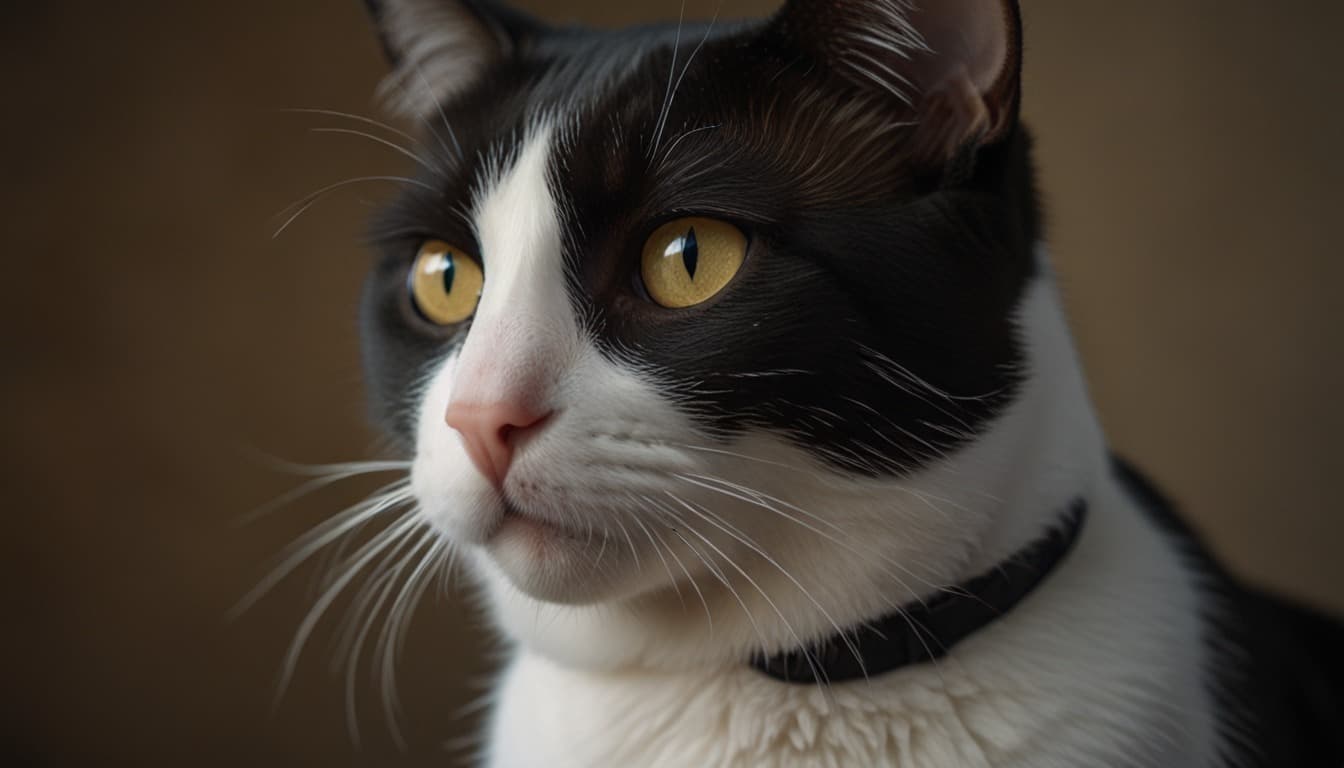
I used to think I was pretty good at reading cats. I'd worked at a shelter for six years, fostered more than 40 of them, and I'd only gotten my face clawed twice, both times I had it coming. Then Frankie arirved — a scrawny, big-eared tuxedo with the kind of wide-eyed look that makes you think, oh, he's scared, I'll just be very gentle and give him a slow blink and some chin scritches and he'll purr within five minutes.
He didn't purr. He latched onto my forearm with all four paws and bit me so hard I saw spots.
I stood there in my kitchen, bleeding onto the linoleum, staring at this cat who'd been purring three seconds earlier — or at least I thought he'd been purring. It turns out that weird little trill he was making wasn't a purr at all. It was a low-grade vibration I'd completely misread because I was too busy thinking about how cute his toes were. His ears were flattened sideways. His tail was doing that slow, deliberate swish I'd always interpreted as "contemplative" but was actually "I'm one overstimulated straw away from breaking." And his whiskers? Pinned forward like little radar dishes locked onto a target. I'd missed every single sign.
That bite cost me an urgent care visit and a course of antibiotics because cat mouths are basically bacterial swamps, and it also forced me to admit something I'd been avoiding for years: I didn't actually know how to read cat body language. I'd been guessing. And I'd been wrong a lot.
Here's what I've figured out since then — through a lot of trial and error, a ridiculous amount of cat behavior books, late-night YouTube sessions watching Jackson Galaxy at 2 a.m., and the kind of humility that only comes from a build cat sending you to the emergency room. None of this is magic. It's just paying attention to the signals cats have been sending us the whole time while we were busy cooing over their toe beans.
The Time Frankie Bit Me and I Completely Deserved It
Let's back up for a secnod. Frankie came from a hoarding situation — 40 cats in a double-wide trailer — and the shelter notes said "semi-feral, may need patience." I read that and thought, pfft, I've socialized semi-ferals before. I put him in my spare bathroom with a cozy bed, a litter box, and one of those pheromone diffusers that smell like an old lady's potpourri, and I sat on the floor for an hour every night, reading a book and ignoring him. Classic socialization protocol.
Day four, Frankie approached me for the first time. He circled my leg, rubbed his cheek against my knee, and then — this is the part I replay in my head like a horror movie — he flopped onto his side and showed me his stomach.
I melred. I reached down to pet that soft, spotted belly.
What I should have noticed: his ears were turned sideways, his pupils were massive black dinner plates despite the bathroom light being bright, and his tail was flicking at the tip like a little metronome set to "impending doom." What I did notice: furry tummy. Within half a second, my hand was wrapped in claws and teeth, and Frankie was back under the sink, glaring at me with the kind of betrayal that said I knew you'd pull this crap.
That's the thing about cat body language — so much of it happens in a fraction of a second, and our human brains are wired to see what we want to see. We interpret a cat rolling over as "pet me" becasue that's what dogs do. But cats aren't dogs. They're not small opinionated dogs. They're a different species with a completely different communication system, and expecting a cat to act like a dog is like expecting a dolphin to act like a horse just because they're both mammals.
After Frankie, I stopped assuming and started actually observing. What follows is everythiing I wish I'd known before I ended up with an infected bite and a growling tuxedo under my sink.
Ears Talk Louder Than Meows
If you only learn one thing about cat body language, make it the ears. Cats have 32 muscles in each ear — for reference, humans have six, and we can barely wiggle ours. Those ears are constantly swiveling, rotating, and tilting to pick up sound, but they're also broadcasting exactly how the cat is feeling. Once you know what to look for, the ears tell you everything.
Forward and Perked: "I'm Curious, Not Necessarily Friendly"
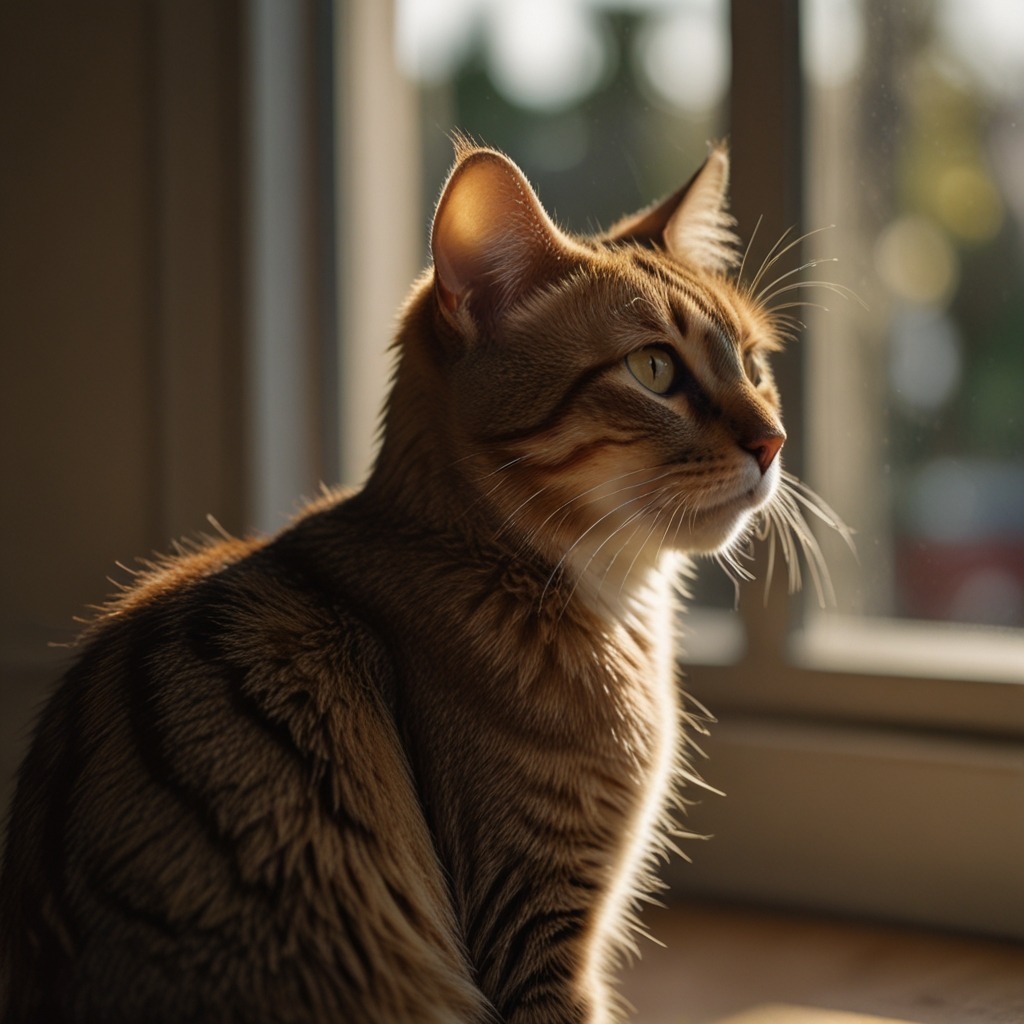
Ears pointing straight up or slightly forward usually mean the cat is alert and interested. Maybe they heard a can opener, maybe they spotted a moth on the ceiling. This isn't an invitation to scoop them up and bury your face in their fur — it just means their attention is fixed on something. I learned this with Miso, my chonky gray build who I've written about when we were knee-deep in his diet saga. Miso would sit on the windowsill with his ears pricked forward, completely still, watching a bird. If I tried to pet him during that laser-focused state, he'd flinch like I'd startled him out of a trance and sometimes swat. He wasn't being mean — he was just in full predator mode, and my hand interrupted the program.
Forward ears also show up when a cat is cautiously investigating something new. Tuna, a former feral I fostered last year, would approach a new toy with her ears so far forward they almost touched at the tips. Her body crouched low, whiskers forward, tail straight out behind her — the whole package said "I'm intrigued but prepared to bolt." That's not the same as "come pet me." I'd wait until she'd sniffed the toy, batted it once, and then relaxed her posture — ears swiveling out to the sides slightly — before I'd try any interaction.
Sideways or Airplane Ears: "Yeah, I'm Annoyed"
You know the look. Ears flatten out to the sides like little airplane wings. This is your cat telling you — politely, at first — that they're Done With Whatever This Is. Overstimulation from too much petting, a noise they don't like, the dog sniffing them one too many times. Whatever the trigger, airplane ears are your thirty-second warning.
I see this all the time when people pet cats for too long. The cat tolerates it for a minute, then the ears start drifting sideways — and the human, oblivious, keeps stroking. Then the swat comes, and the human says "he bit me out of nowhere!" It wasn't nowhere. The ears told you. You just weren't watching.
Frankie's ears hit airplane mode about three seconds before he bit me. I saw the movement and my brain registered it as "cute" and not "evacuate immediately." I don't make that mistake anymore. When I'm petting a new build and those ears start creeping sideways, I pull my hand back and give the cat space. Half the time they'll shake their head, reposition, and then lean back into my hand — they just needed a break. The other half, they'll walk away, and that's fine too.
Flat Back: "Stop Right Freakin' Now"
Fully flattened ears, plastered against the skull like the cat is aerodynamic, is the last warning before fight or flight. This cat is terrified or furious — sometimes both — and is moments away from either bolting or launching at your face. don't touch a cat with pinned-back ears. don't try to soothe them with baby talk. Just back away and let them de-escalate on their own terms.
I've seen this most often at vet visits. My vet, Dr. Nguyen — she's got the patience of a saint and has been dealing with my panicked calls for over a decade — once had to handle a build named Biscuit who turned into a furry buzzsaw the moment the carrier door opened. Ears flat, pupils huge, hissing like a punctured air hose. Dr. Nguyen just wrapped him in a towel, covered his head, and let him calm down in a dark carrier before trying again. Later she said something that's stuck with me: "A cat with pinned ears isn't 'bad' — they're just so scared they can't function. Give them a way out and they'll take it."
That's the important part. Cats with flattened ears are over threshold. Their brains have shifted into survival mode, and no amount of coaxing or scruffing is going to help. Respect the signal and give them space. I've had to cancel vet appointments because a build was too stressed to handle — and you know what? The vet said that was the right call.
The Tail: Not a Wag, a Warning
I see so many people who grew up with dogs try to apply dog logic to cat tails, and it's a disaster every time. A dog wags its tail broadly because it's happy. A cat swishing its tail is the opposite of happy. A cat tail is more like a mood ring that can also physically harm you.
Here's a roguh mood guide, refined through far too many close calls.
Straight Up with a Little Hook: "I'm Confident and I Like You"
A tail held high, maybe with a slight curl at the tip like a question mark, is the cat equivalent of a friendly wave. This cat is comfortable, confident, and open to interaction. Kittens do this automatically when they're greeting their mom. Adult cats do it when they're greeting someone they trust. If a cat approaches you with a tall, hooked tail, they're signaling that they're happy to see you — this is a good moment for a slow blink (we'll get to that) or a gentle cheek scratch, if they're the type that enjoys those.
My current build, a grumpy calico named Pickle, rarely holds her tail up for anyone — but when she does, it's like winning the lottery. She'll march into the kitchen with her tail a straight flagpole, chirping once, and I know that's my window to offer a treat or a quick head rub before she reverts to her default "I'll glare at you from the bookshelf" setting.
Puffed Up: "I'm Terrified, Please Make Yoirself Bigger and Scarier" (Wait, No)
The classic Halloween cat silhouette. Tail fluffed out to twice its normal width, body arched, fur standing on end. This cat isn't trying to be intimidating for fun — they're genuinely terrified, trying to look larger to scare off a threat. You see this when a cat is startled by a loud noise, cornered by a dog, or introduced to a new home too quickly. The fluffed tail is a reflex, not a choice, and it means the cat's nervous system has hit the panic button.
I had a build named Biscuit (different Biscuit, I seem to reuse names) who stayed puffed for three straight days after I brought him home from the shelter. He'd crouch under the bed, his whole body a bristled loaf, and any movement from me sent his tail expanding like an accordion. I finally put a cardboard box with a towel and a Feliway diffuser near his hiding spot, and I left him completely alone except for feeding times for a full week. By day six, the puffing stopped. His tail returned to normal size, and he started venturing out to watch me from the doorway. Patience and space — that's the only treatment for a puffed cat. You can't force them to calm down.
The Slow Swish: "I Am Considering Violence"
This tail movement is the one that gets people bitten the most. It's not a big dramatic wag. It's a slow, rhythmic sweep — back and forth, back and forth — usually from a resting or crouching position. People see it and think the cat is relaxed. They aren't relaxed. They're overstimulated, irritated, or hunting, and the tail is the pressure gauge creeping toward the red zone.
I've seen this with every cat I've ever fostered during play sessions that went on too long. The cat starts out happily chasing a wand toy, tail up, ears forward. Then the play gets frantic, the tail lowers, the ears pitch back slightly, and that slow sweep begins. If I don't end the session right then, the cat redirects that prey drive onto my ankle or my hand — because the energy has to go somewhere, and I'm the closest moving target.
So now I watch for the slow swish the way I watch the temperature gauge on my car. The moment I see it, I stop moving the toy, set it down, and step back. The cat usually does a few more seconds of hunting stalking, then realizes the fun's over and settles down. I've avoided more bites with this one observation than any other technique.
A quick note on dog tails, since I can't help myself: I've spent years fostering dogs too, and the tail language difference is wild. My Lab mix, Gus, thumps his tail against the wall like a drrumline when he's happy. The first time my build cat Tuna saw that, she flattened her ears and hid under the couch because a rapidly thumping tail means "I'm about to attack" in cat-speak. Interspecies miscommunication at its finest. Anyway, back to cats.
The Belly Trap
If a cat rolls onto her back and exposes that fluffy tuummy, don't — I mean don't — go in for a rub. That's not an invitation. It's a complicated gesture that means "I trust you enough to show you my most vulnerable parts, but I also now have all four sets of claws perfectly aied at your hand, so we'll see how this plays out."
I learned this the permanent way with Frankie, who I already told you about, but Miso reinforced the lesson a dozen times. Miso would flop onto his side, purring like a motorboat, belly exposed and soft. I'd try a single finger, very gently. Three seconds of bliss, then bam — bunny kicks and a biite. He wasn't trying to be a jerk. He just got overstimulated, and the belly is an extremely sensitive area for most cats. For some cats, it's never a "pet here" zone. For others, you can earn the privilege after months of trust-building, but even then, keep it brief.
Now when a cat shows me her belly, I admire it from a distance. I might say "beautiful tummy" and offer a chin scratch instead. Both parties stay happy and unscarred.
Slow Binks: The Closest They'll Get to "I Love You"
Out of everything I've learned about cat communication, the slow blink is the one that makes me emotional in a weird, sappy way. Cats are predators, and they're also prey. In the wild, staring means threat — predators lock eyes before they pounce, and prey animals stare to monitor danger. When a cat deliberately, slowly closes their eyes in your presence and then opens them again like a lazy blink, they're saying "I feel so safe with you that I'm willing to take my eyes off the world."
You can slow blink back. It sounds dumb, but it works. I've used it with every semi-feral build I've had. I sit on the floor, not looking directly at the cat — direct eye contact is intimidating — and I blink very slowly, then look away. The cat watches. After a few minutes, they often blink back. It's like a tiny contract of trust, and it's the foundation for everything else.
I remember the first time Tuna slow-blinked at me. She'd been hiding behind the toilet for three weeks, and I'd spent that whole time sitting in the bathroom, reading, not pressuring her. One evening she crept out, sat six feet awya, and blinked. I blinked back. She blinked again. Then she turned around and groomed her tail — which, in cat language, is the equivalent of "eh, you're not that interesting, but I don't mind you being here." I almost cried. Three weeks of patience, and one slow blink was my reward. Worth it.
If you're trying to make friends with a shy cat, this is your starting ponit. Don't reach for them. Don't talk loudly. Just sit sideways, blink slowly, and wait. It's the least threatening thing you can do, and cats understand it instinctively.
Whisker Position: The Signal Nobody Talks About
Everyone focuses on ears and tails, but whiskers are my secret weapon for reading a cat's mood. Whiskers — those stiff sensory hairs on their muzzle, above their eyes, and on the backs of their front legs — are incredibly sensitive. They detect air currents, help cats deal with in the dark, and gauge whether they can fit through an opening. But they also telegraph emotional state in real time.
Whiskers Forward: "I'm Intensely Interested"
When a cat's whiskers are fanned forward, pointing toward something, they're in hunting mode or serious investigation. You'll see this when they're staring at a toy, watching a brid, or creeping toward a suspicious sound. The whiskers are reaching out to gather as much sensory data as possible. This cat is focused, and touching them during this state will startle them. I've seen it with every cat who's ever locked onto a laser pointer — whiskers aimed forward like a mustache made of danger, body quivering. That's not a calm cat ready for pets. That's a predator in the final seconds of a stalk.
Whiskers Relaxed, Slightly Out to the Sdies: "Life Is Good"
A relaxed cat has whiskers that just sort of hang out, neutral. They might angle slightly downward if the cat is drowsy. This is the face of a cat who's content, not threatened, not working. When Pickle lounges on the back of the couch in the sun, her whiskers droop a little and twitch occasionally. Thats' my signal that I can approach slowly and maybe rub behind her ears without getting the cold shoulder.
Whiskers Pulled Back Against the Cheeks: "I'm Freaked Out"
Whiskers flattened against the face, often combined with flattened ears and wide eyes, is a distress signal. The cat is making itself small, trying to disappear. You'll see this at the vet, during thunderstorms, or when a cat is being cornered by something they fear. I saw it on Tuna for the first two weeks in my spare bathroom, before she started to trust me. Her whiskers were perpetually pulled tight against her face, making her look pinched and worried. As she relaxed over the weeks, they slowly loosened and started angling normally. Whisker position was my progress bar.
I've become the kind of person who notices whissker tension the way some people notice a cat's weight. It's a subtle meter, but once you start paying attention, you can't unsee it. And it helps — a lot — when you're trying to gauge whether a nervous cat is ready to be approached or whether you should back off for another day.
That Time I Chased a Cat for 20 Minutes and He Peed on My Couch (a Tangential But Necessary Rant)
This isn't directly about body language, but it's connected to the broader point of listening to what your cat is telling you. A couple years ago, I fostered a cat named Gravy (yes, the one from my gravy-trained saga) — a massive orange tom who was terrified of carriers. The first time I needed to take him to the vet, I made the misstake of thinking I could just scoop him up and stuff him in. He saw the carrier from across the room and bolted. His body language was screaming "I'm panicked" — tail tucked, ears flat, body low to the ground — but I ignored it because I was in a hurry. I chased him around the apartment for twenty minutes, cornered him behind the TV stand, and finally got him into the carrier while he yowled like I was murdering him.
Later that day, I came home to find he'd peed on the couch. Not because he's a bad cat, but because he was so stressed from the chase and the vet that he couldn't hold it. That was the mooment I realized I'd ignored every signal he gave me. If I'd paid attention to his body language earlier — the wide eyes when I first brought out the carrier, the low crouch, the tucked tail — I could have desensitized him slowly over weeks instead of traumatizing him in one morning. I've since learned to respect the early warning signs. And I've also learned a lot about inappropriate urination and stress, which I wrote about in another build's lengthy pee saga. Bottom line: cats don't pee on things out of spite. They're communicating. And when you miss the subtle cues, the communication gets more dramatic.
The "I'm About to Swat You" Checklist
Over the years, I've developed a mental checklist I run through before I pet any cat, even my own fosters. It takes about two seconds and it's saved my hands more times than I can count. If any of these boxes are checked, I pause and reassess.
Ears: Are they forward and relaxed, or are they sideways/flat? If sideways — red flag. If flat — abort mission.
Tail: Is it up, low and still, or swishing? Slow swish = don't touch. Fast thrash = run.
Whiskers: Neutral and relaxed, or pulled back/pinned forward? Pilled back means scared; pinned forward means overstimulated. Either way, wait.
Eyes: Soft and blinkong, or wide with dilated pupils? Dilated pupils in a bright room often mean agitation or fear.
Body tension: Loose and droopy like a melted puddle, or rigid and twitchy? A tense body is a warning.
I also pay attention to purring context. People think purring always means happy. It doesn't. Cats also purr when they're in pain or stressed — it's a self-soothing mechanism. A cat who's purring while their ears are sideways and their tail is thrashing isn't a happy cat. They're an anxious cat trying to calm themselves down. I've seen this in the vet's office so many times, and well-meaning owners go "aw, he's purring, he's fine" while their cat is trembling in terror. Context matters.
None of this is complicated. It's just awareness. And it means I almmost never get scratched anymore unless I'm doing something stupid — which, to be fair, still happens occasionally because I'm a flawed human who sometimes thinks "maybe this cat is different." They're never different. They're cats.
A Quick Word on Scratching and Territory (Because It's Body Language, Too)
Scratching isn't just about claw maintenance. It's a huge part of how cats communicate with other cats — and with you. When a cat scratches your couch in front of you, they're not just destroying your furniture. They're leaving a visual and scent mark that says "I was here, this is mine." The posture they take — stretched tall, claws digging in — is a display of confidence and ownership. I used to get furious about scratching until I realized my cat was basically putting a Post-It note on the couch that said "Property of Cat."
I redirected that behavior by placing scratching posts right next to the furniture they favored, and I used catnip and treats to make the posts more appealing. It took a while, but it worked — and I wrote about the whole frustrating process in the post about my couch-scratching war. Understanding that scratching is a form of body language — not vandalism — changed my whole approach.
When Grooming Goes Wrong: The Tesnion You Can't See Until It's Too Late
Long-haired cats have their own special body language challenges. Mats pull on the skin, and even a gentle brush stroke can hurt if you're not careful. I learned this the hard way with a cat named Juniper, who I let get so matted that the vet had to shave him naked. During brushing sessions, Juniper would strt out fine — ears forward, tail up. Then, about two minutes in, his ears would drift sideways, his skin would ripple along his back, and his whiskers would tense forward. All classic signs of irritation and overstimulation. If I kept brushing, he'd snap. I eventually learned to stop the moment I saw those ripples, even if I'd barely made a dent in the mat. A few short sessions were better than one long battle that ended with both of us traumatized.
Grooming body language is subtle because the cat's face might be hidden or their body restrained, but those ear shifts and skin ripples are universal. Respect them.
Six Months After Frankie, I Haven't Been Bitten Again — And Here's the One Thing That Changed
It's not that I'm smarter now. I'm just paying attention instead of projecting. When I walk into a room with a new build cat, I don't think about how badly I want to pet them. I watch their ears. I check their tail. I look at their whiskers and I wait for a slow blink. If I don't get any positive signals, I sit on the floor, I read my book, and I let the cat decide when — or if — to approach. Some cats take three days. Some take three months. And some, like my grumpy Pickle, will never be lap cats, and that's okay. Their body language tells me what they're comfortable with, and it's my job to listen, not to push.
Frankie eventually came out from under the sink. It took two more weeks of me sitting perfectly still, offering Churu treats on a spoon, and letting him initiate every interaction. One day he walked up, sniffed my knee, and head-butted my hand. I scratched behind his ears for exactly three seconds — because that's what his ears and tail told me was the limit — and then I stopped before he asked me to. He purred. A real purr this time. And then he walked back under the sink, because he was done. And I let him.
He was adopted six months later by a wonderful family who understood his body language from day one. I got a Christmas card with a photo of Frankie sprawled on a sofa, belly up, ears relaxed, whiskers neutral. The cat who bit me was finally comfortable in his own skin. All it took was someone bothering to listen.