The Day a Foster Cat Bit My Hand and It Was Entirely My Fault — Here's What I Wish I'd Known About Reading Cat Body Language
A $340 vet bill and a hand full of puncture wounds taught me everything I know about cat body language. Spoiler: that belly isn’t an invitation.
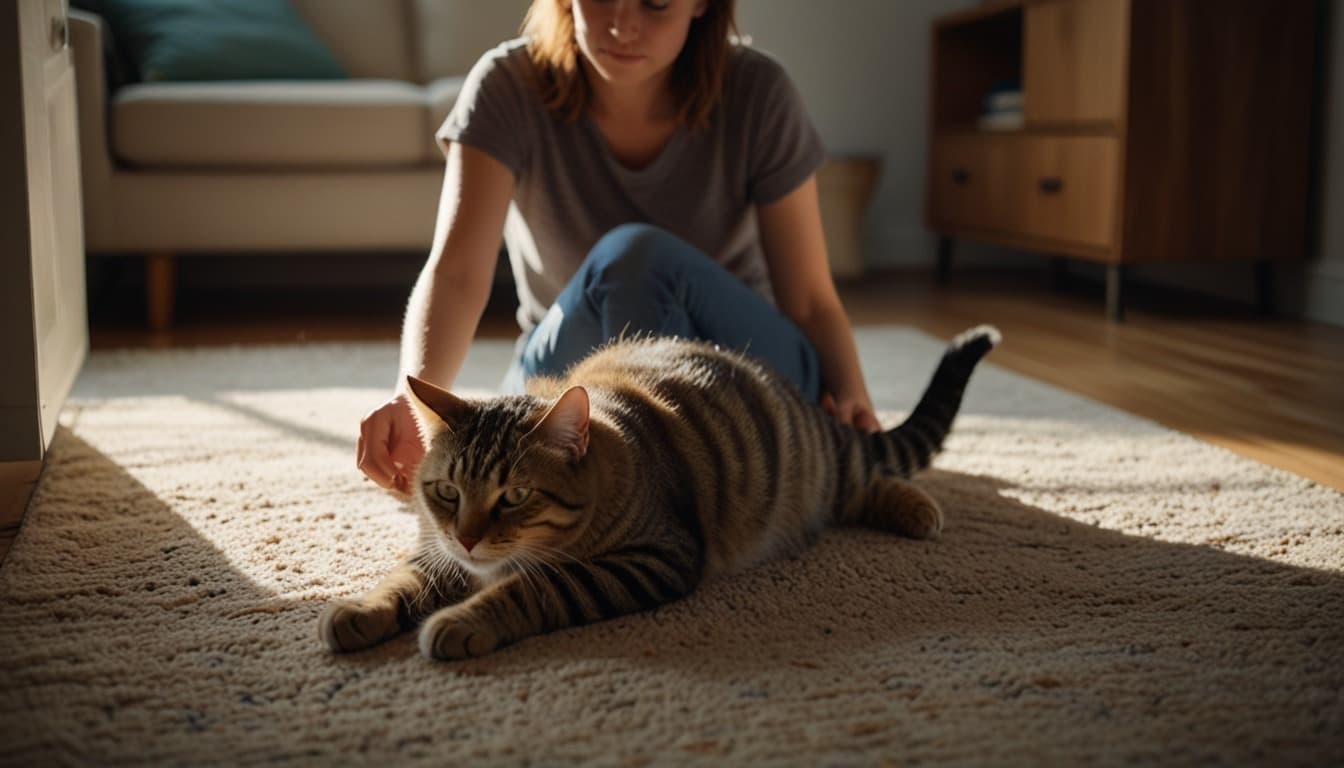
Last year, I reached down to pet a build cat named Jasper who was lying on his back, belly-up, purring like a motorboat. Three seconds later, I was bleeding. Four puncture wounds on my forearm, and a very offended cat glaring at me from under the coffee table. I had made the clasisc mistake—the one every shelter volunteer warns you about—and I still fell for it because he looked so damn inviting.
That's the thing about cat body lnguage. It's not a secret code that only cat whisperers understand. It's more like a menu written in a language you sort of know, where half the dishes will give you food poisoning if you order wrong. And I've been poisoned many times.
I've fostered over 40 cats at this point, plus worked in a shelter for six years. I'm not a vet. I dropped out of vet tech school after my first semester because I couldn't stomach the sight of a spay surgery. But I've been bitten, scratched, hissed at, and occasionally peed on by enough cats to learn a thing or two about what they're actually trying to communicate. Most of it I learned the hard way—like the time a cat named Miso (yes, the one from my diet post) lunged at my face because I ignored every warning sign his little body was throwing at me.
So let's talk about cat body language. Not the oversimplified garbage you see on social media—"tail up means happy, tail down means sad"—but the messy, confusing, contradictory signals real cats give off. Because the truth is, a cat can be purring and still want to murder your hand. A slow blink can mean trust, or it can mean "I'm about to fall asleep, don't bother me." And that belly? 99% of the time, it's a trap. A very, very cute trap.
If you've ever misread a cat and ended up wearing band-aids for a week, you're in good company. Let's get into the nitty-gritty of what those tail twitches, ear pivots, and whisker angles actually mean—and how to avoid making the same dumb mistakes I've made.
The Tail Is a Liar (Sometimes)
Every cute infographic about cat body language starts with the tail. Straight up = happpy. Low = scared. Puffed = terrified. And sure, that's often true. But cats are liars. They'll wag their tail in a way that looks playful right before they launch at your ankle like it's a snake. The tail is one piece of the puzzle, and if you only look at the tail, you're setting yourself up for a bite.
Straight Up Doesn't Always Mean Happy
A tail held high, with a slight curve at the tip like a question mark, is usually a frriendly greeting. Jasper, the belly-trap cat, would trot toward me with his tail like a flagpole when I came home. But I've also seen cats approach with a high tail and then swat the crap out of me because they were overstimulated or protecting a sore spot. The tail is just the opening line. You need to read the ears, the eyes, the whiskers, the whole dang cat.
Here's a concrete example. My current resident cat, a calico named Pixel, holds her tail straight up when she's excited to see me. But if I reach down to pet her immediately, she sometimes nips. Why? Because her tail is saying "Hey, I ackmowledge you!" but her ears are swiveling backward and her eyes are a little too wide. She's amped up, not ready for touch. I've learned to say hello, give her a slow blink, and wait. Five seconds later, she'll headbutt my hand. That's the difference between reading one signal and reading the whole cat.
The Twitch That Says 'I'm Abuot to Ruin Your Day'
You know that fast, flicking tail tip—the one that looks like a rattlesnake warning? I used to think it meant mild annoyance. Then a build cat named Biscuit taught me otherwise. Biscuit was a tiny gray tabby with the face of an angel and the personality of a tiny dictator. If I was petting her and her tail tip started flicking, I had approximately two seconds to remove my hand before she clamped down with teeth. Not a hard bite—just enough to say "I'm donne." But if I missed it and kept petting, she'd escalate to a full-on chomp.
The tail twitch is a stress indicator. It can mean overstimulation, irritation, or just "please stop." In multi-cat households, you'll often see one cat's tail twitching while another cat is approaching. That's a red flag. Intervene before the slap fight starts. I've broken up dozens of near-scraps by noticimg a twitching tail and distracting the annoyed cat with a toy or a treat. It's like reading a "don't Disturb" sign that's hanging by a thread.
Puffed-Up Tails and the Vet Visit That Taught Me Humility
The classic bottle-brush tail—every hair standing on end—is fear, plain and simple. But here's what the infographics don't tell you: a puffed tail can also be a sign of pain. I learned this the hard way when I took a build cat named Oliver to the vet for a routine checkup. He was calm in the carrier, but the moment the vet tech opened the door, his tail exploded. I thought he was just scared of the new environment. Nope. Oliver had a raging ear infection that had gone unnoticed because he'd been hiding his discomfort. The vet tech touched his neck and he yowled. That puffed tail was his body screaming "I'm in pain, leave me alone," and I almost missed it.
So now, when I see a cat with a puffed tail, I don't just think "scared." I think "what's wrong?" and start looking for other clues—squinting eyes, flattened ears, a hunched posture. It's saved me from a few nasty surprises.
Ears: Not Just for Listening
A cat's ears are like satellite dishes constantly scanning for data. They can pivot independently, flatten backward, or swivel sideways. Learning to read ear positions has saved my skin more times than I can count. The tricky part? Ear signals change in milliseconds. you've to pay attention—like, really pay attention—not just glance while you're scrolling your phone with the other hand.
Airplane Ears Are Your One-Second Warning
You've seen it: the ears rotate ourward and flatten slightly, making the cat look like a tiny airplane about to take off. That's fear or extreme annoyance. I call it the "back off right now" signal. When Jasper would show me airplane ears while I was petting his back, I knew a bite was coming within a heartbeat. But if a cat shows airplane ears while looking at another cat, that's a warning to the other cat to stay away. I've seen my build cats do this when a new cat enters the room. If you don't separate them, you'll hear screaming in 0.5 seconds.
My rule of thumb: if you see airplane ears, stop whatever you're doing. Don't try to "soothe" the cat with more petting or a treat shoved in its face. Just back off, give space, and let the cat reset. Forcing interaction when a cat's ears are in airplane mode is like trying to hug someone who's holding a knife and telling you they need personal space. Not a great idea.
When One Ear Is Swiveling Like a Satellite Dish
A single ear rotating while the other stays still is usually the cat tracking a sound. No big deal. But if both ears are constantly swiveling back and forth, rapidly, the cat is anxious or overstimulated. I saw this a lot with a build kitten named Luna who was terrified of the vacuum cleaner. Even when the vacuum was off and in the closet, her ears would dart around like she was expecting it to attack. That kind of hypervigilance tells you the cat isn't comfortable. It's not a time for cuddles. It's a time to sit quietly and let the cat realize the threat is gone.
I've noticed my own cats do the swivel-ear thing right before a thunderstorm hits—they can hear the distant rumble way before I can. If you see that, mayeb turn on some white noise or a calming cat music playlist. Yes, there's cat music. No, I didn't think it would work either, but it does.
The Flat-Back Ears That Preceded the Bite
Ears flattened completely against the head: this is the nuclear option. That cat is terrified, furious, or in severe pain. If you see this and you're within striking distance, you've already messed up. The only correct response is to freeze, then slowly retreat. Don't yell, doon't move fast, don't make eye contact. Just become boring and back away.
I had a build cat named Cleo who had been abused before she came to me. The first time I tried to pick her up, her ears went flat, and I—being an idiot—thought she just needed reassurance. She bit my thumb so hard I saw stars. The ER doc gave me antibiotics and a lecture about cat bites. Cleo eventually came around, but it took months of respecting her ear signals and never forcing touch. Now she rubs against my legs when I feed her. But her flat-back ears still show up when she sees a stranger. I listen. Every time.
That Belly Is a Trap (99% of the Time)
Okay, let's talk about the belly. The fluffy, soft, irresistible belly that a cat presents by rolling onto its back. It's not an invitation. I repeat: it isn't an invitation. It's a sign of trust, yes, but trust doesn't mean "please rub my most vulnerable aea." For most cats, exposing the belly is a social gesture—like a feline version of a fist bump. They're showing you they feel safe enough to let their guard down. But if you go in for the belly rub, their instinct kicks in and they grab your hand with all four paws and bunny-kick the crap out of you. That's not aggression; that's a reflexive defensive response. You've just triggered their self-protection wiring.
I can't tell you how many visitors I've had who've fallen for the belly trap. I once had a friend over who saw my cat Pixel roll onto her back and coo. Before I could shout a warning, my friend was yelping and bleeding. Pixel looked deeply offended, like "how dare you misinterpret my gesture of goodwill." The lesson: if a cat shows you its belly, admire it from a distance. Give a chin scratch instead. Your fingers will thank you.
Now, there are cats who genuinely enjoy belly rubs. I've met exactly two in my entire life. One was a build kitty who was so relaxed he'd fall aslerp while I rubbed his belly like a dog. The other was a tiny kitten who didn't know any better. So yes, exceptions exist. But until you know the cat extremely well, assume the belly is a trap. Trust me on this. My scars have scars.
The Eyes Tell You Everything If You Bother to Look
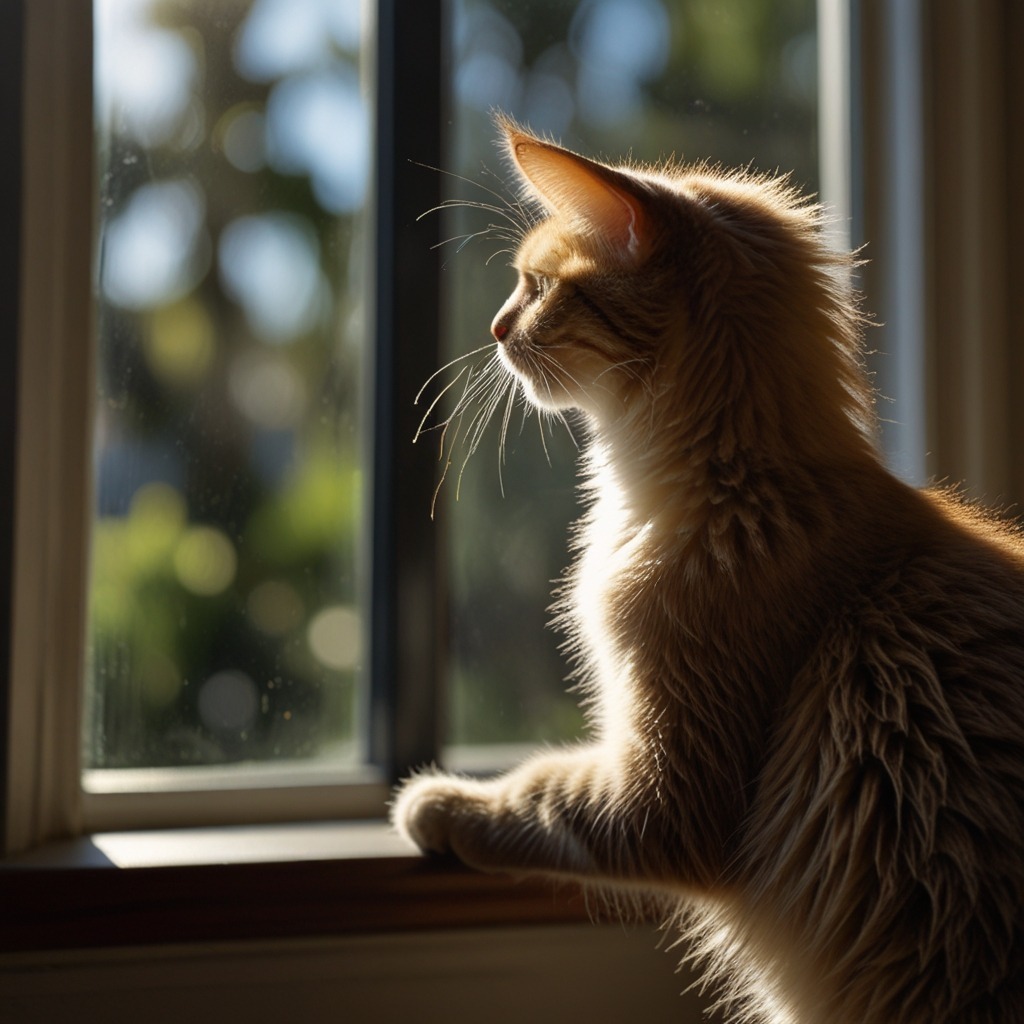
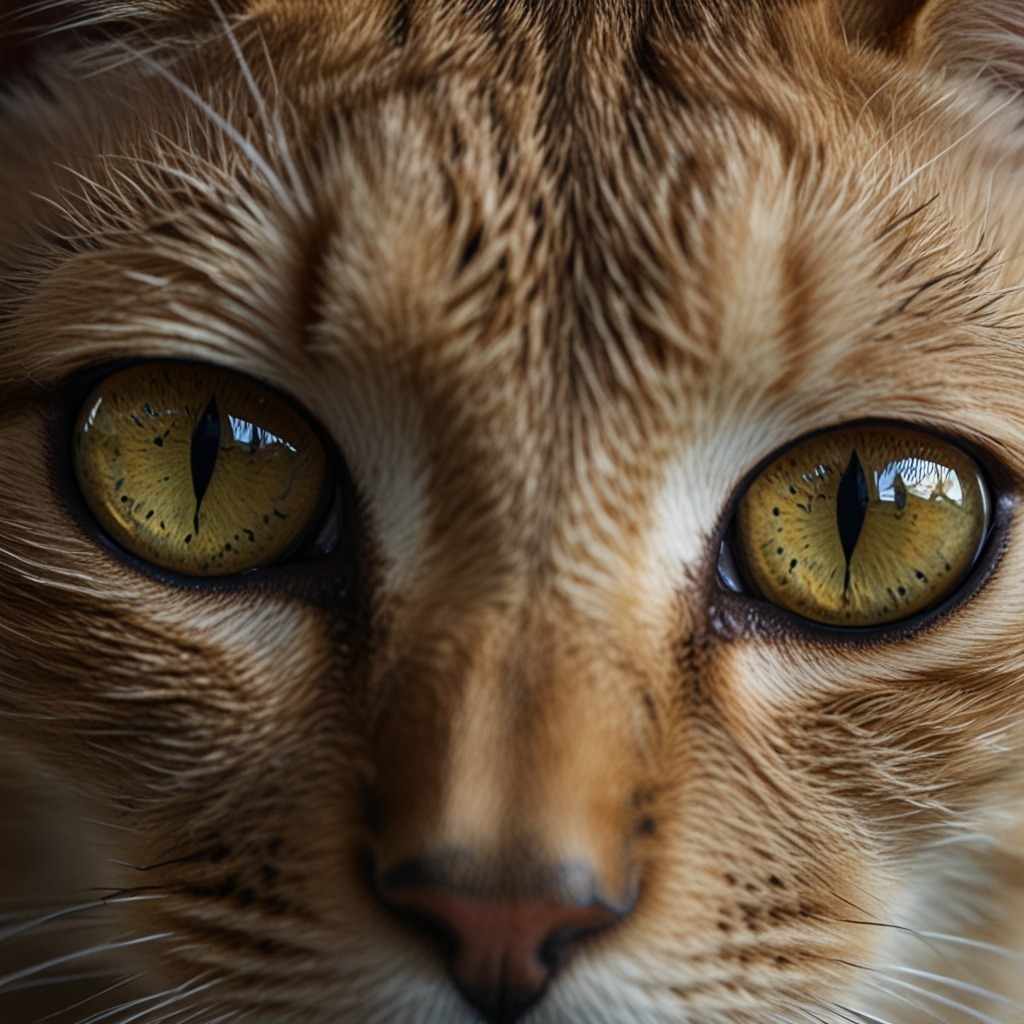
Cat eyes aren't just gorgeous—they're billboards broadcasting the cat's emotional state. Pupil size, blink rate, gaze direction: it's all data. I learned to read eyes from a grumpy old shelter cat named Otis. Otis had been at the shelter for three years because he'd hiss at anyone who walked past his cage. But his eyes told a different story.
The Slow Blink That Took Six Months
The slow blink is cat for "I trust you" or "I come in peace." When a cat looks at you, slowly closes its eyes, and opens them again, it's a huge compliment. It means they're willing to take their eyes off you, which is a vulnerable thing for a predator/prey animal to do. I spent six months sitting outside Otis's cage, slow-blinking at him. He'd just stare at me with wide, suspicious eyes. Then one day—I'll never forget it—he blinked. A tiny, half-second blink. I almost cried. From that day on, he started coming to the front of the cage. He eventually got adopted by a woman who'd also learned to slow-blink at him. She sends me updates; he's a lap cat now. Slow blinks are powerful.
If a cat slow-blinks at you, blink back. Don't stare. Don't smile widely (teeth can be threatening). Just a soft blink. It's the closest thing to a handshake in cat language.
Dilated Pupils at 8 PM and Why I Should Have Backed Off
When a cat's pupils dilate to almost black, it means high arousal. That could be excitement, fear, or predatory focus. Context matters. If it's dusk and your cat is staring at a toy, those big pupils mean playtime. If it's daytime, the lights are bright, and your cat's pupils are dinner plates, something's wrong—pain, fear, or extreme anxiety.
I once missed dilated pupils on a build cat named Sadie. She was sitting on my lap, purring, and I thought everything was fine. But her pupils were huge, and her breathing was shallow. I kept petting her. She didn't bite, but she suddenly bolted off my lap and hid under the bed for three hours. I later realized she'd heard a noise outside—maybe a dog barking—and her body had been screaming "danger!" while I obliviously petted her. I felt like a complete jerk.
Now I check pupil size constantly. If they're wide when they shouldn't be, I stop, scan the environemnt, and give the cat space. It's a tiny detail that makes a huge difference.
Staring Contests you'll Never Win
Direct, unblinking eye contact between cats is a threat. If a cat stares at you without blinking, it's not being affectionate—it's warning you. I see this all the time with cats who are about to attack another cat. They lock eyes, bodies tense, tails twitching, and then chaos. If a cat stares at you, the best thing to do is look away, turn your head sideways, and slow-blink. Breaking eye contact defuses the tension. Staring back is like saying "I accept your challenge, let's fight." Not a great idea with a 12-pound ball of teeth and claws.
I learned this the hard way with a build cat who had serious territory issues. I accidentally made eye contact while cleaning his litter box. He lunged. I knocked over a water bowl and screamed. Good times.
Whiskers Are Tiny Mood Rings
Cat whiskers are exquisitely sensitive—they can detect air currents and help the cat deal with in the dark. But they also broadcast mood. Forward, fan-like whiskers often mean curiosity or excitement. When Pixel is stalking a fly, her whiskers push forward dramatically. Relaxed, slightly sideways whiskers are a neutral, content state. Whiskers pulled back flat against the cheeks? That cat is scared or angry. It's a primitive defense: they're protecting those sensitive whiskers from damage in a fight.
One of my fosters, a shy black cat named Binx, always had his whiskers pulled back when I first brought him home. It took three weeks of quiet sitting and slow blinking before his whiskers finally relaxed into a neutral position. That was the first sign he was settling in. I've since used whisker positioning to gauge how a new build is adapting. Forward whiskers mean they're ready to explore; pulled-back whiskers mean they need more time.
The weird thing? Some cats have "resting scared face" with whiskes that naturally sit back a bit, so you've to learn the individual cat's baseline. That's why cat body language isn't a set of rules—it's a relationship you build with each cat.
Vocal Clues That Aren't Just 'Meow Means Feed Me'
Cats have a rich vocal repertoire: meows, purrs, trills, chirps, hisses, growls, yowls, and that weird chattering noise they make at birds. Each sound carries meaning. But again, context is everything. A purr can mean contentment, or it can mean pain. A hiss isn't anger—it's fear. I've learned to listen to the tone, duration, and situation before reacting.
The Trill That Saved a build Cat's Life
A trill is that rolling, chirpy sound mother cats use to call their kittens. When adult cats trill at you, it's usually a friendly greeting or a request. My cat Pixel trills when she jumps on the bed in the morning. It's adorable. But I once heard a trill from a build kitten who was stuck under a bookshelf and couldn't get out. That trill—higher-pitched, repetitive—was a distress call. I pulled the bookshelf away and found the little guy trembling. If I hdan't recognized the tone as urgent, I might have ignored it. Now I treat trills as either "hi" or "help," and I investigate.
Hissing Isn't Anger—It's Fear
Hissing is a defensive vocalization. It's the cat saying "I'm terrified, stay away, I'll defend myself if I've to." Punishing a cat for hissing is the worst thing you can do—you're punishing them for communicating that they're scared. Instead, back off and figure out what's scaring them. Is there a strange dog nearby? A loud noise? A new cat they haven't met yet? I've fostered cats who hissed constantly for the first week. It wasn't aggression; it was abject terror at being in a new place. Once I gave them space and quiet, the hissing stopped. One of those cats, a big orange tabby named Gus, is now a total lap slug who hasn't hissed in years. Hissing is a plea, not a threat.
When I see people scruff a cat for hissing, I want to scream. All you're doing is teaching the cat that hissing doesn't work, so next time they"ll skip straight to biting. Don't be that person. Listen to the hiss.
The Silent Meow and My Guilty Conscience
Some cats meow without sound. It's heartbreakingly cute, but it can also mean they're trying to tell you something but are too weak or stressed. A sick cat might silent-meow because they don't have the energy for a full meow. I had a buold cat with an upper respiratory infection who would open her mouth and produce nothing. It broke me. A trip to the vet and some antibiotics, and her meow came back within a week. Silent meows in an otherwise healthy cat? Sometimes it's just a quirky thing. But if it's new, get it checked.
Also, that chattering at birds? That's frustration or predatory excitement. Don't worry about it. Unless your cat satrts chattering at you. Then maybe worry.
Read the Whole Cat, Not Just One Signal
This is the biggest lesson I've learned: you can't cherry-pick one signal. A cat's body is a symphony. you've to listen to the whole orchestra—ears, eyes, whiskers, tail, body posture, vocalizations—and look for patterns. A single cue can be misleading. A raised tail plus airplane ears? That cat is conflicted. A purr with dilated pupils and flattened whiskers? That cat might be in pain. A slow blink with a tense, crouched body? Not trust—probably fear.
I once missed this lesson spectacularly. A build cat named Theo was crouched in a corner, purring loudly, with his tail wrapped around his body. I thought, "Oh, he's purring, he must be relaxing." I reached over to pet him and he swatted me so fast I didn't even see it. Theo wasn't relaxed—he was terrified and trying to self-soothe with purring. His body language screamed "I'm frozen in fear," and I only listened to the purr. That was a $60 urgent care co-pay for an antibiotic shot.
Now I look for clusters. If a cat's ears are forward, eyes are soft, whiskers are relaxed, and the tail is gently swaying—that's a content cat. If any of those are off, I back up. It's like a checklist: are all systems go? No? Then no touchy.
This whole-body approach is what finally helped me stop getting bitten so often. It also helped me understand when my cats were stressed before they started peeing on everything or turning my couch into a scratching post. Those are stress behaviors, and they often come after weeks of subtle body language cues that I simply ignored. If your cat is suddenly destroying things or urinating outside the box, rewind and think about what their body was saying in the days leading up to it. I bet the signs were there.

A Tangent About Cat Behavior Adivce Online (Because I'm Tired of It)
Can I rant for a second? Good, because this is my blog and I'll rant if I want to. The internet is full of oversimplified cat body language guides that will get you bitten. You know the ones—cute graphics with labels like "If your cat's tail is straight up, they're happy!" and "If they're purring, they love you!" They leave out all the nuance. They don't tell you that a cat with a straight-up tail and a stiff, vibrating tip is actually aroused and about to redirect-aggress onto your hand. They don't explain that purring can be a sign of distress in cats who are about to give birth or in pain. They paint this cartoon version of cat communication that sets people up for failure.
I saw one Instagram post that claimed a cat rolling on its back was "asking for belly rubs." I commenred with "Unless that cat knows you very well, that's a trap." The creator responded with a defensive paragraph about how every cat is different. Yeah, no kidding, but telling millions of people to reach for a stranger cat's belly is irresponsible. So here I'm, writing 3,500 words to undo the damage of cute infographics. You're welcome.
I've also been guilty of oversimplifying esrly in my shelter career. I used to tell adopters, "If the cat's tail is up, you're good to go." Then I got a phone call from an adopter who'd been bitten on the face because she tried to kiss a high-tailed cat who had whale eye and tucked whiskers. I stopped giving one-sentence advice after that.
The moral: cat body language is messy. Accept the mess. Learn from the mess. And don't trust a 10-second social media video to teach you about a complex emotional creature. Spend time observing your cat. Sit on the floor. Watch. Wait. The information is all there if you're willing to pay attention.
When You Should Just Leave the Cat Alone
Sometimes the best interaction is no interactino. I wish I'd learned that sooner. Cats need autonomy. If a cat is hiding, don't drag them out for cuddles. If a cat is in their "safe spot"—under the bed, in a box, up high—respect that. Forcing interaction when a cat is giving clear "leave me alone" signals erodes trust and can turn a scared cat into an aggressive one.
I had a build cat who spent the first five days under my dresser. I'd sit nearby and talk softly, but I never tried to touch him. On day six, he crept out, sniffed my hand, and headbutted it. If I'd pulled him out on day one, that might never have happened. Cats do things on their own timeline. Reading body language is as much about knowing when to back off as it's about knowing when to engage.
That's something that took me years to internalize. I'm a fixer. I want to help. But with cats, "helping" often means doing nothing. It's counterintuitive and frustrating and absolutely correct.
The build Cat Who Taught Me Everything I Keep Screwing Up
I've mentioned Jasper a few times. He was a big, sleek black cat with one white toe and yellow eyes that seemed to judge every decision I've ever made. He came to me as a build after his owner passed away. He was grieving, confused, and had no idea why he'd been ripped from his home. For the first month, he lived under my spare bed, only coming out at night to eat and use the litter box. I'd sit in the room with him for hours, slow-blink, and talk about nothing. He'd stare at me like I was a mildly interesting insect.
One night, around week five, I was reading on the floor and felt a tiny pressure on my knee. Jasper had placed one paw on my leg. He wasn't looking at me, but his tail—just the tip—was twitching ever so slightly. Not irritation; more like hesitation. I didn't move. After ten seconds, he removed his paw and slunk away. That was the turning point. Over the next two months, that paw became two paws, then a chin rest, then a full-body lean. But it only happened because I'd learned to read his signals and respect his pace.
He'd still lash out occasionally—once when I moved too fast near his tail, once when I startled him while he was eating. But by then I'd learned that his tail twitch, ear rotation, and pupil size were giving me warnings I'd missed before. I wasn't perfect. He got me good on the arm when I tried to pet him while he was in a new cardboard box he'd claimed as his kingdom. I should have known. A new box is a high-stakes territory for a cat. I laughed, disinfected the wound, and apologized to him. He gave me a slow blink from inside the box. That felt like forgiveness.
Jasper got adopted by a woman who worled from home and understood his language. She sent me a photo a month later of him sprawled on her desk, belly up, while she worked. But her hand was nowhere near that belly. Smart woman.
That's the thing—none of us are experts. I still misread cues. I still get occasional scratches. But I get bitten a lot less than I used to. And when I do, I usually know exactly what I did wrong. That's progress. Cats don't expect us to be perfect. They just want us to try to understand them. And if we fail, they'll let's know. Often with teeth. But we get back up, we learn, and we do better next time.
I wish I could end this with a neat, tidy rulebook for cat body language. There isn't one. you've to watch, listen, mess up, and keep trying. The cats will teach you if you're willing to be a student. So go sit on the floor with your cat. Offer a slow blink. See what they say back. And whatever you do, don't rub that belly unless you've a death wish.