My Foster Kitten Pooped Liquid for 11 Days Straight—Here's the Wet Food That Finally Firmed Things Up (And the $7 Can That Made Him Worse)
I thought all wet kitten food was basically the same until Basil turned my foster room floor into a biohazard zone. 11 days, 9 different cans, and one midnight vet visit later, I learned what actually helps a kitten with diarrhea—and what makes everything so much worse.
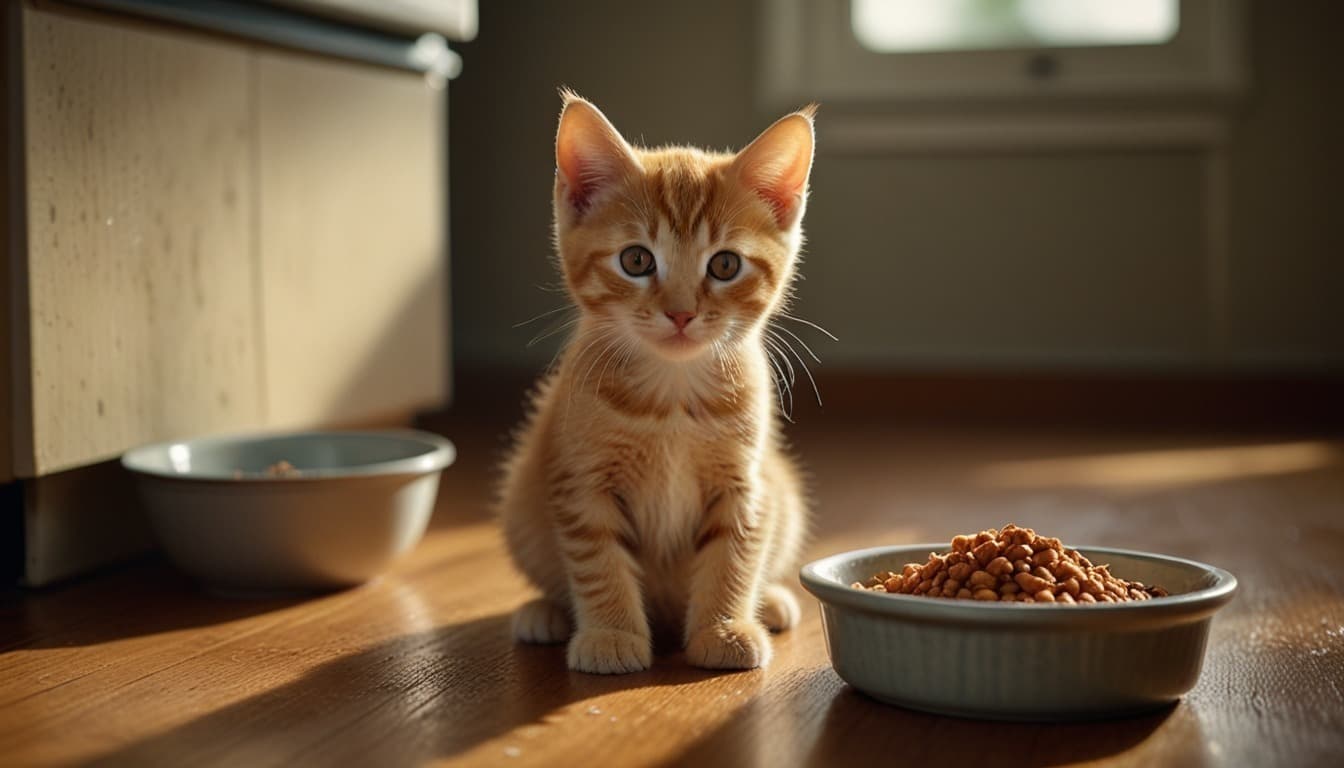
Basil arrived on a Thursday afternoon in a cardboard box that smelled like the inside of a garbage truck. He was an orange tabby the size of a baked potato with eyes so big they looked like they'd been stuck on with glue. I'd taken him in from a hoarding situation—fourteen cats in a two-bedroom trailer, according to the intake paperwork—and the poor thing had never seen a clean litter box, or probably a clean anything. The volunteer who handed him over warned me he'd been a little "loose" since they pulled him. Loose. That's what they called it. By Friday morning, "loose" was the understatement of my entire fostering career.
The diarrhea was liquid, yellow-brown, and it came with a sound. You could hear it from the next room. A horrible little splattering noise that made my three dogs perk up their ears like, what the hell was that? I scooped him up, checked his gums—pale but not terrible—and started googling teh symptoms at 2am while Basil sat in a towel on my lap, shivering and giving me a look that said, I'm going to die and it's your fault.
I've fostered over 40 cats and kittens. I've dealt with ringworm, upper respiratory infections, ear mites, and one very memorable case of a cat who ate an entire foam earplug and then yacked it up on my pillow at 3am. (Yes, I wrote about that $340 adventure.) But kitten diarrhea is its own special circle of hell because you're dealing with a tiny creature who can go from "kinda sick" to "lifeless puddle" in twelve hours. And the cause? Could be parasites, could be food, could be stress, coild be the phase of the moon. Nobody tells you that.
Over the next 11 days, I turned into a lunatic. I bought nine different wet kitten foods. I kept a poop journal that I'm slightly ashamed of. I called my vet, Dr. Nguyen—who has put up with my panic calls for 11 years, through three dogs and a divorce—four times. Twice she told me to be patient. Once she told me to come in immediately. And then, finally, a combination of food and patience and one very specific probiotic turned Basil's back end from a liquid nightmare into something that actually resembled normal kitten poop. This is what I learned the hard way, and what I wish someone had told me before I spent $87 on a single can of "full" rabbit pâté.
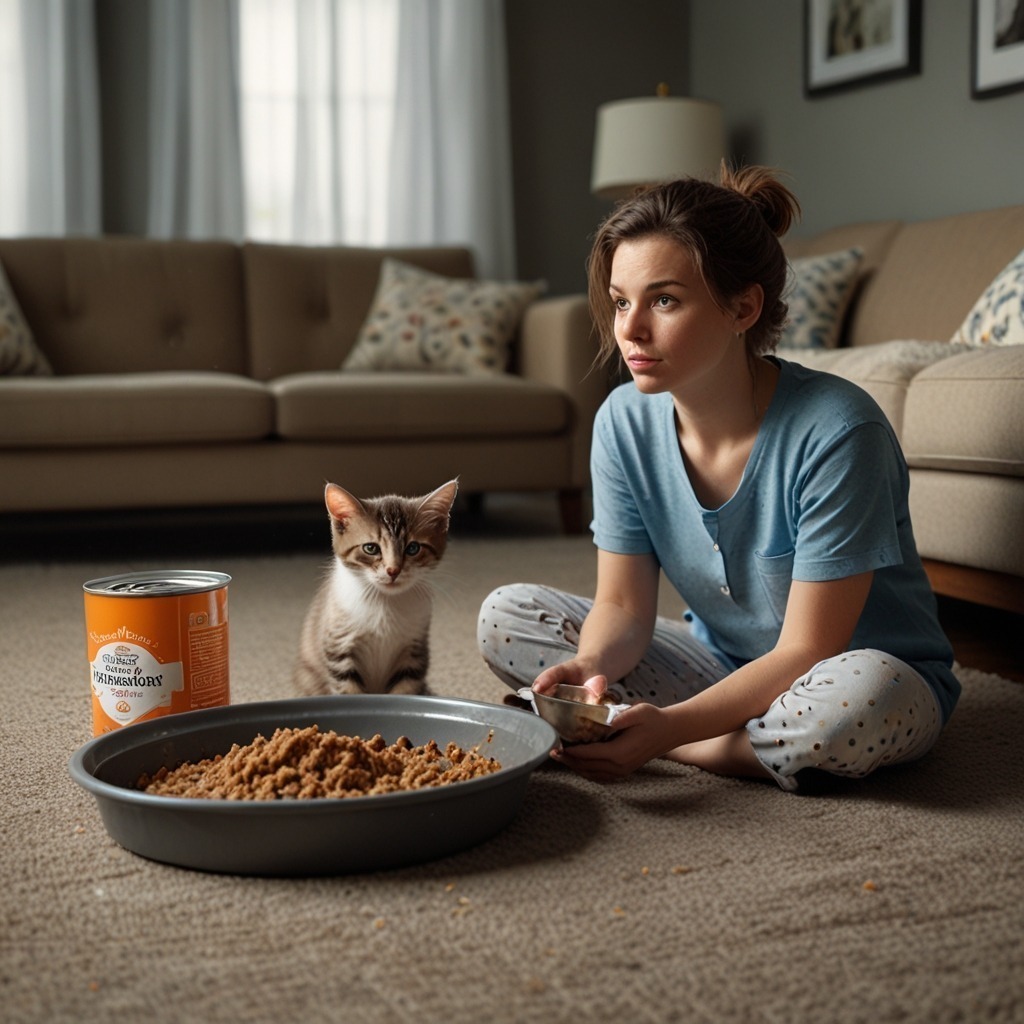
I thought all wet kitten foods were basically the same. Basil's littre box proved me wrong.
Here's the thing: when you're standing in the pet food aisle at 8pm with a screaming kitten in a carrier and a stomach full of panic, you grab whatever can has the cutest kitten on the label and the words "sensitive digestion" somewhere near the top. That's exactly what I did. I came home with a can of what I'll call Very Famous Premium Kitten Food That Comes In Tiny Expensive Cans. The ingredient list started with chicken, chicken broth, chicken liver—sounded great. Basil gobbled it up in forty-five seconds flat. I thought I'd cracked the code.
Three hours later, I was scrubbing liquid poop off the build room baseboards. The stuff had shot out of him with enough force to reach the wall. I'm not exaggerating. I had to move the litter box and wipe down the entire corner. My rescue friend texted me: "try a different protein." So I did. I switched to a salmon-based wet food. That made it worse—now the poop wasn't only liquid but it smelled like low tide. I tried turkey. Same. I tried a "limited ingredient" duck formula that cost $3.79 for a 3-ounce can. Basil licked the bowl clean, looked at me with those huge eyes, and then proceeded to produce a puddle so foul that one of my dogs actually got up and left the room. I think that's when I started the poop journal.
What I didn't understand then—and what nobody explains on the back of the can—is that kittens have digestive systems held together with hope and chewing gum. They're weaning, or freshly weaned, and their gut microbiome is about as sturdy as a sandcastle in a rainstorm. A sudden switch to a rich, high-fat food can trigger what vets politely call "rapid intestinal transit." I called it "butt fire hose." Even foods labeled for kittens often contain ingredients that can irritate a sensitive stomach: csrrageenan (a thickener linked to inflammation), guar gum, xanthan gum, artificial flavors, and even certain protein sources that are too rich or too novel too fast. I learned that lesson the $87 way, but we'll get to that.
One thing I learned from my other build cats, especially during transitions, is that you can't just slam a new bowl down and expect everything to be fine. I wrote a whole post about my cat Miso pooping on my rug because I didn't transition his food properly, which you can read right here. The difference with a kitten like Basil is that you're not just switching—you're building a digestive system from scratch. The stakes feel higher because the kitten is so small. A 1.5-pound kitten with diarrhea for three days can crash. I've seen it. It's terrifying.
The $4.79 can of rabbit pâté that cost me $300 at the emergency vet
Okay, so after the salmon disaster and the duck disaster, I decided I needed to get "fancy." I did what every over-researching build parent does: I fell down a rabbit hole of online forums. Somewhere between a raw-feeding Facebook group and a blog written by a person who refers to themselves as a "pet nutritionist" (no credentials, but a lot of confidence), I got it into my head that Basil must be allergic to poultry. All poultry. Chicken, turkey, duck—the works. The solution, according to the internet, was a novel protein like rabbit or venison. Something he'd never been exposed to. Something "pure."
I drove to the fancy pet store across town—the one that sells dog raincoats and cold-pressed chews that cost more than my lunch—and bought a single 5.5-ounce can of grass-fed rabbit pâté. It was $4.79. I should have known when I saw the ingredient list: rabbit, rabbit broth, rabbit liver, sunflower oil, dicalcium phosphate, and some unpronounceable mineral supplement. It looked rich. It smelled rich. It was a murky brown color that reminded me of something you'd spread on toast in a very expensive restaurant. I mixed a tiny spoonful into Basil's bland diet (boiled chicken and rice, per Dr. Nguyen's earlier advice) and waited.
The first poop was soft but not liquid. I got excited. The second poop, about four hours later, was the kind of greenish-brown sludge that makes you wonder if something inside the kitten has actually died. Basil started vomiting. He was listless. I called Dr. Nguyen's after-hours line, and she told me to bring him in. Two hundred and ninety-seven dollars later—hydration fluids, anti-nausea injection, and a probiotic paste that cost $38 for a tube the size of my pinky—I learned that rabbit pâté was too rich and too fatty for his compromised gut. He didn't have a poultry allergy. He had a gut that had been through the wringer and couldn't handle a sudden influx of novel proteins and high fat. I felt like an idiot. A $300 idiot.
I've since learned that novel proteins can be valuable for some cats with confirmed allergies, but for a kitten with genrric diarrhea from stress and a bad start in life, you're better off starting with something simple and gentle before you go playing exotic meat roulette. If you're reading this and your kitten's poop is liquid, please, for the love of all that's holy, don't start with rabbit. Start with a veterinary-recommended bland diet or a gentle commercial food designed for sensitive stomachs. And don't fall for the "full" marketing until you've ruled out the basics. I wrote another post about how I fed my Maine Coon wrong for a year because I was seduced by fancy labels, so apparently this is a pattern with me.
A crash course in kitten digestion: what I shuold have known before I bought 14 different cans
Here's what they don't tell you in the adorable kitten adoption pamphlets: a kitten's digestive system isn't a miniature version of an adult cat's. It's under construction. From birth to about 12 weeks, kittens go from relying entirely on mom's milk to processing solid food, and every single step of that transition is fraught. The enzymes they produce change, the gut lining matures, and the bacterial population—the microbiome—is wildly unstable. Any disruption—stress, a new food, a medication, a slight breeze—can tip the whole thing into chaos. And chaos, in kitten terms, means diarrhea.
In my rescue work, I've seen kittens who were eating nothing but mom's milk suddenly get liquid poop because the queen went into heat and her milk composition changed. I've seen kittens who were dewormed and then spent three days painting the crate walls because the medication nuked their gut flora. I've seen one tiny tuxedo kitten named Pippin who got diarrhea every single time he purred too hard. I'm not kidding. The vet said it was probably a vagal nerve thing—intense excitement triggering bowel contractions. My point is: kitten digestion is delicate, unpredictable, and profoundly unfair. So when you're choosing a wet food, you've to think about more than just "complete and balanced." you've to think about what that specific kitten's gut can actually handle right now.
Why kittens are poop factories
Kittens eat a lot rrlative to their body weight, and they eat often. A 2-pound kitten might need 200+ calories a day, spread across four or five meals. That means their digestive system is constantly processing food, pushing it through, and producing waste. When everything is working properly, you get soft but formed stools. When things go wrong, the transit time speeds up, water isn't reabsorbed in the colon, and out comes the flood. Kittens also have a shorter colon relative to their small intestine length compared to adult cats, which means they've less capacity to solidify things at the end of the line. It's a design flaw, honestly.
Add to that the fact that many rescue kittens have parasites—coccidia, giardia, roundworms—and you're dealing with an inflamed gut lining that can't absorb nutrients or water properly. Even after deworming, the gut needs time to heal. During that healing window, the food you give them matters enormously. High-fiber foods can help some kittens, but too much fiber can accelerate things in the wrong way. High-fat foods can cause osmotic diarrhea because the fat isn't absorbed well. Protein that's too rich or too new can trigger an immune response. It's a balancing act that makes you want to scream into a pillow.
The ingredients that make everything worse
I've become an obsessive label reader over the years, and I've noticed some patterns. First, carrageenan. This is a seaweed-derived thickener used in a ton of wet cat foods to give them that smooth, loafy texture. There's research suggesting it can cause intestinal inflammation in some animals. I'm not saying every kitten reacts to it, but when I started avoiding foods with carrageenan, I saw fewer "mystery diarrhea" cases in my fosters. The same goes for artificial colors (why are we dyeing cat food red? for us, not the cat) and certain gums like xanthan gum or locust bean gum, which can pull water into the bowel and make things worse.
Second, the protein source. Chicken is generally well-tolerated, but some kittens have a genuine sensitivity—not a full-blown allergy, but an intolerance that leads to loose stools. If you're trying to narrow things down, stick to a single protein source and avoid blends. Foods that list "chicken, turkey, and duck" or "ocean fish" (which could be anything) make it impossible to figure out what's causing the problem. I learned this the hard way with a build named Clover who couldn't handle poultry but did beautifully on a single-protein rabbit food—a different rabbit food than the one that nearly killed Basil, because this one had a lower fat content and no sunflower oil. It took me three weeks and a spreadsheet to figure that out.
Why "grain-free" isn't always the ansswer for a kitten with the runs
There's a lot of marketing around grain-free diets, and for some adult cats with specific issues, they can be helpful. But for a kitten with diarrhea? Sometimes what they actually need is a little bit of gentle, digestible carbohydrate to slow things down. I've had fosters whose poop firmed up almost overnight when I added a spoonful of plain pumpkin or switched to a food that included rice or oatmeal. The fiber in a small amount of cooked white rice can absorb excess water in the gut and give the colon something to work with. This is why a bland diet of boiled chicken and rice works—it's not because it's magic, it's because it's low-fat, easy to digest, and provides just enough bulk to form a stool.
Now, I'm not saying you should stuff your kitten with grains. But if you're feeding a grain-free wet food that's 95% meat and your kitten's poop is still liquid, cnosider whether a little soluble fiber might help. I'll talk about the specific foods that worked for me in a second.
Unrelated tangent: My neighbor's cat snuck in and ate the $3-a-can food, then puked on my welcome mat. I'm still bitter.
I need to take a moment here to complain about something that has nothing to do with kittens but everything to do with cat food drama. My neighbor's cat, a massive gray tabby named Tank, once pushed open my screen door when I was carrying in groceries. He waltzed into my build room, knocked the lid off a can of expensive digestive-care wet food I'd left on the counter (my fault, I know), and ate about half of it before I caught him. Twenty minutes later, he threw up on my entryway rug. Not in the litter box. Not on the tile. On the one rug I actually cared about. And then he just sat there, licking his paw, like he'd done me a favor. The irony is that this was the same food I was about to feed to a kitten with explosive diarrhea, and here was this perfectly healthy cat—well, supposedly healthy—puking it up. Made me real confident about my choices, let me tell you.
Moving on. Back to kitten poop.
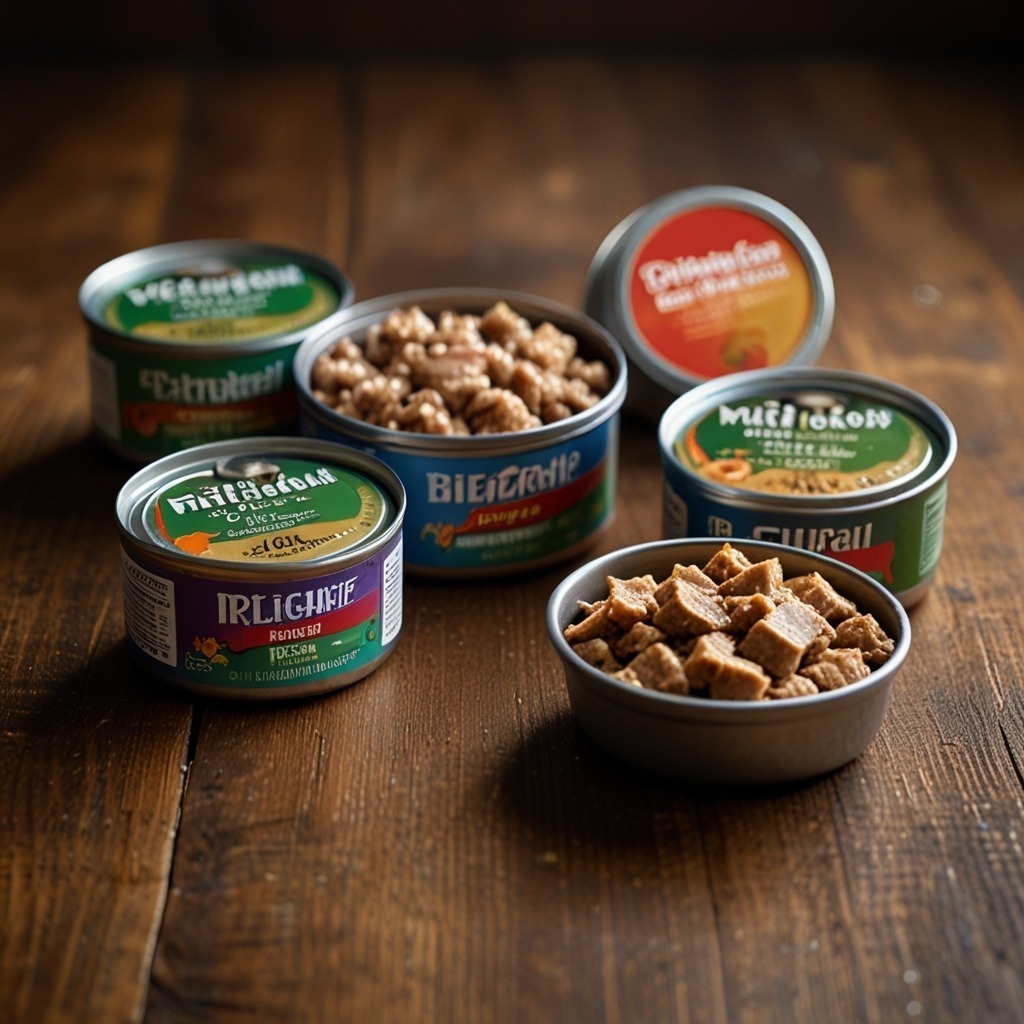
The five wet foods I've actally used that turned watery poop into respectable little logs
Over the years, across dozens of fosters including Basil, I've settled on a short list of wet foods that consistently work for kittens with diarrhea. I'm not getting paid to say any of this—I'm just a person with a lot of cleaning supplies and a deep appreciation for formed stool. These are the ones I reach for now.
The chicken-free savior for protein-intolerant kittens
For kittens who seem to react to poultry (and I've had thrree fosters like this, including Clover), I use Instinct Limited Ingredient Diet Grain-Free Rabbit Recipe. Note: this isn't the same as the ultra-premium rabbit pâté that sent Basil to the vet. This one has a lower fat content, no sunflower oil, and a single protein source: farm-raised rabbit. It's a pâté texture, which is easy for tiny mouths to eat, and it contains montmorillonite clay (a natural binder that can help firm up stools). I know "clay" in cat food sounds weird, but it's a common annti-diarrheal agent. The first time I fed this to Clover, her poop went from a puddle to a soft Tootsie Roll within 36 hours. I wept.
The downside is the price—it's usually around $3.50 per 5.5-ounce can—and availability. But when you're draling with a kitten who can't keep anything else in, it's worth it.
The budget-friendly go-to that's worked for 80% of my fosters
Most kittens I've fostered have done well on Purina Pro Plan True Nture Turkey & Chicken Recipe Grain-Free Kitten Food. I know, I know—Purina? The big box brand? Listen. I used to be a food snob. Then I fostered twelve kittens in one summer and couldn't afford to feed them all $4 cans. My vet actually recommended this one, and I'll tell you why: it's formulated for kittens, it contains no artificial colors, flavors, or preservatives, and it uses named protein sources. The texxture is a smooth pâté that's easy to mix with a little water if you need to increase hydration (crucial for diarrhea), and it's widely available. I pay about $1.79 per 5.5-ounce can, sometimes less on sale.
The catch: it does contain carrageenan. I know I said I avoid carrageenan, and I do, generally. But if a kitten doesn't show sensitivity to it and the alternative is me going broke, I'll use this food. The overwhelming majority of my fosters have had no issues. If a kitten starts to get loose, I'll switch to the rabbit one, but for everyday feeding when things are stable, this is my workhorse. Don't let perfect be the enemy of "the kitten is finally pooping semi-solid."
The prescription-only option for when nothing else works
In truly stubborn cases—like Basil after the rabbit catastrophe—I've used Royal Canin Veterinary Diet Gastrointestinal Kitten. You need a prescription for this, and it's outrageously expensive (about $4.50 per can, often more). But it's designed specifically for kittens with GI issues: highly digestible ptoteins, prebiotic fibers, omega-3 fatty acids for inflammation, and a bunch of other science-y stuff I can't pronounce. The first can I fed Basil after his vet visit stopped the diarrhea within 24 hours. I cried again. Not my proudest moment, but there it's.
I keep a couple cans of this in my emergency stash now, but I don't use it long-term unless the vet directs me to. It's not meant to be a permanent diet, and it's too expensive for that anyway. But as a short-term rescue for a kitten with acute diarrhea, it's a miracle.
The gentle single-protein fish option (for kittens who turn their nose up at everything else)
Some kittens are picky, even when they're sick. I've had a few who refused pâté entirely and would only eat flakes or shreds. For those stubborn little gremlins, I've used Tiki Cat Aloha Friends Variety Pack—specifically the Tuna with Tilapia & Pumpkin. Tiki Cat is a grain-free brand that uses whole ingredients, and this one has pumpkin as a natural source of fiber. The shreds are in a light broth, which means the kitten gets ectra hydration, and the texture seems to appeal to some cats who won't touch a pâté. The inclusion of pumpkin seems to help firm things up, and there's no carrageenan or artificial junk.
The downside is that fish-based foosd are generally not recommended as a primary long-term diet for kittens because of concerns about heavy metals and nutritional balance. I use this as a temporary bridge—to get them eating and hydrated—and then transition to one of the other options once the diarrhea is under control. Also, fish makes the poop smell like the bottom of a pier, but at least it's formed.
The one I wish I'd known about years ago: a nobel approach with insect protein
This is going to sound bizarre, but hear me out. There's a newer brand called Lovebug that makes insect-based cat food—specifically black soldier fly larvae. I tried it out of desperation with a build named Cricket who seemed to react to every single animal protein I offered. Insect protein is novel in the truest sense; most cats have never been exposed to it, so the risk of an immune reaction is lower. It's also highly digestible and environmentally sustainable, but that's not why I care. I care because Cricket's poop firmed up in two days and stayed firm. The food is a pâté, grain-free, and contains no common allergens. It's pricey (around $3 per can) and hard to find in stores, but you can order it online. I'm not saying it's for every kitten, but if you've exhausted all other options, it's worth considering. I still can't believe I'm the weirdo recommending bug food for cats, but here we're.
Oh, and here's the probiotic I sprinkle on everything like pixie dust
I can't talk about food withot mentioning the probiotic that I'm convinced has saved at least a dozen fosters from the fecal abyss. It's FortiFlora by Purina. It's a powder that comes in little single-dose packets, and you sprinkle it on food once a day. It contains a specific strain of Enterococcus faecium that's been shown to help repopulate the gut after diarrhea, along with vitamins and flavor enhancers that make even the blandest food irresistible. My vet, Dr. Nguyen, recommends it for any cat with antibiotic-associated diarrhea, stress colitis, or general GI upset. It's not cheap—about $30 for a box of 30 packets—but one packet a day for a week can turn things around. I always, always have FortiFlora in my house. It's my security blankie. I've even used it for my dogs when they've had tummy troubles, because screw it, probiotics are probiotics.
I mention probiotics because sometimes people focus so hard on finding the "perfect" food that they forget the gut itself might need reinforcements. If your kitten's diarrhea is diet-related, adding a probiotic can speed up recovery. Don't buy the weird unregulated brands from the health food store—get the veterinary one. It's one of the few supplements I'll go to bat for.
When to stop experimenting and just go to the damn vet
I've a bad habit of trying to fix everything myself before I call the vet. Part of it's pride—I've been doing rescue for 14 years, I should know what to do—and part of it's fear of the biill. But I've learned that there are some red flags you can't food-hack your way past. If your kitten has diarrhea AND any of the following, get off the internet and get to a clinic: bloody stool, vomiting, lethargy, refusal to eat for more than 12 hours, pale gums, a distended belly, or the kitten is under 8 weeks old and losing weight. I once had a build kitten named Squeak who had coccidia, a protozoal parasite that causes watery diarrhea, and I wasted four precious days trying different foods while the infection raged. When I finally took her in, she needed IV fluids and a round of Albon. She recovered, but it was close. I wrote about my expensive lesson in misdiagnosing cat symptoms here, and the same principle applies here: sometimes it's not the food. It's a bug (literally).
Most vets will want a fecal sample to check for parasites, and they'll probably recommend a bland diet and probiotics as a first step. If the diarrhea persists past 3-4 days even on a gentle diet, ask about food trials and allergy testing. But strat with the vet, not the pet store. I say this as someone who has a pantry full of half-used cans of specialty food I bought at midnight.
How to trnasition food without turning your kitten's butt into a firehose
This is the part that everyone skips because they're in a hurry to stop the diarrhea. I get it. I've been there. But I've also learned that a slow food transition is the single most effective thing you can do for a kitten with a sensitive stomach. When I wrote about Miso pooping on my rug over here, I was talking about an adult cat, but the same principles apply to kittens—except you've to go even sower. A kitten's gut is fragile, and a big dietary change can cause a flare-up that takes days to resolve.
Here's the schedule I use now, adapted from Dr. Nguyen's advice and a lot of trial and error:
- Days 1-2: 75% old food, 25% new food. If the kitten is currently on a bland diet of chicken and rice, you can mix in a small amount of the wet food.
- Days 3-4: 50% old, 50% new. Watch the poop like a hawk. If it softens, go back to the previous ratio and hold there for another two days.
- Days 5-6: 25% old, 75% new.
- Day 7: 100% new food, assuming everything is still solid.
If at any point the diarrhea returns or worsens, stop the new food entirely and go back to what was working. Don't push through. That's how I ended up with a kitten who spray-painted my wall. Also, keep in mind that some kittens will have a soft stool for a day or two after any change—that's normal. What you're looking for is a trend toward imprvement over a week, not instant perfection.
And please, please don't add canned pumpkin or rice unless you know what you're doing. A teaspoon of plain pumpkin can help some kittens, but too much can cause electrolyte imbalances. When in doubt, ask your vet. I've made the mistake of over-supplementing and ended up with a constipated kitten, which is a whole different kind of panic.
The stress factor is huge too. A kitten who's just been separated from its mom, transported in a carrier, and dropped into a strange new home with weird smells and a yapping dog is going to have diarrhea no matter what you feed it. I wrote a post about how the first week in a new home can break your cat, and it's even more true for kittens. Sometimes you've to separate the food issue from the stress issue. Provide a quiet, warm space, use a Feliway diffuser, and let the kitten settle for 48 hours before you start messing with its diet. I've had fosters whose diarrhea resolved the moment they stopped being terrified.
What Basil eats now, six months later (and why I panic if the store is out of stock)
Basil is now a 7-pound orange tornado who has opinions about everything: when I wake up, what brand of litter I use, whether the ceiling fan is on. He also has the most exquisite, beautifully formed poops you've ever seen from a cat. Dark brown, firm but not hard, barely any smell. I never thought I'd be the kind of person who brags about her cat's bowel movements, but here we're. He eats the Purina Pro Plan True Nature kitten formula I mentioned earlier, with a daily FortiFlora sprinkle because I'm paranoid and I love him. I tried to switch him to a different, slightly cheaper food a month ago, and his poop went soft after two days. So we went right back. I'm not messing with success.
Every time I go to the pet store and see that familiar purple label, I feel a little surge of relief. If they're ever out of stock, I order it online with expedited shipping. I've become one of those people who keeps a backup case in the pantry at all times. My dogs think I'm insane. They're probably right.
The truth is, there's no single "best" wet food for every kitten with diarrhea. There's only the best food for your specific kitten, in your specific situation, after you've ruled out parasites and stress and given their gut time to heal. What worked for Basil migjt make your kitten worse. What saved Clover might be out of your price range. But if you start slow, pay attention, and don't fall for the marketing that promises a cure in a can, you'll figure it out. And when you do, you too will become the person who keeps a poop journal and isn't ashamed of it. Or you'll just be glad the splattering has stopped. Either way, I'm proud of you.