My Foster Cat Threw Up White Foam at 3 AM and I Lost My Damn Mind — Here's What It Actually Meant
A 3 AM puddle of white foam had me convinced my foster cat was dying. Turns out it was something stupidly simple—but also, sometimes it’s not. Here’s what I learned from 40+ cats, two panic attacks, and a vet who keeps answering my calls.
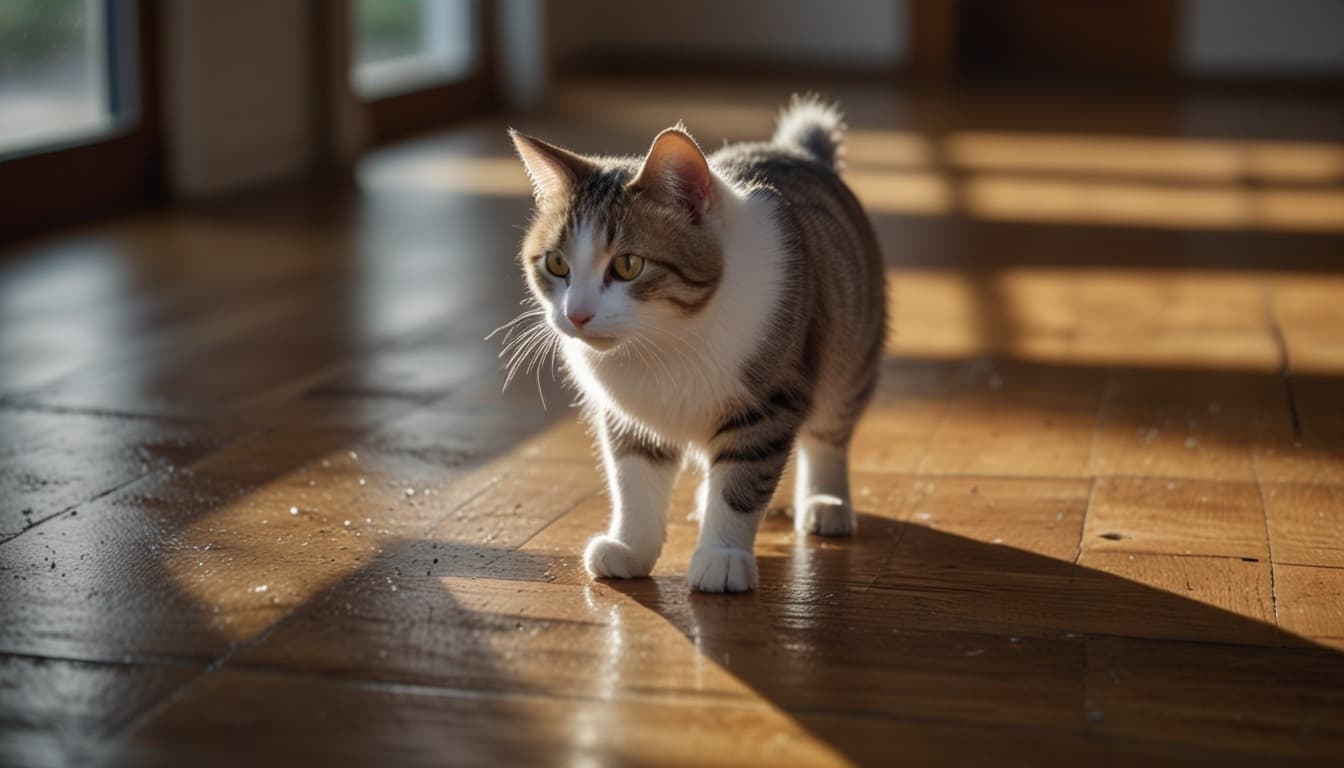
The first time I found a puddle of white foam on my kitchen floor at 3 AM, I was convinced my build cat was dying. Not being dramatic. I'd just taken in a scrawny tuxedo named Felix who'd arrived that afternoon. He'd barely eaten, hid behind the toilet for six hours, and then—sometime around 3 AM—started retching. I remember standing in the dark in my bare feet, stepping in something cold and frothy, and my brain immediately went to That Worst Place. I'd like to say I handled it calmly. I didn't. I stood there in my pajamas, foam on my foot, googling "cat vomiting foam death" and spiraling.
The 3 AM puddle that taught me about empty stomachs
I'm going to tell you something that sounds obvious once you know it. But at 3 AM with vomit on your sock, nothing is obvious. White or yellow foam usually means there was nothing in the stomach. That's it. No food, no hairball, no mysterious cat poison. Just an empty stomach, a little bile, and a lot of heaving. Felix hadn't eaten anything except a few bites of pâté at 6 PM. By 3 AM, his stomach was empty and angry. The retching whipped up saliva and bile into a froth, and he horked it onto my floor. Classic bilious vomiting syndrome.
Dr. Nguyen—she's been putting up with my panic calls for over a decade, through three dogs and a divorce—called me back at 7 AM. "What did he eat last night?" I told her. "Did he finish it?" No, maybe three bites. "There you go. Empty stomach. Try a late-night snack tonight." That night I put down a tablespoon of wet food right before bed. Felix didn't puke. I'd lost an entire night's sleep over a cat who just needed a midnight snack. Teh kind of thing nobody puts in a cat care book. They'll tell you vomiting is "concerning." They won't mention that sometimes it's as dumb as your cat forgetting to eat for 10 hours and their stomach throwing a tantrum.
But here's the part that kept me up the next night: sometimes foam isn't just an empty stomach. I learned that lesson a dozen times over the next few years of fostering. So let me walk you through the messier stuff.

When the vet said "it's probably nothng" and my gut knew better
A few months after Felix, I got a calico named Piper. She was nine years old, surrendered because her owner went into assisted living. Piper vomited foam almost every morning. I assumed hunger pukes again. Gave her a bedtime snack—it helped for maybe a week. Then the foam came back, and now it was happening after meals too. She'd eat half her food, walk two feet, and heave up bubbly yellow mess. She was losing weight, but I told myself it was stress. She was drinking a lot of water, too—draining her bowl by noon—but I chalked it up to the dry winter air. I was focused so hard on the "empty stomach" theory that I ignored the other signs for almost three weeks.
Finally my gut said this isn't right. Dr. Nguyen ran bloodwork. Piper's kidney values were elevated—early chronic renal disease. The vomiting wasn't just bile from an empty stomach; it was from ureic toxins building up in her blood, irritating her stomach lining. The foam had a slightly pinkish tint I hadn't let myself notice. I'd wasted weeks assuming it was nothing. That's the thing about foam: it can be benign or it can be the first whisper of something really serious, and you need the whole picture to tell the difference. If I'd kept watching and waiting, those three years we eventually got with her would have been lost.
Let me hit pause for a second with a dog story, because it's relevant. My Lab mix Gus went through a phase where he'd eat grass frantically every morning and then vomit yellow foam on the rug. It went on for two months before I figured it out. I eventually wrote a whole post about what stopped it—switching his food and adding a specific probiotiic—and I won't rehash the entire saga here. The point is, grass-eating and foam vomiting can look identical across species. Cats do it too—munch grass, then retch foam. I've had fosters who'd beg for grass and then produce a foamy puddle. Sometimes the fix is stupidly simple. Other times, it's not. If you're interested in the grass end of things, that post is My Dog Ate Grass and Puked on the Rug Every Morning for Two Months — Here's the $40 Fix That Finally Stopped It. The gut principles carry over more than you'd think, even if cats aren't tiny dogs.
Anyway, back to cats. Before I move on, we've to address the hairball myth. Every time a cat vomits, someone says "it's just a hairball." But hairball vomit almost always includes a hairball—a tubular wad of fur, maybe with some food. Foam-only pukes are very rarely hairballs. I've had fosters who retched up foam before a hairball, like a precursor, but the main event came later. If you're seeing foam and no fur, don't let anyone convince you it's just hairballs. That lazy diagnosis has delayed treatment for things like IBD and obstructions more times than I can count.
A quick note about foam color
White foam: usually saliva with maybe stomach mucus. Yellow foam: definitely bile. Pink or red-tinged foam: there's blood in there—could be from heaving too hard (tiny esophageal tear) or something much worse. Green foam: bile plus maybe grass, or if no grass, could signal an obstruction with bile backing up. Brown foam: often digested blood, and taht's a straight-to-the-vet situation. If you see anything pink, red, or brown, stop reading this and call your vet. I'm not being dramatic. Blood in vomit is a "drop everything" moment. I once had a build kitten produce pink foam after a bout of retching that lasted maybe thirty seconds. The vet said the force had irritated her esophagus—nothing sinister—but we still did x-rays to be sure. I coud have skipped them, I guess. But the peace of mind was worth every penny. I'd rather pay for an x-ray I don't need than miss a foreign body.
The one time it absolutely wasn't hairballs
About four years ago I fostered a black cat named Binx from a hoarding situation—forty cats in a single-wide. Binx was sweet but weird about food. He'd scarf and barf. I assumed his foam vomiting was just regurgitation from eating too fast. I did all the usual stuff: small meals, elevated bowl. The foam kept happening, twice a week, usually within an hour of eating. Then one Saturday morning I found him hunched in the litter box, straining, yowling. He'd vomited foam three times in the past hour. Emergency vet. X-rays showed a mass in his intestine—a trichobezoar (giant hairball) that had formed a partial obstruction. It was the size of a golf ball, sitting in his small intestine for likely weeks, intermittently blocking things. The foam was from backup pressure. Binx needed surgery. The vet said if I'd waited another 24 hours, it could've perforated. I cried in the waiting room for twenty minutes.
That's the story I think about when someone says, "Oh, my cat throws up foam sometimes but it's no big deal." Sometimes it's not. Sometimes it's a golf ball of hair slowly killing your cat, and the only sign is foam on the floor once a week. I'm not saying every foam puke is a surgical emergency. I'm saying patterns matter. A cat who vomits foam twice a week for a month isn't the same as a cat who does it once after skipping breakfast. The frequency, the timing, the things that happen around the vomiting—those are what separate the benign from the terrifying.
While we're on the topic of food and vomiting, it's worth mentioning that I've another post about Miso, my permanent cat, and the nightmare of putting him on a diet. When Miso was overweight, he'd vomit foam after meals because his stomach couldn't handle the volume while compressed by fat. You'd be shocked how many vomiting issues tie back to weight and diet changes. That post—I Put Miso on a Diet and All I Got Was a Fatter, Angrier Cat — Here’s What Finally Worked—goes into the food side of things in detail. The short version: switching a cat's food too fast can also cause foam vomiting. Cats are dramatic little dinosaurs about dietary changes. Even a 10% shift in kibble can throw their stomach into revolt.

What I tried (and what actually helped) before running to the vet
After years of trial and error—and thanks to Dr. Nguyen not blocking my number—I've got a mental checklist for when a cat starts vomiting foam. This isn't medical advice. I'm not a vet. This is just "what Sarah does before she panics."
1. Feed a late-night snack
If the foam happens in the early morning or right before a meal, its probably hunger pukes. Try a small meal right before you go to bed, like 10 or 11 PM. I use a teaspoon of plain canned pumpkin (not pie filling, just pumpkin) mixed with a little wet food. Pumpkin is gentle and adds fiber. If the foam stops for a few days, you've likely found you're culprit.
2. Check the food itself
Foam vomiting can be a sign of food intolerance. I had a build named Sable who vomited white foam daily until I switched her from chicken to rabbit. She had a poultry sensitivity no one had ever connected because she'd been on chicken-based kibble her whole life. If you're seeing foam and loose stools together, that's extra suspicious for a food issue.
3. Slow down the eating
Scarf-and-barf: cat inhales food, stretches the stomach too fast, triggers regurgitation. The vomit is often undigested food, but sometimes just foam if the stomach was on the emptier side. A slow-feeder bowl—I use an ugly maze-shaped one I got for nine bucks—works wonders. Spreading wet food flat on a plate so they've to lick it up also helps.
4. Look for other symptoms
Is the cat drinking more than usual? Peeing huge lakes in the litter box? Lethargic? Hiidng? Not grooming? Losing weight? If yes to any of those, skip the home stuff and see a vet. Foam vomiting plus any other sign is a red flag. Even if it's just foam multiple times a week with no other signs, I'd still go in. Piper taught me that the hard way.
5. Consider stress
I've seen cats vomit foam purely from anxiety. Moving to a new home, a new pet, construction noise—stress can trigger a gastritis that causes foam pukes. One of my fosters—I wrote about him in a post on inappropriate peeing—was a nervous wreck when he arrived. Foamy vomit for thrre days straight. The vet gave a mild anti-anxiety med for a few days, and the vomiting stopped. That post is My build Cat Peed on Everything I Owned for Six Months — Here's What Finally Made Him Stop, and while it's about urination, the root cause was the same: stress screws up a cat's entier digestive system. Sometimes the foam is just the stress talking.
When I've tried all five of those and the foam keeps happening, that's when I stop messing around. By that point I'm not dealing with a simple empty stomach anymore. It couuld be pancreatitis. Inflammatory bowel disease. Thyroid issues. Renal stuff. All of those need diagnostics, not guesswork.
The $340 vet bill that explained everything
Remember Piper, the renal cat? That first bloodwork and urinalysis ran me $340, and it was the best money I'd ever spent because it gave me a roadmap. Before the tests, I was shooting in the dark with mdinight snacks and diet changes. After, I knew exactly what we were dealing with: early chronic kidney disease. We switched her to a kidney support diet, added subcutaneous fluids twice a week, and the vomiting stopped within two weeks. She lived another three years with great quality of life. If I'd kept assuming "empty stomach," I'd've lost that time. So when someone tells me their cat is still vomiting foam after all the easy fixes, I get pushy. Go test. The information is worth $340. The guilt of waiting too long is a hell of a lot more expensive.
I had another cat—a tortie named June—who kept vomiting greenish foam. Bloodwork showed hyperthyroidism. Methimazole, foam gone. Another cat, persistent yellow foam with occasional diarrhea: ultrasound confirmed IBD. Hydrolyzed protein diet and budesonide, foam gone. You can't outsmart diagnostics with internet research. Trust me, I've tried, and I've failed spectacularly.
Wait, is it foam from vomiting or foam from drooling?
This is a distinction that trips people up. A cat who is sslivating excessively—foamy drool coming from the mouth without any abdominal heaving—isn't vomiting. That could be nausea, sure, but also dental pain, oral irritation, or even poisoning. I once had a cat drool foam after licking a spot of spilled cleaning spray. Learned that one fast. If there's no retching, no stomach contractions, it's probably not vomit. It's drool. And drool with foam can mean a totally different set of problems. I wasted 45 minutes on hold with poison control because I misidentified foam drool as vomit. Don't be me. Watch the cat. Heaving? Vomiting. Just walking around with a wet, foamy chin? Not vomiting.
Also, a cat who "vomits" foam after taking medication might just be reacting to a bitter taste. Oral meds can cause excessive salivation that looks like foam vomit. I've seen it with liquid antibiotics especially. If you're giving pills and suddenly see foam, it might be drool, not puke. Check with your vet, but it's usually harmless.
When to stop reading and start driving
Okay, real talk. If you're Googling "cat vomiting foam" at 2 AM, you're already worried. Here's the no-BS emergency checklist. If you see any of these, close this tab and call your vet or go to an ER.
- Vomiting foam more than 3 times in an hour
- Foam with blood—pink, red, brown
- Cat can't keep water down—drinks, pukes foam within minutes
- Lethargy to the point of not responding
- Straining in the litter box without producing anything (could be urinary blockage, espceially in male cats, but also obstruction)
- Swollen, painful belly
- Pale gums
- Labored breathing
Don't second-guess these. I've made the mistake of waiting, and I've paid for it. Once, with a build kitten, I noticed bloody foam at midnight and thought "I'll watch her until motning." By morning she was critical. She survived, but it was too close. That memory sits in my gut forever.
The awkward speech I give every build adopter about vomiting
I know it's weird, but I've a literal list I run through with people who adopt my fosters. "Here's what to expect, here's what's normal, here's what's not." Vomiting foam is on that list. I tell them: "If your cat throws up white or yellow foam in the morning and is otherwise fine, try a bedtime snack. If it stops, great. If it doesn't stop within a week or you see other symptoms, call me first. We'll talk." I also give them a printout of the emergency signs—the list above—and circle "blood in vomit" in red Sharpie. Yes, I'm that build mom. But I've seen too many cats suffer because someone assumed "just a hairball" or "just an empty stomach" when it was something that needed attention. You can't assume. That's the whole point of this article, really. You can't assume. you've to pay attention to the pattern.
And look, I get that vet visits are expensive. I've been broke plenty of times. I've had to make decisions I hated. But vomiting foam, when it persists, is one of tohse things you don't cheap out on. The diagnostic workup often gives you a simple answer and a fix, and it prevents a far bigger bill down the line. If you're on the fence, call your vet and describe what's happening. They'd rather hear from you early than see you in an emergency at 2 AM.
Oh, and if you haven't dealt with a cat's weight or diet chamges that might be contributing, I'd recommend reading that post about Miso's diet disaster. It's painful but helpful: The Day My Vet Asked If My Cat Was 'Gravy-Trained' — and the 18-Month Journey to a Cat Who Could Lick His Own Butt Again. The connection between weight, fopd, and vomiting is closer than most people think.
Why I finally stopped panicking (mostly)
Miso is my permanent cat, the one on my windowsill right now. He's eleven, a little chunky despite our diet saga, and he vomits foam maybe twice a year. When it happens, I still get that spike of adrenaline, but I've learned to ask the right questions before I spiral. What did he eat last? When? How's his water intake? Any behavior changes? Usually it's because he refused his dinner and then woke up with an empty stomach, or ate too fast after a fast, or got into something he shouldn't have. I know his baseline, so I can triage. But if I didn't know him? If he were a new cat? I'd be at the vet. That's the tension. With fosters, I run tests. With my own cat, I watch and wait—but only because I've been watching him for a decade. You can't watch-and-wait with a cat you've only known for two weeks. You don't know their normal.
So. Cat vomiting foam. It might be nothing. It might be everything. You're not a bad pet parent for panicking. You're not overreacting. The ones who overreact are the ones who notice things. I'd rather have a hundred false alarms than miss the one time it's real.
Now if you'll excuse me, I need to go refill Miso's water bowl. He's staring at me like I've personally offended him. And that look? That's a whole different kind of emergency.