My First Cat-Dog Introduction Ended With a Hiss, a Snarl, and a $40 Lamp in Shards. 40+ Foster Cats Later, Here's the Mess I Finally Learned to Avoid
The internet lied about cat-dog introductions. A ceramic lamp died, but I learned the real steps that work—after 40+ foster cats, here's the messy, unglamorous truth.
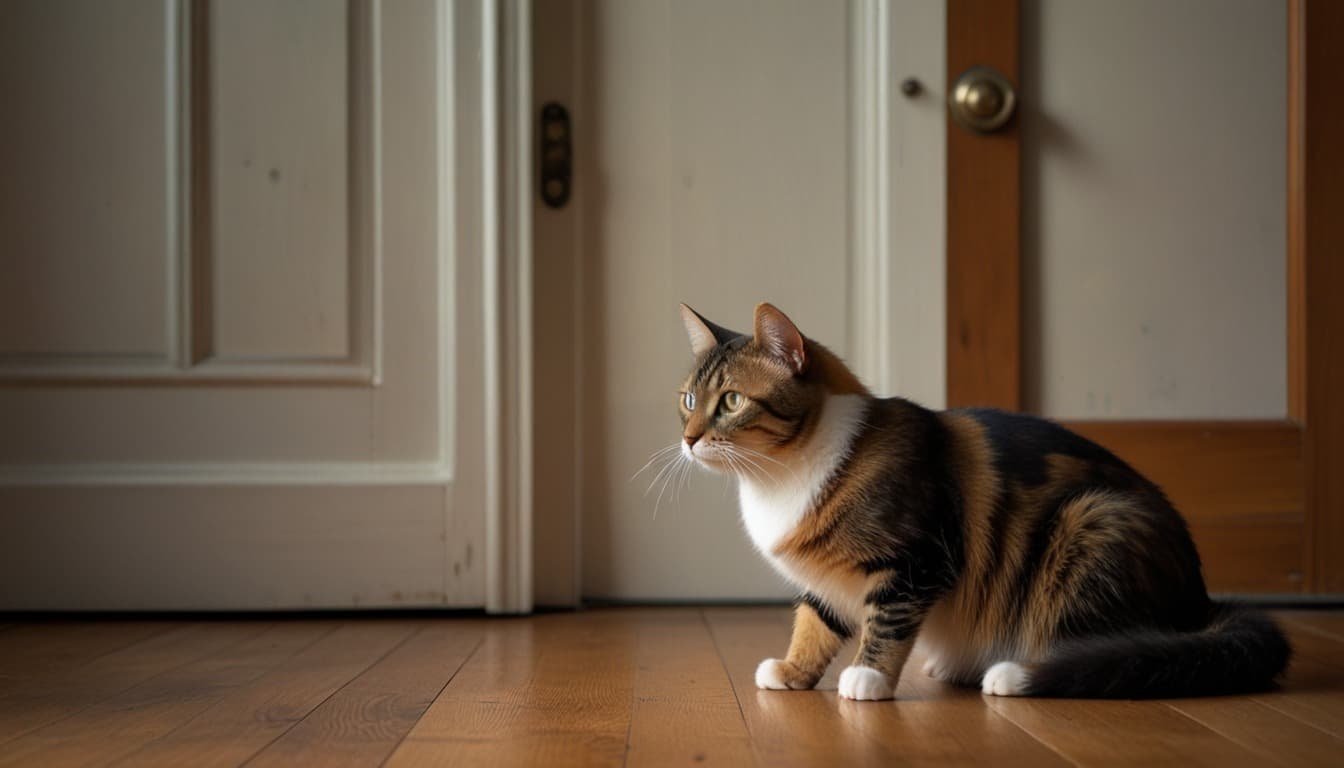
I still remember the exact sound of my favorite ceramic lamp exploding against the hardwood floor. It wasn't the dog's fault, and it wasn't really the cat's fault either. It was my fault, and I was standing there in my socks holding a bag of freeze-dried chicken like an idiot while a terrified calico hissed from the top of the bookcase and my 80-pound Lab mix, Gus, paced underneath, tail going thump-thump-thump against the wall in pure excitement. I had thought, This will be fine, cats and dogs can get alomg, I've read the internet.
The internet lied.
Or, more accurately, the internet gave me the outline and forgot to mention that I'd be dealing with actual living animals who have zero respect for my plan. That was nearly 14 years and somewhere north of 40 build cats ago. I've since introduced terrified strays, confident bottle-baby kittens, and one particularly memorable former barn cat named Harriet who'd never seen a dog and treated Gus like a furry demon sent to steal her soul. I've had successes where the cat and dog were curled up together within 48 hours, and I've had failures that ended with me sobbing into a glass of wine while the cat yowled from the spare bedroom and the dog whined at the door. I've learned that there's no unoversal timeline, that the popular advice is about 60% correct, and that the real work happens in the 2 a.m. panic moments when you're second-guessing this entire decision.
I'm going to tell you what I actually do, what I've actually screwed up, and what I wish someone had told me back when I had zero grey hair and thought I knew everything. Pull up a chair. Let's get into it.
Why the 'Just Let Them Sort It Out' Crowd Can Screw Right Off
I know someone who introduced their new cat to their resident pitbull by just… opening the carrier in the living room and sitting back to watch. They claim everything was fine. The dog sniffed, the cat swatted once, and they were best friends by dinner. That person is either the luckiest human alive, lying, or has a dog so deeply sedate he might actually be a throw pillow with a pulse.
For the rest of us, especially those of us with dogs who have anything resembling prey drive or curiosity, the 'just let them sort it out' method is a fast track to injury—and I'm not being dramatic. I've seen a cat get pinned to the floor by a dog who just wanted to play, and that cat never trusted dogs again. I've seen a dog get a claw straight to the cornea because a cat panicked. Both outcomes required emergency vet visits and left emotional scars on everyone involved, me included. The dog I mentioned in that story was my build failure, Gus, who honestly had the gentlest heart on the planet but also weighed nearly as much as my first apartment fridge. He didn't understand that his enthusiastic 'let's be friends' bounce could genuinely terrify a creature the size of a large burrito.
So here's the first thing I want you to internalize: this introduction isn't about the mment they meet face-to-face. It's about the days, sometimes weeks, you spend building a foundation so that when the face-to-face happens, neither animal feels like they're fighting for their life. I'm going to walk you through what I do now—every single step, including the parts I used to skip because I was impatient. That impatience cost me, over the years, somewhere around a grand in vet bills, a few broken possessions, and a lot of heartbreak. I'd rather you not do the same.
Oh, and before I forget: I'm not a vet. I'm not an animal behaviorist. I'm just a lady with a lot of build laundry and a deep, abiding certainty that animals are simultaneously smarter and dumber than we give them credit for.
Before You Even Thikn About Visual Contact: The Sacred Ritual of Smell
Here's the thing about cats and dogs: they live in a world we can't even comprehend. When your dog sniffs the air and you smell nothing, he's getting a full biography. He can tell that a cat was stress-shedding three rooms away, that she had salmon for breakfast, and that she probably peed in a corner somwehere at some point. Cats are the same way—their noses are maybe less overpowering than a dog's but way more refined, and they remember scents in a way that seems almost supernatural. I once reintroduced a cat to my house after a vet visit and my dog acted like she was a complete stranger because she smelled like antiseptic and the receptionist's perfume. He was genuinely confused and a little offended.
So the first phase of any successful introduction is scent-swapping, and it has absolutely nothing to do with putting the animals in the same room. The goal is to weave the new cat's smell into the fabric of the house, and vice versa, so that by the time they see each other, neither one smells like an intruder. I learned this the hard way with a build named Miso who peed on my pillow because—and I'm quoting my vet here—'she was trying to assert her presence in a space that smelled hostile to her.' I talk about that disaster in another post, but the upshot is that smell is everything.
What I do now is so simple it's almost stupid. The new cat gets a dedicated room—usually my home office, where I can shut the door solidly and the dog can't get to. I put everything she needs in there: litter box, food, water, scratching post, a few hiding spots. Then I take a clean washcloth or a small blanket and I rub it all over the cat. Cheeks, base of the tail, the spots where the sccent glands are concentrated. I do the same with the dog: a different cloth, rub it along his neck and behind his ears and down his sides after he's been lying on his bed for a while. Then I swap.
I put the cat-scented cloth under the dog's food bowl. I put the dog-scented cloth near the cat's favorite hiding spot. Not on top of her food—some cats will hunger-strike if their food smells too much like dog—but nearby, so she can investigate on her own terms. Repeat daily. I also sometimes swap the actual bedding, not washeed, so the scent is heavy. The first time I did this with a particularly skittish build named Pearl, she spent an entire afternoon batting the dog-scented blanket around, hissing, then eventually falling asleep on it. By day four, she didn't even twitch when I put another one in. That's the whole point.
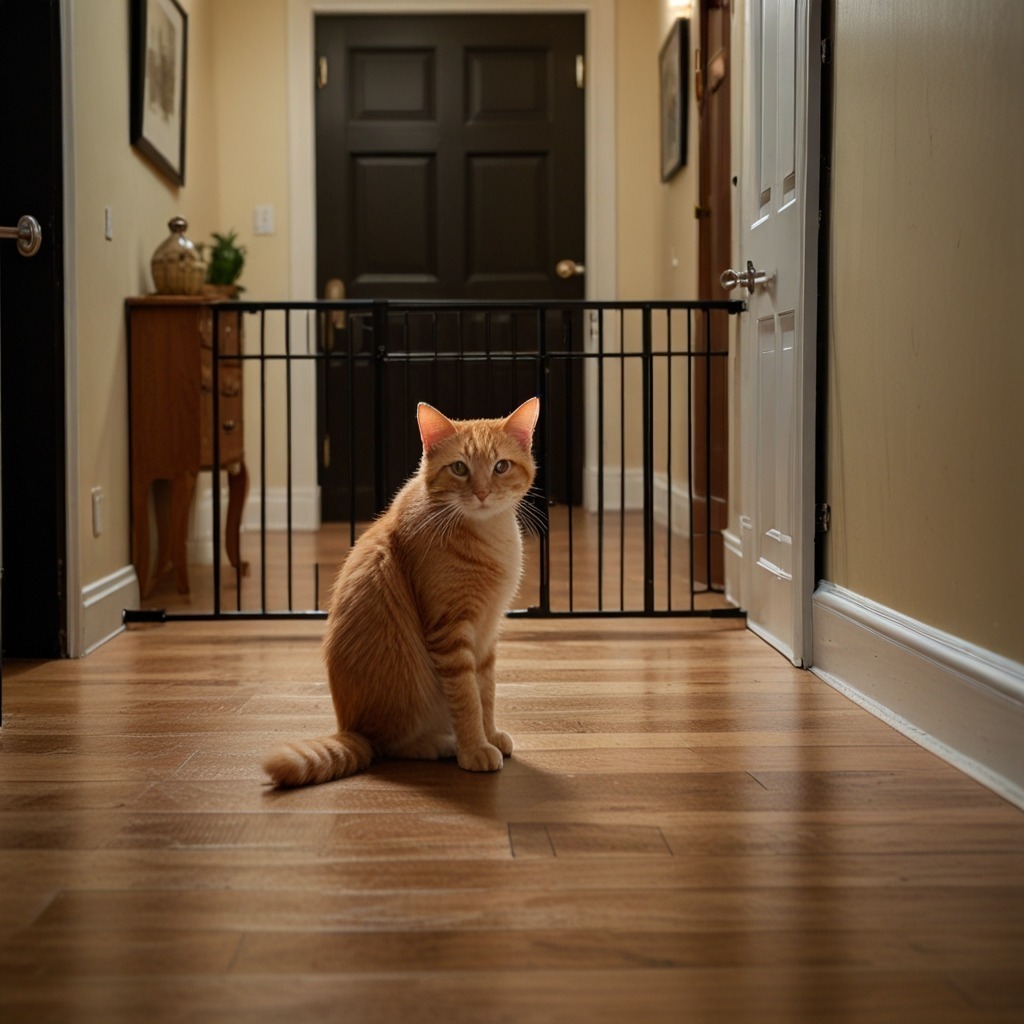
I've made the mistake of rushing this step more times than I care to admit. With Harriet, the barn cat, I gave it two days because I was tired of cleaning the spare bathroom and wanted my office back. Big mistake. The moment she caught a whiff of Gus through the door crack, she went full Halloween cat—arched back, puffed tail, a moan that sounded like a dying smoke detector. I had to backtrack, do a full week of scent-swapping, and then slowy, very slowly, reintroduce the idea that the giant brown creature in the hallway wasn't, in fact, a predator. If I'd just done the full ritual from the start, I'd've saved myself three weeks and a whole lot of stress.
The Room Swap That Changed Everything for My Setup
This is an extension of scent-swapping, but it deserves its own section because it was a big deal for me. After a few days—maybe 3-5, depending on how the cat is doing—I'll swap spaces entirely. I leash the dog, take him for a long walk so he's tired and calm, then while we're gone, my partner or a friend lets the cat out of her room to explore the rest of the house. The dog, when we get back, goes directly into the cat's room (door closed), while the cat roams free for an hour or two.
Why? Because the cat gets to map the entire territory without the dog being present, which builds confidence. She gets to sniff the dog's bed, the couch, the kitchen floor—all the places the dog has been—and realize it's not a threat. Meanwhile, the dog is in the cat's room, surrounded by her scent, learning that her smell is part of the house. When I first did this with a build named Tiny (who was anything but tiny; she was a 16-pound Maine Coon mix with the attitude of a jilted heiress), I came back to find Gus asleep on her favorite blanket, drooling. She'd been in the living room the whole time, exploring every corner, and when I finally brought her back to her room, she didn't hiss at the dog-smell on her blanket. She just curled up and went to sleep. That, right there, is progress you can't buy with any fancy pheromone spray.
I should mention that during all of this, the dog needs to be exercised and mrntally stimulated so he's not a vibrating ball of energy when the actual introductions start. My dog Gus used to whine for seven hours straight when I left for work—I wrote about that here—so I know how separation anxiety can mess with the whole process. A dog who's already anxious or wound up is going to struggle with the patience required for cat introductions. So I'm also doing long walks, puzzle toys, and occasional bully sticks during this period. It matters.
The First Glimpse: Why I Used to Skip This Step and Why I No Longer Do
At some point, after maybe a week or two of scent swapping and room exchanges, I'll allow a brief visual. And I mean brief. Not a meet-and-greet. Not a nose-to-nose. I'm talking a crack in the door, a baby gate stacked double high (with me standing right there), or the cat in a carrier while the dog is on a leash across the room. The goal is for both animals to register the other's presence without any physical interaction whatsoever.
I botched this spectacularly once. I had a build cat named Button who seemed so confident—she'd strut around her room, rub against my legs, purr like a motorboat—so I thought, 'Oh, she's ready for a real look.' I set up a baby gate, held the dog on a short leash ten feet away, and opened the door. Button took one look at the dog, made a sound I can only describe as a yodel, and scaled me like I was a tree. My forearms looked like I'd been shredding cheese on them. The dog lunged forward, I dropped the leash, and we had a good thirty seconds of chaos before I managed to scoop Button into the bathrooom and slam the door. She hid behind the toilet for eight hours.
What I learned: always make the first visual as neutral as possible, with the cat in a space she already owns and the dog on a leash that can't be dropped. I hold the leash, not loop it around my wrist—loop it and you might get dragged. I ask the dog to sit or lie down. I've high-value treats for both animals, though the cat may be too stressed to eat and that's fine. The moment the dog's body language changes—staring, stiffening, whining, pulling—I close the door and we try again later, with even more distance. If the cat hisses or swats, I also close the door and back off. The goal is to end the session before anyone panics.
One thing I started adding that made a huge difference: a pheromone diffuser like Feliway in the room where the cat is, and sometimes an Adaptil collar on the dog. I'm not going to pretend it's magic, but I've seen a notable reduction in hissing when the plug-in is running. It takes the edge off enough to make the training stick.
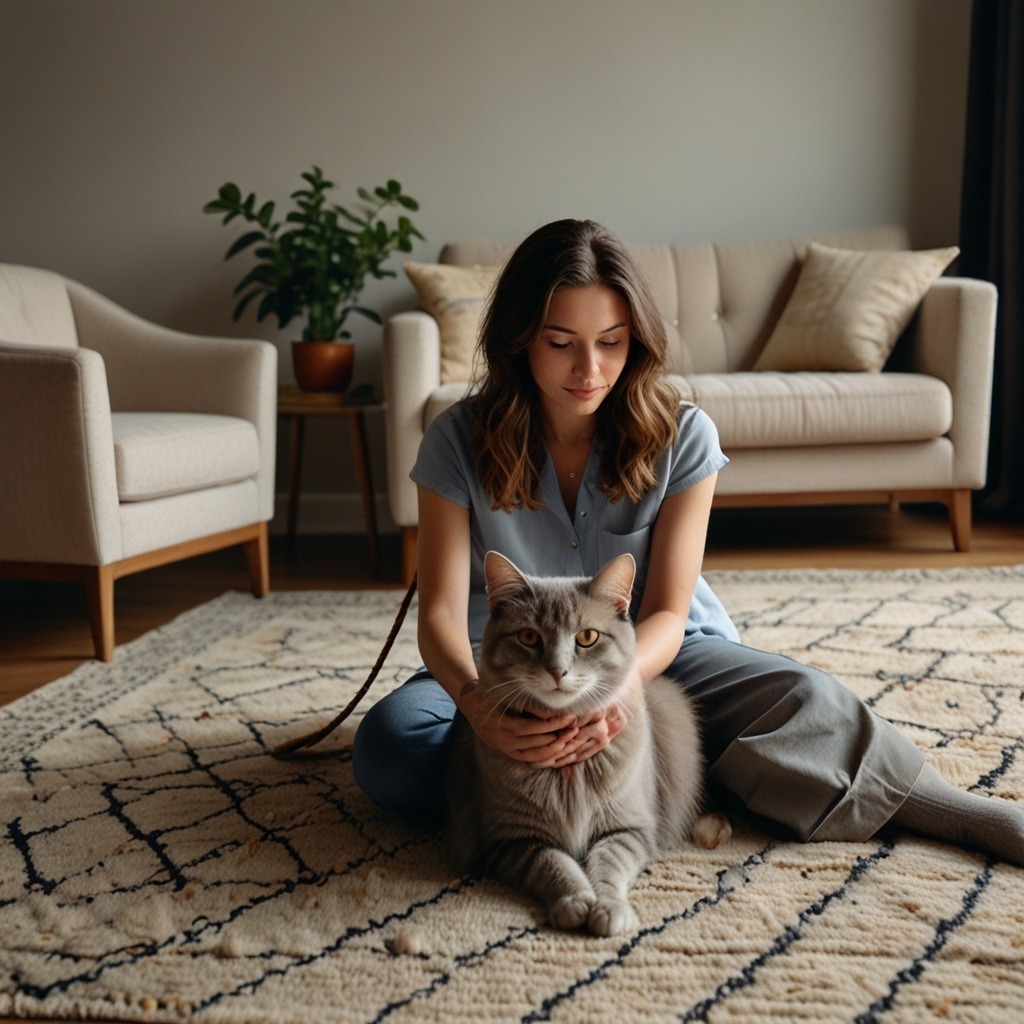
I do these brief visuals multiple times a day, short sessions, maybe 30 seconds to a minute. Over the coruse of another week, I'll gradually decrease the distance, always watching both animals like a hawk. If I see the dog's tail go rigid or the cat's ears flatten, we're done for that session. Patience, here, is boring and tedious and absolutely critical.
The Actual, Suprevised, In-the-Same-Room Meeting—and the One Rule That Keeps Me from Crying
When the visual sessions have been going smoothly—dog calm, cat able to look without freaking out, maybe even some casual sniffing through the gate—I'll attempt a same-room meeting. Dog on leassh, cat loose (unless the cat is extremely skittish, in which case I might use a carrier or a use). I remove all escape routes that lead to dangerous places, like the top of an unstable bookshelf (rip, lamp). I've a sturdy cat tree nearby, ideally placed so the cat can escape vertically if needed. I make sure there are hiding spots under furniture, but I also block off any spaces under low cabinets where a cat could wedge herself and I couldn't extract her in an emergency.
I sit on the floor with the dog at my side, leash short but not taut, and I toss treats to both animals if they're food-motivated. I don't force interaction. I don't let the dog approach the cat unless the cat initiates. If the dog is staring, I redirect with a treat or a command. If the cat approaches, I watch the dog's face like a hawk—any lip lick, whale eye, or sudden stillness? We create distance. The first meeting might last thirty seconds. That's fine.
Gus, bless his big dumb heart, once tried to drop a slobbery tennis ball at a build cat's feet in what I believe was a genuine attempt at friendship. The cat, understandably, interpreted this as a threat and slashed him across the nose. Gus looked at me with the most betrayed expression I've ever seen on a dog's face, and I realized: we hadn't yet established a 'no sudden movements' rule. So I added that. I'll now spend a few sessions after the visual phase just practicing the dog being calm in the same room as the cat while nothing exciting happens. I call it 'boring time.' I sit there with my coffee, dog on a bed, cat across the room, and we do absolutely nothing. For ten, fifteen minutes. If the cat moves, I reward the dog for ignoring her. If the dog gets up, I reset him. Tedious, but it works.
When Someone Gets a Little Too Excited (Or Terrified) and Everything Goes Sideways
No matter how careful you're, there will be a moment when something triggers a reaction. The cat darts and triggers the dog's chase reflex. The dog barks and the cat bolts into a lamp. You'll feel your blood pressure spike and you'll maybe yell something you regret. It's okay. You haven't ruined everything. I've cried over these moments—once, openly, while a build cat yowled from behind the washing machine—and I'm here to tell you that one bad interaction doesn't erase all the work you've done.
What I do now when things go sideways: separate immediately, without anger. I pick up the cat (or if she's too spooked, I herd her gently into her safe room) and I take the dog out of the room. Everyone gets a time-out. Then I assess. Did anyone get hurt? If yes, vet. If no, we go back a step. Maybe we do a couple more days of scent-swapping and visual-through-gate before trying again. The worst thing you can do is push forward out of guilt or frustration. I once pushed a build cat named Spud into a meeting she wasn't ready for because I was hosting a dinner party in two days and wanted the introduction 'done.' Spud hid in the basement for a week. I learned.
Side tangent: I used to obsess over whether my cats were 'happy enough.' Then I stopped tracking metrics and just watched their bodies. A tail-up cat walking around purring is happy. A cat who eats and poops and occasionally plays is happy. You don't need a spreadsheet.
That One Time I Had to Re-Introduce Cats to the Same Dog After a Vet Visit
Speaking of things nobody warns you about: if your resident cat goes to the vet and comes back smelling like iodine and fear, your dog might not recognize her. Seriously. I've had this happen twice, both times with my own senior cat, Snickers. She'd go for a dental, come home groggy, and Gus would act like she was a completely new animal—barking, posturing, confused. The firsst time it happened, it terrified me. I thought Gus had suddenly turned aggressive. My vet explained that it's called non-recognition aggression, and it's especially common when one animal returns smelling drastically different.
So now, after vet visits, I treat the returning cat like a new cat for a day or two. I do a mini scent-swap, I let them smell each other through a door, I give them a few hours before any visual contact. It usually resolves within 24 hours. But if I hadn't known about this, I'd've panicked and possibly made things worse. So now you know, too.
Speaking of aggressoon, I once wasted an entire year blaming my own cat for spraying, only to discover the root cause was something completely different. I wrote about that here, and it's relevant because stress from a bad introduction can absolutely trigger spraying. So if you start seeing urine outside the box a few weeeks into an introduction, your first thought shouldn't be 'this cat is spiteful.' It should be 'this cat is stressed and I need to slow down.'
The Fostering Factor: When Yo're Doing This Over and Over With Different Personalities
I've introduced cats to my resident dogs so many times now that I've a mental flowchart. But every single cat throws a wrench in a different way. The confident ones sometimes bully the dog. The timid ones vanish for weeks. The kittens treat the dog like a jungle gym, which is cute until they accidentally claw him in the eye. And senior dogs require a whole different approach—a 14-year-old Lab with arthritis isn't going to be able to handle a kitten jumping on his hips without pain, and a senior cat may simply never tolerate a dog, and that's okay.
I had one senior build, a calico named Ruth, who was about 15 and had lived her entire life as an only pet. I tried to introduce her to my quietest senior dog, who literally slept 20 hours a day and barely acknowledged her existence, and Ruth still hissed at him every time he walked past her room. After a month, I accepted that Ruth's best life was as an only cat in a quiet home. I found her a wonderful adopter who worked from home and had no other animals, and she thrived. That's not a failure. That's just knowing your animal. Not every pairing works, and forcing it for your own ego is cruel.
I've sometimes had to keep cats in my office for months until they were adopted, doing careful, never-forced interactions, and that's fine. The dogs learned to ignore the door. I learned to accept the sound of hissing as a normal Tuesday. And eventually, most of those cats came to tolerate the dogs, even if they never became cuddle buddies.
Why I Keep Doing This to Myself (A Tangent About Guilt and Wine and the 2 AM Panic)
There have been moments—many of thhem, honestly—where I've stood in my kitchen at midnight, listening to a cat yowl from one end of the house and a dog whine from the other, and thought, Why did I sign up for this? I cpuld have a quiet house. I could have unshredded curtains. I could sleep through the night without waking up at the sound of a thump, immediately wondering who threw up on what.
But then I remember the morning I walked out and found Gus and a build kotten named Pixel curled into a perfect yin-yang shape on the dog bed, the kitten's tiny paw draped over Gus's giant jowl. I remember the time my reclusive build cat, Pearl, finally walked into the living room while the dogs were all asleep, sniffed each one, and then fell asleep in the exact middle of the floor like she owned the place. I remember the adopter who sent me a photo a year later of her dog and the cat I'd introduced to him, both asleep on the same pillow, both looking slightly annoyed at being photographed.
The payoff is never guaranteed, and the process is messy and emotional and sometimes expensive. But when it works, when you see that trust built from scratch, it's the best feeling in the world. And even when it doesn't work, you've learned something about your animals and about yourself. I wrote about a similar experience with a dog who couldn't get off the cpuch without screaming—I spent a lot of money and made a lot of mistakes before finding what actually helped. The lesson always comes, eventually, even if it's wrapped in vet bills and self-doubt.
What I Actualyl Keep on Hand Now (The Un-Glamorous Essentials)
Over the years, I've assembled a little stash of things that make introductions smoother. None of it's magic, but all of it's practical.
- A double-stacked baby gate with a cat door. Some gates have a small cat pass-through, which is fantastic. The cat can come and go whole the dog can't, giving the cat total control over interactions. This is worth every penny.
- High-value treats that each animal goes bonkers for. For the dog, it's freeze-dried liver or tiny bits of cheese. For the cat, it's those lickable tube treats or bonito flakes. I keep them in separate Ziplocs so the powerful dog-sniffer doesn't get confused.
- A sturdy cat tree near the introduction space, and ideally one near an exit route. Cats feel safer up high. If I had a dollar for evry time a cat scaled my bookshelf, I'd have enough to replace the lamp.
- A Feliway diffuser and sometimes an Adaptil collar. Again, not magic, but when you're dealing with the subtle terror of a cat who's never seen a dog, any little bit helps.
- A long, lightweight leash for the dog—not a retracrable one, which can jam and cause a sudden stop that startles everyone, but a 6-foot cotton lead I can manage with one hand.
- Towels. So many towels. For scent-swapping, for barrier building under doors (dogs can and will scratch at the crack, and cats will paw at it), for when someone inevitably pees somewhere during a stressful moment. I talk about the litter box relationship in this post, but it's just as relevant here—a stressed cat will avoid the litter box if it's not pristine.
I've also learned the hard way that I need to have a backup plan for when introductions stall. A spare room that can become the cat's permanent safe zone if necessary. A phone number for a behaviorist I trust. The willingness to accept that maybe this combination isn't going to work right now, and that's heartbreaking but survivable. I once had to move a build cat to another build's home after three months of no progress, and I cried the whole drive. Later, that cat was adopted by a woman with no dogs and two other cats and absolutely thrived. I didn't fail that cat. I just wasn't her final home.
The Thing I Forgot to Tell You (But It's Probably the Most Important)
you're a variable in this equation. Your anxiety, your frustration, your impatience—they all leak out of you, and animals pick up on that faster than you think. When I'm tense, my dogs are tense. When my shoulders are up around my ears during a cat introduction, both animals read that as 'something is wrong.' I've had to learn to breathe, to move slowly, to let my voice stay low and steady even when internally I'm screaming. It's stupid how much my own emotional state affects the outcome, but it does.
One of my worst introduction failures happened because I was moving too fast and I was stressed about a deadline. I remember standing in the hallway, holding the leash too tight, snapping at the dog for being 'too interested,' and the cat picked up on that whole mess and bolted. It took me weeks to repair the damage. So now, before any introduction session, I take a few deep breaths, I check in with myself, and I make sure I'm not bringing my own garbage into the room. If I'm not calm, we don't do a session that day. It's that simple and that hard.
The first week a new cat spends in a home can truly break her if you're not careful. I've screwed that up, too. My post about that goes deep into what I did wrong and what I do now. But the short version is: let the cat set the pace. Always, always let the cat set the pace. If she needs three days in a closet before she's ready to face the dog's existence, give her three days. If she needs three weeks, give her three weeks. The only timeline that matters is hers.
When the Hisssss Finally Stops and You Forget It Was Ever Hard
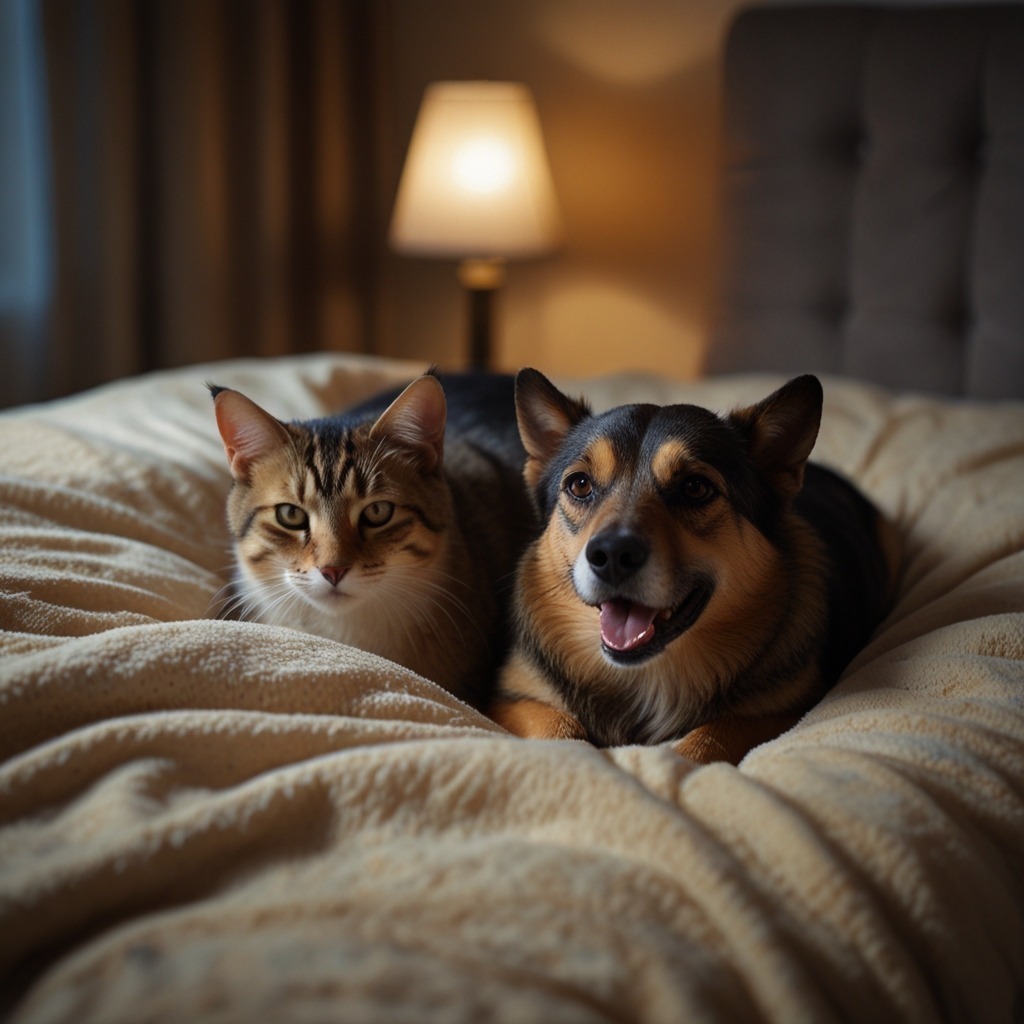
I no longer measure success by whether the cat and dog become best friends. Snickers and Gus toleratd each other for seven years—they'd nap on opposite ends of the couch, occasionally sniff each other's ears, and once, when I was sick, I found Snickers pressing her foorehead against Gus's flank while he drooled in his sleep. They never played, never cuddled, but they co-existed in a way that was clearly comfortable for both. That's a win.
Some cats will grow to adore the dog. Some will just… stop caring that the dog exists. The goal is a house where no one is constantly afraid, where resources are easy to access, and where the humans aren't losing their minds trying to referee. If you get to that point, you've done your job. If you get beyond that, you've been given a gift.
I still remember the day I found Button, the cat who'd scaled me like a tree, asleep on the dog bed next to Gus. I took a picture, and it was blurry because my hands were shaking. That photo is still on my phone, and I look at it every time a new introduction goes sideways, because it reminds me that animals are resilient and that time and patience can repair an astonishing amount of fear. You just have to stick with it, stay boring, and trust that the scent-swapping and the baby gates and the increasingly ridiculous amount of high-value treats your'e hemorrhaging money on will eventually add up to a quiet Tuesday morning where everything is, finally, just fine.