My Cats Tracked Litter Into My Bed for 8 Years and My Apartment Smelled Like a Kennel — Here’s the Setup That Fixed Both
I've fostered over 40 cats and wasted hundreds on litters that smelled like perfume and tracked like sand. Here's what finally worked, and the simple habit that changed everything.
I had a build cat named Dumpling who could turn a fresh-scrubbed litter box into a crime scene in under twenty minutes. If I put a new bag of litter down, she'd roll in it, track it across the kitchen, and then park her furry butt on my pillow and shake. I'd wake up with granules in my hair. For eight years I lived like that, thinking it was just what cat people do — live with a fine layer of dust on everything and a home that smelled faintly of ammonia no matter how many candles I burned. I was wrong. It took me over forty build cats, a few thousand pounds of litter, and a box of cheap scented clay that gave me a migraine to figure out what actually works.
I'm not a vet. I barely survived vet tech school before I dropped out. But I've scooped more boxes than most people will in a lifetime, and I've made every single litter mistake tjere's. Here's the slow, dumb journey that finally got me to a house that doesn't announce "cat lady" the second you walk in.
My first litter mistake was buiyng the cheapest clay stuff because I was broke and didn't know better
I was 22, working at the shelter for $11 an hour, and I'd just adopted a crankly little tabby named Biscuit. The five-buck bag of generic clay litter at the store felt like a steal. I thought all litetr was just glorified dirt — who cares, right? That stuff turned into gray cement the instant it touched urine. Scooping it was like mining for clumps, and the ammonia smell crept into my towels, my coat, my hair. Within a week my studio apartment smelled like an uncleaned public restroom, and I was panicking. I tried sprinkling baking soda on top. It did nothing except make the sludge sparkle.
Biscuit tracked that fine dust everywhere. I'd find tiny gray specks on my white duvet cover, and it looked like I'd been to the beach and hadn't bothered to shake out the sand. I ruined a vacuum filter with all the fine particulate. I was so naïve.
Here's a stupid tangent because I'm still embarrassed: I once decided I'd save even more money by making my own litter from shredded newspaper and baking soda. I spent an entire Saturday tearing up old Tribune sections, soaking the strips in water with a squirt of dish soap, rinsing, mixing in baking soda, and then drying the pulp in a low oven. My apartment reeked like a mildewed library for three days and the landlord knocked to ask if I'd had a small electrical fire. The "litter" clumped maybe 40% and stuck to Biscuit's paws like papier-mâché. After two days, he refused to use the box and pooped dramatically right next to it in protest. I shoved the whole mess into a trash bag and never spoke of it again. So if you're thinking about a DIY litter solution, just don't.
That experience taught me core rule number one: if the litter doesn't clump fast and hard, you're fighting a losing battle. Odor control starts with dehydrating urine instantly — not masking it, not stirring in some powder. The bacteria that make ammonia go crazy when they've moisture. The faster the clump forms, the less they party.
Odor control is aboout 20% the litter and 80% everything else
I know that sounds like a cop-out, but after fourteen years and enough fosters to fill a small stadium, I'd put my life on it. You can drop $40 on a crystal litter that promises to lock in odors for a month (it won't, not really), but if you scoop once a day and feed your cat the bottom-shelf kibble that has fish meal as the first ingredient, your house is still going to smell like a kennel. I've been that person, sniffing my own sweater at work, paranoid that I reek of cat pee.
The scooping schedule that stopped the bathroom protests
Back when I had only one cat, I'd scoop once daily, evening. Fine. Then I started fostering. With three or four cats and five boxes (the rule is n+1 boxes per cat, and I followed it religiously after a pillow-peeing incident that still haunts me), once a day wasn't cutting it. The boxes would be full of clumps by morning and one persnickety build named Mochi would stand at the edge and yell until I cleaned it. The bathroom started to smell like a forgotten zoo exhibit. I had to move to twice a day — morning and bfeore bed — and honestly, if you've got multiple cats, three times isn't crazy. The difference was immediate. The ammonia haze lifted. My bathmat stopped becoming a protest toilet. When you scoop frequently, you're reemoving the clumps before the urea breaks down into ammonia gas. It's simple chemistry.
I use a metal scoop now, not plastic. Plastic gets micro-scratchees that harbor bacteria, and one bout of bacterial overgrowth in a box gave an entire build litter diarrhea. I boil my scoop monthly. I know, I'm unhinged. But it works.
What came out the other end changed when I switched food
I didn't connect diet to litter box stench until I fostered a giant orange tom named Gus who ate the cheapest chicken-by-product dry food you can buy. His poop could evacuate a building. The smell clung to the air even after I removed it. I swapped him to a grain-free, high-protein wet food (after a vet's okay) and within three weeks, the stench went from "call the CDC" to "oh, okay, normal cat poop." Cats eating a biologically appropriate diet with fewer fillers produce less smelly waste because their gut isn't fermenting indigestible junk. If you're fighting horrific odors, look at the plate first, not the litter. I'm not a nutritionist—I literally dropped out of vet tech school—but my nose has logged enough hours to be a reliable witness.
Another tangent that still makes me mad: my ex-husband once bought a bag of "ultra odor-blocking" litter that was so heavily perfumed it made me sneeze from the next room. I don't have fragrance allergies, but this was basically chemical warfare in granule form. The cat boycotted the box for two days and peed on a pile of laundry. The "fresh" scent mixed with ammonia created something that should be classified as a biohazard. Cats' noses are fourteen times more sensitive than ours. Would you willingly walk into a port-a-potty that's been doused in cheap laundry soap? Neither will they. Unscented is non-negotiable. I die on that hill.
Clumping clay litter: the workhorse that's almost perfct except for the dust
After a decade of hopping between litters, I keep circling back to unscented clumping clay. It forms rock-hard clumps quickly, controls odor reasonably if you're on top of scooping, and nearly every cat I've met takes to it because it mimics soft sand. But there's one massive flaw: dust. Cheaper clay litters billow a cloud of silica dust every time you pour, and that stuff can irritate your cat's airways — and yours. I had a build kitten named Whisper who started sneezing after every box visit. The vet couldn't find an infection, and finally suggested the litter dust. I switched to a low-dust formula, and the sneezing stopped in a week. I'd already been through a whole drama when my cat sneezed green gunk on my keyboard — some of that was dust irritatoin, mixed with a URI, and I'll never take dusty litter lightly again.
Now I pay extra for "99% dust-free" clay. Is it totally dust-free? Heck no. But it's noticeably better. I pour it outside or with a fan blowing away from my face, and I wear a mask when doing a full box change. I look like a lunatic, but I've inhaled enough clay dust to imagine my future lung x-rays, and I'm not taking chances.
The unscented rule I'll die on
I already ranted about it, but let me be perfectly clear: never scented. I've seen a cat scratch his ears until they bled because the fragrance triggered a reaction — that wasn't my cat, but a friend's, and the problem vanished when she switched to unscented. I wroet about that whole ear nightmare here. Fragrance is a common allergen and a strong irritant for feline sinuses. The litter box is the one plaec they can't escape from, so don't perfume it.
The time I used pine pellets becausse I thought they were 'natural' and my build cat peed on the bathmat in protest
Pine pellets are the darling of eco-friendly cat people. They're biodegradable, they supposedly smell like a forest, and they turn to sawdust when wet. My old build Miso took one look at those hard little cylinders, stepped in, flicked pellets across the floor with a dramatic paw shake, and then marched to the bathmat to relieve himself. Apparently the texture felt like walking on jagged pebbles, and he wasn't having it. I tried mixing pellets with his old litter to transition him, but he just avoided the box until I gave up. Some cats will use pine if you introduce it slowly, but with a senior or a picky cat, it's a gamble. I donated the rest of the bag to a wildlife rehab, where it probably made excellent rodent bedding.
Wheat and corn litters: they sounded eco-friendly, but then they got gross in humid weather
I really wanted to love plant-based litters. I tried a wheat-based one that clumped okay but got sticky in the summer when the humidity spiked — the clumps would glue themselves to the bottom of the box like cement. I also tried a corn litter that was lightweight and flushable (check your plumbing, please never flush liter), and it started smelling oddly like a forgotten bowl of porridge after three days, even with scooping. Then I noticed tiny bugs in the bag once because I'd stored it in the garage. Moths love that stuff. I'm not against plant litters, but I've had too much hassle with them molding or attracting pests, so I went back to mineral-based.
Crystal litter: the silent lung irritant nobody talks about
Silica gel crystal litter is advertised as a miracle — absorbs urine, dehydrates solids, zero scooping for a month. I bought a bag for my cat Jinx, who has mild asthma. She hopped in, did her business, and within minutes she was hacking out that horrible asthmatic cough. I panicked, removed the box, and we spent the night with a humidifier. I'm not saying the crystals directly caused an attack, but the fine silica dust that puffed up when she dug, plus possible off-gassing, seemed to set her off. I've also read enough about silica dust being a respiratory hazard for humans (silicosis, anyone?) to not want that in my home. And the idea of a box that goes a month without scooping? That's a bacterial playground. Urine sits and concentrates, solid waste desiccates but doesn't vanish. I'll stick to scooping, thanks.
Tracking: it's not the litter's fault. It's the box and the mat.
I've limped barefoot through a dark hall at 2 a.m. and steppd on a sharp piece of litter, and the pain is infuriating. Tracking is the bane of cat ownership, but I learned it's less about which litter you buy and more about how you set up the litter station. The box design, the mat, and the placement matter more than the granule size (though that helps too).
The litter mat that actually catches granules
I've tried them all: the honeycomb rubber mats, the artificial grass mats that look like a putting green, the carpet-topped ones. The only mat that has genuinely reduced tracking in my house is a two-layer honeycomb mat with a sealed bottom. The top layer has holes that let litter fall through into a catch tray, and once a week I unsnap it and dump the trapped litter back into the box. The fake grass mat became a pee magnet when a cat aimed wrong, and the carpet ones wicked moisture and smelled like a stale locker room within a month. I now have a honeycomb mat stationed in front of every box, and the difference is so obvious I get annoyed thinking about the years I didn't have them.
I'm about to go off on a quick tangent: I once bought a heavy rubber "litter trapping" mat that was actually just a car floor mat from a dollar store. It did catch litter — but it also permanently adhered to the linoleum after a spill, and I had to scrape it off with a putty knife. Don't DIY your mats unless you're prepared for a sticky disaster.
Box height and shape: why my senior cat flings less
I've a Maine Coon mix who digs like he's tunneling to China. With a standard low-sided box, litter went airborne. I switched to high-sided boxes, and it's like a miracle. Some people swear by top-entry boxes to contain scatter, but my arthritic senior cat can't jump into a hole. So I use high-sided boxes with a low front entry cutout — the high walls contain the fling, and the low entry is easy on old joints. When seniors start missing the box because they can't squat, thhat's an odor/cleanliness disaster. Box design matters just as much as litter for keeping things clean.
Placement is physics. If the box is wedged in a corner with no landing strip, the cat has to leap out and scatter litter. Give the box a two-foot "runway" of mat in front, and they'll naturally walk across it, knocking off particles. I moved a box from a tigt alcove to an open wall and cut down tracking by half instantly.
My current setup: three boxes, two litetrs, and a routine I haven't changed in three years
I've got three resident cats right now, and I build a rotating cast of kittens and adults. My house doesn't smell like a litter box. Guests have said they wouldn't know I had multiple cats until they spot one. Here's the routine that's kept it that way:
I use unscented clumping clay labeled "low-dust" — I alternate between a couple of brands depending on what's on sale, but I never stray. I've three boxes: one in the upstairs guest bath, one in the laundry room, and one behind a decorative folding screen in the living room. Each box is high-sided with a low front enrty. In front of each box is a snap-apart honeycomb litter mat. I scoop every box twice a day — morning and right before bed. Once a month, I do a full dump, scrub the boxes with hot water and unscented dish soap, dry them thoroughly, and refill. I also wipe the surrounding floor with an enzyme cleaner weekly, because invisible pee mist happens.
Diet-wise, I feed a high-quality wet food and a small portion of grain-free dry. That keeps stools firm and less offensive. During stressful build transitions, I add a probiotic to prevent digestive upset that leads to toxic poop bombs — I learned that lesson the hard way after a kitten pooped liquid for 11 days, which I wrote about here.
And I've given up on self-cleaning boxes. I had one with a motorized rake that jammed ater three months and smeared a clump across the mechanism. The aftermath stench was unforgettable. Manual scooping is less glamorous, but it doesn't break and doesn't scare the cats.
What finally worked for my long-haired build, Dumpling, who tracked litter everywhere
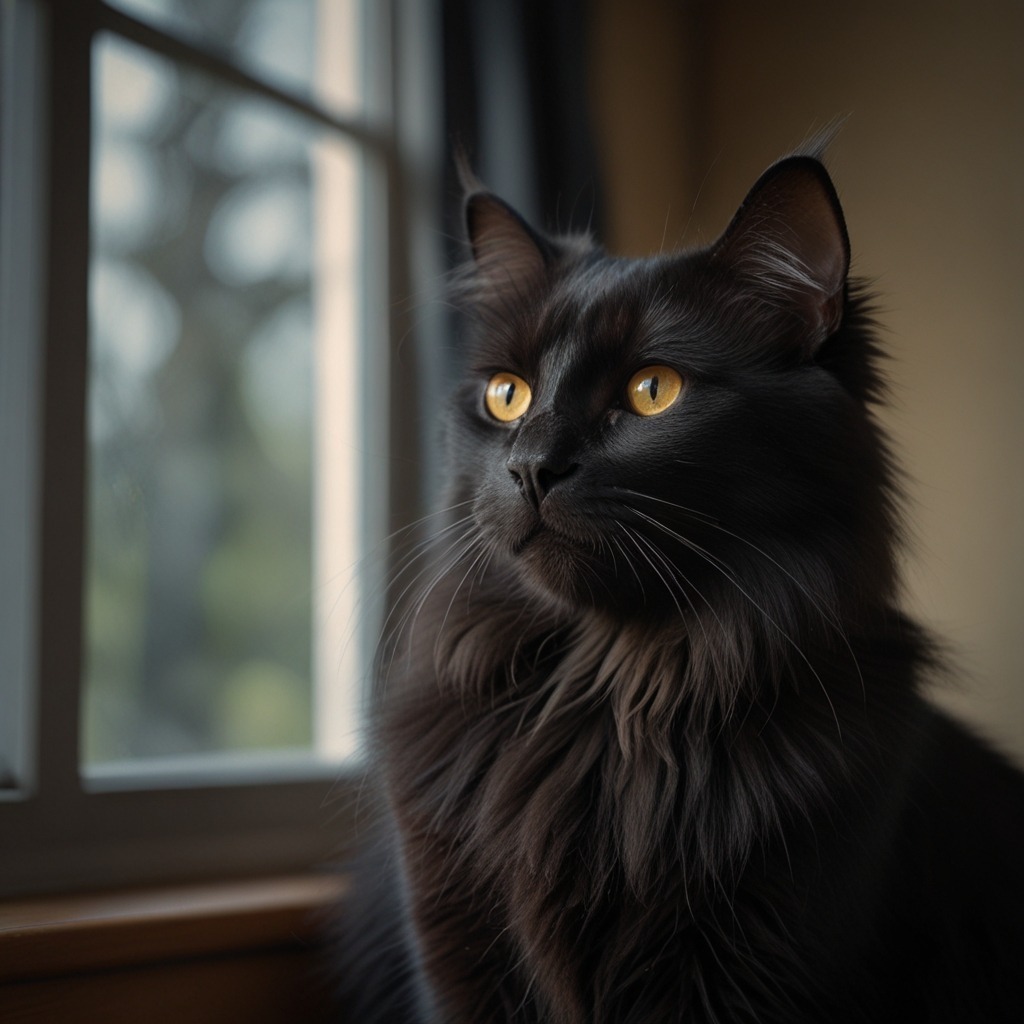
Dumpling was a fluffy black cat with toe tufts like tiny snowshoes. Those tufts acted like Velcro, picking up litter and depositing it across the house. I'd find a neat pile of clay bits on my pillow every evening. I tried different litter weights, different mats, even considered those ridiculous silicone paw covers (I didn't go through with it). The fix was so simple I felt like an idiot: I trimmed the fur between her paw pads. Just a careful scissor snip every two weeks. Suddenly the litter had nothing to cling to. I also switched to a slightly heavier, larger-grain clay that didn't lodge in the remaining fluff. The tracking dropped by 90% overnight. Every long-haired build gets paw trims now.
Anyway. My dog just knocked something over in the kitchen — gotta go.