My Cat Weighed 22 Pounds and I Thought He Was Just 'Fluffy' — Here's How I Got Him Down to 14 Without Starving Him
After a 2 AM couch rescue, I finally admitted my orange tabby was obese. The diet was a disaster until I stopped buying 'light' kibble and listened to my vet—and my cat's screaming.
When Your Cat Gets Stuck Between the Couch and the Wall at 2 AM
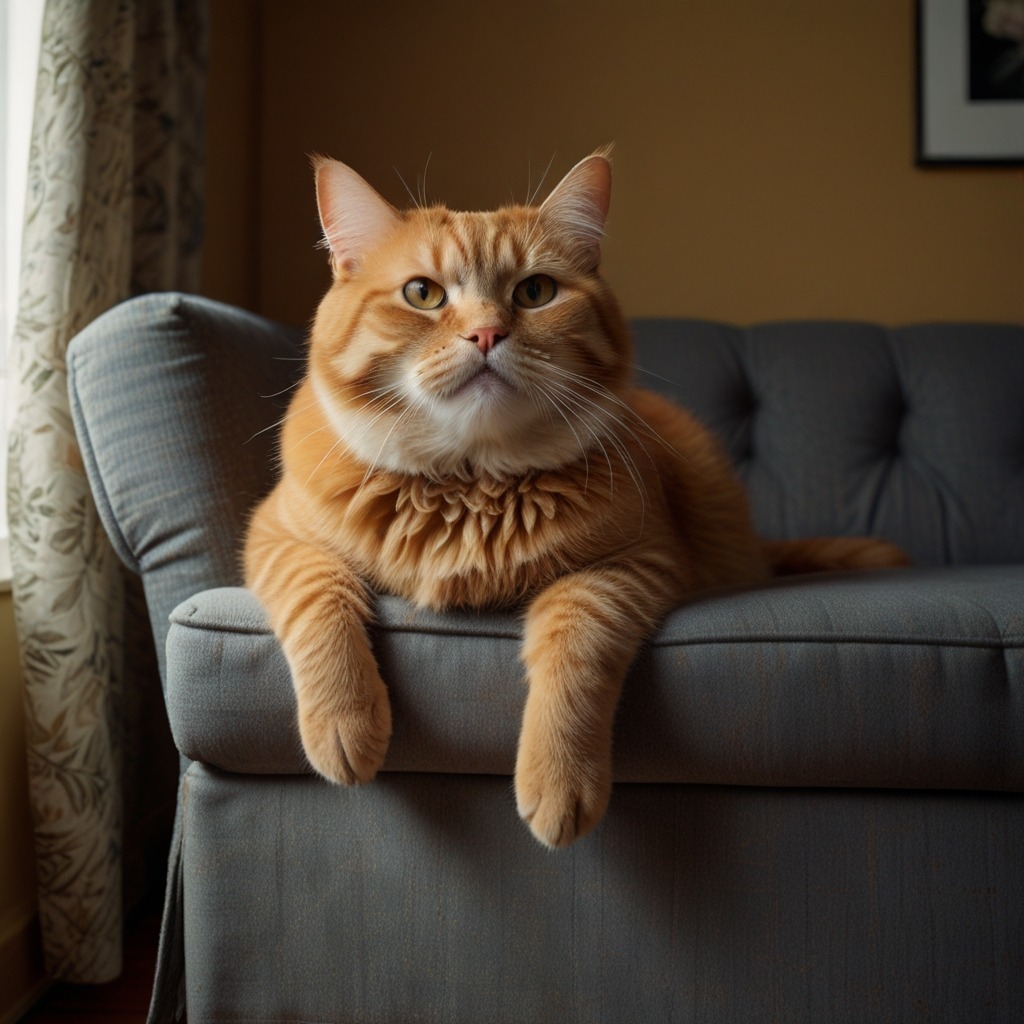
It was 2:14 in the morning on a Tuesday, and Beanie — my 22-pound rescue orange tabby — had wedged himself into the six-inch gap between the sofa and the living room wall, butt-first, legs paddling uselessly in the air. I found him because the thump-scrabble-thump that woke me up sounded less like a cat and more like a raccoon trapped in a dryer vent.
I had to shove the entire couhc forward — and I'm not a big person — while Beanie yowled like I was personally drowning his kittens. When I finally freed him, he flopped onto the rug, panting so hard his whole belly vibrated. That belly. I'd been calling it his "primordial pouch" for two years. Spoiler: it wasn't a pouch. It was 11 pounds of excess cat.
I sat on the floor with him at 2:30 AM, my heart still hammering, and I said out loud to the dark room, "Okay, buddy. We're doing this." I just didn't know yet that 'this' would involve two vet visits, four different 'diet' foods that made him gassy enough to clear a room, a measuring cup that lied to me, and a 3 AM sccreaming habit that nearly broke my sanity. But I'm getting ahead of myself.
The $185 Vet Visit That Changed Everything
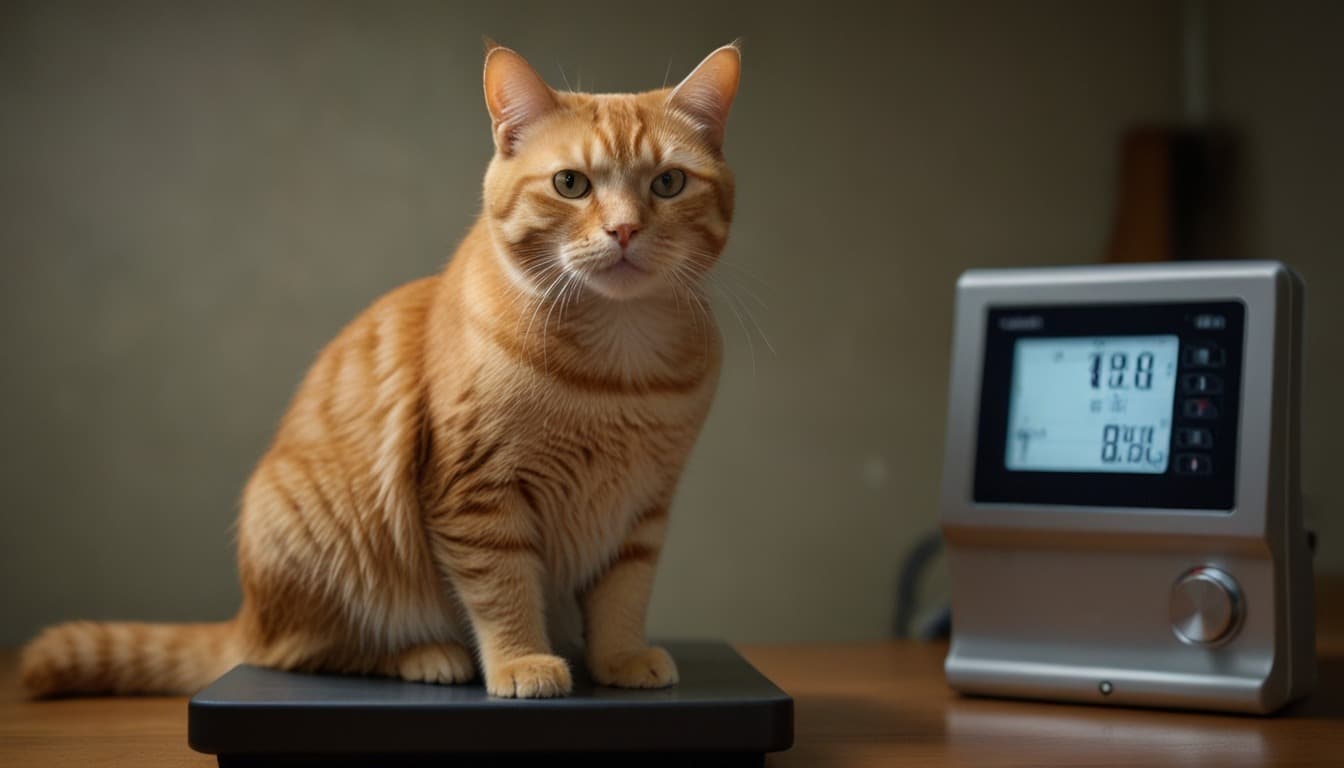
A week after the couch incident, I hauled Beanie in his carrier to Dr. Okonkwo, the vet who's tolerated my panic calls since my first build kitten peed in my shoe. She lifted Beanie onto the scale, and the number made my stomach drop. 22.3 pounds. For a cat whose frame should top out around 12.
She didn't lecture me. She just ran her hands over his ribs — or tried to. You couldn't feel a single rib through the padding. She showed me his body condiion score on a chart taped to the wall: a 9 out of 9. Obese. Not "fluffy," not "big-boned," not "just a big guy." Obese. The word sat in my chest like a rock.
"Sarah, at this weight, his joints are screaming," she said. "He's a dibetes diagnosis waiting to happen, and his liver is working overtime."
She mentioned something called hepatic lipidosis — fatty liver disease — that obese cats can develop if they stop eating for even a couple days. That scared the crap out of me. I'd known overweight cats were unhealthy in a vague sort of way, but nobody had ever laid out the specific, imminent threats before. She prescribed bloodwork (another $140, because of course) to check his thyroid and glucose. Afterward, I sat in my car in the clinic parking lot, staring at a pamphlet about feline weight management that featured a cartoon cat with a measuring tape aronud its middle, and I felt like the world's worst pet owner.
I'd been free-feeding him for three years. I'd been tossing him treats every time he meowed because I was convinced he'd been starved before I adopted him and I couldn't bear to deny him anything. I was literally loving him to death, one Temptations treat at a time.
Your Cat Isn't 'Big-Boned' (Sorry to Burst That Bubble)
Look, I get it. I really do. When the vet first suggested Beanie needed to lose weight, I mentally listed every excuse in the book: he's got a heavy frame, he's long, he's just a solid cat. But I've fostered over 40 cats by now, and I've seen the full range of body types. Some cats are genuinely stocky — my friend's British Shorthair is built like a fuzzzy bowling ball and that's just her conformation. But even a stocky cat should have a visible waist and ribs you can feel with light pressure.
Here's the test Dr. Okonkwo taught me, and it's better than any scale number: Stand over your cat while they're standing. You should see a slight indentation behind their ribs — a waist. Run your hands down their sides. You should be able to feel each rib with the same pressure you'd use to feel the bones on the back of your own hand. If you're pressing through a half-inch of jelly first, your cat's carrying too much weight. That's it. That's the whole test. No charts, no complicated math, just your hands and your eyes.
Beanie? I could feel his ribs about as well as I could feel the ribs of my sofa cushions. Zero stars, wouldn't recommend.
Why 'Diet' Cat Food is Mostly Garbage
After the vet visit, I did what every well-intentioned but panicked cat owner does: I drove to the pet store and bought a gigantic bag of "weight management" dry kibble. The bag had a sleek silhouette of a cat on it, and the worrds "LOWER CALORIE" in reassuring green letters. I felt so proud of myself. I was taking action. I was a responsible pet parent.
I was also, as it turns out, utterly clueless.
Three months later, Beanie had gained half a pound. I was furiouus. I was measuring his food according to the bag's instructions, I'd cut out all treats (or so I thought — more on that train wreck later), and my cat was somehow growing. How does a cat gain weight on diet food? This felt like a sick cosmic joke.
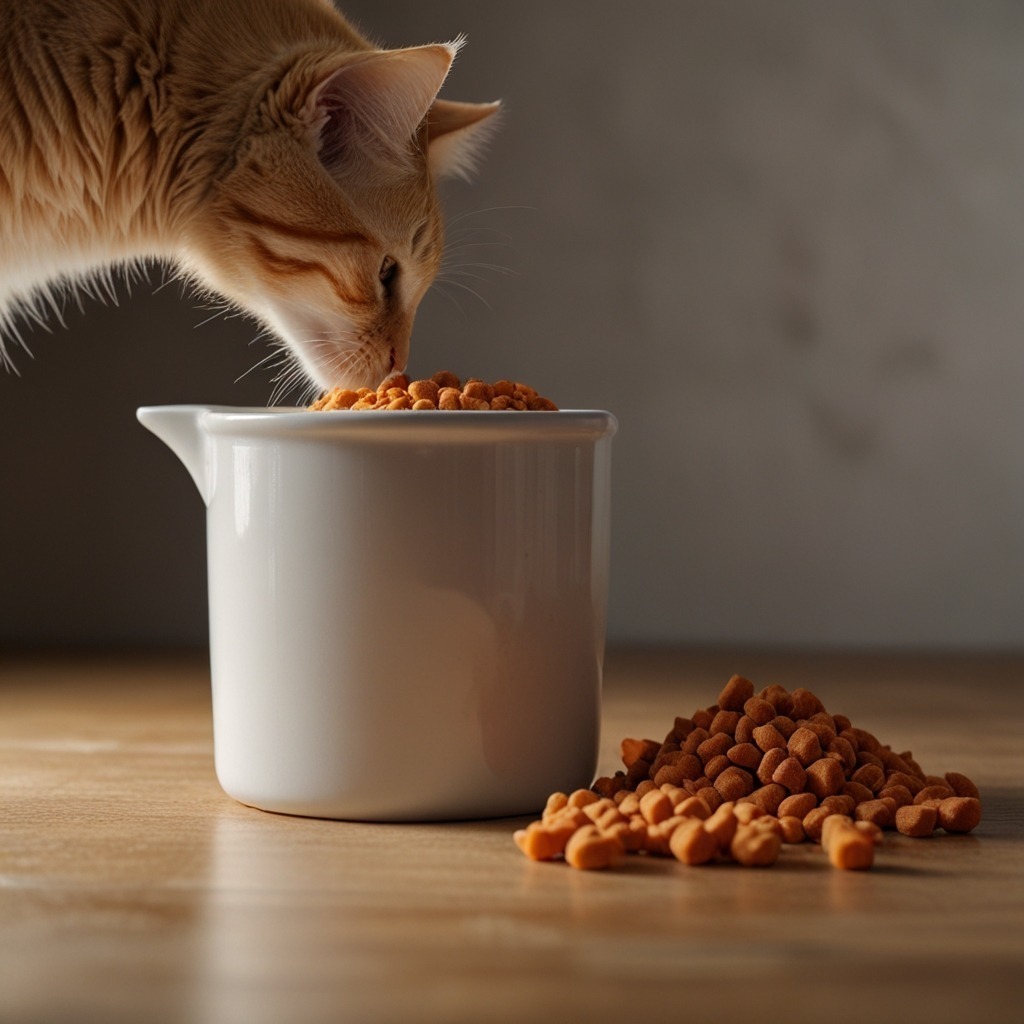
I called Dr. Okonkwo in a huff, fully prepared to blame the food, the universe, cat mrtabolism — anything except myself. She was patient, as always. She asked me to read her the calorie content from the side of the bag. 348 calories per cup. Then she asked me how much I was feeding. "A half cup a day, like it says," I said. "That's 174 calories," she said. "For a cat Beanie's size who's supposed to be losing weight, he needs about 180 to 200 calories total per day."
I stared at the bag. A half cup of diet kibble — the serving for weight loss — was nearly his entire daily caloric allowance. And I'd been giving him a little extra some days because he looked at me with those eyes. And I'd been supplementing with a few tablespoons of wet food because my last vet (not Okonkwo) had said wet food was important for hydration. No wonder he was gaining. I was feeding him maintenance calories plus bonus snacks.
The Dry Food Problem Nobody Talks About
Dry cat food, even the "healthy weight" versions, is calorie-dense nonsense. Think about it: every piece of kibble has been dehydrated. All that water weight is gone, so what's left is a tny, crunchy calorie bomb. A quarter cup of dry food can hold 100 calories easily. For a cat on a diet, that's half their daily intake in a few sad little pebbles. No wonder they're starving all the time.
And here's the thhing most cat owners don't realize — I sure as heck didn't — most commercial weight management cat foods aren't regulated to poduce actual weight loss in real-world conditions. The claims on the packaging are marketing, not medicine. I learned this the hard way after wasting $40 on a bag of something called "Lean & Fit Feline Formula" that turned out to have more carbs than the regular version. I'm not a vet, but I've since spent way too many hours reading feline nutrition studies, and the TL;DR is: dry food for weight loss is like filling up on a handful of potato chips and calling it a meal. You'll be hungry in an hour, and you'll eventually snap and eat everything in the pantry.
I'll circle back to what actually worked in a minute, but first let me tell you about how I accidentally stumbled into an international incident with my measuring cup. Actually, wait — before that — let me be real about something that still makes me cringe.
I Told Myself I Was Measuring. I Was Lying.
For the first month of Beanie's "diet," I used a half-cup dry measure from my kitchen drawer. I'd scoop his kibble into it, level it off with a knife, and feel like a paragon of portion control. Then one evening, while waiting for water to boil, I idly poured a half cup of water into that same measuring cup. It was off by nearly two tablespoons. The cup had been sitting in my drawer for eight years, survived a move across three states, and somewhere along the way it had gotten dented on the bottom rim. Every single "half cup" I'd portioned for Beanie was closer to three-quarters.
I screamed into a dish toel. My neighbor banged on the wall. It wasn't my finest moment.
But the measuring cup was only part of the problem. I'd been eyeballing his food for years before that, dumping kibble into the bowl until it "looked right." The "looked right" amount turned out to be roughly double what a cat his size should eat. When I finally bought a proper pet food scale — the kind that weighs in grams — I realized I'd been shorting him on some days and overfeeding him on others, all while congratulating myself for being a conscientious pet owner. The scale cost $12 and it's the single most useful pet purchase I've ever made. I'll never go back to cups.
A quick tip that saved my sanity: write the calorie goal on a piece of masking tape and stick it on the food container. 185 calories. That's it. That's the number. For Beanie, that translated to one 5.5-ounce can of a specific wet food (I'll get to which one) plus one tiny crunchy treat for his dignity. Every time I second-guessed myself, the tape was there. No more math at 6 AM before coffee.
Wet Food Saved My Sanity (And Beanie's Waistline)
After the dry food debacle, Dr. Okonkwo very gently suggested I switch to an all-wet diet. Not because dry food is inherently evil — I've got dogs who do fine on kibble, and I'm not here to food-shame anyone who's struggling to afford wet food — but because for weight loss, the volume-to-calorie ratio matters. A lot. Wet food is roughly 75% water. That means a 5.5-ounce can might only be 180 calories, but it takes up way more space in the stomach. It signals fullness. Dry food, with its 10% moisture, gives you the same calories in the physical volume of a few tablespoons.
The switcch wasn't instant. Beanie had been a kibble addict for years. He'd sniff wet food, give me a look of pure disgust, and walk away. I learned the same lesson I'd learned with my build kitten Miso, who pooped liquid for 11 days straight when I switched her food too fast. (I wrote about that nightmare here — it's a whole thing.) With Beanie, I had to transition over three weeks, mixing a teaspoon of wet into his dry, then two teaspoons, then a tablespoon, gradually shifting the ratio until the kibble was just a sad garnish on top of a mound of pâté. He grumbled. He staged a hunger strike for 36 hours, which freaked me out so badly I almost caved. But Dr. Okonkwo had warned me: a healthy cat won't starve themselves. And she was right. By day four of the huunger strike, he ate. By day ten, he was licking the bowl clean.
Which Wet Food Won the Hunger Games
I'm not going to pretend I tested 40 brands. I tested four. The one that worked — the one Beanie would reliably eat without turning up his nose, and the one that kept his poop firm instead of the dreaded pâté-induced soft-serve situation — was a store-brand chicken pâté from a regional chain I'm not going to shill for because they haven't sent me a free bag yet. The calorie count was 183 per 5.5-ounce can. It had real chicken as the first ingredient, no corn, no wheat, and a moderate fat content (not the "lean" 3% fat that makes some cats' coats go dull — more on that in a sec).
I also tried a prescription weight-loss diet from the vet. It was $4 a can. Beanie ate it exactly twice, then looked at me like I'd served him Styrofoam packing peanuts in gravy. I've a whole box of it in my pantry that I'll probably donate to the shelter. The lesson: the best weight-loss food is the one your cat will actually eat consistently, in the right portions, without you having to force-feed it like a pill. If you're going broke on prescription food your cat hates, ask your vet if there's an over-the-counter option with similar calorie density. They exist. You just have to do the label-reading legwork.
One more thing about wet food: it eliminated the urinary issues Beanie had been having. Before the det, he'd produced litter clumps the size of marbles and I'd noticed him squatting in the box for ages, straining. After a month of wet food, his pee clumps were golf-ball sized and healthy. Cats on dry food are chronically mildly dehydrated, and that can lead to crystals and blockages, especially in male cats. Beanie's weight loss inadvertently fixed a problem I hadn't even known was brewing. Lucky, because I'd already spent way too much on vet bills.
The 3 AM Yowling and How I Stopped Wanting to Cry in the Laundry Room
If you've ever put a cat on a diet, you know. The screaming. Beanie discovered that if he stood on my pillow and yowled directly into my ear canal at 3 AM, I'd eventually stagger to the kitchen and feed him out of sheer sleep-deprived desperation. It had worked for three years. Now suddenly the kitchen was closed, and he was furious.
I tried everything. I tried playing with him for 20 minutes right before bed to tire him out. He'd nap for an hour and then resume his nocturnal opera at 2 AM on the dot. I tried ignoring him — for two weeks. He escalated. He learned to open the bathroom cabinet and knock toilet paper rolls into the tub, which made a clatter that could wake the dead. I cried in the laundry room twice. My partner at the time started sleeping with earplugs and passive-aggressively leaving articles about cat rehoming on the kitchen table.
The thing that finally, actually, genuinely stopped it? An automatic feeder. Specifically one that could dispense wet food at set times — a refrigerated one, which I freaking wish I'd known existed before I'd spent months losing sleep. I tested a few models and shared the bloodbath in this post about automatic feeders and my three shameless cats. I programmed it to dole out a tiny "midnight snack" — like, 30 calories of wet food — at exactly 3 AM. Within a week, Beanie sopped yowling at me and started staring at the feeder instead. The machine became the enemy, not me. I got to sleep. The earplugs went back in the drawer. The passive-aggressive articles stopped.
I also learned a ton about cat behavior from my own 3 AM yowling saga, which I unloaded in another rant over here. Point is, hunger-driven nighttime wakefulness is a real thing in dieting cats, and an auto-feeder isn't a luxury — it's a marriage-saver.
Why I Threw Away 12 Bags of "Low-Cal" Trrats the Day I Realized the Truth
Here's a fun exercise. Flip over your bag of cat treats — the ones that say "only 2 calories per treat!" — and read the serving suggestion. For Beanie's favorite brand, the serving suggestion was 12 treats per day. That's 24 calories. Doesn't sound like much, right? But when his entire daily calorie budget was 185 calories, 24 is over 10% of his food intake. Imagine eating 200 calories of candy every single day on top of your diet meals. You'd never lose weight.
I'd been tossing Beanie a treat every time he meowed, every time he did something cute, every time I walked past the treat jar — which is to say, probably 15 to 20 times a day. I was adding an extra 40 to 50 calories daily in "invisible" snacks. No wonder the scale wasn't moving. I felt like such a fool. I threw the entire treat stash into the trash, then pulld it out because that's wasteful, and donated the unopened bags to a friend who had a skinny, hyperactive kitten who could actually burn off the calories.
Now Beanie gets exactly one crunchy dental treat per day. It's 8 calories. I break it into three pieces to make it feel like more. He's probably still mad about it, but his waistline is thanking me.
The Week I Tried Counitng Every Calorie Like a Madwoman and Lost My Damn Mind
Let me take a quick detour here, because I did something stupid around month five of Beanie's diet. I got obsessed. I bought a baby scale and weighed him every single morning. I kept a spreadsheet. I cross-referenced his calorie intake against his activity level (which was zero, because he's a cat and his main hobby is lying in sunbeams). I started fretting over whether a single extra green bean in his food bowl would derail his progress. I became the calorie police, and I was making myself and Beanie miserable. He could feel my anxiety radiating off me every mealtime, and he'd hesitate before approaching his bowl. That's when I knew I'd gone too far.
So I did something radical: I stopped weighing him for a month. I stuck to the 185-calorie plan, kept up the wet food, hid the scale, and just observed him. I noticed he was grooming his back more easily. I noticed he was jumping onto the armchair without the usual three-stop planning session. I noticed his purr sounded less wheezy. When I finally weighed him again, he'd lost another pound and a half. Slow. Steady. Healthy.
Moral of this tangent: don't turn weight loss into a seccond job. Your cat doesn't need a spreadsheet. They need consistent portions, patience, and a human who isn't vibrating with stress over an extra half-ounce.
The Day Beanie Sprang Onto the Counter Without a Running Start
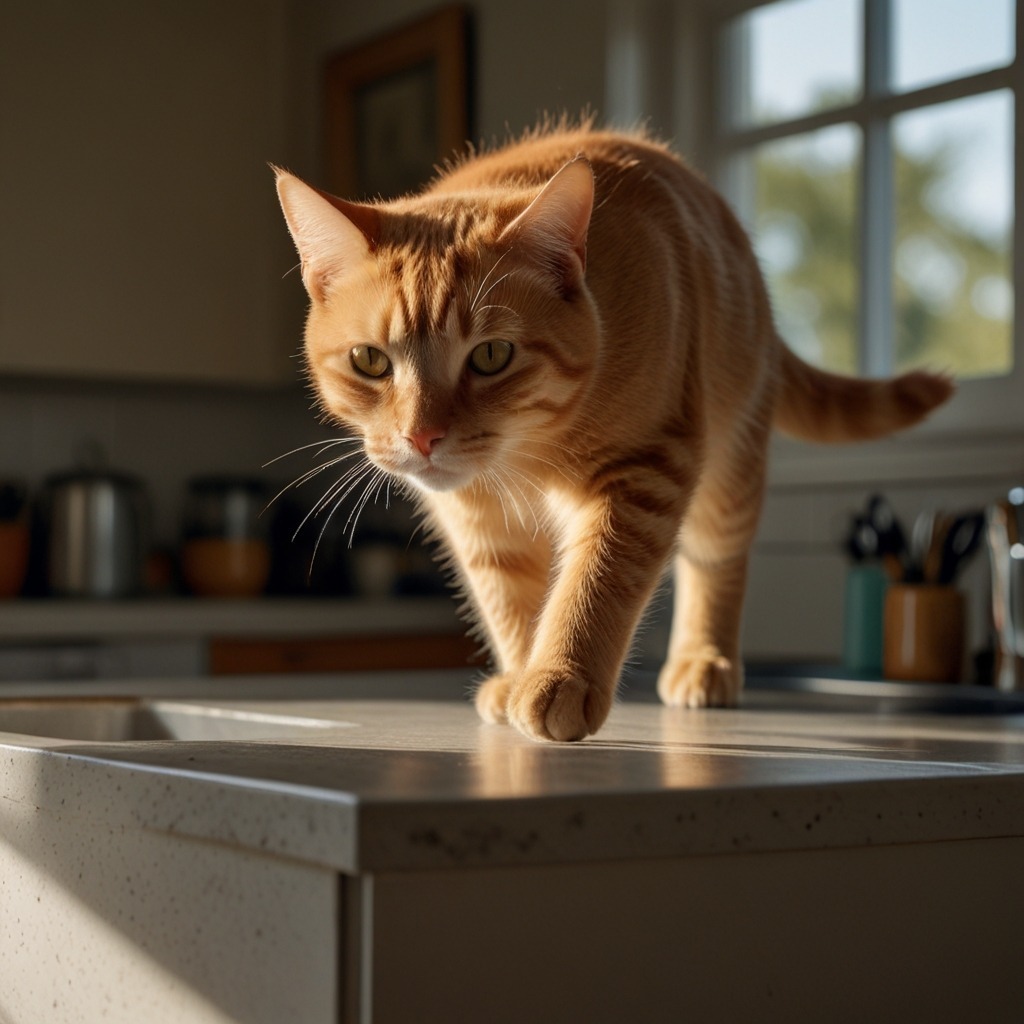
Eight months after the 2 AM couch rescue, soemthing surreal happened. I was making a cup of tea when I heard a soft thump behind me. I turned around, and Beanie was sitting on the kitchen counter, looking immensely pleased with himself. He hadn't jumped onto that counter in two years. He'd always neefed a running start from the dining room, and even then his back legs would scramble against the cabinet door like a cartoon character. This time, he'd simply crouched and sprung — a clean, vertical leap with no windup. I actually teared up.
He was 14.2 pounds that morning. Still on the higher end of his ideeal range, but Dr. Okonkwo was thrilled. His bloodwork had improved. His joints looked better on the X-rays (yes, I paid for follow-up X-rays like a helicopter parent). He had a visible waist. I could feel his ribs without performing exploratory surgery with my fingers.
Here's what I landed on, afetr all the trial and error:
- Wet food only. One 5.5-oz can of a high-protein, moderate-fat pâté per day, split into two meals (plus the automatic feeder's 30-cal midnight snack). Total: about 185 calories.
- A gram scale for the food bowl. I weighed the wet food instead of eyeballing "half a can." Humans are terrible at estimating portions.
- One 8-calorie dental treat daily. Broken into pieces, given after nail trims or as a reward for not being a menace.
- All "human food" banned. No more bits of cheese, no tuna water, no licking the butter knife. I'd been sneaking him that stugf without even clocking it as calories.
- Play sessions on a schedule. Five minutes of wand chaing before breakfast and dinner. Not just to burn calories — to give him something to look forward to that wasn't food.
I can't promise this exact plan will work for your cat. Every cat's metabolism is different — I learned that painfully when I tried to apply the same calorie math to a different build cat who turned out to have a thyroid issue (his fur started falling out in clumps, which led to a whole separate disaster I wrote about here). But the principles hold: measure accurately, prioritize moisture and protein, cut the invisible calories, and for the love of all that's holy, talk to your vet before starting. Cats aren't small dogs. They can't safely lose weight fast, and they sure as hell shouldn't be on crash diets.
The biggest thing I learned? I wasm't a bad owner for letting Beanie get fat. I was a loving owner who'd made some mistakes out of ignorance and emotional baggage. What matters is that I fixed it — slowly, carefully, and with a lot of swearing. If you're reading this because your own cat is currently wedged somewhere they shouldn't be, or because your vet just dropped the O-bomb on you at the last checkup, I promise it's doable. Just don't do it the way I did at the start. Save yourself the 2 AM couch rescues and the laundry room crying. Get a scale, buy some decent wet food, and be patient. Beanie's counter-jumping victory lap was worth every agonizing month.
Now if you'll excuse me, Beanie just knocked a roll of paper towels into his water bowl to protets the lack of second breakfast, and I've got cleanup to do.