My Cat Stared at Me for 20 Minutes Without Blinking and I Thought He Was Plotting My Funeral — Here's What He Was Actually Saying
I thought I knew cats until a 10-pound tabby bit me on day two and made me question everything. 40+ fosters later, I still misread signals — but at least now I know why. Here's what your cat's ears, tail, and weird purring are actually saying.
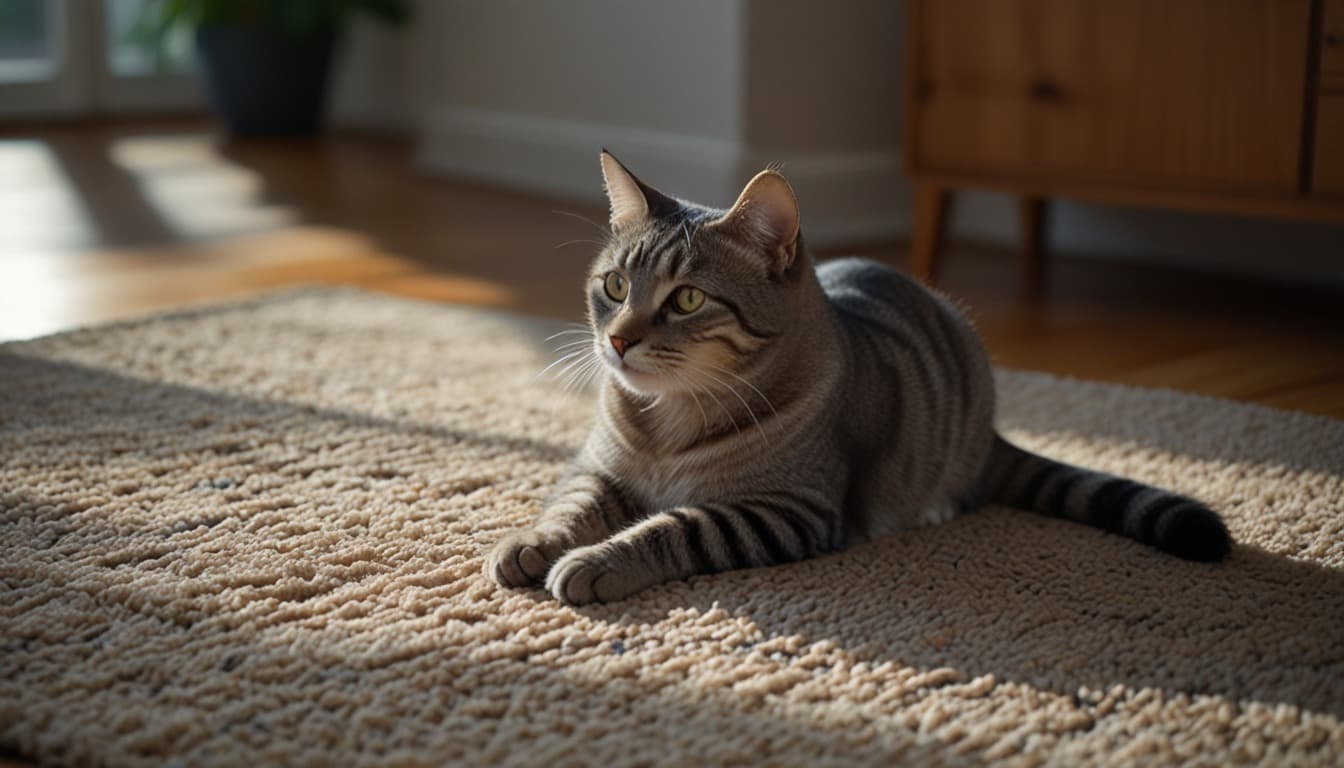
The first cat I ever fostered bit me on the second day and I swore I was the worst animal person alive. Jasper — a sleek gray tabby who'd been surrendered because he 'didn't get along with the new baby' — had spent 48 hours under my guest bed, only coming out to inhale wet food at 3 a.m. and poop in the litter box like he was paying taxes. Tuesday morning I crouched dpwn, made kissy noises, and reached a hand toward him super slow. He stared at me, ears forward, whiskers tilted. I thought: okay, he's curious, he's ready. The bite landed on the meat of my thumb and drew blood before I even registered movement. I yelped. He vanished. I sat on the floor holding a paper towel and wondering if I should just stick to dogs. But here's the thing I didn't know yet — Jasper was telling me something the whole time. I just didn't speak cat.
Over 40 build cats later, I still screw up. I still miss a tail flick or misread a purr and get a swat for my trouble. Cat behavior signals aren't a tidy little dictionary you memorize. They're a mess of contradictions, context-dependant nonsense that'll make you want to bang your head on the wall. But once you start seeing them as a whloe-body, whole-room language — not just isolated emojis — they actually start making sense. I've been bitten, scratched, and hissed at enough to learn most of the signals the hard way. Here's what I wish I'd understood from the jump, from someone who still gets it wrong sometimes but now at least knows why she got it wrong.
The Morning Jasper Bit Me for No Apparent Reason
I was so mad at myself that day. I'd worked at a shelter for six yars — I should've known better. But shelter cats in cages don't give you the same read as a terrified cat in a quiet guest room. In the shelter, Jasper was shut down, flattened into the corner, pupils huge, barely moving. I knew that signal: shut down, scared, don't approach. But at my house, after 48 hours, he'd started coming out for food. He'd nap on the rug in the middle of the room while I sat on the floor 10 feet away reading. He slow-blinked at me twice. I was sure we'd turned a corner. So I reached out. And he nailed me.
Here's what I missed: the ears. His ears were slightly sideways, not forward. That's a cat who's unsure, not relaxed. His whiskers were fanning forrward a little — that's interest mixed with tension. And the big one: his tail. A cat who's truly comfortable will have a relaxed tail, maybe a little curl at the tip, or held soft. Jasper's tail was wrapped tight against his body. I didn't notice because I was so focused on the slow blinks. That's like reading one sentence in a whole paragraph and assuming you know the plot.
I've done that more times than I care to admit. With a different build — a fluffy orange disastre named Mochi — I saw the belly roll and thought aww, he wants tummy rubs. Four parallel scratches down my forearm later, I learned that a belly presentation can mean 'I trust you enough to show my vulnerable side' but absolutely doesn't mean 'touch it'. Mochi was basically saying 'look, don't touch, you weirdo.' But I'll get to that later.
Anyway, Jasper eventually came around. Took two months and a lot of sitting stikl and letting him initiate everything. But that bite was a gift, honestly. It taught me to look at the whole cat, not just the part I wanted to see. And to stop expecting cats to communicate like tiny dogs. They don't. They're a whole different planet.
That Tail Says a Lot More Than 'I'm Happy'
If you take one thing from this whole post, let it be this: a cat's tail isn't a dog's tail. A wagging cat tail isn't a happy thing. I spent years watching dog tails and I still have to mentally translate. When a dog wags, it's generally excitement or happiness. When a cat does that quick, twitchy flick back and forth — especially just the tip — that cat is annoyed or overstimulated. I learned this the hard way perting a cat who started purring, then tail-tip flicking, then biting me in the same three seconds. The purr was residual contentment, the tail said 'stop now please', and I kept going like an idiot.
A cat who holds their tail straight up like a flagpole is saying hello, I'm friendly, I'm feeling confident. My build kitten, Buttons, used to charge at me with her tail straaight up and a little quiver at the tip, and that's basically 'I'm so happy to see you I could vibrate'. A tail puffed up like a bottle brush is fear or defensiveness — the classic Halloween cat pose. A tail tucked under is fear or submission. And a slow, relaxed sway while they're lying down just means they're zoning out, no big emotions. Context always matters, but the tail gives you the emotional volume knob.
I've been trying to get a photo of my personal cat, Miso, with his tail perfectly straight up for seven years. He only does it when I walk in with a fresh bag of freeze-dried chicken treats. The rest of the time he's lying on the windowsill, tail dangling like a dead npodle, judging the sparrows. Which is also a signal: contentment, zero interest in me. I've learned to accept it.
The Ears: Your Cat's Emotional Radar
Cats have 32 muscles in each ear. That's 32 muscles just to rotate, tilt, flatten, and swivel. If you'er not watching the ears, you're missing half the conversation. Here's the rough guide I've built from living with a rotating cast of weirdos.
Forward and slightly tilted
Ears pointed forwad mean the cat is engaged — curious, playful, or hunting. If you're dangling a wand toy and the ears are forward, you've got their attention. If they're also accompanied by a crouched body and a twitching rear end, you're about to see a pounce. That's the good stuff. But forward ears can also mean focused aggression if paired with a stiff body and dilated pupils. Again, whole picture.
Airplane ears — flat and out to the sides
When a cat's ears go horizontal, like little airplane wings, they're scared, anxious, or really irritated. Jasper had airplane ears right before he bit me. I see this a lot when I bring a new build into the house and the resident cats catch a whiff. Miso does airplane ears whenever I vacuum, which, same. This is a cat who wants the thing they're perceiving to go away. If you ignore airplane ears, you're asking for a defensive swat or a full-blown panic flight under the fridge.
Flattened back against the head
Flat ears are a step beyond airplane mode. This is defensive or offensive aggression — a cat who's ready to fight or flee and is protecting their ears from damage. I've only seen this a handful of times, and each time it was accompanied by hissing, spiitting, and very dilated pupils. If a cat's ears are pinned flat, don't reach toward them. Just back off slowly and talk in a calm voice. They're in full lizard-brain mode.
Swiveling like satellite dishes
Sometimes a cat's ears will spin independently, tracking noises you can't even hear. That's just them being a cat. It doesn't necessarily mean anything about their mood, except that they're alert. My favorite thing is when one ear is tracking a fly while the other is pointed at me, and they look like a broen robot. It's not a behavior signal per se, but it's a reminder of how much sensory input they're processing all the time. Which is probably why they get overstimulated so easily.
I used to think I was great at reading ear signals until I fostered a deaf cat. His ears didn't swivel at all — they stayed in a weird, semi-flat position all the time — and I kept thinking he was annoyed at me when he was actually just napping. His name was Toast, and he taught me to rely more on eyes and whiskers. But that's a whole other post.
Purring isn't a Universal Good Sign
This is the one that trips up almost every new cat owner. Purring mrans happy, right? Yes. And no. Cats also purr when they're stressed, in pain, or even dying. It's a self-soothing mechanism, like a human humming when they're terrified. I've had cats purr on the exam table at the vet while their heart rate was through the roof and their eyes were the size of dinner plates. The first time I saw it, I thought they were weirdly chill. They weren't. They were panicking.
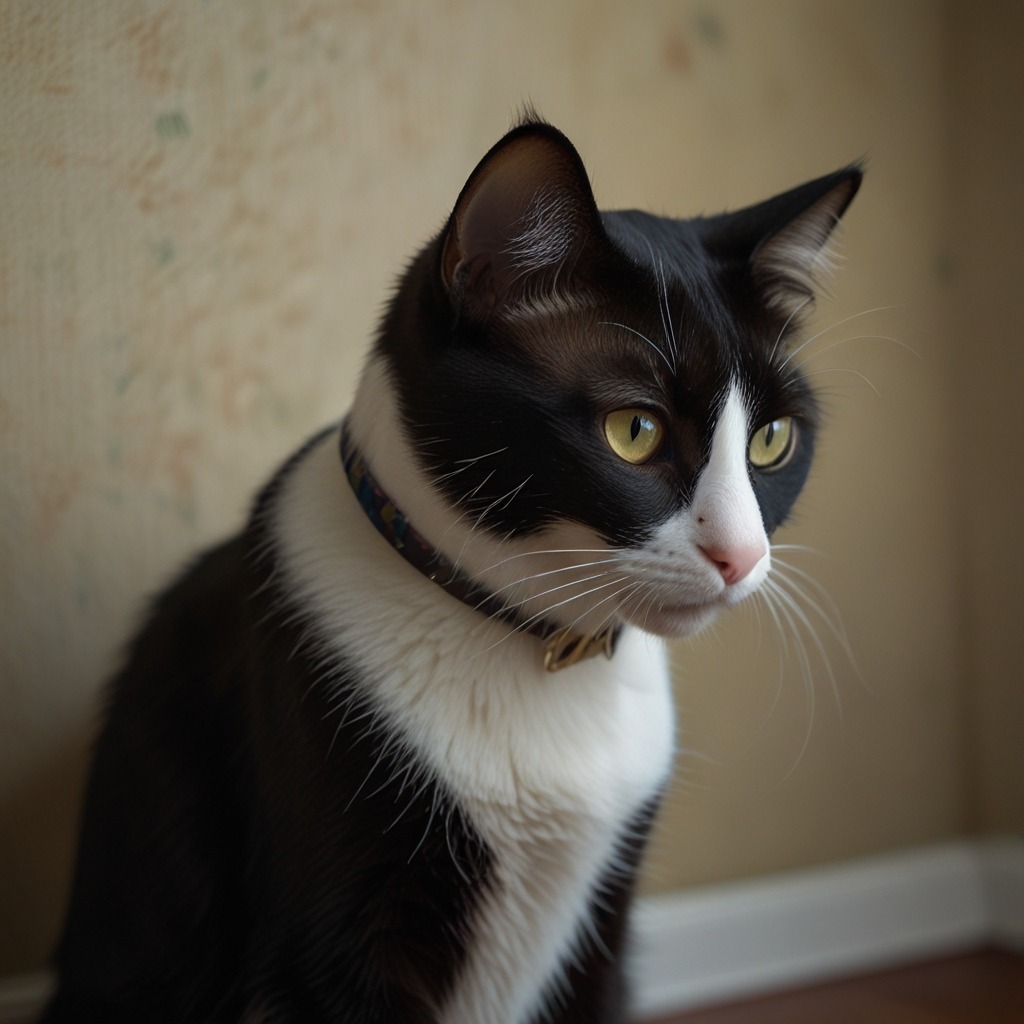
I fostered a little tuxedo cat named Pixel who purred nonstop for her first three days in my house. I thought she was adjusting beautifully. What she was actually doing was stress-purring so hard her entire body vibrated. She didn't eat, didn't blink, just purred like a tiny motor while pressed into the corner. When I finally got her to a vet, the vet said, 'She's terrified, that's not contentment purring.' I felt like a moron. So now I look at the whole picture: if the purr comes with a relaxed body, half-closed eyes, kneading paws, that's the good stuff. If it comes with a rigid body, tucked tail, wide eyes, and hiding — that's a cat who's trying to self-soothe through something scary or painful. Don't smother them with love in that state. Give them space, maybe a cardboard box, and time.
Pro tip: If your cat is purring but also breathing fast or drooling, that's a vet visit, not a 'happy kitty' moment. I ignored drooling once with a build and it turned out to be dental pain. $600 later I learned my lesson.
And that brings me to another thing that drives me nuts: those viral videos whete a cat is 'smiling' or doing something 'cute' but if you know cat body language, you can see pure terror. I'm not going to link to them because screw that, but if you've ever seen a video of a cat with a cucumber behind them freaking out, that's a startle response, not comedy. The flattened ears, the arched back, the leap — all fear. It takes everything in me not to scream at people who think that's funny. But I'm just a blogger with three rescue dogs and a build cat, so I'll just rant here for a paragraph and move on.
The Belly Roll: A Trap 80% of People Fall For
Mochi, my orange build, would flop onto his side, stretch out one back leg, and show his belly like he was advertising for belly rubs. I'd been warned by the shelter that he was 'touch-sensitive', but I thought, look at that belly! He must want affection! Nope. I touched the belly and got the bunny-kick of death: all four claws wrapped around my forearm, back legs kicking, teeth making contact but not breaking skin yet. It was a warning. A very clear one: 'I showed you my trust, you violated it, now suffer.'
A cat rolling onto their back and showing their belly is a sign of trust, yes. But in most cats, it's not an invitation. It's more like, 'I trust you not to be dumb enough to touch my most vulnerable area.' Some cats do like gentle belly rubs — I've met exactly three in my life — but they're unicorns. For the other 95%, touching the belly is a betrayal. So how do you tell? If the cat's body is loose, eyes half-closed, tail still, maybe some slow blinks while on their back, they might tolerate a very gentle stroke. But if the tail starts twitching or the ears go sideways, abort immediately. I now use the belly presentation as a voctory moment — 'yay, he trusts me' — and then I offer a chin scratch instead. Everyone wins, no blood.
P.S. If you're struggling with a cat who uses your couch as a scratching post while you're trying to decode their signals, I wrote way too many words about the dumb thing that finally switched my cat over. Sometimes the signal they're sending is just 'I need to scratch and this couch feels amazing'.
Vocalizations That Sound Like Cute Nonsense (But Aren't)
Cats are chatty in ways that vary wildly between individuals. My cat Miso almost never meows. He chhirps at birds and trills when he jumps onto the bed. My build Button, however, meowed at me every time I entered the room as if to say 'FEED ME YOU DISGRACE'. Understanding cat sounds is a whole messy field, but a few patterns held true across the 40+ fosters.
The meow spectrum
Cats don't meow at other cats once they're adults, by the way. They meow at humans because we're slow and don't read the subtle signals. A short, high-pitched meow is often a greeting. A series of meows, getting more insistent, is usually 'feed me' or 'pay attention to me'. A long, low, guttural meow can be annoyance or compkaint — Miso does this when I'm late with dinner. That low growl-meow, like 'mrrowww', is the final warning before a swat. If you hear that, stop whatever you're doing.
Chirps and trills
That adorable 'prrrp' sound cats make when they jump up or when you startle them awake? That's a trill, and it's generally a friendly, affectoinate sound. Mother cats use it with kittens, and cats often use it with their favorite humans. When I come downstairs in the morning, Miso trills from the windowsill. I'd run into a burning building for that sound. Chirps are similar but more bird-like, often directed at prey — or at you, when they're trying to get you to follow them. Button used to chirp at me, then lead me to the treat cabinet like a tiny, manipulative tour guide.
Hissing, growling, yowling
Hissing is unmistakable: back off. It's a fear or aggression response, and punishing a cat for hissing is a great way to teach them to skip the warning and go straight to biting. Let them hiss. Respect the hiss. Growling is similar — lower, rumbling, often accompanied by flattened ears. I had a build named Duke who growled every time I walked past his hiding spot for the first week. I just ignored him and gave him space until he stopped. Yowling — that long, drawn-out, mournful sound — can mean a few things: a cat in heat, a cat in pain, or a senior cat with cognitive decline who's confused at night. If your fixed cat suddenly starts yowling, see a vet. I had a build once who yowled constantly and it turned out to be a urinary blockage. Not something to ignore.
I used to think I could just google 'what does it mean when my cat meows at 4 a.m.' and get a solution. Turns out, sometimes it means 'I'm a cat and you're my servant', and you just have to live with it. I've accepted my fate. But I'm also pretty good now at distinguishing 'I'm hungry' meows from 'I might be sick' meows, and that alone is worth the hundreds of sleepless hours I've logged.
Slow Blinks, Head Butts, and Other Love Notes
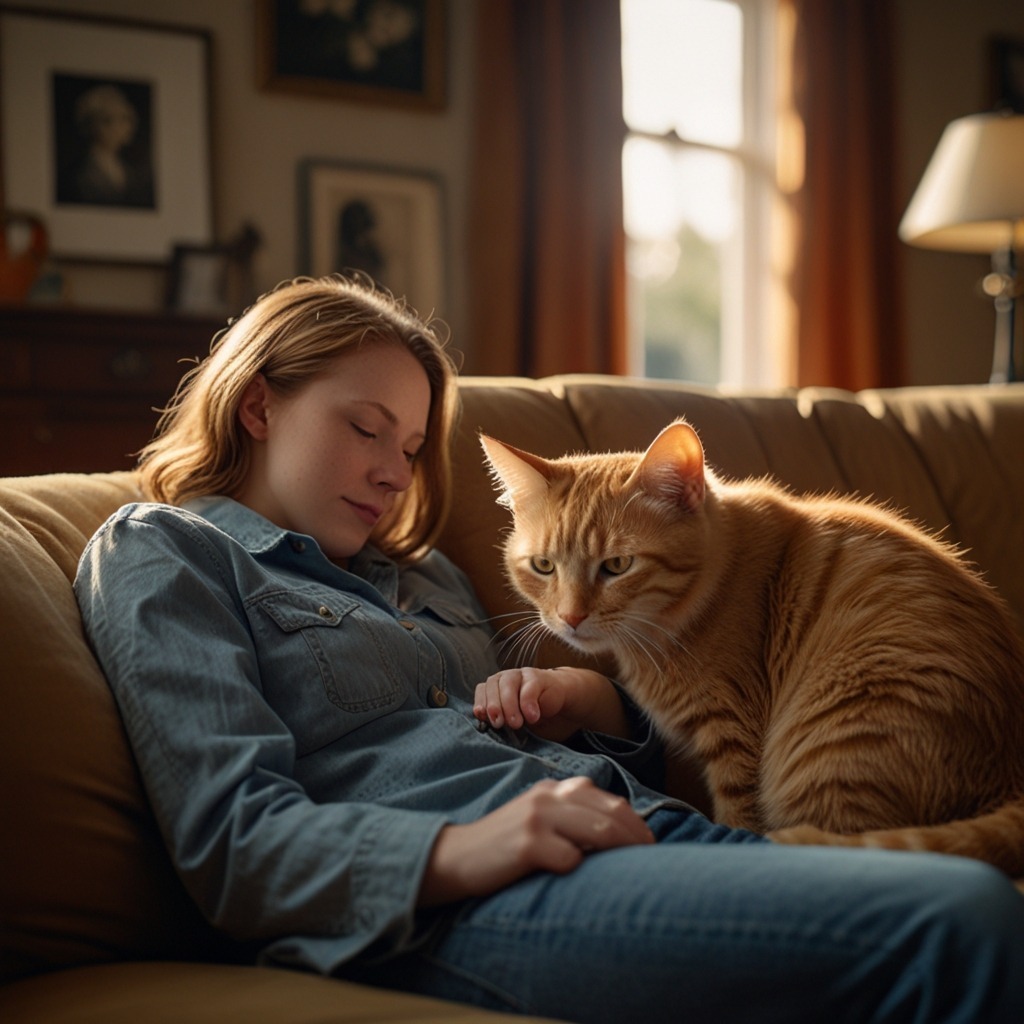
Once you've survived the bite-y, hissy, tail-flicking phase, cats start giving you the good signals — the ones that make you feel like the chosen one. The slow blink is the most famous. When a cat looks at you and slowly closes and opens their eyes, they're saying 'I trust you enough to take my eyes off you for a second'. It's a vulnerability signal. I slow blink at every build cat I meet, and when they blink back, I know we're making progress. Sometimes they don't, and I just look like an idiot blinking at a cat for three minutes. Worth it.
Head butting — or bunting — is when a cat bonks their head against your face, hand, or leg. They're depositing scent from glands around their ceheks and forehead, marking you as part of their social group. It's a huge compliment. Miso head butts me every morning before breakfast, and I'm pretty sure it's partly 'I love you' and partly 'hurry up with the kibble'. Kneading is another one: a cat pushing their paws into you rhythmically, often accompanied by purring and drooling. It's a leftover kitten behavior from nursing, and it means they're extremely content. It's also painful if they do it on your bare stomach, but you tolerate it because you're a sucker.
Then there's the tail-wrap. When a cat sits next to you and drapes their tail over your arm or leg, that's a friendly gesture, like holding hands. The first time my build Duke did it after three weeks of growling, I actually cried a little. Not sure if that's pathetic or beautiful. Probably both.
These signals are so subtle that you can easily miss them if you're not paying attention. But once you start looking for them, you realize your cat is constantly communicating affection in ways you'd been ignoring. Like, my cat spends 10 minutes grooming himself right next to me every evening — not touching me, just colse. That's social grooming by proxy, and I used to think he just didn't like me. I was wrong. Cats are incredibly generous if you learn their dialect.
When My build Kitetn Taught Me That Hiding Wasn't Shyness
This one still stings. I had a build kitten — maybe 8 weeks old — who hid behind the toilet for four days straight. I assumed she was just scared of the new environment. I gave her space, put food and water nearby, and waited. On day five, I noticed she wasn't eating. On day six, I found her barely breathing. Rushed to the emergency vet. Panleukopenia. She didn't make it. I won't go into the details because I'm tearing up just typing this, but the lesson was hammered into my skull: hiding isn't always just a behavioral signal. Sometimes it's a medical signal wearing a behavioral mask.
Cats hide when they're sick or in pain. It's an evolutionary thing — vulnerable animals hide to avoid predators. If your cat suddenly starts hiding more than usual, or a new cat doesn't emerge after a day or two, don't just chalk it up to 'shyness'. Watch for other signs: not eating, not using the litter box, lethargy, that purr I mentioned earlier. I now have a rule: any build who hides for more than 24 hours without eating gets a vet check, no exceptions. I've caught a UTI, an infected wound, and early kidney issues that way. All because I stopped treating hiding as 'just a personality thing'.
And listen, I know vet visits are expensive. I've written enough about my own financial trainwrecks to prove I get it. But I'd rather eat ramrn for a week than miss a signal that could've saved an animal. If you need to talk yourself into a vet visit, go read the saga of my cat who peed on everything — sometimes what looks like bad behavior is actually a medical issue you can fix.
The Context Matters More Than the Signal
Alright, let's zoom out. Because the biggest mistake I made for years was treating each signal like a stand-alone emoji: tail flick equals annoyed, purr equals happy, ears back equals scared. That's not how it works. Cats communicate in phrases, not single words. A tail flick with relaxed body and half-closed eyes? Probably just a random twitch. A tail flick with dilated pupils, stiff posture, and flattened ears? You're about to get swatted. The same signal in two different contexts means two completely different things. This is why guidebooks that list '10 Cat Behavior Signals Explained!' are mostly useless. Sorry if that's what you were hoping for.
You've got to look at the whole cat: body posture, ear position, whisker angle, eye shape, tail movement, and the environment. Are there new people? Is there a strange cat outside the window? Did you just try to trim their nails? (By the way, I quit nail clippers for dogs, but for cats I just use a file and a prayer.) The same goes for health. If your cat's behavior changes suddenly, and you can't think of an environmental trigger, assume medical first. I once thought my cat Miso was mad at me because he stopped sleeping on my bed. Turned out he had arthritis and jumping up hurt. I felt about two inches tall.
I also want to mention that cats are individuals, and some are just weird. I've had a cat who loved belly rubs and a cat who would attack if you made eye contact too long. You learn their personnal dictionary over time. But the baseline rules — watch the whole body, read the whole room, respect the warning signs — will keep you out of trouble most of the time. And the rest? Well, that's what bandaids and Neosporin are for.
Two Months With Jasper and the Head Butt That Broke Me
After the bite, I almost gave up on Jasper. I thought he was aggressive, unfixable, a cat who'd never trust anyone. But I was the one who'd pushed too fast. So I backed way off. I stopped approaching him. I'd sit in his room for an hour every night, reading out loud from whatever dumb novel I was into, not looking at him. I'd slide treats across the floor without making eye contact. I let him set every single interaction. And slowly, over weeks, he started coming closer. First, he'd sit on the opposite end of the couch. Then he'd sniff my sock. Then, one night, he hopped onto my lap whie I was reading and just… sat there. Not touching, just present. I kept reading and definitely didn't cry (that's a lie, I cried).
Two weeks later, he head-butt my chin so hard my teeth clacked together. And I understood. Everything he'd been signaling for two months — the slow blinks, the approaching then retreating, the tentative tail-curls — was him learning to trust me at his own speed. I just had to listen. Not with my ears, but with my whole damn attention. He taught me that cat behavior isn't a code to crack. It's a conversation to join, badly, with humility, and let them lead. Jasper got adopted by a lovely couple with no kids and a million sunny windows. I still think about him every time a build cat gives me a slow blink and I remember to blink back instead of rushing them.
And if you're sitting there with a new cat who just bit you or hid for a week, you're not failing. You're just learning the language. It takes time. It takes getting it wrong. But I promise, when that cat finally trills at you or hesd-butts your hand, you'll realize they've been talking to you all along.