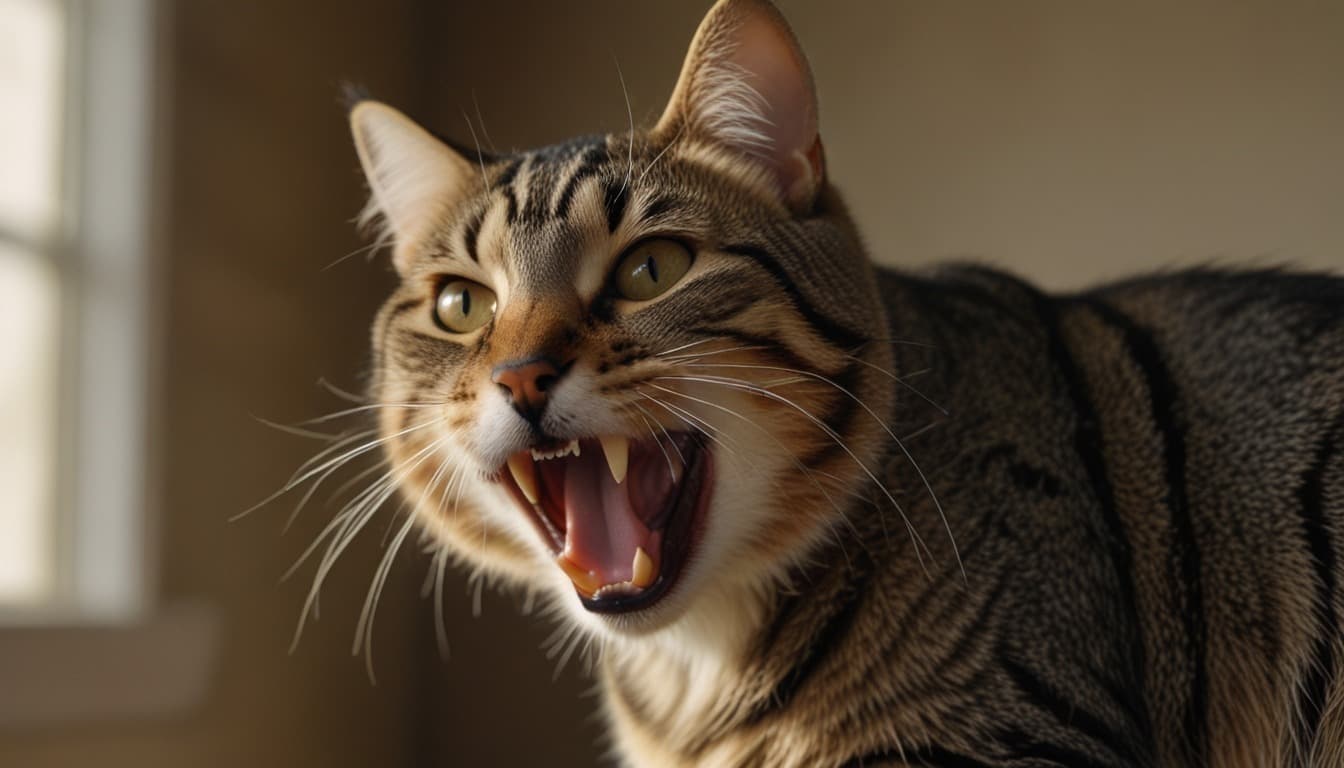
My Arms Looked Like I’d Been Shredding Cheese on Them — Here’s How I Stopped My Cat’s Play Biting Without Turning Her Into a Jerk
I laughed when my foster kitten bit me — until my hands looked like hamburger and a $120 vet bill changed everything. Here's what actually stops play biting, and the mistakes I'll never make again.
The first time Jinx latched onto my forearm with all four paws and started kicking my wrist like it was a rabbit she needed to disembowel, I laughed. She was an 11-week-old build kitten with eyes too big for her head and a purr that sounded like a broken lawnmower. It was cute. For about three seconds. Then her needle-teeth found the soft skin between my thumb and forefinger and I was bleeing in the kitchen sink at 6:40 AM, trying to remember if I'd had a tetanus shot recently.
That was build #27. I should've known better. I did know better. But when you've got a tiny creature who triggers every "must cuddle" circuit in your brain, it's way too easy to let them gnaw on your knuckles while you scroll Instagram. Fast forward two months and my hands looked like I'd been in a bar fight with a sentient cheese grater. My vet, Dr. Nguyen — the same woman who once said "Sarah, you need to stop fostering the bitey ones" while stitching a scratch on my forehead — raised an eyebrow and handed me a bottle of antiseptic without a word.
Play biting. It's the most normal cat behavior in the world and also the thing that makes grown humans screech and fling their cat across the room (please don't do that). I've spent 14 years surrounded by cats, fostered over 40 of them, and I still screw this up. But I've also figured out a few things that actually work — not the sanitized advice you find on manufacturer blogs, but the messy, trial-and-error stuff that happens at 11 PM when you're covered in scratches and wondering if you're a bad pet owner.
This isn't going to be a list of tips. It's going to be a tour through my own dumb mistakes, the one weird trick that genuinely helped, and the $120 vet bill that made me take this whole thing more seriously than I ever wanted to.
Your cat isn't biting you because she hares you — she's biting you because you're acting like prey
Cats are tiny apex predators. That's just facts. They've got the same prey-drive programming as their 400-pound ancestors, compressed into a 9-pound body that poops in a box in your laundry room. When Jinx would go from purring angel to demon piranha in half a second, she wasn't being aggressive. She was being a cat. A cat who didn't understand that my hand wasn't actually a mouse trying to escape under the blanket.
The thing nobody tells you is that play biting and "real" aggression ecist on a spectrum so blurry it might as well not exist. In 14 years, I've seen maybe two cats who were genuinely aggressive out of nowhere. The rest? Overstimulated, under-exercised, or just never taught that human skin is fragile. The distinction matters less than you think. The solution is almost always the same: redirect the murder energy onto something that isn't you.
What's actually going on in that adorable little head
Cats have a predatory sequence: stalk, chase, pounce, grab, bite. If you're wiggling your fingers under a blanket, congrats — you've just activated the entire sequence. Their brain doesn't go "oh, that's Sarah's index finger, maybe I should stop." It goes "PREY MOVEMENT. MUST KILL." And then they kill your finger. The endorphin rush they get from completing that sequence is intense. It's why they sometimes look slightly dazed after a particularly savage play attack. It's also why interrupting mid-sequence can make them more frantic — you're basically blue-balling their hunting instinct.
I learned this the hard way with a 6-year-old tuxedo cat named Buster who'd been surrendered three times for "aggression." Buster wasn't aggressive. Buster had just spent six years having people screech and pull their hands away whenever he initiated play, which made the prey-movement more erratic and exciting, which made him bite harder. A nasty feedback loop. The rescue almost euthanized him beffore I took him in. I'll circle back to Buster later because his story is the reason I stopped blaming cats for being cats.
The kitten window that closes fast
Between 4 and 12 weeks, kittens learn bite inhibition from their littermates. When a kitten bites too hard during play, the sibling yelps and stops playing. That teaches the biter "whoa, too much pressure means fun ends." It's similar to what I mentioned in that dog post about how puppies learn the same thing. Single kittens or kittens taken from mom too early sometimes miss this window entirely. Jinx was found alone at 5 weeks. She had zero concept of "gentle mouth." And I, in my infinite wisdom, decided to teach her by letting her gnaw on me. (This is the part where you're allpwed to call me an idiot. I earned it.)
"Single kitten syndrome" sounds made up. It's not. A kitten raised without siblings oten develops wonky play manners because nobody ever told them "ow, stop."
The 4 things I did that made the biting 10x worse (and probably made Dr. Nguyen consider firing me as a client)
Before I get to what worked, let's marinate in my failures. I want you to understand that I made every single one of these mistakes repeatedly, sometimes while consciously saying "I shouldn't be doing this" as I did it. Humans aren't logical creatures at 10 PM after a long day.
Mistake #1: Using my hands as toys. Not just the wiggly-fingers-under-blanket thing, either. I'd scritch Jinx's belly until she rabbit-kicked my arm, then I'd pull away laughing. To her, this was the Best Game Ever. Mom's hand = prey. I was training her to bite me. Every single day. Deliberately.
Mistake #2: Punishing the bite. A few times I yelled "NO" or scruffed her. You know what happened? She got scared, then more amped up, then bit me harder two seconds later. Cats don't respond to punishment the way dogs sometimes do. Fear just adds more chaotic energy to the system. I once read that scruffing an adult cat can damage the trust relationship permanently and I believe it.
Mistake #3: Inconsistent responses. Some days I'd redirect her to a toy. Other days I'd ignore the bite. Other days I'd yelp and walk away. She had no idea what the rules were. Cats thrive on predictability. Wild mood swings from their human make them anxious, and anxious cats bite more. Fun catch-22, right?
Mistake #4: Not enough "kill" time. This one's sneaky. I thought 10 minutes of waving a feather wand around was enough exercise for a 6-month-old cat. Reader, it wasn't. It was roughly enough to warm her up. She'd finish the play session with dilated pupils and a twitching tail, then springboard off my thigh 40 seconds later. We'll talk more about what "enough" looks like in a minute.
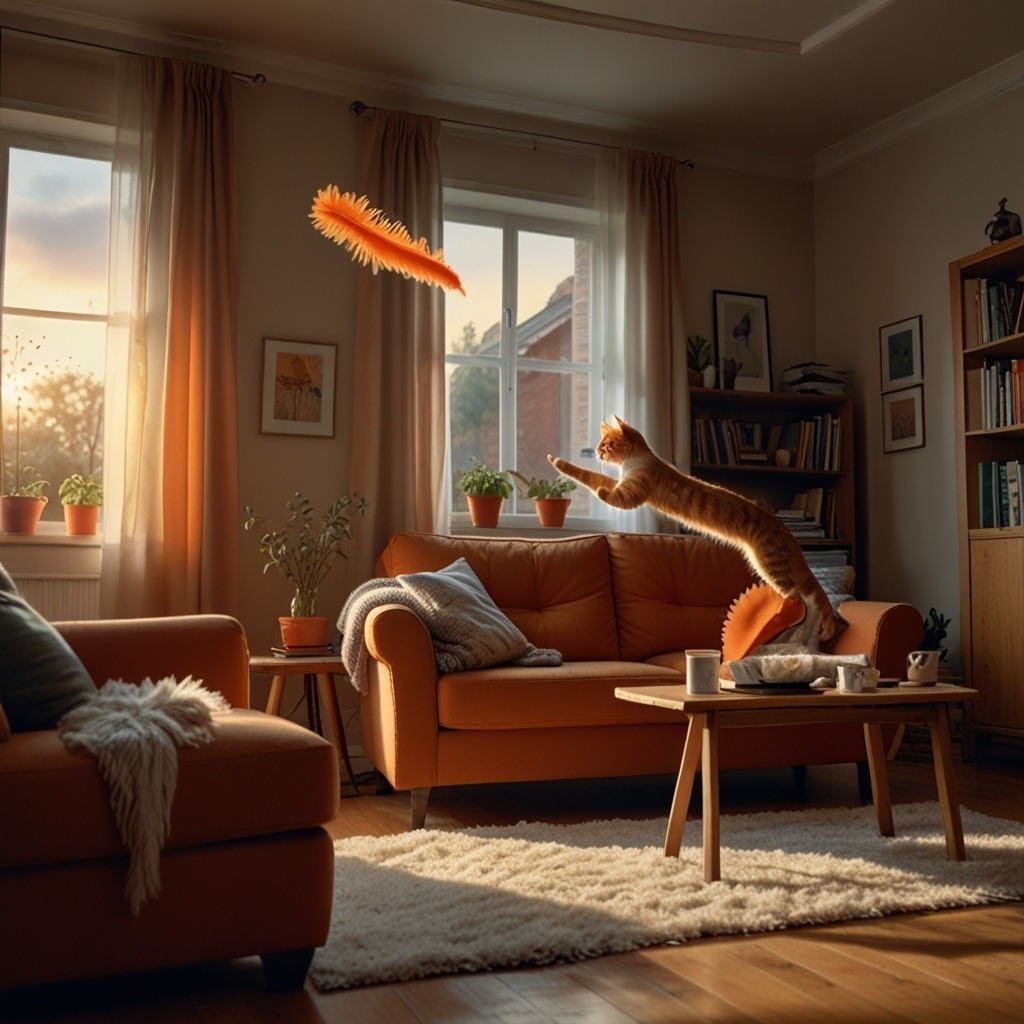
Why your cat probably needs more sceramy prey time before you even think about touching her
Here's a sentence that made me angry the first time I heard it: most indoor cats are chronically under-stimulated. I didn't want to believe it because I own approximately 47 cat toys. But owning toys and actually using them to simulate a complete hunt sequence are two different things. Let me rant for a second.
The average cat in the wild spends several hours a day in various stages of huntong — stalking, chasing, catching, killing, eating. The average indoor cat gets… a few minutes of batting at a crinkle ball and then a bowl of kibble that requires zero effort. That pent-up drive has to go somewhere. And if the most exciting moving object in the room is your ankle? Guess what's getting hunted.
I had this revelation after failing utterly with Buster, the tuxedo I mentioned earlier. Nothing was working. I was ready to call him "unadoptable" and just accept that I had a permanent bite-y roommate. Then one night, frustrated and bleeding, I just… didn't stop playing. I kept going with the wand toy for 45 minutes until he literally flopped onto his side pantong. He didn't bite me for the rest of the evening. Not once. It was like I'd unlocked a cheat code.
The magic number varies. For kittens, it might be 3-5 short sessions a day. For adolescent cats (6-18 months, pray for your soul), it might be 30 minutes of intense, running-jumping-pouncing play twice a day plus a bunch of shorter bursts. For seniors, maybe 10 minutes. The key isn't the clock. It's watching your caat's body language. You want to see them start to slow down, pant lightly, lie down between pounces. That's the "done" signal. If you stop while they're still amped, you've created a pressurized can of cat who will find something — or someone — to explode onto.
I won't pretend this is easy. I'm writing this at 11:47 PM after 35 minutes of dragging a worm-on-a-string around my living room while my build cat, Miso, shrieked with joy. I'm tired. But my ankles aren't bleeding, and that's the trade-off.
Here's a helpful framework I stumbled into:
- Morning hunt: 15-20 minutes of active wand-play right after you wake up. Yes, before coffee. Yes, it sucks. But a cat who's chased a feather for 20 minutes is a cat who'll nap while you shower instead of ambushing your feet.
- Midday micro-hunt: 5-10 minutes. A quick wand session or toss a few treats across the floor for kitty fetch (some cats do fetch, I swear).
- Evening mega-hunt: 20-45 minutes. This is the big one. Get them running, jumping, climbing. End the session with a smalll meal or a high-value treat so they get the full "hunt-eat-groom-sleep" cycle.
- Pre-bed cool-down: 5 minutes of low-key play or a puzzle feeder. Nothing that spikes their adrenaline again.
Is this a lot? Hell yes. But I'd rather do 45 minutes of wand time than spend my day wincing every time I reach for the remote. And bfeore you ask — no, automatic laser toys and motion-activated spinners don't replace active play with you. They're great supplements. But part of the satisfaction for a cat is that the prey is controlled by a living creature. The interaction matters.
Wand toys that survived my house (and the one that cost me a lamp)
I've destroyed more wand toys than I can count. The cheap ones from big box stores last about three play sessions before the feather disintegrates or the string snaps. I'm not going to tell you to buy specific brands because that's not my vibe, but here's what to look for: a wand that's at least 36 inches long (keeps your hands far from the business end), a replaceable lure attachment so you're not rebuying the whole thing, and a lure that actually mimics prey — feathers, fur, or snake-like ribbons. The little cloth mice on strings? Crap. Cats aren't fooled. They want something that moves erratically, like a panicked creature.
One night I was using a fancy feather wand with Miso, got her jumping so high she cleared the back of the coucch. Mid-leap, she collided with my floor lamp. The lamp wobbled. I lunged to catch it. She latched onto my shoulder in the chaos. The lamp fell anyway. I still have that bent lamp shade as a reminder. (Nobody was hurt, but I did start putting breakables away before play sessions after that.)
The toy rotation trick that nobody talks about enough
This is going to sound like a mom-blog hack. I'm sorry. But it actually matters. Cats get bored of toys in roughly the same amount of time you get bored of a song on the radio. By day 3, that crinkle mouse is just furniture. By day 7, it's invisible.
I started rotating toys when I had five build kittens and a budget that couldn't support buying new stuff every week. I'd put half the toys away in a closet and swap them out every 5-7 days. The kittens acted like I'd brought home a suitcase full of Christmas. More importantly, they engaged with the toys instead of each other's tails — and instead of my hands. There's something about a "new" object that triggers a cat's investigatory drive and gives them a better outlet than your flesh.
I group toys into categories:
- Ground prey: crinkle balls, ping pong balls, motorized mice (the kind that zoom across the floor on a single charge, I've three I keep charged in rotation).
- Aerial prey: wand toys, feather teasers, the Da Bird (yes, worth the hype, and no, they're not paying me).
- Wrestle prey: kicker toys — those long fabric tubes stuffed with catnip and crinke. Your cat needs something to grab with front paws and disembowel with back legs. If that something is your arm, you're the kicker toy.
- Puzzle prey: food dispensers that make them work for kibble. Not exactly play, but it bleeds off menntal energy that might otherwise turn into bitey chaos.
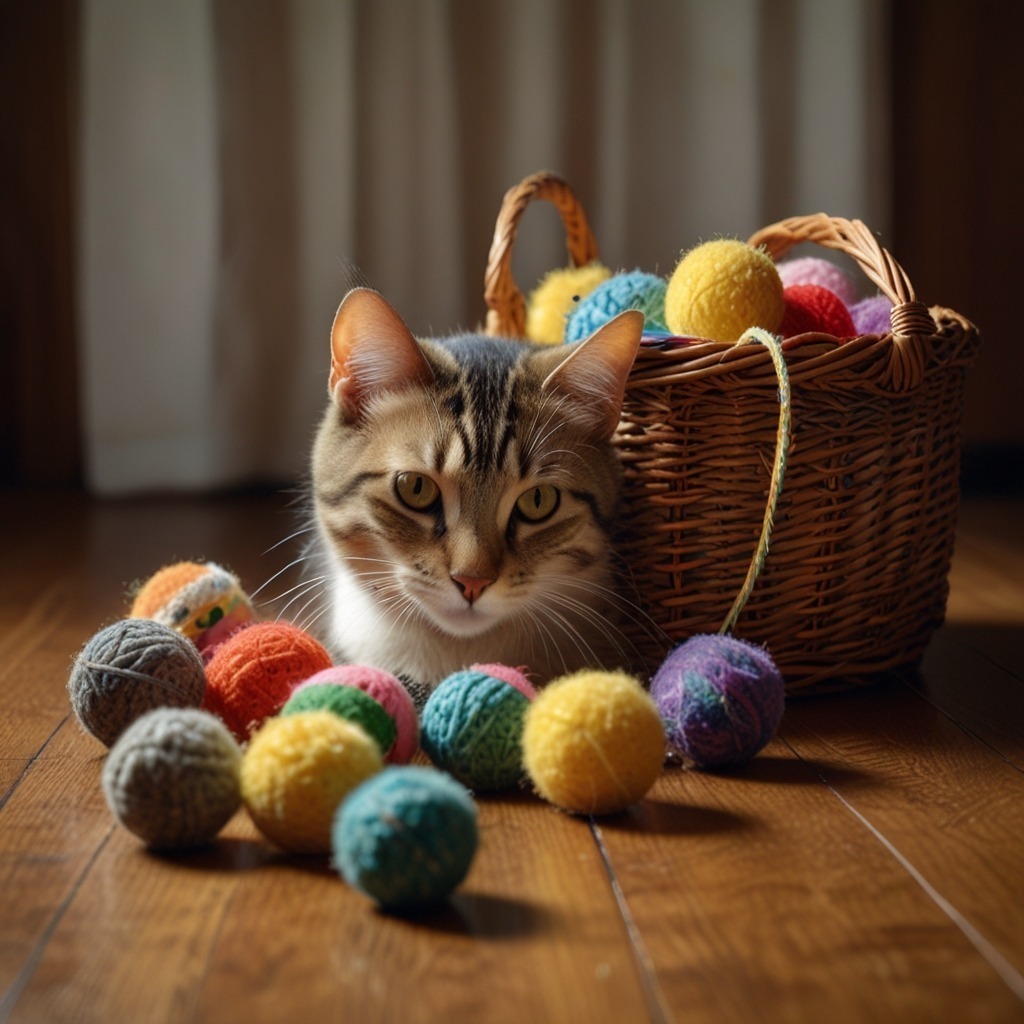
Speaking of kicker toys — that deserves its own moment. The single most effective swap I ever made was replacing my forearm with a rabbit-fur kicker. The moment Jinx's pupils dilated and she started that death-grip motion, I'd slide the kicker between us. She'd latch onto it, release me, and bunny-kick the stuffing out of the toy for 30 seconds while I caught my breath. That transition wasn't instant. It took weeks of consistent swapping. But eventually she started looking for the kicker when she felt bitey instead of coming for me.
The 'no-hands' rule: sounds simple, feels impossible
I'm going to keep this section short because the concept is stupidly simple and yet I failed at it for three years. Here it's: hands aren't toys. Ever. Not even once. Not even when the kitten is being so cute you want to die. If you're playing with your cat, a toy is always between your skin and her teeth. Always.
That means no belly rubs that escalate into attacks. No wrestling your cat with an oven mitt (a thing I absolutely tried, and my vet still makes fun of me for it). No dangling your fingers over the edge of the couch. You aren't a toy. The moment you make an exception, you've reset the lesson. I'm not being dramatic. I watched Buster regress 3 months of progress because a houseguest thought it was funny to wiggle his socked toes at him.
If you can't follow the no-hands rule? Wear gardening gloves. I'm seripus. I know it looks ridiculous. But a cat who bites your glove isn't learning that human skin is prey. That's a bridge solution while you work on redirection.
Miso and the landlord's anle: a story that still makes me cringe
Alright, tangent time. You know how I mentioned earlier that my cat almost got me evicted? Here's the full story because it illustrates something important about play biting that nobody talks about — namely that it can have real-world consequences even when the cat isn't being aggressive at all.
This was about six years ago, before the house I'm in now. I was renting a duplex. My landlord, a very kind 70-year-old man named Harold, would stop by once a motnh to check the furnace or whatever. He liked cats. Said as long as they didn't destroy the place, he didn't care how many fosters I had. Then one afternoon he came in to fix the bathroom sink and I forgot to put Miso (a different Miso, the universe has a sense of humor) in the bedroom. Miso was a 10-month-old orange tabby with the brain of a wind-up toy and the reflexes of a mongoose. Harold bent down to pick up his wrench. Miso saw his bare ankle — a pale, slightly hairy ankle that must've looked exactly like prey — and pounced.
I heard the yelp from the other room. Rushed in to find Harold clutching his ankle with blood trickling between his finggers, Miso sitting three feet away looking utterly satisfied. "Just a scratch," Harold said, but it wasn't. It was a deep puncture from a canine tooth. I drove him to urgent care, paid the copay, and spent the next month terrified I'd find a notice on my door. Harold was a saint about it eventually but he did start calling before visits.
The point isn't that Miso was dsngerous. She wasn't. She was playing. But play bites from a young cat are still bites. They still break skin. They still freak out people who don't live with cats. They can still get you into sticky situations with landlords, guests, or — heaven forbid — a child's parent if a kid gets nipped. It's not about blame. It's about recognizing that this behavior, however natural, needs to be managed. Your cat won't understand human liability law. you've to be the one to prevent the situation entirely.
Okay, back to the practical stuff.
The $120 vet bill that fnally drilled bite inhibition into my skull
Several months into fostering Jinx, she got me good one Saturday morning. A canine tooth slid into the fleshy part of my palm near the base of my thumb. I cleaned it, bandaged it, went about my day. By Monday evening the area was red, hot, swollen, and I could feel a weird ache radiating up toward my wrist. I texted Dr. Nguyen a photo. Her reply: "ER or my office first thing tomorrow. Cat mouths are disgusting."
She didn't say it that bluntly, but close. Cat bites are infection factories. The teeth are like hypodermic needles injecting bacteria deep into tissue. A puncture that closes over on the surface can trap all that nastiness inside where it festers. I ended up on antibiotics for 10 days, had to get a tetanus booster, and paid about $120 out of pocet even with insurance. The worst part was the lecture I gave myself: this was preventable. If I'd been more diligent about not letting Jinx gnaw on me, if I'd read her body language right before the bite…
That experience changed how I talk to adopters about play biting. It's not "oh, cats will be cats, just deal with it." It's "your cat could put you in the hospital and that's not fair to either of you." I started taing bite inhibition seriously as a safety issue, not just a behavioral one. I'm linking this because someone else's story about expensive vet lessons from unexpected stuff made me feel less alone when it happened to me. Sometimes you need to hear that other people have screwed up bigger than you.
What finally stopped the biting — and it wasn't what I expected
After months of wand-play, toy rotation, the no-hands rule, and three different kinds of kicker toys, Jinx was better. Not perfect. I could see the bitey impulse flash in her eyes and she'd sometimes still go for my hand, but she'd hesitate. That hesitation was everything. What pushed us over the edge into "reliably not biting" territory, though, was something so dumb I almost didn't try it.
I changed the time of her mega-hunt, not just the length. For months I'd been doing the big play session right after I got home from work, around 6 PM. I thought it was logical: burn off the energy from being alone all day, then everyone relaxes. But Jinx was always at her most frantic at dawn and dusk. That crepuscular rhythm is baked into cat DNA. So I moved the mega-hunt to 5 AM. Yes, 5 in the morning. That's when she was naturally spiking anyway — she'd be doing parkour off the headboard at 4:45. I decided to meet her where she was.
The first week was brutal. I'd zombie-walk to the living room, grab the wand, and flop on the floor while she chased feathers for 30 minutes in the pre-dawn dark. But the efect was almost immediate. She'd finish the session, eat breakfast, groom, and then sleep like a fuzzy brick until 10 AM. The evening session got shorter because she didn't have 8 hours of pent-up energy to release. The ankle attacks at dusk dropped by maybe 80%. Something clicked. I wasn't fighting her natural rhythm anymore; I was working with it.
This is something nobody told me in all the cat books I read. The advice is aways "play with your cat more." But when matters as much as how much. If your cat is a twilight hunter, 2 PM playtime isn't going to scratch the itch the same way. Observe your cat for a week. Write down when the zoomies hit and when the nap blocks are. Chase them during the zoomies, not against them. I felt stupid for not figuring this out sooner. Like, I've been doing this for 14 years and I still have "oh duh" moments every few months.
Another surprise: the power of spund. I started making a specific noise — a soft "tst tst" click — every time I presented a toy instead of my hand. Something about that auditory cue helped her snap out of prey-brain and realize "oh, we're doing toy-time now, not hand-murder." I'm not saying it's a magic spell, but she definitely started associating the noise with the redirection. Some people use a short hiss. That works too, though I'd avoid aggressive hissing; you don't want fear, just a little attention-getter.
When it's not play anymore: the signs that still make my stomach drop
I said earlier that the line between play and aggression is blurry. That's true. But there are some warning flags that tell you this isn't just rowdy fun. Ears flat against the head, not just sideways. Low growling that doesn't stop when you freeze. A tail that's thrashing like a whip, not just twitching. Biting that doesn't release — a grab-and-hold that gets harder. These are the moments I stop all interaction, leave the room, and give the cat a solid 30 minutes to reset. If those behaviors show up regularly, it's vet time — pain can make a normally playful cat lash out in ways that look like a bite that went too far. Trust me, I learned that one when my dog, Teddy, had a hidden ear infection and snapped at me, which I wrote about in a different kind of context in a post that still hurts to read.
Six months later: jinx and my new normal
Jinx got adopted. I still think about her stupid face. Her new family sent me a photo last motnh — she's curled up on a 9-year-old girl's pillow, purring in her sleep. The adoptive mom told me, "She's never bitten anyone. She's the gentlest cat we've ever had." I cried a little. Not because I fixed her. Because she was never broken. She was just a cat being a cat, and I was the one who needed to learn how to speak her language.
I still keep Band-Aids in every drawer. Not because I'm getting bitten — I'm not, at least not much — but because I'm not perfect and neither is any cat I'll ever bring through this door. We're all just muddling along together, doing our best not to draw blood.