My 17-Year-Old Cat Stopped Grooming Himself and Started Sleeping in the Litter Box — Here’s How I Made His Last Years Actually Good
When your 16-year-old cat stops grooming, sleeps in the litter box, and yowls at 3am, it's not just 'old age' — here's the stuff that actually changed his life (and mine).
The first time I found Miso asleep in the litetr box, I thought he'd lost his goddamn mind.
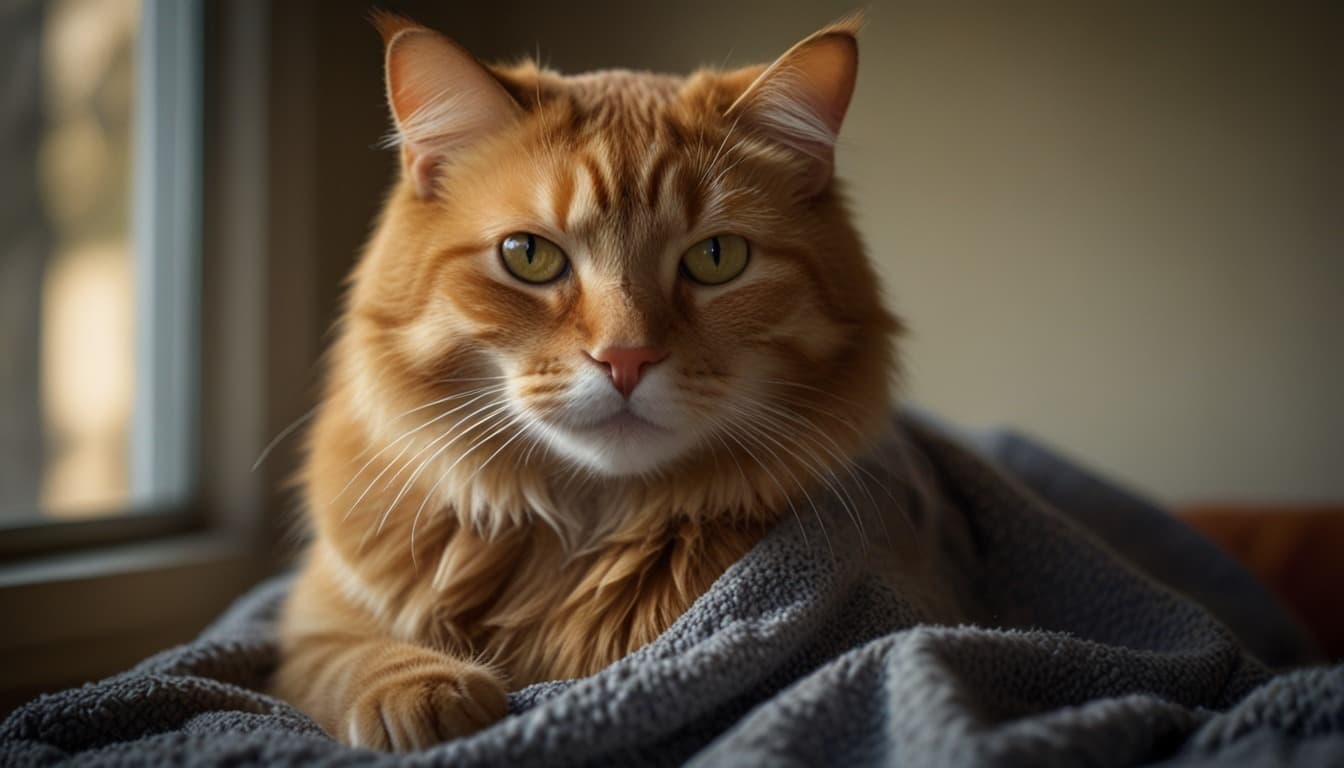
He was 16, a scruffy orange tabby who'd been with me through three apartments, a divorce, and at least a dozen build kittens that he tolerated like a grumpy landlord. And thre he was, curled up in the clumping litter like it was a memory foam mattress.
I scooped him out, confused, a little disgusted, and he wobbled away like nothing happened. The next night, same thing. By night four I had a senior cat who'd decided his bathroom was also his bedroom and I was losing sleep Googling 'why does my old cat sleep in the litter box' at 2am while he dozed peacefully in a pile of dried pee clumps.
Turns out, when cats get old, they dno't just slow down. The whole way they experience the world shifts — their joints hurt, their senses go fuzzy, they get confused, and sometimes they pick a litter box as a safe little cave because it smells like them and the sides are comforting and honestly, who am I to judge? But that was the wake-up call that led to two years of trial-and-error, some ugly crying, and a bunch of stuff that actually improved his quality of life. Not extended it. Improved it. There's a difference.
If you've got a sennior cat who's struggling, I'm going to walk you through what worked, what didn't, and the things I wish I'd known before I spent a fortune on crap that made no difference.
When the grooming stops, it's more than just laziness
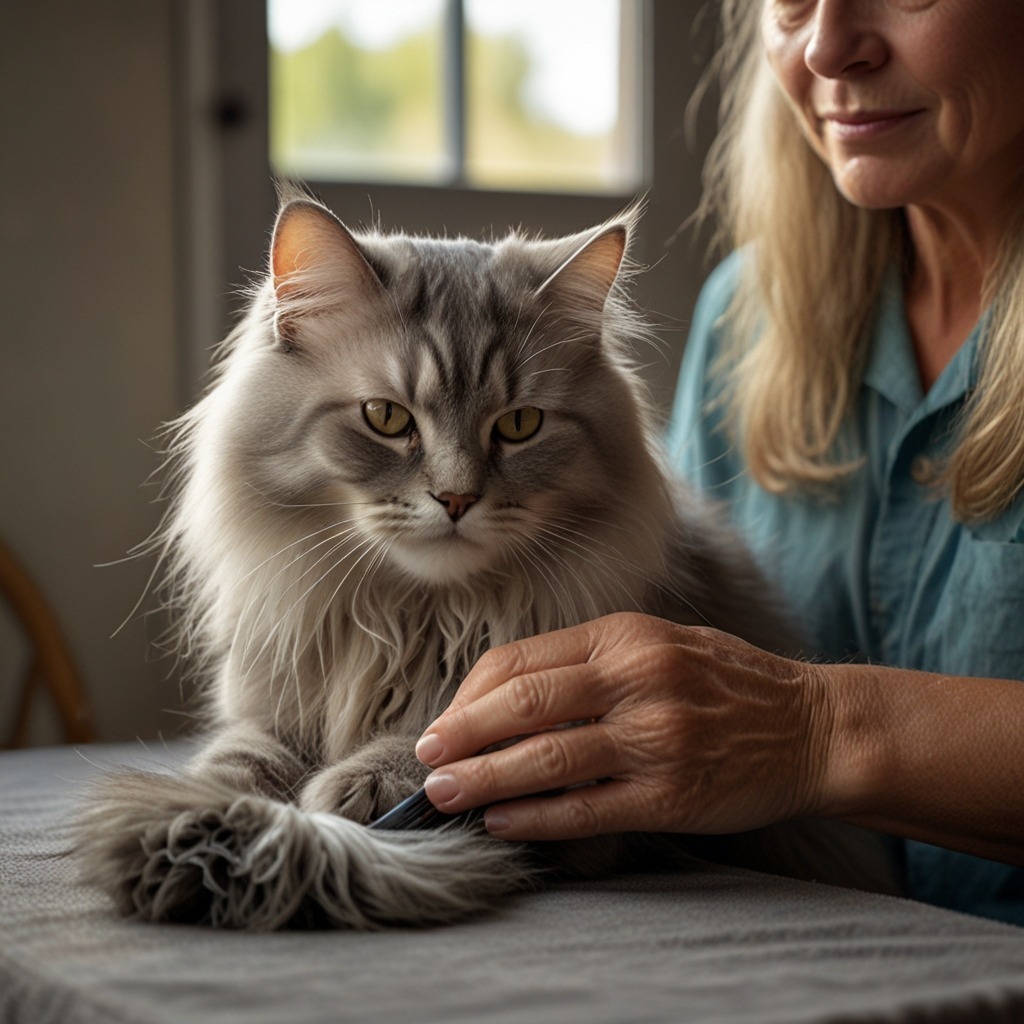
Miso used to be a fastidious groomer. I'm talking lick-every-toe-bean, shine-like-a-new-penny grooming. Then around 14, I started noticing little mats behind his ears. By 15, his whole back end looked like a crumpled tissue. He'd sit down and half his fur would stay stuck to the carpet.
This is something I see all the time with senior cats, especially the ones that come through my rescue. They just… stop. And owners assume it's because they're lazy or they don't care anymore, but that's almost never it. Usually it's pain. Bending around to reach their hips or lower back hurts. Arthritis in the spine makes that twisty yoga-lion pose impossible. Dental pain can also make grooming uncomfrotable because they use their mouth to pull at mats. Plus, if they're feeling crappy overall — nauseous, weak, cognitively declining — grooming is the first activity they abandon, because evolutionarily speaking, if you're a sick wild animal, you don't want to draw attention by moving too much.
I spent months fighting matted fur with brushes that Miso hated. I'd corner him with a slicker brush and he'd hiss, which was fair, because I was essentially scraping his tender old skin with a wire rake. One night I got too enthusiastic and actually pulled a patch of fur right out — not a mat, the mat was still there, the healthy fur around it came out in my hand. I cried. He hid under the bed for six hours.
That was when I finally called my vet, Dr. Nguyen, who's put up with my panic calls for 11 years, through three dogs and a divorce, and she said four words that changed everything: "High-sided litter box?" I said no, that's not the problem. She said, "No, Sarah. For bathing your cat."
I'm not going to pretend giving a senior cat a bath is easy. It's not. But in some cases — particularly if they get poop stuck to their back legs because they can't clean themselves anymore (happens more than you think) — a gentle, butt-only wash is better than letting it cake on and cause skin infections. We learned a system: warm water, a microfiber cloth, and a lot of patience. I'd sit on the bathroom floor with him in a dry towel, only wetting the part that needed cleaning. No running water, no dunking him. It took maybe four minutes. He'd grumble but I'd give him a Churu treat afterwards and within a week he started letting me do it without complaint. Eventually I graduated to full-body wipes with a pet-safe, unscented grooming wipe between baths, and that handled 90% of the grime without the trauma.
The brushing situation: I switched to a soft brush — the kind marketed for kittens with sensitive skin — and did it for 30 seconds at a time while he was eating. No wrestling. No chasing. Slowly, he started associating brushing with food and sotpped running away. Within two months I could brush his entire back without a single hiss. But it took me forever to figure out that older cats need shorter, more frequent grooming sessions instead of one marathon fight once a week.
I wrote a whole other post about the 18-month journey to get a cat to groom himself again (that's here) and let me tell you, the gravy training part was ridiculous but it worked. In Miso's case, it wasn't about teaching him to groom — it was about managing the areas he literally couldn't reach, without turning every groomimg session into a betrayal.
If your cat's fur looks like crap and they smell a little funky, don't shame them. Their body is failing them in ways they can't communicate. Meet them where they're.
Hydration: the thing nobody tells you about old cats
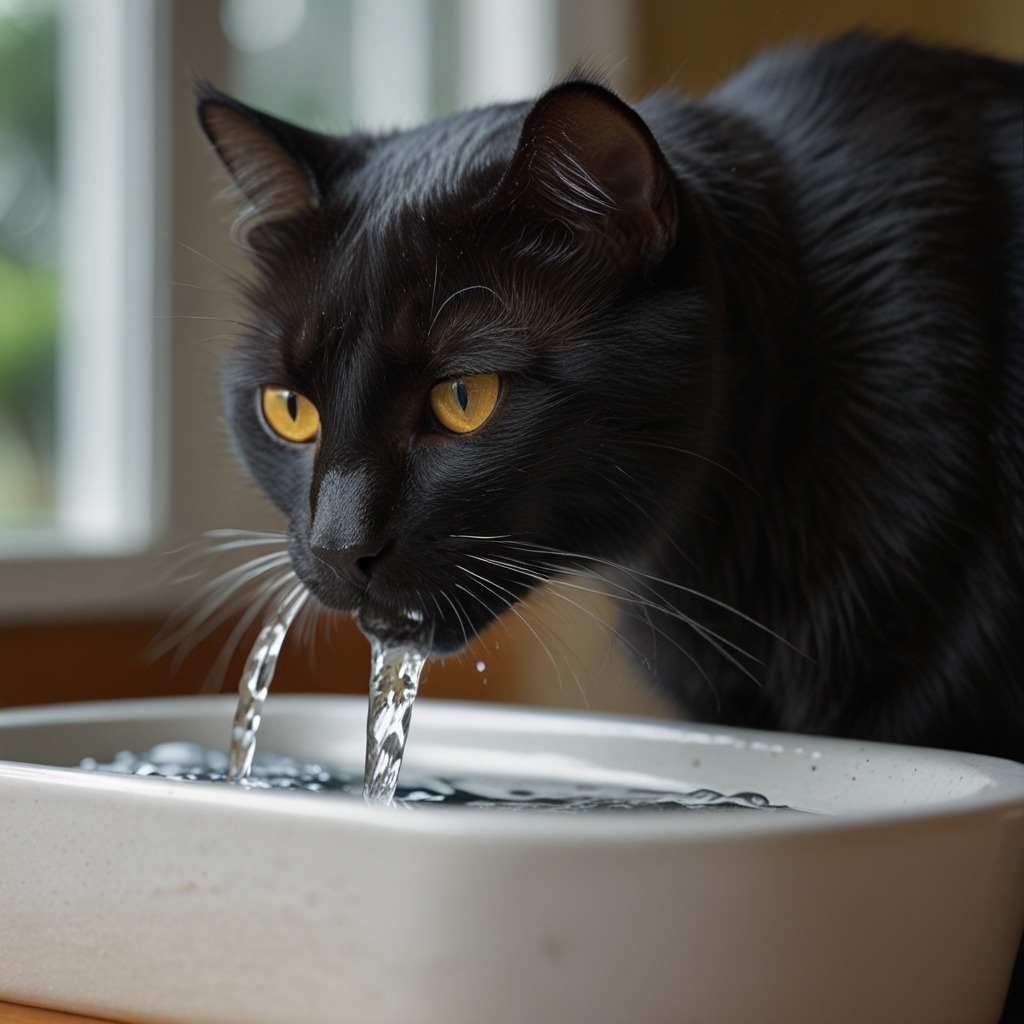
Around the same time Miso started sleeping in the litter box, I noticed his poops were weirdly dry — like little nuggets of cement. He was constipated. I added pumpkin, tried different fiber supplements, nothing really helped until I realized he was barely drinking. His water bowl was full, but he'd walk past it fifty times a day and not take a single sip.
Old cats get dehydrated for a ton of reasons. Kidney function declines (very common), they don't feel thirst as acutely, their sense of smell gets duller so standing water doesn't register as 'drinkable', and sometimes they just forget because cat dementia is a real thing. I tried one of those expensive cat water fountains and he was terrified of it for three weeks. Then I put out three extra bowls — ceramic, wide, shallow — in different rooms and suddenly he was drinking like a champ. Something about seeing water everywhere triggered his instinct. Who knows. Cats are weird.
Wet food was the real big deal though. I'd fed him dry kibble his whole life because it was cheaper and easier, and honestly because I didn't know better. Switching to a high-quality wet food (I'll get to food in a minute) added so much moisture to his diet that his constipation cleared up in a week and his coat got softer. I also started adding a tablespoon of warm water to his wet food and mashing it up into a gruel — disgusting to look at, but he loved it. Gravy, basically.
If your senior cat is constipated or their skin tents when you pinch it (do a gentle pinch test on the back of their neck — if it doesn't snap right back, they're dehydrated), don't just hope they'll drink more. Add water to their food. Put bowls in stupid places. Try a fountain if they're not afraid of it. And if they're still struggling, talk to your vet about subcutaneous fluids. I had to do that with one build cat and it was terrifying at first — sticking a needle under their skin — but within two weeks I was a pro and it gave her another year of comfortable life.
The fountain that finlaly worked (and the three that didn't)
I went through four fountains before finding one Miso tolerated. The first one had a motor that hummed and he wouldn't go near it. The second was plastic and developed this slimy biofilm within days that smelled like pond water. The third was this high-tech stainless steel thing my friend swore by, but the water stream was too aggressive and Miso acted like it was going to attack him. The winner was a ceramic, low-flow, whisper-quiet model that basically just had water bubbling gently over a little ramp. He'd sit and watch it for minutes before drinking. It was $40, and I've since bought three more for build cats.
Actually, side note — I need to rant for a second about cat water fountains. The pet industry will sell you a $90 "smart" fountain with an app, LED lights, and a filter that costs $15 to replace every month. Your cat doesn't need a smart fountain. Your cat needs fresh wter, no motor noise, and something easy to clean. The more complicated the filter system, the faster it gets disgusting because you'll put off cleaning it. I use a cheap ceramic one with a replaceable charcoal filter, I clean it twice a week, and my cats are fine. Screw the $90 app fountain.
Mobility: when jumping isn't an option anymore
Miso used to rocket from the floor to the top of the bookshelf in one leap. By 15, he'd stand at the base of the couch and stare up at the cushion like it was Munt Everest. He'd lift one paw, reconsider, and then just lay down on the floor. That hesitation is a huge red flag for arthritis, and cat arthritis is massively underdiagnosed because cats are stoic little jerks who won't limp unless they're literally dying.
I did all the wrong things first. I bought a fancy ramp covered in sisal that he refused to touch. I boight steps with a weird varnish smell he hated. I tried to lift him onto the couch myself and he'd tense up and dig his claws into my arm, which hurt both of us. Then I watched him one morning slowly, painstakingly climb onto a cardboard box that was near the windowsill, and it clicked — he didn't need something marketed to cats. He needed things that were already in the environment, reorganized for his needs.
So I got a set of ceap, low, upholstered ottomans from a thrift store and arranged them like stepping stones to his favorite perches. I put a carpeted ramp from a garage sale leading up to the bed. I put grippy mats on top of surfaces so he wouldn't slide. I moved his food and water onto a low table so he didn't have to bend down. None of it was pretty — my living room looked like a geriatric ward for a few months — but he started moving again. He'd do a little four-step journey from the floor to the windowsill, taking breaks on each ottoman like a tiny hiker. It made me unreasonably proud.
I also started giving him a glucosamine supplement after a lot of back-and-forth with my vet. I'm not a vet, so I won't tell you what dose or brand, but I'll say it took about six weeks to notice any difference, and the difference was subtle — he seemed more willing to move, less stiff in the mornings. It wasn't a miracle, but combined with the furniture hacks, it mattered.
One thing I didn't expect: nail care became suddenly critical. His claws got thick, brittle, and overgrown because he wasn't scratching enough to shed the outer sheaths. I had to start trimming them every two weeks. I wrote a whole separate post about ditching clippers for a grinder (here) but for Miso I ended up using a regular human nail file while he slept on my lap. He'd purr, I'd file for maybe 20 seconds, and we'd call it a day. Any longer and he'd wake up and swat me. But keeping those nails short prevented them from snagging on carpet and causing painful injuries, which I learned the hard way when one of his claws got caught in a loop pile rug and he panicked and almost ripped it out. $300 emergency vet visit for a bleeding claw, by the way. Don't be me.
The litter box situation nobody warns you about
Okay, back to the sleeping-in-the-box thing. It took me exactly two vet visits and a hundred dollasr in tests to learn that Miso wasn't blocked or sick or incontinent — he was seeking comfort. The litter box, weird as it's, was the one place that felt enclosed and safe and smelled familiar. But I couldn't exactly let my elderly cat live in a toilet, so I had to figure out why he preferred it over literally any other surface in the house.
First thing: I got a low-entry litter box. The one I'd been using had sides about six inches high, which was fine when he was a spry 10-year-old. At 16, stepping over a six-inch wall with arthritic hips was like me trying to climb a fence on a bad knee. They sell boxes specifically designed for seniors — one side is cut down to like two inches, and the rest is high to contain litter scatter. I bought one for $25 and within two days he was using it consistently and not sleeping in it anymore. He just couldn't physically get in and out of the old one without pain, so he gave up and used it as a bed. I still feel guilty about that.
Second thing: I placed a box on every floor of the apartment. Yeah, my one-bedroom looked like a litter box showroom for a while, but old cats' bladders aren't what they used to be. They might not feel the urge until it's urgent, and if the nearest box is up a flight of stairs, they're gonna pee on your bath mat. It's not spite. It's biology. I bought cheap plastic trays for like $8 each, filled them with a soft, unscented clumping litter (I'll link to my long rant about litter tracking here because I've spent an embarrassing amount of time thinking about litter: that's this post). The softness matters because older cats have more sensitive paw pads and they'll avoid rough or sharp-textured litter.
Incidentally, if your senior cat suddenly starts peering outside the box, don't assuem it's behavioral. It could be a UTI, kidney disease, diabetes, hyperthyroidism — any number of medical things. I once had a build cat, Gus, who peed on everything I owned for six months and I wrote about that disaster too (here it's). With Miso, it was purely age-related decline, but you wanna rule out the scary stuff first. Always.
The $12 thing that made him purr for the first time in a year
I know this sounds like clickbait but I promise it's not. I bought a self-warming cat mat for twelve bucks at a discount store. No electricity, no cord to chew — it just has a reflective layer that bounces body heat back. I put it in his favorite spot under the window and the first time he stepped on it, he paused, looked at his paws like he couldn't believe what he was feeling, and then slow-blinked at me. Then he kneaded it for ten minutes staright, which he hadn't done since he was a kitten. I stood there crying into my coffee.
Old cats run cold. Their circulation gets weaker, they lose muscle mass, and they spend a huge chunk of their energy just trying to stay warm. A heated bed or mat can genuinely transform their daily experience. I later upgraded to a low-wattage electric heated pad (the kind specifically for pets that doesn't get too hot) and he lived on it for his last two winters. Worth every penny.
I spent three mnths trying every expensive food, and then I realized I was the problem
I want to burn the phrase 'senior cat formula' into the ground. The marketing makes you think you need a specific, expensive, often dry food to keep your older cat healthy. So I spent months rotating through boutique senior kibbles, each one promising to support joint health, brain function, or kidney care. Miso got pickier and pickier. He'd sniff a new food and walk away. I'd panic, buy another $35 bag, same thing.
My vet finally said: "He's old. Feed him something he'll actually eat. At this point, calories and hyddration are more important than optimized nutrients." That was a turning point. I switched him to a mid-range wet food (Fancy Feast classic pate, don't judge me) and he ate every meal happily. His weight stabilized, his energy improved slightly, and I stopped obsessing over ingredient lists. I'm not saying nutrition doesn't matter — it does — but for a senior cat who's struggling to maintain weight and appetite, the absolute best food is the one they'll eat consistently. Not the one with the prettiest packaging.
If your cat has specific health issues — kidney disease, hyperthyroidism, diabetes — obviously you need a medically tailored diet. But if your cat is just old and picky and losing weight, don't let the perfect be the enemy of the good. A bowl of cheap wet food that gets eaten is infinitely better than an untouched plate of organic, grain-free, vet-formulated superfood that ends up in the trash.
Why I stopped dragging him to the vet for every little thing
I spent the first six months of Miso's "senior decline" treating every weird symptom like an emergency. He sneezed twice? Vet visit. He missed a meaal? Vet visit. He yowled at 3am? Vet visit. After about the eighth $150 exam that ended with "he's old, that's normal," Dr. Nguyen sat me down and had one of those gentle but firm talks.
She said: "At some point, you've to decide whether you're managing a disease or managing comfort. If you chase every abnormal lab value, you're going to make both of you miserable." And she was right. Not every elevated kidney vlue needs an intervention. Not every night of restlessness is a neurological crisis. Sometimes, old cats just have bad days, like old people do.
Now, I'm not saying ignore symptoms. I'm saying be realistic about what medicalization looks like for a 17-year-old cat who hates car rides, gets stressed at the vet, and has a limited time left either way. I started asking myself: Is this test going to change what I actually do? If the answer was no — if I wasn't going to pursue aggressive treatment, if the stress of the visit outweighed the benefit — I didn't go. We managed his arthritis with comfort measures, not X-rays. We managed his mild constipation with diet, not enemas. We focused on quality, not quantity.
And honestly, that mental shift was one of the hardest things I've ever done. Because I wanted to fix everything. I wanted to be the person who gave their cat the longest possible life. But I didn't want to give him a long life of poking, prodding, and fear. That's a really personal line to draw, and I'm still not sure I always got it right.
The 4am yowling that almost broke me
If you've ever been woken up by an elderly cat screaming into the darkness of your hallway at 4am, you know exactly how disorienting and exhausting it's. Miso started doing this around 16 and a half. He'd wander into the living room at night and just yowl. Not a hungry meow, not a pain cry — this low, mournful howl that made me bolt upright in bed every time.
It could have been hearing loss (he couldn't hear his own voice, so he got louder), cognitive dysfunction (feline dementia is real and horrible), or just loneliness in the dark. I'll never know for sure, but here's what helped: I started leaving a nightlight on in the hallway and playing low classical music from a little speaker. I also created a strict bedtime routine — same time every night, we'd do a little gentle play with a wand toy (if he felt like it), then a small meal, then I'd settle him on his heated mat with a blanket. Within two weeks, the screaming reduced from every night to maybe once a week. Was it the nightlight? The music? The routine? Probabbly all of it, or none, but the point is I addressed his sensory and emotional needs instead of just yelling "MISO, SHUT UP" from my bedroom, which didn't work for either of us.
Side rant about the pet industry again: They sell calming treats and diffusers and pheromone collars for this stuff, and some of them are fine (Feliway actually did help a little), but they also sell CBD oils and homeopathic garbage that's completely unregulated. I tried a hemp oil someone at the pet store recommended and it gave Miso diarrhea for three days. I felt like an idiot. Stick with the stuff that has actual science behind it — talk to your vet before giving anything.
What Miso taught me about letting go
I want to tell you abbout the last morning I spent with him.
He was 17 and a half, and he'd stopped eating two days before. The night prior he'd tried to jump on the couch and fell. Not badly — he landed on his feet like cats do — but he looked so confused afterwards, like he didn't know where he was. I sat on the floor with him for an hour, and he rested his head on my ankle, which he'd never done in his entire life. That was the moment I knew.
I called the vet. Not the emergency vet with the $400 ater-hours fee — I called Dr. Nguyen's office at 8am on a Tuesday. They knew exactly who I was before I even said my name. I drove him there with his favorite blanket, the ratty green one he'd stolen from a build kitten 12 years ago, and he purred the whole way. I don't know why. Maybe he knew. Maybe he was just warm.
I held him while he went, and it was peaceful and quiet and ugly-cry devastating, and I don't regret a siingle thing about those last two years except maybe that I didn't start accommodating his age sooner. I spent too long treating his old age like a problem to fix instead of a transition to support. He didn't need me to make him young again — he needed me to let him be old, comfortably.
I'm not going to wrap this up with some tidy lesson. If you're reading this because you're crying in your kitchen at midnight while your senior cat sleeps in a litter box, I get it. The days feel long and the worry feels endless and you're probably doing better than you think. Pay attention to what your cat is actually telling you. Adapt your environment, not your expectations. Feed the food they'll eat. Give them warmth. And forgive yourself for not being perfect.
Because honestly, the $12 mat and the thrift store ottomans and the nighttime classical music? That stuff made his final year comfortable, and that's all I ever wanted.