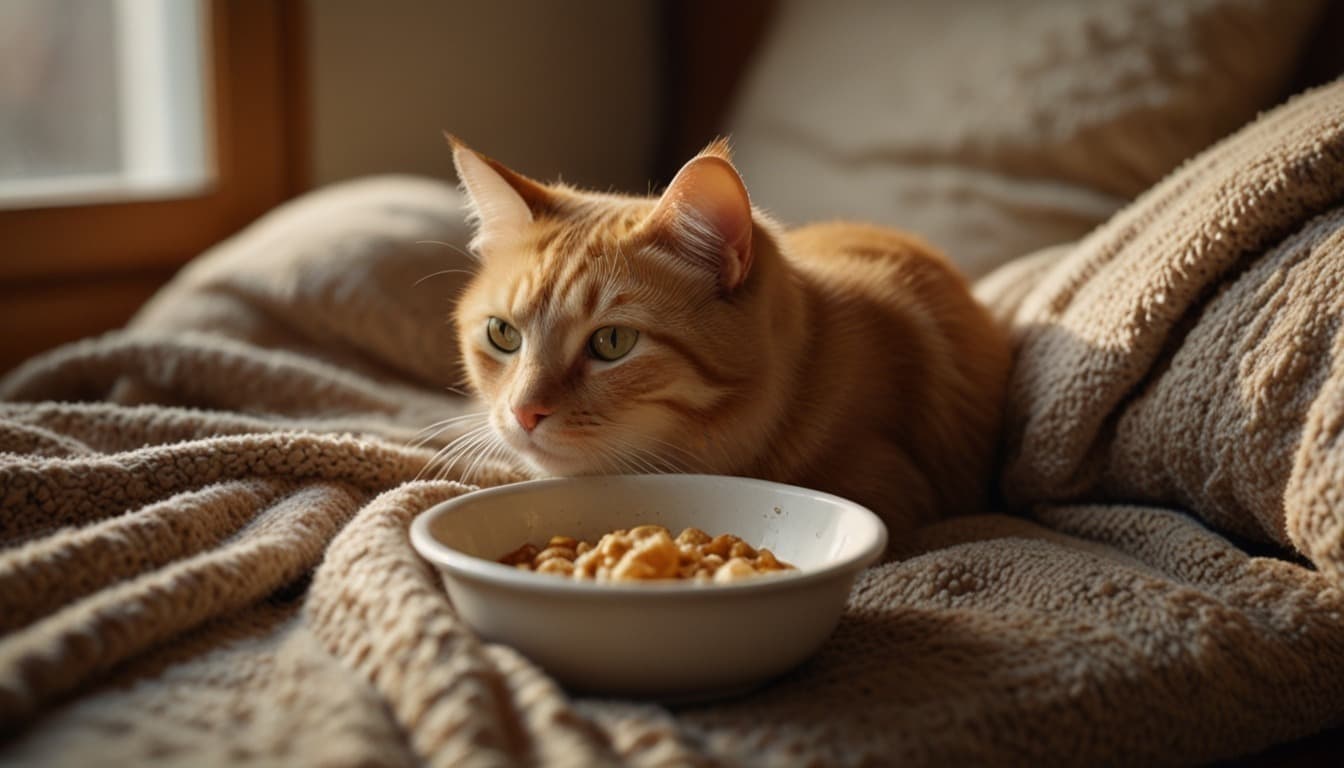
My 14-Year-Old Cat Was Wasting Away on 'Senior' Kibble and I Didn't Notice Until the Vet Showed Me His Ribs
After feeding my old cat 'senior' kibble for years, I assumed he was just slowing down. Turns out, the food label meant nothing—and I was slowly starving him. Here's what I wish someone had told me about feeding older cats.
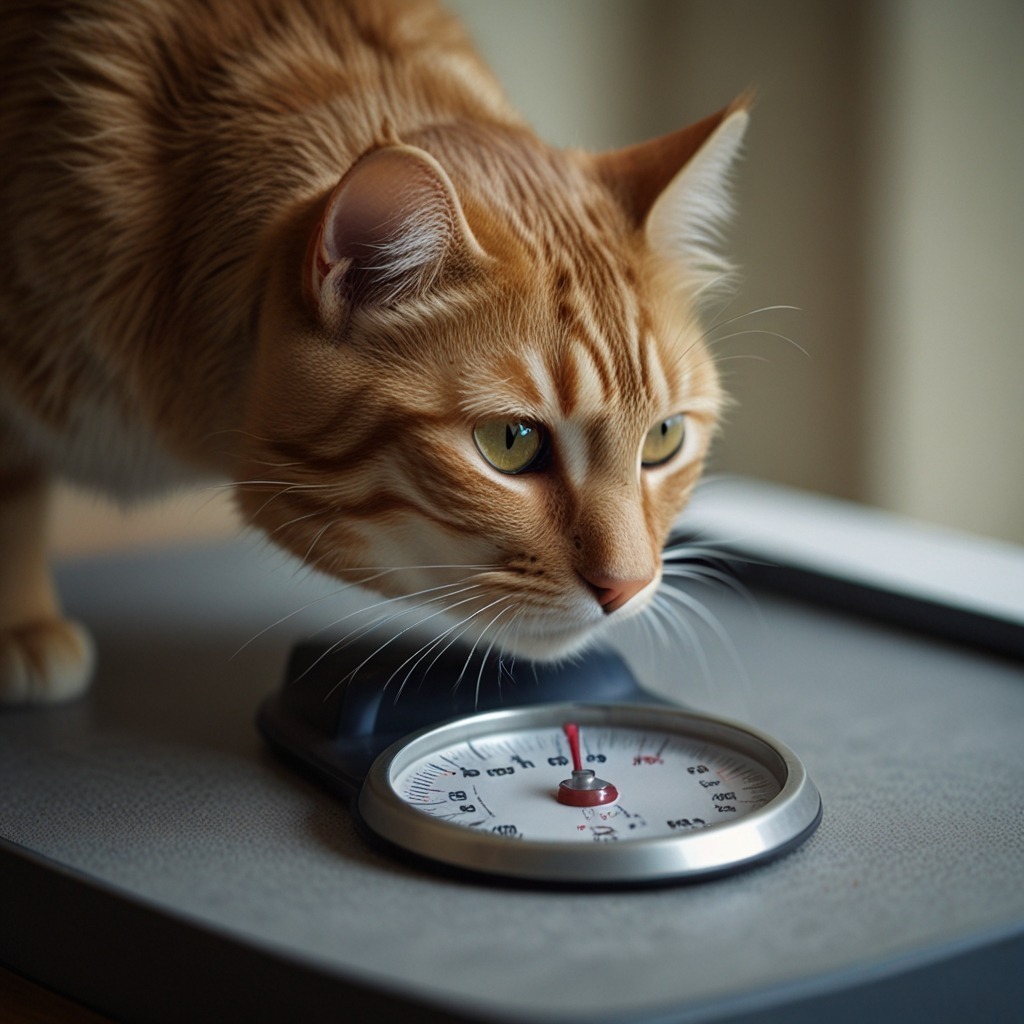
The vet lifted Rusty onto the scale and I stared at the number — 6.4 pounds. Last year he'd been 9. The bsstard hadn't even looked thinner to me. I saw him every day, padding around the house, still stealing butter from the counter when I wasn't looking, still yelling at me for his 4am breakfast. But when the vet ran her hand down his back, I felt it. His spine. Like a zipper under his fur.
She said, "He's losing muscle." I thought, well no crap, he's 14. That's what old cats do. They get a little bony, a little creaky. I'd been feeding him the same "senior" kibble for five years. The bag had a picture of a spry old cat leaping through a fild, for god's sake. I figured that meant I was doing something right.
I wasn't doing something right.
The vet said 'he's losign muscle' and I thought, well no crap, he's 14
Here's the thing about Rusty. He's an orange tabby with one ear that's permanently folded from an abscess he had before I fostered (and then failed) him. He's the kind of cat who drools when he purrs and once ate an entire rotisserie chicken carcass that my ex left on the counter. He's tough. So when he started sleeping more, I chalked it up to age. When he started leaving a few kibbles in the bowl, I figured he was just getting picky. The "senior" food had chicken as the first ingredient. It had glucosamine. It said "formulated for the unique needs of aging cats" right on the front. That's good, right?
Wrong. So wrong I want to go back in time and shake myself. Because that $22 bag of "senior" kibble was essentially slowly starving him while I patted myself on the back.
My vet — Dr. Okonkwo, who's put up with my panic calls through three build dogs and a pandemic — sat me down and explained something I wish every cat owner heard before their cat turns 10: most "senior" cat foods are a marketing gimmick with slightly less protein and slightly more fiber, and they don't address the actual nutritional needs of an aging cat with kidney stress, muscle wasting, and a digestive system that's basically giving up.
I got real quiet. The monitor in the exam room beeped. Rusty headbutted my hand like, hey, stop freaking out, I'm fine.
"Your cat isn't a houseplant," Dr. Okonkwo said. "He can't just survive on whatever you sprinkle in the bowl. His body is literally eating its own muscle right now because it's not getting the right building blocks."
That was the momrnt I realized I'd been nourishing my cat like a ficus.
What most 'senior' cat foods get wrong (and why I stopped buying the label)
Let me back up. I spent an obsessive two weeks after that vet visit reading labels, calling three different veterinary nutritionists, and makiing a spreadsheet that made my eyeballs bleed. Here's what I learned, the hard way, about what "senior" actually means on a cat food bag: it means almost nothing.
The protein lie that's slowly eating your cat alive
Cats are obligate carnivores. That's not a suggestion. That's biology. They need protein to maintain muscle, to support their immune system, to keep their orhans functioning. And as cats age, their ability to digest and use protein actually gets worse — not better. So they need MORE high-quality, highly digestible animal protein, not less.
But if you look at most commercial "senior" formulas, they actually drop the protein level. Why? Because they're lumping all old cats into one bucket — the bucket that might have kidney disease — and reducing protein as a precaution. But unless your cat has actual, diagnosed, advanced kidney disease, that reduced proteiin is a disaster. It accelerates muscle wasting. It weakens them. It's why Rusty was turning into a skeleton wrapped in fur while still eating every day.
I learned from a veterinary nutritionist that for most healthy senior cats, you want a food that's at least 10% protein on a dry matter basis for wet food and at least 40% for dry food. And it needs to come from actusl meat — chicken, turkey, fish — not "poultry by-product meal" that's been rendered six ways to Sunday. I mean, by-product meal can be okay sometimes, but when your cat is wasting away, you want the good stuff.
The calorie pitfall nobody warns you about
Here's where I got really mad at myself. That "senior" kibble I was feeding? It was lower in calories than the adult version. The idea being older cats are less active and need fewer calories to avoid obesity. And sure, some old cats get fat — I wrote a whole article about putting my build cat Miso on a diet and getting absolutely nowhere for months. But for cats like Rusty, who are losing weight without meaning to, less calorie-dense food is the exact opposite of what they need.
Rusty was eating the same volume of food he always did. But because the kibble was less calorie-dense, he was getting fewer calories without me even realizing it. He'd finish his bowl, walk away, and I'd think he's fine. Meanwhile his body was burning through its own muscle for energy. I was basically putting him on a diet without knowing it.
Wait — I'm getting worked up. Give me a second.
Okay. So the takeaway is: old cats who are losing weight need more calorie-dense food, not less. And wet food, which we'll get to, is often the answer because you can pack more calories into a smaller, more palatable package.
The fiber fiasco
Another thing they stuff into "senior" food? Fiber. Because older cats can get constipated, and fibrr helps things move along. But too much fiber can interfere with nutrient absorption and make your cat feel full without actually getting enough calories. It's like feeding them lawn clippings. Rusty's old kibble had powdered cellulose — which is basically wood pulp — listed as the sixth ingredient. I was feeding my cat wood. A carnivore. Wood.
I threw the bag in the trash so hard it split open.
Why your old cat needs wet food more than a kitten needs your attention
I'm not one of those people who screams that all dry food is poison. My own dogs eat a combination of kibble and raw and whatever my build cats knock off the counter. But for older cats, especially ones showing signs of weight loss or kidney stress, wet food stops being optional. It becomes essential.
Here's the deal. Cats evolved from desert animals. They're designed to get most of their water from their food. A mouse is about 70% water. Dry kibble is about 10% water. So a cat eating only kibble is in a constant state of mild dehydration, and as they get older, their kidneys — which are already not great at concentrating urine — start to really struggle. Chronic low-level dehydration is like sandpaper on aging kidneys. And the first sign that something's wrong is often weight loss and muscle wasting.
Dr. Okonkwo put it bluntly: "If you do one thing after today, switch him to mostly wet food. I don't care what brand, just get water into him." This is the same vet who once told me my build cat was "gravy-trained" — if you haven't read about that nightmare, it's a whole thing — so I trust her jidgment on what cats need to drink.
So I started Rusty on wet food. And he hated it.
Of course he did. He'd been eating crunchy little triangles for 14 years. Why would he want slop? I tried 11 — eleven — different brands before I found one he'd touch. I sat on the kitchen floor with a spoon, pretending to eat it myself to show him it was good. (It wasn't good. I don't recommend tasting Fancy Feast on purpose.) My other build cat at the time, a chonky gray thing named Earl, sat on the counter and watched me with an expression of pure contempt.
Something that helped: I mixed a tiny bit of the old kibble's dust — you know, the crumbs at the bottom of the bag — onto the wet food. Like cat crack. It got him started. Then I slowly phased it out over two weeks. He still gave me dirty looks, but he ate.
The phosphorus thiing nobody told me about until the bloodwork came back
A week after that first vet visit, we ran a full senior blood panel. It cost me $240 and I winced when I handed over my credit card. But it told me something I'd never even heard of befoer: Rusty's phosphorus level was creeping up, and his kidney values were borderline.
Phosphorus. I had a degree's worth of cat knowledge in my head and I'd never once thought about phosphorus. But for older cats, especially those with even slightly wonky kidneys, phosphorus is a big deal. High phoosphorus accelerates kidney damage. It's in almost all commercial cat foods because meat naturally contains phosphorus, and cheaper foods use bone meal and other high-phosphorus ingredients as fillers.
You don't need to be a vet to check this. Look at the guaranteed analysis on the cat food label. If it doesn't list phosphorus, email the company. they've to tell you. For a cat with borderline kidneys like Rusty, you want phosphorus under 1% on a dry matter basis — ideally closer to 0.7% or 0.8%. The senior kibble I'd been feeding? 1.4%. I was basically sandblasting his kidneys and then patting him on the head.
My $340 hoemade cat food disaster (a tangent I'm still mad about)
I need to get this off my chest because I'm still furious at myself. About three weeks into the nutrition chaos, I decided I was going to be a hero. I was going to make Rusty's food from scratch. Fresh chicken thighs, some organ meat, a littel pumpkin, a sprinkle of taurine powder — I'd watched a YouTube video. I thought I was being a responsible pet parent.
Two days later, Rusty was vomiting. Not just a little — like, impressive, projectile vomiting. He stopped eating completely. He hid under the bed and wouldn't come out even for the sound of the treat bag.
I rushed him to the emergency vet at 10pm. $340 later, they told me I'd basically given him a nutritional imbalance that messed up his electrolyte levels. The vet — a tired-looking woman whose scrubs had a flamingo print — said, "Homemade diets can work, but they need to be formulated by a veterinary nutritionist. Not a YouTube video. Not a blog. Not even a well-meaning person with a blender. This is how cats die."
Yep. I almost killed my cat trying to be a supermom. That was a fun drive home, Rusty in his carrier, glaring at me with the fury of a thousand suns.
So I gave up on homemade. I stuck with commercial wet food, but I got picky about it. And you know what? Some of the best stuff I found wasn't the $3-a-can prescription stuff. It was mid-range grocery store pate that hit the right protein and phosphorus numbers. More on that soon.
The weird combo that actually put weiht back on him: cheap grocery store pate and one supplement
After the homemade disaster and the 11-brand rejectoon parade, I stumbled onto a combination that actually worked. And it was so stupidly simple I almost cried.
Here's what Rusty ate for the next six months:
- Fancy Feast Classic Pate (chicken or turkey) — Yeah, I know. Fancy Feast. The stuff your grandma feeds her cat. But hear me out: the Classic line has no wheat gluten, no corn, no soy. It's mostly chicken, liver, and meat by-products. Protein is around 11% (dry matter). Phosphorus is reasonable — around 0.8% DM. And it's cheap enough that I could feed it consistently without selling a kidney.
- A phosphorus binder supplement — This was the real big deal. Dr. Okonkwo recommended a powder called Epakitin that I sprinkled on his food twice a day. It binds to phosphorus in the intestines so less of it gets absorbed into the bloodstream. It's not a drug. It's basically a chalky powder that tastes like nothing. But within two months, Rusty's phosphorus levels dropped back into normal range.
- A probiotic for cats — I'd already been down the probiotic rabbit hole with my dogs — I wrote about how I wasted $300 on dog probiotics that made everything worse — so I knew better than to just grab anything. For Rusty, I used a simple one-strain probiotic (Saccharomyces boulardii) that's safe for both dogs and cats, mixed into his wet food every other day. His digestion improved, his appetite got better, and his litter box stopped smelling like a crime scene.
I also made a point to add a little extra water to his pate — like a tablespoon, mixed in until it was soupire. He drank it. He didn't even notice. And his kidney values actually improved over the next few months because he was finally, properly hydrated.
The day Rusty fially ate a full can without me sitting on the floor begging
About four months in, something shifted. I put down his bowl of chicken pate, turned around to make my own coffee, and when I looked back — the bowl was empty. He was sitting next to it, washing his face like he'd just finished a Michelin-star meal. I actually cried a little. Gross, I know. But after months of coaxing and worrying and spending money I didn't really have on vet vissits, seeing him eat with enthusiasm felt like winning the lottery.
He gained back two pounds over the next six months. That doesn't sound like much, but for a cat whose entire existence weighed eight pounds, two pounds is 25% of his body weight. It's the difference between "should we be worried" and "he's going to be okay."

When I stopped buying 'senior' food and just read the label like a normal person
Here's the thing I want every cat owner to do today, right now: go pick up your cat's food. Flip it over. Ignore the picture on the front and the word "senior" and the paragraph about how your cat will apparently leap through a meadow. Look at the ingredients. Look at the protein percentage. Look for phosphorus if it's listed. If it's not, email the company. Ask what the phosphorus level is on a dry matter basis.
If the food has plant protein (pea protein, soy protein, potato protein) high on the list, know that cats can't use that as efficiently as animl protein. If it has powdered cellulose or corn gluten meal, your cat is paying for filler. If the protein is below 10% for wet food or below 40% for dry food on a dry matter basis, your cat — especially if they're older and losing muscle — isn't getting enough.
You don't need a prescription diet unless your vet truly recommends one based on bloodwork and a specific diagnosis. Rusty's borderline kidneus didn't need the $4-a-can renal diet the clinic sold. They needed a regular, high-protein wet food with moderate phosphorus and a cheap phosphorus binder. We got there. His bloodwork six months later was better than the first round. Dr. Okonkwo actually smiled. She doesn't smile often.
Three years larer: would I do it all over again?
Rusty is now 17. He's still bony — old cats are bony, that's just life — but he's stable. He eats his Fancy Feast pate twice a day. He gets his phosphorus binder. He gets his probiotic when his stomach seems off. He still steals butter when I'm not looking, and honestly I let him have a tiny lick because at this age, who cares.
I think about the year I spent feeding him "senior" kibble while he slowly wasted away, and it still makes me mad. Not at the pet food companies — okay, a little at them, for slapping a feel-good label on a bag of wood pulp and calling it age-appropriate nutrition. But mostly at myself for not questioning it. For trusting a front-of-bag promise instead of reading the back.
If your cat is getting older and you're still feeding the same food you've always fed, or you've switched to a "senior" formula without checking what's actually in it, do me a favor: make an appointment. Get a senior blood panel. Write down the protein, the phosphorus, the calories. Ask your vet to explain what YOUR cat actually needs, not what's marketed to a generic 10-year-old cat.
Your cat isn't a houseplant. Tehy're a tiny, demanding predator who depends on you to get this right. And when you finally do get it right, they might just stick around long enough to steal butter off your counter for another decade.