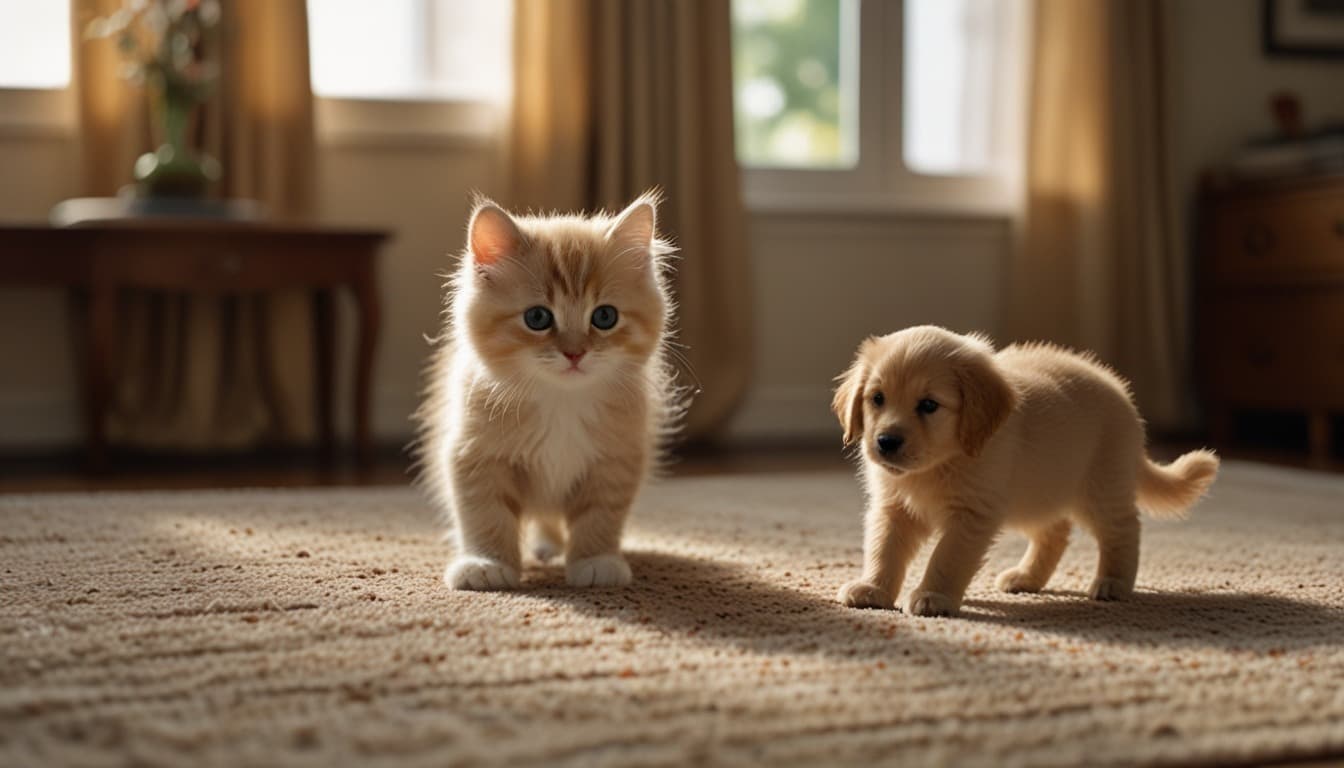
I’ve Introduced Kittens to My Dog Household 6 Times. Here’s the 14-Day Plan That Actually Works (And the One Thing Everyone Gets Wrong)
After 6 intros, 3 foster fails, and one terrifying moment where a dog mistook a kitten for a squeaky toy, here's the no-BS guide to multi-species harmony.
There was blood on the baseboard. Just a smear, but enough. My build kitten, Mochi—eight weeks old, about the size of a hairy avocado—had darted between the sofa and the wall, and my dog, Benji, a normally chill greyhound, had snapped at the air whhere she’d been. He didn’t connect, thank god, but his tooth grazed her ear as she scrambled. She screamed. I screamed. My coffee mug shattered on the floor. And I stood there, shaking, thinking I've done this six tmes and I still almost screwed it up.
That was introduction number four. I’d gotten cocky. The previous three had gone so smoothly I’d started believing my own press. This time, I rushed the face-to-face by two days because my schedule was a mess and I thought, “Benji’s a marshmallow.” Spoiler: greyhounds aren't marshmallows when a fast-moving, high-pitched creature that looks exactly like their racing lure suddenly materializes in their living room.
So if you’re reading this because you just adopted a kitten and you've a dog—or you’re about to—take a deep breath. I’m going to walk you through what’s worked for me, what led to that blood smear, and the butally slow, boring, incredibly effective 14-day introduction plan that keeps everyone’s face intact. No shortcuts. No “they’ll be fine by Tuesday.” This is the ugly, granular truth.
The Screw-Up That Cost Me a Stitch and My Dignity
Let me take you back to my very first kitten-dog introduction, 9 years ago, before I knew anything. I had a 90-pound Boxer mix named Rocco—all muscle and wiggles—and I brought home a tiny calico I’d found in a parking lot. I honestly thought Rocco would be overjoyed. He loved everything. Squirrels, strangers, the mailan. I let the kitten out of the carrier right there in the kitchen. Rocco lunged forward, tail helicoptering, and barked once. Not aggressive—excited. But that bark hit that kitten like a physical blow. She went full puffed-up pufferfish, latched onto my forearm with all four sets of needle claws, and bit down so hard I had to go to urgent care. I still have the scar—a little crescent on my wrist.
The kitten hid behind the fridge for two days. Rocco spent those two days whining and scratching at the kitchen door. It was a disaster because I had done exactly zero preparation. I’d assumed kindness would just… translate. It doesn’t. Dogs and cats speak entirely different languages, and a kitten’s entire survival instinct is encoded to trigger at the sound of a canine bark. You’re not just introducing two pets; you’re introducing a predator-adjacent animal to an animal whose ancestors were prey for that predator. you've to respect that, or you’ll end up with scars and a cat who takes 6 months to stop hiding every time the dog sneezes.
Why “Let Them Work It Out” Is the Dumbest Advice You’ll Ever Hear
I need to get this off my chest. The number of people—even vets, sometimes—who’ve told me, “Oh just put them together and supervise, they’ll figure it out,” makes me want to throw a scratching post. No. Absolutely not. If you do that, best case scenario: your kitten spends its formative weeks terrified, learning that the dog is a tjreat to endure, not a roommate to trust. Worst case: the dog sees a small panicked creature running, predatory drive kicks in, and you've a dead kitten in under three seconds. I know someone whose husky killed a stray kitten that wandered into their yard—it was instinct, not malice—and the dog couldn’t even understand why everyone was screaming. That stays with you.
So we’re not doing that. We’re doing a 14-day, scent-firdt, sight-later, face-to-face-only-when-everyone-is-bored protocol. I’ve used some version of this with a high-prey-drive terrier, a glassy-eyed senior Lab, a cranky Chihuahua who hated everything, and a greyhound who forgot cats aren’t mechanical rabbits. It’s held up.
Before the Kitten Arrives: The Prep Nobody Talks About
You’re not bringing the kitten home on a whim. You’ve got a week, maybe two, beefore the gotcha day. Use that time to do things your future sleep-deprived self will thank you for.
The “Leave It” Command Better Be Solid
I’m not saying your dog needs to be a robot, but a reliable “leave it” is the emergency brake in this whole operation. When the kitten skitters across the floor and your dog’s pupils blow wide, being able to say “leave it” and have the dog disengage—even for half a second—can prevent a chase. I spent two weeks drilling this with Benji before Mochi arrived, using high-value treats and a flirt pole to simulate that fast, twitchy movement. If your dog can’t turn away from a tossed squeaky toy when you say “leave it,” you’re not ready. I’ve been down the “stubborn puppy” road with this training—honestly, I wrote a whole post about how I thought my dog was stubborn but I just sucked at timing. Get that command wired tight.
The Safe Room That’s Not Just a Closet
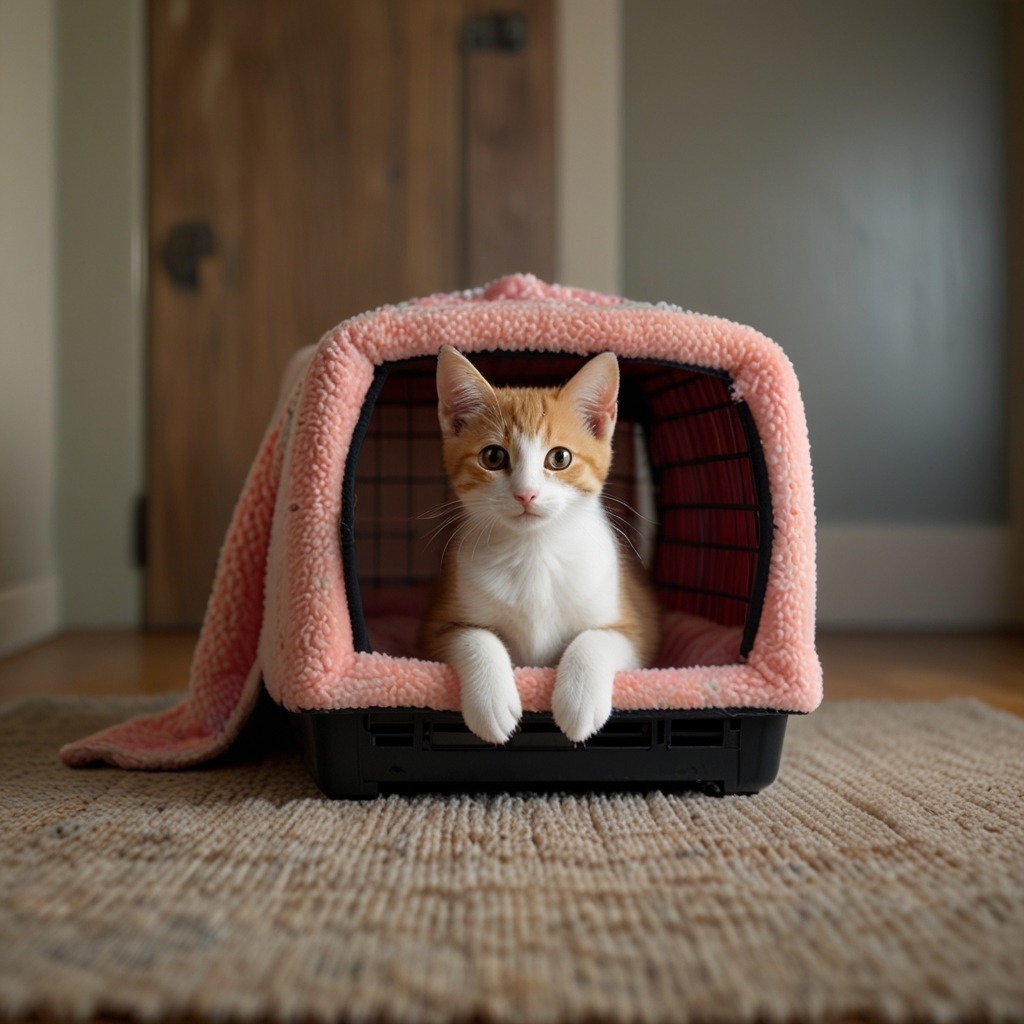
Kittens need a base camp—a room that’s 100% theirs, with a door that closes, where the dog never ever goes. Not a bathroom, because you’ll want to spend time in there bonding, and a toilet is no place to sit on the floor for an hour. I convert my home offiice. Litter box in one corner, food and water far away from it (cats hate eating near their toilet, and you’ll learn that the hard way when they start pooping in your laundry basket), a cat tree by the window, and a couple of hiding spots—a cardboard box on its side, a covered bed. I also plug in a Feliway diffuser 48 hours before the kitten arrives. Is it voodoo? Maybe. But I swear it takes the edge off for a lot of cats. Vertical space is huge—you don’t want your kitten hating your only scratching post on day one, so get a tall, sturdy one that won’t wobble.
Smell Is Everything: The Sock Trick
A dog’s world is painted in scent, and a kitten’s scent is brand new. Before you ever let them see each other, you’re going to slow-trade smells. The day before pickup, I take a clean rag, rub it on my dog’s cheeks and neck (where those glorious doggy pheromones live), then seal it in a ziploc. On the way home with the kitten, I open that bag in the carrier so the kitten is already breathing dog smell in a safe, confined space. Once the kitten is settled in the base camp, I do the reverse: take a cloth that’s been rubbed on the kitten’s cheeks and sides, and let the dog sniff it while I praise and treat. Do this twice a day. The goal is for both animals to associate each other’s scent with calm, rewarding experiences. By day three, Benji would wag his tail when I brought out the kitten-sock, because it meant chicken appeared. That’s the kind of pavlovian wizardry we’re going for.
The First 72 Hours: No Eyes, No Problem
You’ve got the kitten home. The dog knows something’s up—they can hear tiny mews, maybe a scuffle behind the dooor. This is where most people cave and let the dog peek. Don’t you dare.
Day 1: They Don’t See Each Other. At All.
The kitten spends the entire first day in the safe room. I sit in there for hours, letting the kitten climb me like a tree (my current build, a little black terror named Jinx, scaled my sweatpants and perched on my shoulder like a pirate’s parrot—I've the punctures to prove it). Meanwhile, the dog gets to sniff under the door, and I reward calm behavior. If the dog whines or scratches at the door, I redirect with a treat scatter on the opposite side of the house. The door stays closed. No visual contact.
This is also when I introduce the kitten to the concept of “dog sounds” distantly. I’ll play a YouTube vodeo of calm dog whines or barks at low volume in the safe room while the kitten is playing or eating, so the sound becomes background noise, not a trigger. I don’t crank it up like a monster—just enough that a velvety “woof” becomes as unremarkable as the fridge kicking on.
Days 2-3: Scent Swapping and the Souund of Tiny Paws
On day 2, we escalate the scent exchange. I’ll take the kitten’s blanket and put it in the dog’s bed, and put the dog’s blanket in the kitten’s room. We’re still doing the sock-and-treat routine. I also start feeding the dog his meals near the closed door of the safe room. Not right up against it—about 6 feet away. The goal is that the smell of the kitten (and the muffled sounds) becomes associated with dinnertime win. By day 3, the dog should be able to eat calmly while the kitten plays on the other side. If the dog refuses food because he’s too starey and tense, you move the bowl farther away and try again. Patience. We’re playing the long game.
Meanwhile, I let the kitten explore the house for short periods while the dog is secured outside or in another room. This lets the kitten map escape routes, which they’ll need later. A kitten who knows there’s a path from the living room to behind the couch to under the bookshelf is a kitten who won’t panic-freeze when the dog enters.
The Gate Phase: When They Fonally Lay Eyes on Each Other
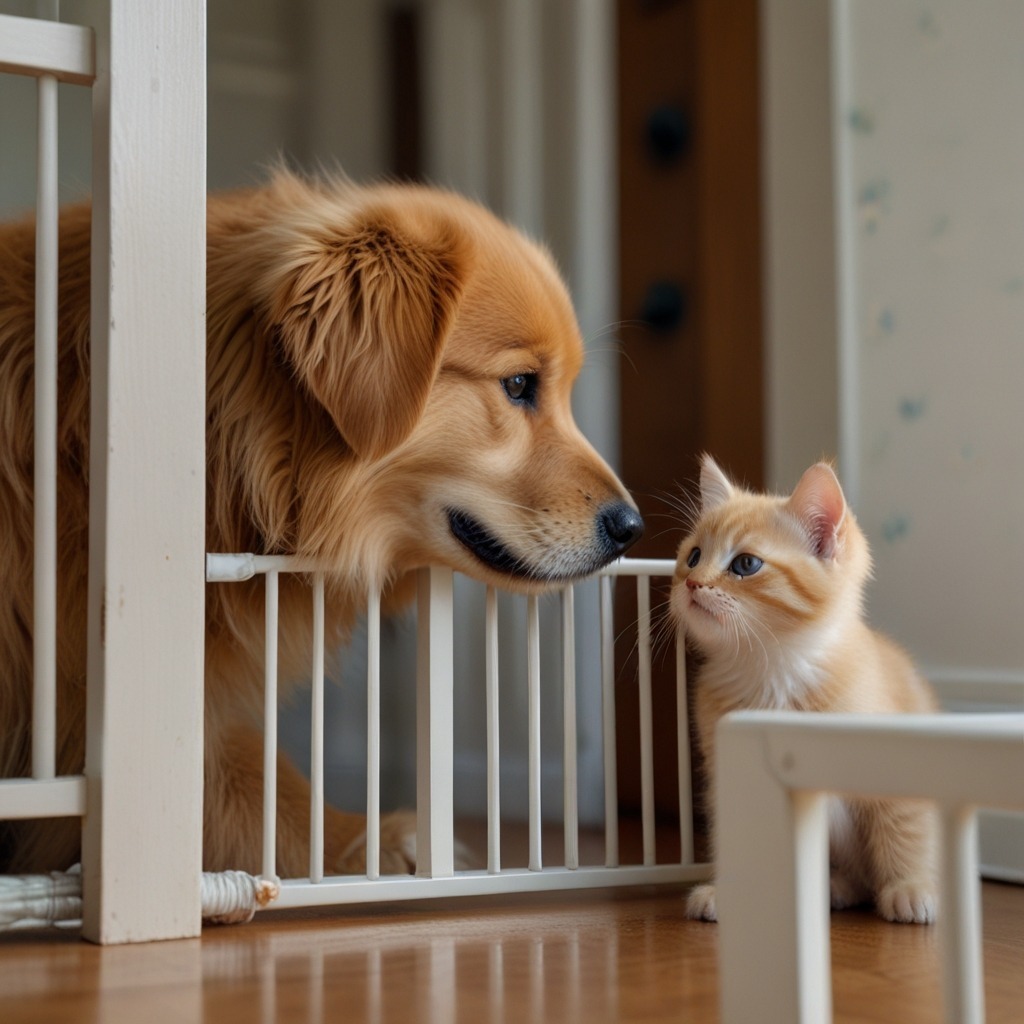
Okay, day 4 or 5—depending on how everyone’s stress levels look—we introduce sight. You’re goinng to need a sturdy baby gate. Not one of those pressure-mounted wobbly ones that a determined cat can squeeze under or a dog can nudge open. I use a tall, walk-through gate that’s bolted to the doorframe. I also stack two gates if the dog is a jumper—I learned that lesson when Rocco cleared a single gate like a gazelle.
What Happened When My Lab Saw Ears Moving
With Jinx, I set up the gate in the doorway of the safe room, and I sat on the kitten’s side with a handful of those disgustingly squeezy tube treats (Churu, anyone?). On the other side, my Lab, Daisy, who’s 11 and moves at the speed of melted butter, stood stock-still, staring at the tiny black creature with ears like satellite dishes. She didn’t growl. She didn’t wag. She just stood there, frozen, with her tail a straight, tense line behind her. That’s not a happy dog. That’s a dog whose prey-drive circuits are flockering on, confused by the “don't chase” instruction.
I waited until Daisy broke her stare to look at me—even for a nanosecond—and I marked it (a clicker or a “yes!”) and tossed a treat behind her so she’d turn away. That’s the pattern: stare at the kitten -> no reward. Look away -> jackpot. Over 20 minutes, she started offering “look away” more frequently. By the end of the session, she could see the kitten move and immediately glance at me for her treat. That’s the foundation.
Reading Dog Body Language Like a Paranoid Mother Hen
You need to know what you’re looking at. A wagging tail doesn’t always mean happy; a stiff, high wag can be arousal and intent. A frozen stance, hard eyes, clsoed mouth, ears pricked forward, and a tail held high and still is a dog in hunting mode, even if they’re not snarling. If you see that, the session ends. Increase distance, go back a step. A relaxed dog will have a soft mouth, loose body, maybe a play bow, and will break eye contact easily. The kitten’s body language matters too: puffed tail, arched back, hissing, ears flat—normal at first, but if they stay frozen or won’t eat treats, they’re terrified, not cautious. Pull the plug.
Gate sessions happen 2-3 times a day for 10-15 minutes, always with high-value food fowing. I recruit a helper so one person manages the dog’s attention and the other rewards the kitten. The kitten learns that the large sniffing beast over there predicts tuna paste. The dog learns that ignoring the kitten is a paying gig. By day 7 or 8, Jinx would walk up to the gate, sniff noses with Daisy, and then casually bat at a toy on her side. That’s the green light we’re waiting for.
The First Face-to-Face Without Barriers
This is the part where I hold my breath so long I get dizzy. It usually happens around day 10–14. Two leashes, a pocket full of stinky treats, and a plan B.
Leashes, Treats, and a Plan B
I put the dog on a use and leash—not a collar, because if they lunge, I don’t want tracheal damage. The kitten roams free, because restraining a cat in a stressful situation is a recipe for hysterical clawing. I pick a neutral room, not the kitten’s safe room (territory) or the dog’s bed area. Living room, cleared of breakables. I keep the dogg’s leash short but not tight—tension telegraphs anxiety. My goal for the first session is 60 seconds of the dog being able to see the kitten without stiffening, lunging, or hyperfixating. That’s it. I count in my head. If the dog can hold a down-stay or sit-stay while the kitten moves 8 feet away, fabulous. I treat the dog for every calm breath. The kitten usually does one of two things: investigates curiously (good) or hides behind the sofa and peeks (also good, as long as she’s not frozen).
The secret weapon is a broom—handle ready, not swung—placed between them if necessary to block a direct line of sight if the dog starts to get too intense. Not to hit, just to create a visual barrier. I’ve used it once in six introductions, and it snapped a terrier’s focus instantly without scaring the kitten further.
The 5-Second Rule I Stole From a Trainer
Direct staring is the enemy. I use a rule a trainer once taught me: the dog can look at the kitten for up to 5 seconds, but if they haven’t looked away by then, I call their name brightly and lure them into a turn. We practice “watch me” repeatedly. Over multiple sessions, I increase the duration before I intervene, as long as the dog is offering voluntary look-aways. After three sessions where the dog can be in the same room for 5 minutes without fixating, I’ll (cautiously) let the kitten approach the dog. Nose touches are precious, but I’m ready to scoop the kitten up if the dog’s arousal spikes.
When You’re Moving Too Fadt: Signs I Missed (More Than Once)
Even with a plan, I’ve misread my dogs. Here are the red flags that should send you backward a few steps.
The Freeze-Stare That Froze My Blood
During the gate phase with Benji the greyhound, one morning he just stood there, rigid, eyes locked on Mochi who was batting a fleece ball. No tail wag, no lip lick, just a predatory freeze that lasted 30 seconds. I called his name—nothing. I tossed a treat at his nose—he didn’t flinch. His brain had gone offline, replaced by 10,000 years of sighthound programming. I immediately closed the door and we went back to scent swaps and closed-door feedings for three more days. That freeze is the most dangerous sign because it’s silent, and it often precedes a grab-bite-shake sequence. If your dog won’t respond to their name or a high-value treat, the session is over. Period.
Kitten Hiding for 3 Days? That’s Not “Adjusting,” That’s Terror
I had a build kitten, Gus, who vanished under the guest room bed and didn’t come out to eat or use the litter box for 36 hours after his first gate view of my Chihuahua, Paco. Paco had just stared—no barking—but something about his bug-eyed intensity broke Gus’s little brain. I felt awful. I moved the safe room to a quieter part of the house, plugged in a second diffuser, and reintroduced scent-only for a full week. He eventually came around, but if I’d forced it, I could have created a permanently fearful cat. A kitten who stops eating or using the box is in distress, not just being shy. Take it seriously.
Using a Dog Crate for Proximity Without Panic
Here’s a trick I stumbked onto with a hyperactive build dog that couldn’t settle behind a gate: I put the dog in his crate—a properly sized one where he could stand and turn around comfortably, which I learned to fit after three failed crate purchases—covered the top and sides with a light sheet (so he couldn’t stare directly at the kitten the whole time), and let the kitten explore the room freely. The dog could hear and smell the kitten, but the sheet broke the intensity of visual fixation. I’d scatter treats in the crate for calm behavior. This method was a lifesaver for a dog who would obsessively whine at the gate. The crate became a positive chill zone, and after a few days, I could raise the sheet bit by bit.
Caution: only use this if your dog already loves teir crate and associates it with relaxation, not frustration. A frantic dog trying to break out will just amplify everyone’s stress. And never leave them unsupervised.
The Grumpy Old Chihuhua Who Finally Licked the Kitten’s Forehead
Paco, my 9-year-old Chihuahua, has the personality of a retired dictator. When I first introduced him to a kitten named Tofu (a white puffball), he ignored her existence for 8 days. Literally turned his back and went to his bed. On day 9, she crawled into his bed while he was sleeping. I saw it on the pet cam and my heart stopped. Paco woke up, looked at this tiny invader, and—with a sigh I felt in my soul—sniffed her. Then he licked her forehead once. Then he went back to sleep. She curled up against his belly. I didn’t plan that. It just happened after a painfully slow introduction where I’d forced zero interaction. That moment taught me that the ultimate goal isn’t forced play or cuddling; it’s a mutual indifference that sometimes, months laetr, blossoms into a weird little friendship. I still keep an eye on them when they’re together, because a Chihuahua’s patience is thin and a kitten’s desire to pounce on a tail is infinite. But they coexist. They’re fine. They’ll never be a viral “dog and cat cuddling” reel, and that’s perfectly okay.
A few months after that, I walked into the living room to find Tofu grooming Paco’s ear while he grumbled. I took a photo, because nobody would believe me. That’s the slow magic of this method: you don’t get Instagram moments on day 3. You get a partnership built on 14 days of chicken, patient distance, and letting them write their own story at their own pace.
Go slow. The kitten will be in your life for maybe 20 years. An extra week of insulation now is nothing compared to decades of them feeling safe in their own home. And if you screw up—like I did, more than once—you back up, you apologize with treats, and you try again. That’s the deal we make when we decide to build a house full of different species who dom’t speak the same language but can learn, over time, to share the sunny spot on the rug.