
I Threw a Puppy at My Cat and Expected a Hallmark Movie — Here’s the Mess I Made Instead
I thought I knew how to introduce a puppy to a cat. Then Miso peed on my pillow, stopped eating, and cost me $187 at the vet. Here's the slow, frustrating thing that actually worked.
Here's something nobody tells you abput bringing a puppy into a house with a cat: you might end up at the emergency vet at 11pm, holding a $187 bottle of Feliway and sobbing while Dr. Nguyen says, very calmly, "Sarah, you can't just throw a puppy at a cat and hope for the best."
I'm not exaggerating. That actually happened. The puppy — a fluffy little lab mix named Noodle who had ears way too big for his head — had been in my house for less than 48 hours, and Miso, my build cat of 14 months, had already vanished. Not literally, but his personality had. He'd stopped sitting on my keyboard while I wrote (a blessing, except it wasn't), stopped yowling at me for dinner, stopped curling up on my pillow at night. Instead, he wedged himself under teh couch and only came out at 3am to pee in my laundry basket.
I figured it'd pass. Cats are resilient, right? He just needed time.
I was so, so wrong.
I Thought Miso Would 'Just Get Used to' the Puppy. He Didn't.
I've been doing rescue work for over a decade. I've fostered more than 40 cats and dogs. I dropped out of vet tech school, worked at a shelter for six years, and I write about pet care for a living. So obviously I thought I knew how to introduce a puppy to a cat. I'd read the articles. I'd watched the YouTube videos. I'd even given other people advice about it. None of that stopped me from doing everything wrong the moment Noodle came home.
The meet-and-greet happened in my living room about twenty minutes after I unloaded the puppy from the car. I set Noodle down on the floor, and Miso — who'd been asleep on the back of the couch — lifted his head, blinked, and registered the small, wiggling creature that was about to ruin his life. He didn't even have time to assess the situation before Noodle spotted him and barreled over like a furry freight train. Miso's eyes went saucer-wide. He hissed, swatted (claws out, because why wouldn't they be?), and bolted down the hallway. I remember thinking, "Okay, that went about as expected. He'll calm down by dinner."
He didn't calm down. By dinner, Miso was a ghost. I could hear him under my bed soometimes. He didn't eat. He didn't drink. He didn't use the litter box — at least, not the actual litter box. When I woke up the next morning, I found my pillow soaked in cat urine. Not Noodle's pillow, not the couch. My pillow. The message was clear: You did this. Suffer.
This is where I need to pause and say something abuot the internet's advice on introducing pets. Every forum I frantically searched at 2am said the same three words: "Introduce them slowly." Thanks, Captain Obvious. None of them explained that "slowly" meant days — maybe weeks — of separation, scent swapping, and careful, managed exposure. Nobody said that letting them share the same air before the cat was ready could set back your timeline by literal months. And definitely nobody told me that my cat might decide my pillow was the appropriate place to express his displeasure.
If you're new to this whole dog-rearing thing and you think "socialization" means introducing the puppy to every living creature immediately, I need you to hear this: I've made that mistake too. I once thought socialization meant throwing a puppy into every possible scenario, and I ended up with three terrified dogs before I finally figured out what I was actually supposed to be doing (I wrote about that whole disaster here). And when it comes to cats, the rules are even stricter. A cat isn't a small, aloof dog. They process new threats differently, and they'll hold a grudge for way longer than any dog I've ever met.
The $187 Vet Bill That Explaained Everything (and the Cat Pee I Might Never Forget)
After two days of Miso refusing to eat and me scrubbing urine out of my favorite blanket at 3am, I called Dr. Nguyen. She's been my vet for 11 years, through three dogs and a divorce, and she's seen me make some spectacularly dumb choices. She listens to me sob about my ruined pillow and says, flatly, "Bring him in tomorrow if he hasn't eaten, but honestly, Sarah, I told you to set up separate spaces a week before you brought the puppy home. Did you do that?" I hadn't. Guilt is a powerful motivator.
I brought him in. They ran bloodwork just to make sure his hunger strike wasn't something medical, but we both knew it was stress. She gave me a diffuser of Feliway, a long lecture about environmental managemetn, and a receipt for $187. The most expensive pheromones I've ever bought. But the real cost was that I'd eroded Miso's trust so thoroughly that it would take me six weeks to get it back.
The Three-Week Scent Swap That Felt Ridiculous But Saved Us
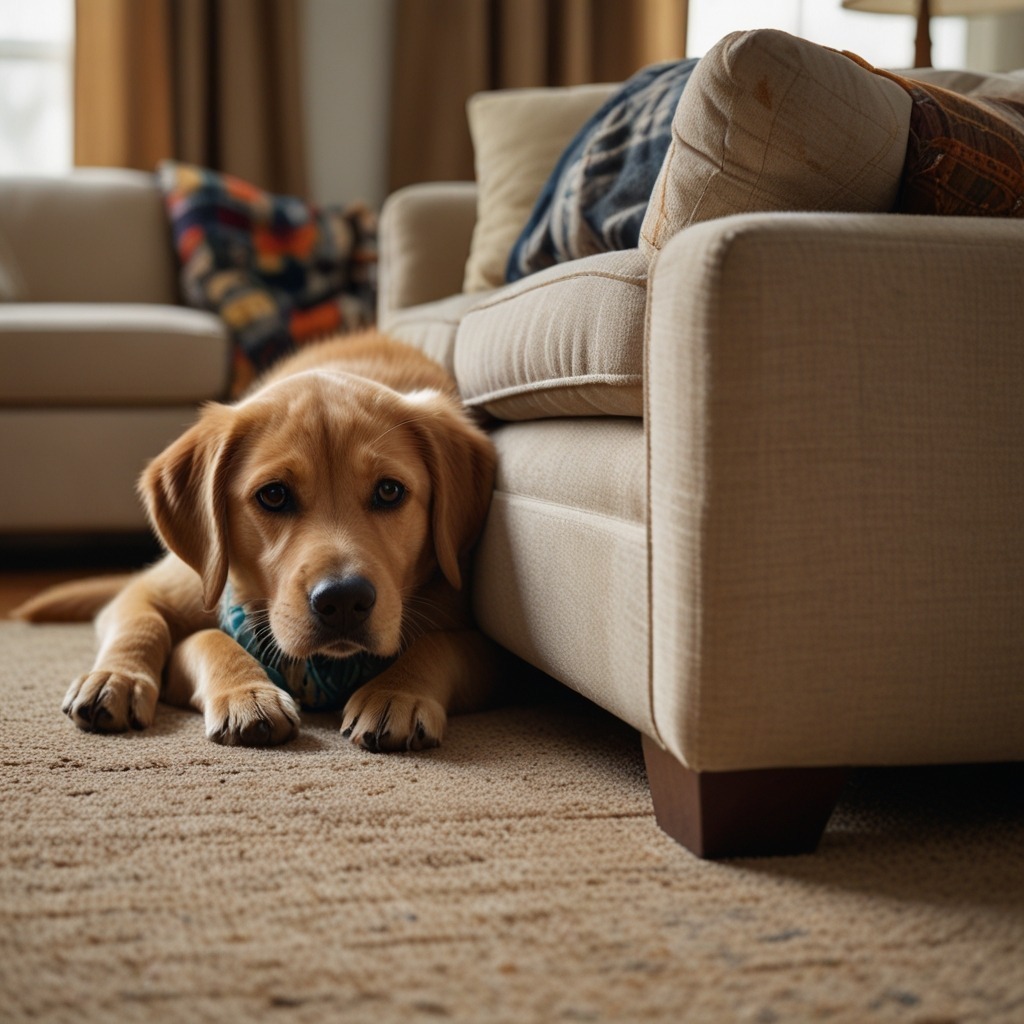
The first thing Dr. Nguyen told me to do was separate them completely. Not just "keep the puppy in a different room while you're at work" — total segregation. Miso got the bedroom, the hallway, and his litter box. Noodle got the kitchen and living room, with a baby gate on the door. And then we started the scent swap. Every morning, I'd take a towel I'd rubbed on Noodle's fur and leave it under Miso's food bowl. Every evening, I'd take one of Miso's blankets and tuck it into Noodle's crate. It felt like a superstitious ritual, but it worked. Slowly, Miso stopped flinching when he smelled the puppy on my hands. Noodle stopped whining every time he caught a whiff of cat.
I also discovered — completely by accident — that swapping litrer box locations made a difference. Once I moved Miso's box to a quiet corner of my laundry room behind a tall baby gate that only he could slip through, he started using it again. If you've ever wrestled with litter tracking, you know that moving a litter box doesn't come without its own headaches. I wrote an entire rant about my three-year war against tracked litter here, but the lesson was the same: placement matters. A cat who feels his bathroom is a death trap because a puppy might burst in wo'nt use it. And then he'll find somewhere else. Like my pillow.
Before You Even Bring the Pippy Home: The Stuff I Now Do in Advance
After the Noodle disaster, I swore I'd never make those mistakes again. Now, before any new puppy crosses my threshold, I prepare like I'm setting up a witness relocation program. If you'te reading this and you haven't brought your puppy home yet, do this. If the puppy's already there and your cat is hiding under the couch, you can still start — it just takes longer.
Claiming Sepatate Territories (and Not Just a Room, a Whole Ecosystem)
The cat needs a zone the puppy can't enter. Not "shouldn't" — can't. For me, that meant baby gates with cat doors, a tall cat tree in the corner of the living room that gave Miso a high perch, and a sturdy folding table that blocked the entrance to my bedroom so the cat could slip under but the chunky lab mix couldn't. He needed multiple escape routes, multiple hiding spots, and at least one window with a bird feeder outside so he could redirect his simmering rage at something feathered.
The Blanket Trick That Feels Stupid But Works
If your puppy isn't home yet, take a blanket to the breeder or shelter and rub it on the puppy. Bring that home before the puppy arrives. Leave it in your cat's favorite sleeping spot for a day or two. Then do the reverse: rub a towel on your cat and stash it somewhere the puppy will sleep. The goal is to make each animal's scent a boring, familiar background thing before they ever lay eyes on each other. It's not magic, but it's close.
Crate Training: My Reluctant Conversion
I used to hate crates. Hated them. Felt like I was putting my dogs in jail. But after a build puppy chewed through my baseboards while I was in the shower (and not just a little — like, exposed subfloor), I changed my tune. Crates aren't punishment; they're a safe den for the puppy and a safety valve for the cat. When I can't supervise, the puppy goes in the crate. Miso knows the crate is puppy territory, and he knows he doesn't have to wory about a fuzzy tornado ambushing him during his 2pm nap. If you're struggling with crate training, a lot of it comes down to making the crate the best place in the world — treats, meals, frozen Kongs. The same approach I used to stop destruction from boredom (something I wrote about after losing a couch) applies here too.
The $40 Baby Gate That Actually Saved My Sanity
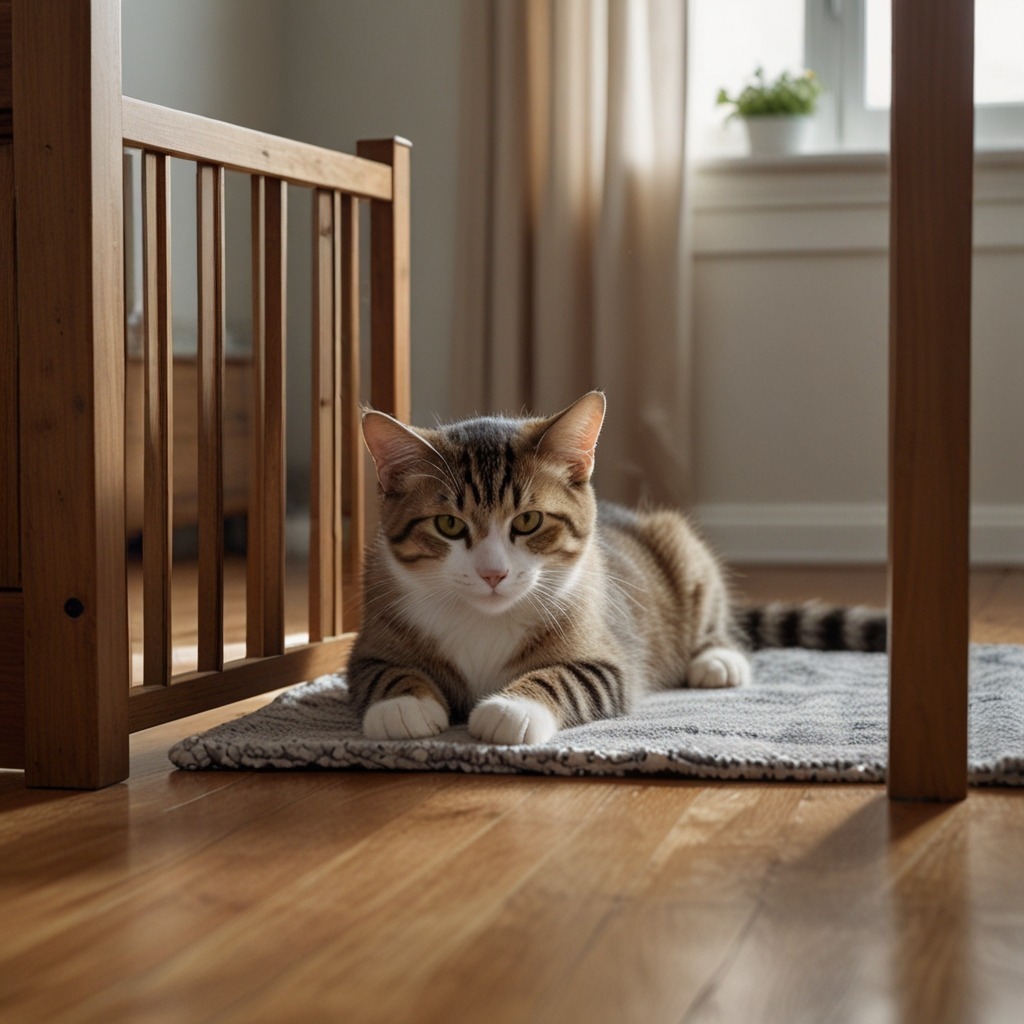
I bought a pressure-mounted baby gate with a little cat door in the bottom. It cost me forty bucks, and it's the reason I didn't rehome either animal. The gate separated the kitchen from the rest of the house. Miso could come and go as he pleased; the puppy couldn't. For weeks, Miso would sit on the other side of the gate, stare down the puppy, and flick his tail. It was like a nature documentary. The gate gave Miso control — and control, for a cat, is everything. Once he realized he could observe the monster from safety, he started eating again.
A quick word about cheap baby gates: don't buy the wooden ones with the plastic mesh you've to screw into the wall. I tried that once, and the whole thing collapsed on my foot while I was carrying a cup of coffee. I said a lot of words I'm not allowed to type here. Spend the extra ten dollars.
The Day I Let Them 'Work It Out' and Miso Stopped Eating
About three weeks in, I got impatient. I'd done the scent swaps, the gates, the separate zones. Miso had started eating again. Noodle had stopped barking at the gate every time he saw the cat. I thought, "They're ready." I opened the gate, let them both into the living room together while I stepped into the kitchen to pour a cup of coffee, and by the time I came back, Miso was on top of the fridge and Noodle had a scratch on his nose and was yelping like I'd never heard. I don't know exactly what happened, but I know Miso was cornered and fought back. It set us back to square one. Worse than square one, actually, because now Miso was terrified and had proof the puppy was dangerous.
That night, he stopped eating again. He didn't purr for four days. I had to syringe-feed him water. I was also dealing with a resurgence of his stress peeing, a nightmare I'd documented exhaustively when he first arrived (I wrote about that urine-soaked saga here). And then, because the universe has a sick sense of humor, Miso started gaining weight — he'd been stress-eating any dry food I left out the few times he came out of hiding, and because he was barely moving, the weight piled on. I later had to fight to get him back to a healthy weight, which was its own frustrating, six-month journey (written up in excruciating detail here). All of it traced back to that one moment of impatience, when I let them "work it out."
Why 'Working It Out' Is the Worst Advice I Ever Followed
Dogs might scuffle and then be friends twenty minutes later. Cats don't do that. A single traumatic encounter can permanently alter a cat's relationship with a dog — and with you. I hear people say, "Oh, they'll figure out the pecking order," and I want to scream. The pecking order for a cat is: I'm safe, or I'm in mortal danger. There's no middle ground when a predator-shaped animal is chasing them. If the cat spends every interaction in fight-or-flight mode, you're creating a trauma bond, not a friendship.
The barking through the baby gae, by the way, wasn't aggression. It was frustrated excitement — the same kind I'd spent months untangling with a reactive build who barked at every stranger who walked past (another story I wrote after learning the hard way). Noodle wasn't trying to hurt Miso. He was just a puppy who saw a moving creature and lost his lttle mind. But that didn't matter to Miso. Intent doesn't matter to a cat. Only outcomes.
When the Puppy Learned That Chasing the Cat Was the Best Game Ever
Somewhere around month two, Noodle figured out that chasing Miso triggered a spectacular, zigzagging escape that looked like the most fun a creature could have. I'd find him with that goofy, open-mouthed puppy grin, tongue lolling, tail going a mile a minute, staring at Miso like he was a sentient flirt pole. Miso, for his part, got faster and more creative with his hiding spots, which only made the chase more thrilling. I had to intervene.
Teaching 'Leave It' in 30-Second Bursts
I'm not a professional trainer. But I've taught a lot of dogs to "leave it," and it's the command that saved my cat. Start with something boring — a piece of kibble on the floor, covered with your hand. When the puppy stops mugging your hand, mark and reward with a different, better treat. Then you name it: "Leave it." Once that's solid, you graduate to a moving target — a toy on a string — and then, eventually, to the cat. It took Noodle about two weeks of daily five-minute sessions to understand that chasing the cat meant the fun stopped and got replaced with a boring "sit" and a treat only if he complied.
The Tether Trick That Kept the Puppy From Being a Menace
For the first month of supervised interactions, I kept Noodle on a lightweight leash attached to my belt loop. If he so much as tensed his body toward Miso, I'd step on the leash. No yelling, no yanking. Just a physical barrier that prebented the chase before it started. It was tedious, it was annoying, and my coffee got cold a lot. But it worked. Miso learned that the puppy wasn't a threat when I was around, and Noodle learned that lunging got him nowhere except a boring sit on the rug.
My Friend Jenna's Spray Bottle Disaster (and Why I Never Hissed at a Puppy)
Speaking of things people do wrong: my friend Jenna tried to "correct" her cat's hissing by spraying him with a water bottle every time he swatted at her new puppy. She ended up with a cat that associated the puppy — and Jenna — with sudden wet terror. He started launching himself at her ankles from behind the curtains. It took a veterinary behavioridt and a $400 consultation to undo that mess. Hissing isn't a crime; it's communication. When Miso finally hissed directly at Noodle without running away, I wanted to throw a party. It meant he felt secure enough to say, "Back off, kid," instead of fleeing. If you punish a cat for setting boundaries, you're telling them they're not allowed to express discomfort — and then the only tool they've left is to escalate.
I Started Finding Miso Sleeping on the Puppy's Bed — Six Months Later
It didn't happen all at once. First, there was the week Miso started napping on the windowsill while Noodle was in the room, as long as Noodle was in a down-stay twenty feet away. Then there was the morning I found them both staring out the sliding glass door at a squirrel, separated only by the baby gate. Eventually, I took the gate down. And maybe two weeks after that, I walked into the living room to find Miso curled up on Noodle's dog bed, Noodle stretched out beside him with his head on Miso's flank, both of them snoring.
I didn't cry. Okay, I might have teared up a little. But it was a long road, and I'm not going to pretend I did everything right. I still screw up. Last week Noodle got the zoomies and cornered Miso under the dining table, and I had to do a full restart for three days — gates, separate rooms, the whole thing. But we're okay.
If you're in the thick of it right now, just know: it's slow, it's messy, and you'll probably cry into a laundry basket at 2am. But it gets better. Now if you'll excuse me, Miso just knocked my coffee off the counter and Noodle is eating a shoe. So I gotta go.