I Thought My Cat Hated Me for Two Years. Then I Learned to Read a Tail Flick.
For two years I thought my cat hated me. Then I learned that a tail flick wasn't attitude—it was overstimulation. Here's the slow, embarrassing way I finally learned to speak cat.
I got bit by a cat named Mochi in 2016.
Not the kind of bite you laugh off. Not a warning nip. She clamped onto my forearm, dug in with her back claws, and left four puncture wounds that puffed up like little vokcanoes by morning. I'd only been fostering for a few months and I remember standing in my kitchen at 11pm, hydrogen peroxide dripping down my wrist, absolutely convinced this cat was just a jerk. A vicious, ungrateful, 9-pound terrorist who'd been living in my spare room for six weeks and repaid me with a trip to urgent care. I was so angry I almost called the rescue coordinator and told her to come get this monster. And then—because I'm stubborn and I hate being wrong—I sat down on the bathroom floor and replayed the whole thing in my head like a crime scene reconstruction. Mochi had been sitting on the windowsill, watching birds. I'd walked up, reached my hand toawrd her face, palm first, the way you'd greet a dog. She'd looked at my hand, her pupils went from almonds to dinner plates, her ears flicked sideways, and a millisecond before the bite—a tail twitch. Not a gentle wave. A sharp, whip-crack twitch at the very tip. I'd seen it. I'd ignored it. She'd been screaming at me in the only language she had.
That was the night I realized I didn't actually know a damn thing about cats. I'd worked at the shelter for four years at that point. I thought I was good at reading animals. But I'd been reading cats like they were furry, aloof dogs, and cats aren't. They're a whole different dialect, and if you mess it up, you get teeth.
The thing that still gets me is how many people live with cats for years and never learn their signals. They'll tell you the cat "randomly" attacks them, or "hates being touched," or "loves belly rubs" right up until it doesn't. And I was one of those people. I'm not a vet—dropped out of vet tech school in year two, ask me about pharmacology and I'll stare at you blankly—but I've now fostered over 40 cats and dogs, mostly cats, and I've made every mistake in the book. I've been bitten, scratched, peed on, and shunned. I've misread a slow blink as boredom. I've mistaken an overstimulated cat for an affectionate one and paid for it with a shredded forearm. This isn't a "how-to" guide in the clinical sense. It's the messy, embarrassing collection of things I've learned the hard way, usually while bleeding.
The Tail That Taught Me Everything
Tail language is the closest thing cats have to a neon sign, and yet most people—myself included, for yrars—don't bother reading it. The problem is that a cat's tail isn't just happy-or-mad. It's a nuanced, constantly updating mood meter, and if you only know "up is good, down is scared," you're missing half the conversation.
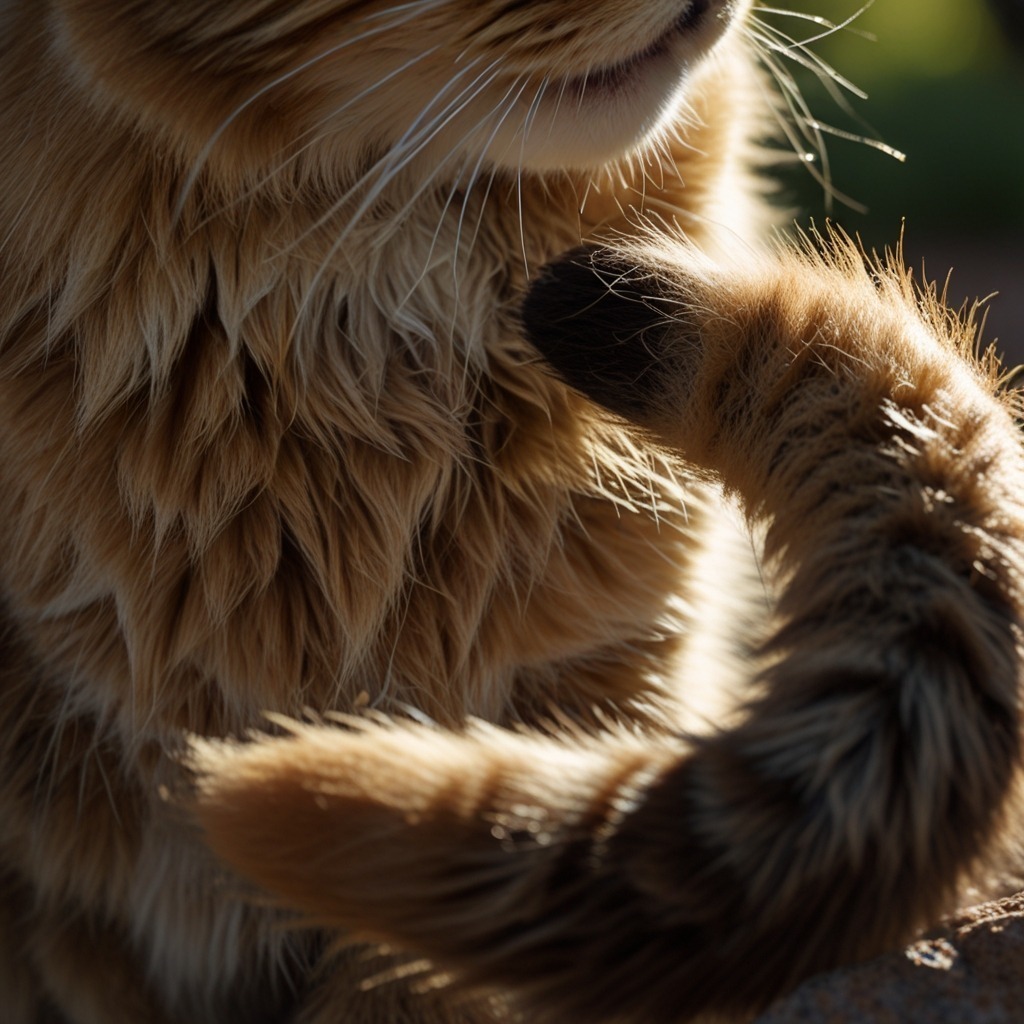
Take the tail flick. When you see the tip of a cat's tail twitching like there's a tiny electric current running through it, that's not annoyance necessarily. It's more like the needle on a pressure gauge edging into the yellow zone. Mochi's tail flick right before she bit me was the last warning before the red zone, but I'd already pushed through a dozen smaller ones—the stiffening of her shoulders, the way her whiskers moved forward instead of relaxed sideways, the subtle ear rotation. That tail was the headline, but the article had been building for a solid five seconds.
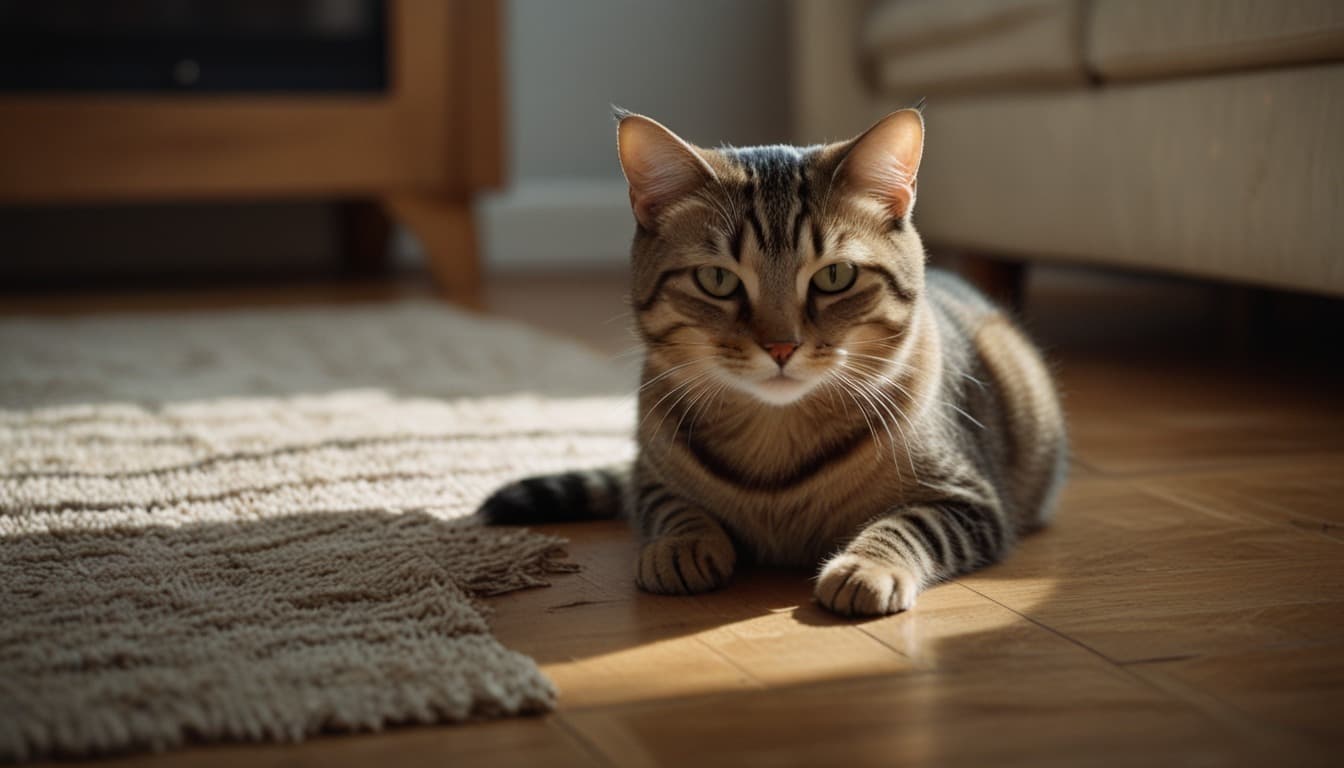
A tail held straight up with a little curl at the tip—like a quetsion mark—is usually friendly confidence. That's the "Hey, I'm glad to see you" pose. My cat Jinx does this every time I walk in the door, and for the first year I had her I thought she just had a weird tail. A tail puffed up like a bottle brush means fear or startle, obviously—we've all seen the Halloween cat silhouette. But a tail that's low and wrapped around the body? That's often insecurity or mild discomfort, not necessarily terror. I've had build cats sit like that for their entire first week, and people will mistake it for aloofness. It's not. It's an animal that's trying to make itself small and invisible while it assesses whether you're a threat.
"The tail is the cat's primary billboard, but it's a billboard written in a language we never formally learn."
Then there's the thrashing tail—a big, sweeping, side-to-side motion that looks almost playful. Don't be fooled. That's the red zone. That cat isn't happy to see you. That cat is done. I learned that one with a build named Panko, a massive orange tabby who I tried to pet while he was lying on his side, tail thumping like a metronome set to "disaster." He didn't bite me, but he did grab my hand with both front paws and rabbit-kick it like it had personally insulted his mother. Which, in hindsight, it kind of had.
What I wish I'd known earlier: watch the base of the tail, not just the tip. The base tells you what's happening internally—whether the cat is relaxed, tense, or about to launch. The tip adds detail. A loose, gently swaying tail with a relaxed base? Content. A stiff base with a twitching tip? Agitation brewing. A base that's vibrating or quivering? Could be excitement (if they're near you after a long day) or territorial marking if they're backing up to a vertical surface. One of my current cats does the quiver-tail when I open a can of wet food, which I used to interpret as anxiety until I realized it was just sheer, uncontainable joy about chicken pâté.
Ears: Not Just Fluffy Triangles
Cat ears are where I almost always misread the situation in the shelter. I used to think ears back meant the cat was aggressive. Sometimes it does. But more often, it means fear. Think about it: the cat is making itself small, flattening the ears to protect them, essentially saying "please don't hurt me." A truly aggressive cat will often have ears rotated slightly outward, not fully pinned, because they're oriented to the threat, not cowering. The flattened ears are the cat equivalent of a dog tucking its tail—it's defensive, not offensive.
I'll never forget a little calico named Suki who came into the rescue with a reputation for being "spicy." Her previous adopter had returned her after three days, claiming she'd swatted at their kid. When I went into her room at the shelter, her ears were flat against her skull and she was backed into the corner of her litter box. I sat down on the floor, didn't look at her directly, and just waited. After maybe 20 minutes, she crept forward, ears slowly rotating forward. That's when I knew she wasn't mean—she was terrified. She'd been in a house with children who probably rushed her. She'd flattened her ears, nobody listened, and the swat was her last resort. Suki ended up living with me for six months and turned into a lap cat. All because I finally looked at her ears.
Now, the other ear signals are subtler. Ears slightly sideways, like an aitplane preparing for takeoff, is often irritation or mild unease. I see this a lot when people pet their cats for too long without checking in. The cat might start out purring, but the ears start drifting outward, and by the time the person notices, the cat has already left or swatted. The ears were broadcasting discomfort the whole time. It's like someone at a party inching toward the door while still smiling—you've to pay attention to the signs that aren't in the mouth.
Forward-facing ears with a relaxed posture means curiosity or engagement. Ears swiveling around like little radar dishes means the cat is tracking sounds, which is normal, but if it's combined with a tense body, it could be hyper-vigilance. One of my build cats, a stray who'd lived rough for two years, did this constantly. Every sound made his ears snap toward it, pupils blown, even when he was asleep. It took me weeks to realize he wasn't just alert—he was suffering from some serious PTSD. I covered his crate with a blanket, gave him a white noise machine, and his ears finally stopped doing the frantic satellite dish rotation. The relief in his whole body was palpable.
The Belly Trap
This is the one that trips up dog people. A cat rolls over and shows you its belly, and you think, "Oh, she wants a belly rub." Wrong. So wrong. In cat language, exposing the belly is a sign of trust—it means the cat feels safe enough to show its most vulnerable area. But for most cats, that's not an invitation. It's a statement: "I trust you not to touch this." If you do touch it, you've betrayed that trust, and you'll get the claws. yoou'll probably get the back-leg bunny kick of doom.
I've seen this happen so many times with new build parents. They'll send me a picture of the cat belly-up on the rug and say "He loves belly rubs!" And I'm like, "No, he loves you enough to show you his belly. Step one is appreciating the gesture. Step two isn't grabbing it." Some cats do tolerate belly rubs—one of mine, Egg, is a weirdo who genuinely enjoys them—but the vast majority don't. The safest bet is to admire the belly from a respectful distance and scratch under the chin instead. The chin is always a better bet. Always.
This relates to a bigger thing I see constantly: people petting cats the way they'd pet a Labrador. Long, sweeping strokes from head to tail. For many cats, that's overstimulating. Petting a cat should be more like a negotiation than a massage. Short strokes on the cheeks, chin, and base of the ears are usuallly safe. The back near the tail is often a trigger zone—I've seen cats go from purring to hissing in half a second when someone touches that spot. It's not that the cat is unpredictable; it's that we're not reading the gradual build-up. The tail starts flicking, the skin over the back ripples, the ears rotate. All there, all ignored. And then when the cat bites, we call it "random." It wasn't random. We just missed the first eleven warnings.
I once had a cat named Miso who would allow exactly three strokes on her back. Not two, not four. Three. If you pushed to four, you bled. For months I was offended by this. I'd mutter things like "ungrateful" and "what's wrong with this cat." Then I realized: I was the one not respecting her limit. She'd been telling me with every stiff muscle and ear flick. I was just too pigheaded to listen. When I finally started respecting the three-stroke rule, Miso relaxed. She started sitting on my lap. She started purring when I walked in the room. We'd been living together for a year and a half, and I'd been accidentally antagonizing her the whole time. All because I thought petting a cat meant petting it like a dog.
Scratching is another one where body language gets ignored. My cat Clover used the arm of my couch as a scratching post for two years, and I was so frustrated I nearly gave up on her. It turns out she was trying to mark her territory because she felt insecure about the outdoor cats she could see through the window. I covered the window with frosted film and put a scratching post right where she'd been clawing the couch. The relief I felt was ridiculous—but it wasn't about me. It was about finally listening to what she'd been telling me since day one. I covered that whole saga in another post if you're in the middel of a furniture crisis right now.
That Slow Blink Isn't Bullshit
I was skeptical about the slow blink for years. It felt like one of those internet cat facts that's too cute to be true—like "cats only meow at humans" (which is mostyl true, actually, adult cats rarely meow at each other). But I started doing it on purpose with a semi-feral build named Spooky, and I'll be damned if it didn't change everything.
Spooky came to me at 8 months old, completely unsocialized. She'd been trapped in a warehouse and she was terrified. For the first three weeks, I only ever saw her as a pair of eyes under the dresser. I'd lie on the floor and just be there, and eventually I started slow blinking. Slowly closing my eyes, holding them shut for a second or two, then slowly opening them. The first time she blinked back, I almost cried. I was a 34-year-old woman in pajamas, crying on the floor because a cat blinked at her. That's fostering for you.
The science behind it's simple but beautiful: a slow blink signals relaxation and trust. A cat that's scared or aggressive kees its eyes wide open, scanning for threats. So when you deliberately close your eyes in front of a cat, you're saying "I don't consider you a threat, I'm comfortable enough to let my guard down." When the cat does it back, same message. It's not a magic wand—you can't slow blink your way out of a serious behavior problem—but for building rapport with a nervous cat, it's one of the most powerful tools I've found. I now do it with every new build, and it consistently shortens the adjustment period.
That said, staring at a cat is the opposite signal. A hard, unblinking stare is a threat. The "cat staring contest" between a new cat and an existing resident cat isn't cute—it's them posturing for dominance or expressing territorial tension. I used to think my cats were just "being weird" when they'd sit and stare at each other across the room. They were actually having a silent standoff that could escalate to a real fight. Now, if I see a stare-down, I break it with a toy or a treat toss, or I physically block the line of sight for a few minutes. It sounds dramatic, but it's prevented actual physical fights more times than I can count.
Watching the eyes—specifically pupil dilation—is also a clue that saved me from a bite more than once. A cat whose pupils suddenly blow up from normal slits to big black saucers is in a heightened arousal state. This can happen when they're excited by a toy (normal) or when they're overstimulated and about to bite (danger zone). Context is everything. If they're crouched, ears pivoted, body tense, and those pupils just expanded—back off. Don't keep petting, don't try to pick them up. They've gone from "I'm okay" to "I'm about to lose it" in the space of a breath. I missed that signal with Mochi back in 2016. I won't miss it again.
Hissing: Not Just "I Hate You"
Hissing is a cat's equivalent of a fire alarm. It's loud, it's startling, and it's meant to be. But it's not an expression of hatred. It's fear, almost always. A cat hisses because it feels cornered, threatened, or in pain. Hissing is a distance-increasing signal: "Back the hell up." It's not personal. It's self-preservation.
I learned this lesson the hard way with a build named Curry. Curry was a massive, scarred-up tomcat who'd been living on the streets for years. When I first got him home, he hissed at me if I so much as walked too close to his carrier. For a week, he lived in my bathroom and hissed anytime I came in. I'd been fostering long enough by then not to take it personally, but I'd be lying if I said it didn't sting a little. I just kept bringing him food, talking to him in a soft voice, and giving him space. About ten days in, he stopped hissing and started trilling—that little chirping sound some cats make—when I'd open the door. The hissing hadn't been aggression. It had been a terrified animal who'd been betrayed by humans in the past, trying to keep me at a safe distance until I proved I wasn't a threat. Curry lived with me for eight more months and turned into the neediest cat I've ever met. He'd follow me from room to room, purring, rubbing against my legs. The hissing was just his starting point, not his personality.
A cat that hisses at the vet, or at a new dog, or at a child who's chasing it—that's a stressed animal, not a mean one. The worst thing you can do is punish a hiss. It's a warning sign. If you punish it, the cat learns that warning doesn't work, and they'll go straight to biting instead. You want the warning. You want the cat to hiss before it reaches the bite threshold. I've seen people yell at their cats for hissing, and it makes me want to bang my head against a wall. You're teaching the cat that communication gets punished. That's how you create a truly unpredictable animal.
Growling is another one people get wtong. Cats growl, and it's terrifying—deep, guttural, almost demonic. I've heard it maybe half a dozen times in all my years fostering, usually from cats in extreme pain or during an actual cat fight. Growling is the final warning before all-out attack. If a cat is growling at another cat, separate them immediately. Don't try to "let them work it out." Cat fights can cause abscesses, eye injuries, and long-term psychological damage. I once had two build cats get into a fight that started with a growl I ignored because I was on the phone. Within ten seconds, there was fur flying and blood. One of them needed antibiotics for a bite that abscessed. I never ignore a growl now. Ever.
When I Realized My Cat Wasn't Peing on My Bed Out of Spite
In 2018, I fostered a cat named Wasabi who started urinating on my pillow. Every other day, a fresh puddle right where my head goes. I was furious. I was disgusted. I thought she was punishing me for some perceived slight—maybe I'd been late with dinner, maybe she was jealous of the other cats. I spent weeks trying to "discipline" her, which mostly meant yelling at her after the fact, which is about as effective as yelling at a potato. It turned out she had a raging urinary tract infection and was in so much pain that she associated the litter box with discomfort. She was peeing on my bed because it was soft and cool and the only place she felt some relief. Her body language the whole time—hunched posture, excessive grooming of her belly, dilated pupils, hiding in the closet—had been screaming "I'm sick" and I'd been reading it as "I'm an asshole." I'm still ashamed of that.
This happens more often than people admit. We anthropomorphize cats so heavily that we assume they're pettiness-driven, vengeful little creatures. They're not. A cat peeing outside the box is usually sick, stressed, or the box isn't clean enough. A cat that's suddenly aggressive is often in pain. I talk about this in detail in the post about the buikd who peed on everything I owned, because sometimes the issue isn't body language misreading—it's a medical or environmental problem that the cat is responding to with the only tools it has. But the body language is still there, if you're looking. The hunched back, the flattened ears, the excessive grooming, the hiding. Cats are masters at masking pain (an evolutionary survival thing), so by the time they're showing it, they're really suffering.
I've since learned to watch for what vets call a "pain face" in cats. Tightened whiskers, a squinty or unfocused gaze, ears flattened or rotated outward, head held low. It breaks my heart every time I see it. The cat isn't being mean—they're hurting. And if you punish or push them, you make everything a thousand times worse.
Purring Is a Big Fat Liar Sometimes
We all think purring means happy. And it can. But cats also purr when they're in distress, in pain, or even when they're dying. Vets have told me about cats that purred right up until being euthanized. The purr is a self-soothing mechanism, not a happiness guarantee. This is a thig that messed me up to learn, honestly, because I'd been using purring as my primary "we're good" indicator for years. I'd be petting a cat, it would be purring, so I'd keep petting. But the cat's tail would be thrashing and the ears would be flat and the skin would be twitching—all the "overstimulation" signs—and I'd ignore them because "but she's purring!" That's how you get bitten. The purr is just one data point. It doesn't cancel out everything else.
I remember a build named Soba who had a terrible respiratory infection. She was in an oxygen tank at the eergency vet, barely breathing, and she was purring. The vet said it was probably a stress purr, a self-comfort thing. It was the saddest sound I've ever heard. She recovered, thankfully, but I never looked at purring the same way again. Now I treat it like a neutral background hum, not an endorsement. I look at the rest of the body to gauge the mood.
There's also a specific "solicitation purr" that some cats use when they want food. It's got a higher-pitched, almost cry-like undertone mixed in with the purr. Scientists have actually studied this—it's a manipulative noise that cats have evolved because humans respond to it. One of my cats, Egg, deploys this like a weapon. It's not a distressed purr, it's a con artist purr. She wants the wet food and she's learned that a certain frequency makes me walk to the kitchen. Cats are smarter than we give them credit for.
The Whole Body Tells a Story (If You Let It)
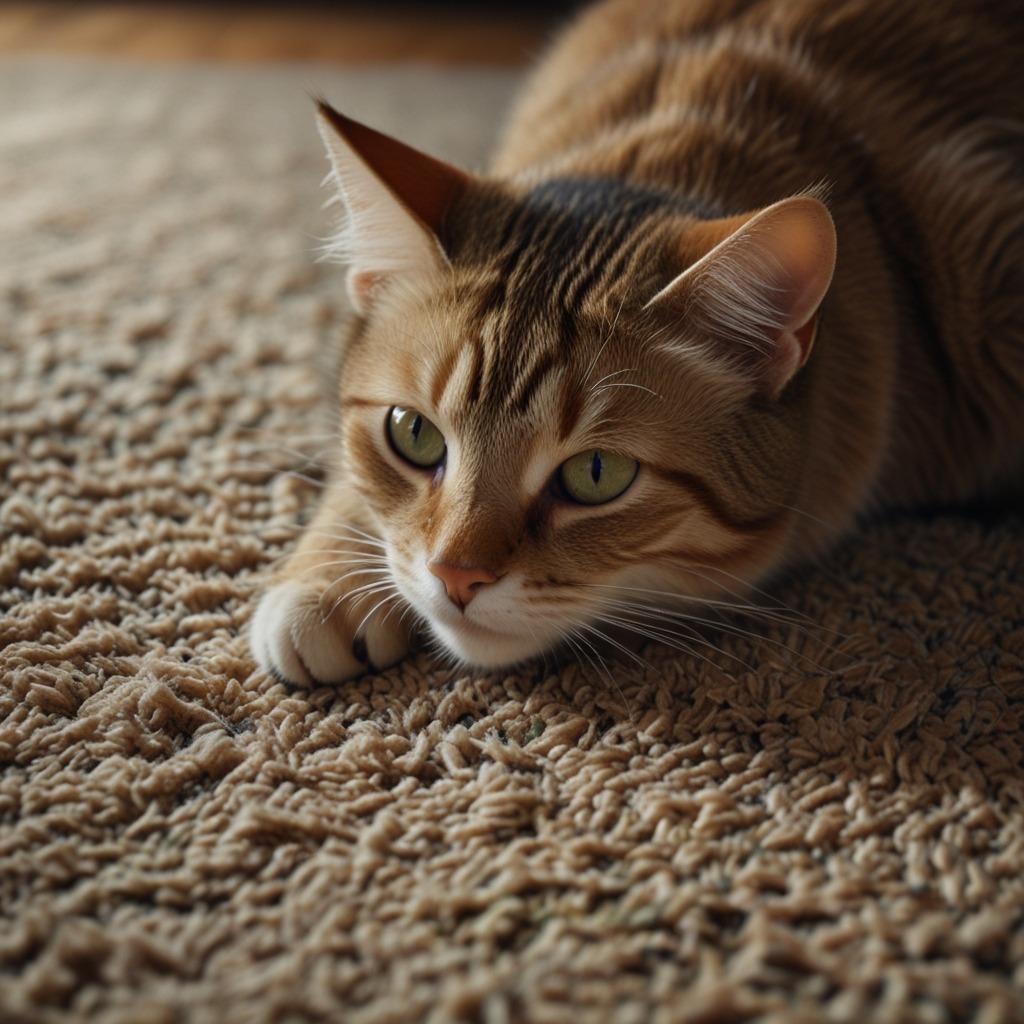
I've talked about tails and ears and eyes and purs separately, but the truth is, you can't read a cat by one body part. you've to look at the entire animal—the tension in the shoulders, the whisker position, the way they're holding their weight. It's a whole-body novel and most of us are only reading the title.
A cat that's standing with an arched back and puffed fur is obviously scared or defensive. That's the Halloween cat again. But a cat that's crouched low to the ground with its legs tucked under, head lower than the shoulders, is a scared cat that's trying to disappear, not fight. They're telling you completely different things. One is "I'll fight you" (bluffing, usually). The other is "please don't hurt me, I'm terrified." You'd handle those two situations in opposite ways: the defensive cat needs space, the terrified cat needs slow, gentle reassurance.
Then there's the "make myself big" display. A cat that wants to intimidate will stand sideways, puff its tail, puff its back fur, and maybe even do a little sideways crab-walk. That's pure threat display, often toward another animal, and it's almost all bluff. I've seen it a hundred times between cats who are just posturing. But a cat that suddenly flops onto its side and presents claws during a fight—that's not playful. That's a defensive roll that means "I'm ready to seriously hurt you if you come closer." Getting down on their side gives them access to all four paws' worth of claws and fangs. That's the last step before a real fight. Separate them before that flop happens if you can.
Whisker position is another one I dismissed forever. Forward-facing whiskers mean curious or engaged. Relaxed, slightly sideways whiskers are the neutral state. Whiskers pulled tight back against the face are a fear or aggression signal. If you're petting a cat and the whiskers slowly start flattening—stop. Something is going wrong. I now use whisker position as my early-warning system. It's the first thing to chsnge, before the ears fully pivot or the tail starts thrashing. It's like the cat's subtle way of saying "this is becoming too much."
I can't talk about whole-body reading without mentioning the time I misread my cat Miso's weight gain as just being "fluffy" and the vet had to call her cllinically obese. That led to an 18-month diet journey that I chronicled in excruciating detail. The reason I'm bringing it up here: her body language changed dramatically once she lost the weight. She moved differently, played more, her tail was up more often. Obesity isn't just a health issue—it literally changes how a cat expresses itself because they can't move freely. I wish I'd noticed sooner that her "laziness" was actually pain from carrying too much weight on little cat joints.
The Day I Stopped Petting Miso's Belly and She Finally Started Sitting on My Lap
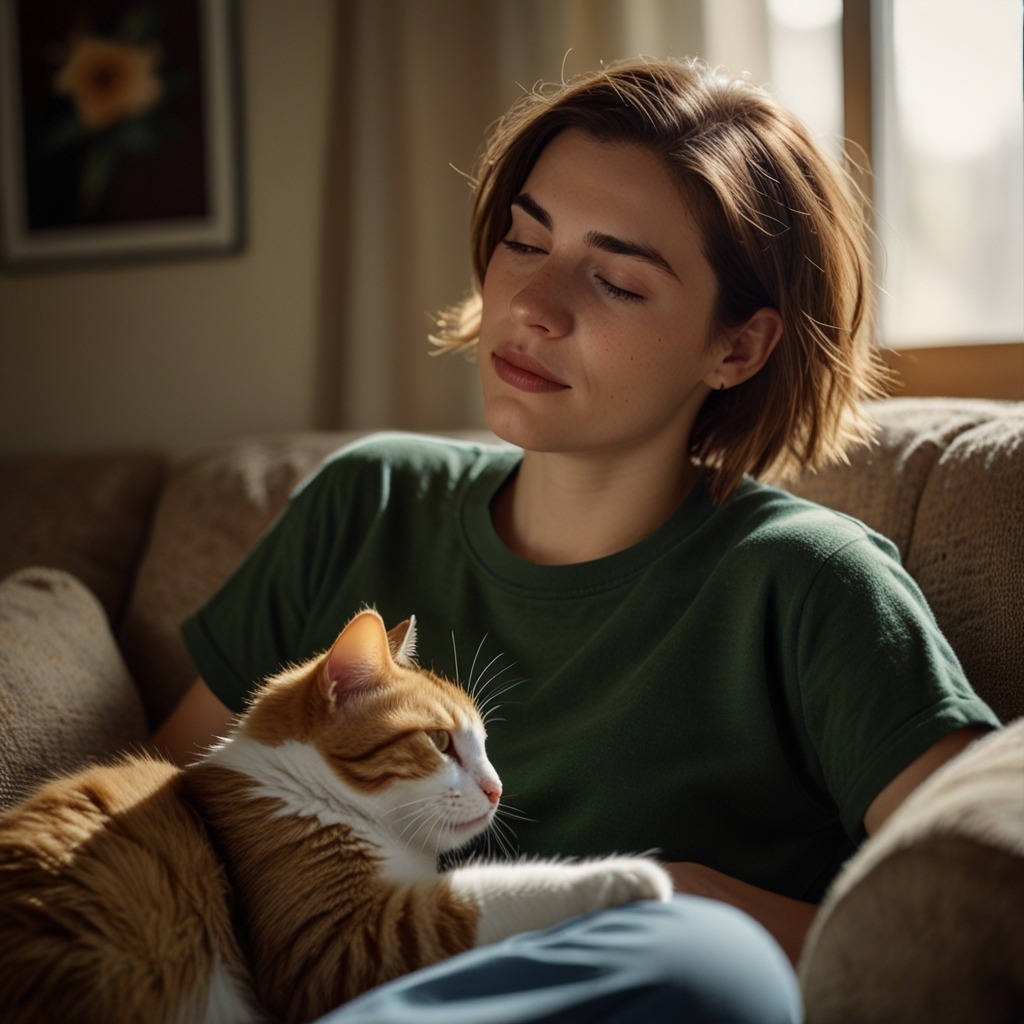
Miso (the same Miso with the three-stroke rule) used to attack my hand every time I touched her belly. For two years, I took it personally. I thought she was just a prickly cat who'd never be affectionate. Then one day, after a particularly bloody incident where she latched onto my wrist and kicked, I finally stopped trying. I just accepted that her belly was off-limits, period. I only petted her chin and cheeks, and only for a few seconds at a time. I'd let her initiate contact. If she walked away, I didn't follow. If she flicked her tail, I stopped immediately. Within a month, she was curling up on my lap every evening. She'd purr, knead my legs, and occasionally let me stroke her back—exactly three strokes, no more. The trust that built from just respecting her signals was incredible. She hadn't hated me. She'd hated being touched in ways that stressed her out. And I'd been the one doing it.
That's the thing I want to leave you with, if you've read this far. You aren't entitled to touch your cat however you want. The relationship is a negotiation, and the cat gets a vote. Every twitch of the tail, every ear rotation, every pupil change is a word in that negotiation. You can ignore the words and get scratched, or you can listen and earn the slow blinks, the head bonks, the lap sits, the purring that actually means happiness. I spent years getting it wrong. I still get it wrong sometimes—last week I ignored a tail thump from a new build and got a warning swipe acros the knuckles. But I'm better than I was. And that's the thing about cats: they're endlessly forgiving if you're willing to learn their language.
Now if you'll excuse me, Jinx is doing the question-mark tail at the treat jar, and I know exactly what that means.