I Let My Long-Haired Cat's Armpit Mat Go for Two Weeks and Ended Up at the Emergency Vet. Here's the Brushing Routine I Wish I'd Started Sooner.
I thought I could skip a few brushing sessions. Then a mat the size of a golf ball sent me to the emergency vet. Here's the real, non-instagram-worthy guide to keeping a long-haired cat mat-free without losing your mind—or your cat's trust.
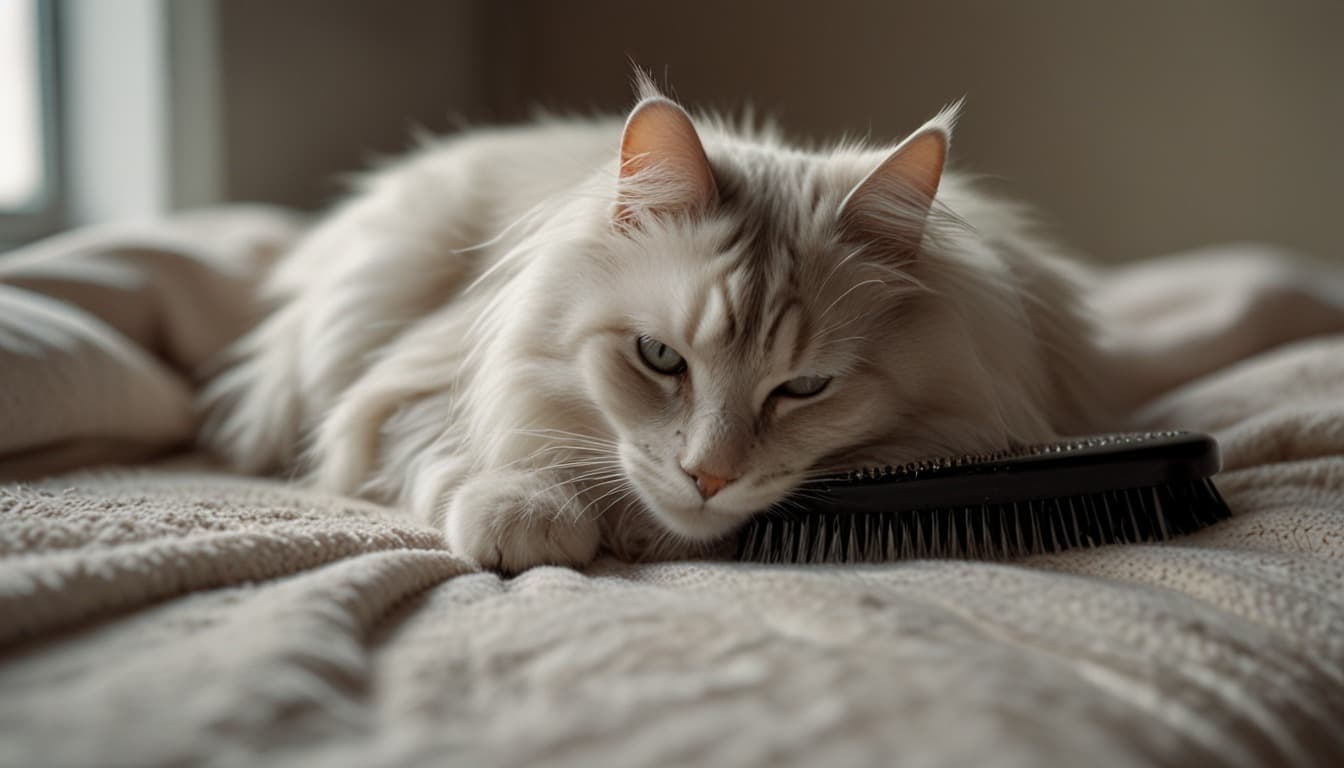
Persimmon looked like a sentient dust bunny the day I brought her home. White fluff with grey patches, a Persian-Angora mix the shelter called “a hot mess with potential.” I'd fostered dozens of cats by that point, but never a long-haired one who actually lived with me. I figured I'd just brush her a couple times a week and she'd be fine. Two weeks later, I found a mat the size of a golf ball in her left armpit, fused to the skin so tight she flinched if I so much as breathed near it.
I did what any idiot with a credit card and a panic disorder does: I tried to cut it out with kitchen scissors. My vet, Dr. Nguyen—she's put up with my stupidity for 11 years now—called me three words I won't repeat when she saw the photos. The mat had pulled the skin up into the tangle. I'd nearly sliced a chunk out of my cat's flank like I was deboning a chhicken. The emergency visit cost me $340 and a lifetime ban from using scissors anywhere near a pet.
Here's the thing nobody tells you avout long-haired cats: their fur isn't some decorative accessory. It's a living, shedding, tangling organism that will absolutely conspire to create felted armor the second you look away. And brushing isn't just about vanity. It's about preventing skin infections, hidden wounds, mobility problems, and—as I learned the expensive way—emergency vet bills that could have bought me a very nice sofa.
I've now spent four years living with a cat whose coat has its own gravitational pull. I've bought every brush on the market, cried into a bag of freeze-dried chicken treats when nothing worked, and eventually figured out a routine that keeps Persimmon mat-free without either of us needing therapy. This isn't a generic “here's how to brush your cat” listicle. This is the stuff I wish someone had told me before I ended up in the parking lot of an emergency vet at 10pm, holding a towel-wrapped cat and my dignity in tatters.
The Time I Found a Mat I Couldn't See and It Was Almost a Disaster
Let me paint you a picture. It was a Tuesday. I'd brushed Persimmon the night before—or so I thught. I'd run a slicker brush over her back, her sides, her fluffy butt, and called it a night. She purred through most of it, except when I hit a little snag on her belly and she gave me a half-hearted warning nip. I filed that away as “sensitive tummy” and went to bed.
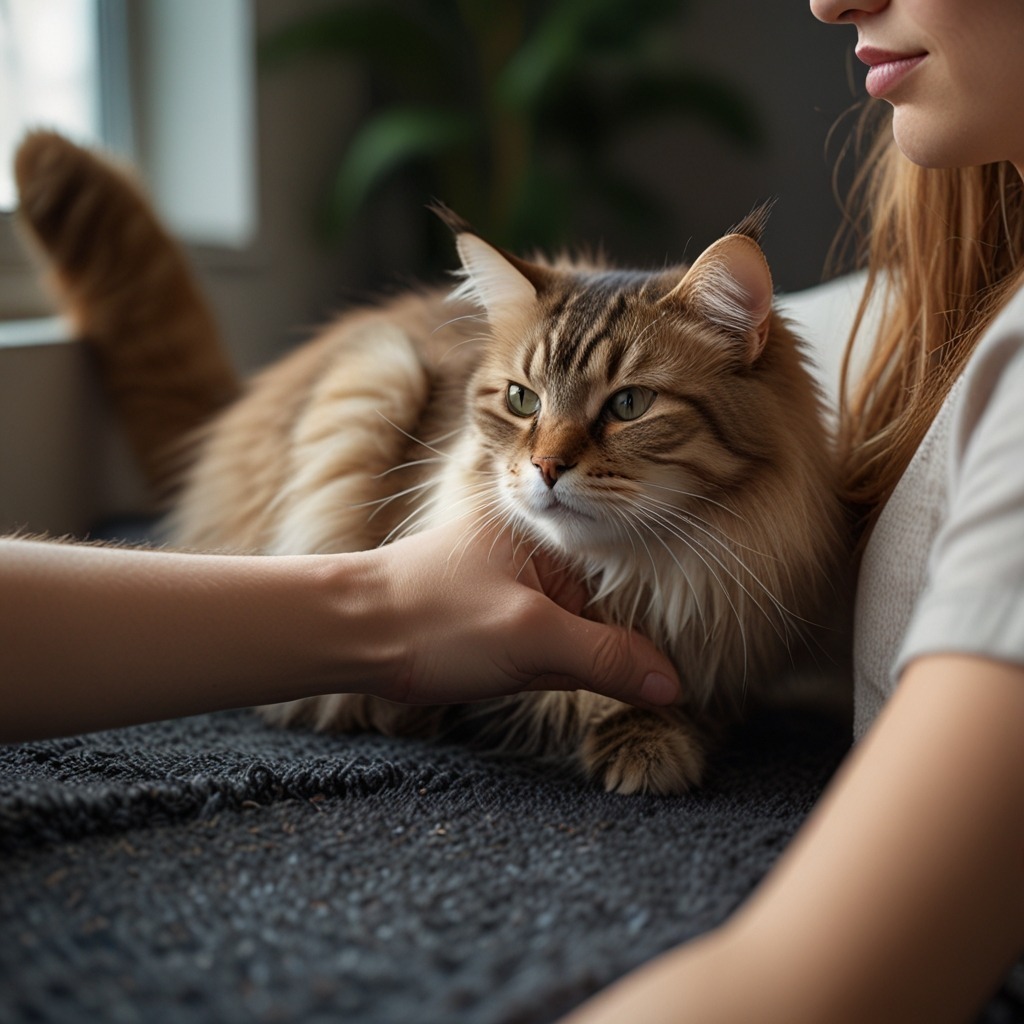
The next morning, she was licking obsessively at her left armpit. Not normal grooming, but that urgent, frantic licking that makes your stomach drop. I flipped her over, parted the fluff, and there it was: a mat about two inches across, felted flat against the skin, so tight I couldn't even get a fnger under the edge. The fur around it was greasy and damp from her saliva. It smelled yeasty. I don't know if you've ever smelled yeast on a cat, but it's the kind of odor that makes you realize something's been quietly rotting on your animal while you scrolled Instagram.
I panicked. I tried to work a comb under the mat. Persimmon screamed—not a hiss, a full-throated, betrayed scream that made my neihbors probably think I was murdering her. I stopped. I called Dr. Nguyen's office, and the front desk person said, and I quote, “don't touch it, don't put anything on it, just bring her in.” Turns out the constant licking had created the perfect warm, moist environment for bacteria, and the mat had pulled the skin so taut it was starting to tear. I'd been brushing her every day and I still missed this.
Why? Because I was brushing like a person who'd only ever owned short-haired cats. Surface-level, top-down, completely ignoring the undercoat. Long-haired cats have this dense, woolly layer close to the skin that can mat even if the topcoat looks pristine. You can run a brush over the top all day and nevver touch the stuff that's actually tangling. I didn't know that. I do now. And I'll never forget the sight of Persimmon's shaved armpit with angry red skin and the little bald patch that took six months to grow back.
Why Long-Haired Cats Mat Like It's Their Job
Mats aren't just knots. They're compressed, tangled clumps of dead and living fur that form when shed hairs get trapped in the coat instead of fslling out. Short-haired cats shed and the hair just… drifts away onto your black pants. Long-haired cats shed and the hairs get woven into the existing coat, especially if there's any friction or moisture. Every time the cat moves—stretching, scratching, grooming—those loose hairs twist and tighten until you've essentially got a dreadlock. And unlike a trendy human dreadlock, you can't just leave it. It'll keep tightening, pulling on the skin, restricting movement, and eventually causing sores underneath.
I used to think mats only happened on neglected animals. That's what the internet told me. So when I found that first one on Persimmon, I felt like a monster. But here's the reality: even a well-groomed long-haired cat can develop a mat in two days. I've seen it happen with build cats who arrived perfectly brushed and then, after a 48-hour car ride to my house, had new mats behind their ears from the stress of travel and the pressure of the carrier. Some cats mat faster than others. Persians? Coonstant vigilance. Maine Coons? Their belly fur is basically designed by nature to tangle. Ragdolls? Deceptively fluffy but their armpits are a nightmare.
Friction is the enemy. Under the chin, behind the ears, in the armpits, between the back legs, along the belly where the cat's own body parts rub against each other. I once fostered a Himalayan who'd mat so aggressively behind his front legs that the shelter actually had a note in his file: “SHAVE PITS MONTHLY.” The vet techs called him “the cashmere sweater.” He wasn't neglected; he just had a coat texture that practically self-felted. I learned more about cat fur from that one build than I did in six years of working at a shelter.
Then there's the shedding cycle. Cats shed more in spring and fall, but indoor cats under artificial light sometimes shed year-round. That dead fur has to go somewhere, and if you're not helping it exit the premises, it'll stay right where it's and make friends with its neighbors. This is also why hairballs are such a problem for long-haired cats. They groom, they ingest the loose hair, and if there's enough of it, you're cleaning up a vile little tube of fur off your rug at 3am. I spent $340 once thinking my cat had a respiratory blockage and it was just a hairball—read that whole saga if you want the details, but the short version is: brushing prevents that nightmare too.
The 14 Brushes I Bought and the One That Actually Works
I've a drawer in my kitchen dedicated to grooming tools that turned out to be useless. Slicker brushes with bent pins. Slicker brushes with straight pins. A “self-cleaning” slicker that jammed every third stroke. A Furminator that stripped so much undercoat Persimmon looked patchy and then I learned you're not supposed to use those on cats with delicate skin. A rubber curry brush that just kind of slid over the topcoat and achieved nothing. A boar bristle brush that was probably lovely for my own hair but did jack for a long-haired cat. A metal comb with rotating teeth that the internet swore by, but Persimmon swatted it out of my hand every single time. I spent close to $200 before I admitted defeat and actually asked a professional groomer what to use.
Here's what she told me: for a long-haired cat, you need exactly two thnigs. A wide-toothed metal comb with long, rounded tines—the kind that can get down to the skin without scraping it—and a slicker brush with flexible, fine pins that can gently card through the topcoat without pulling. That's it. The comb does the real work: it parts the fur, detects tangles before they become mats, and teases out small snags. The slicker is just for finishing and for the areas where the fur is too dense to comb easily. Everything else in my drawer was either a gimmick or a tool designed for dogs with much tougher skin.
I know this because I ended up using that same two-tool setup on my build poodle after the sedation mat disaster, and it changed everything—I wrote about that whole mess in another post, but the takeaway was the same: you don't need a million tools, you need the right two and enough patience to use them correcty. The comb I use now is a simple greyhound-style comb I bought for $12 at a cat show. The slicker is a small, soft-pin one made for kittens. It's the least fancy thing in my house, and it's the only brush Persimmon doesn't run from.
How to Brush a Cat Who'd Rather Eat Your Face
Okay, so you've got the right tools. Great. Your cat doesn't care. Your cat sees the brush and disappears under the bed like a ghost. I've been there. Most cats don't naturally enjoy being brushed because the sensation is weird—a bunch of tiny metal needles dragging through their coat—and if you've ever accidentally snagged a tangle and pulled, they now associate that brush with pain. You can't explain to a cat that you're helping. you've to convince them through patience and bribery, which is basically the foundation of every relationship I've ever had with an animal.
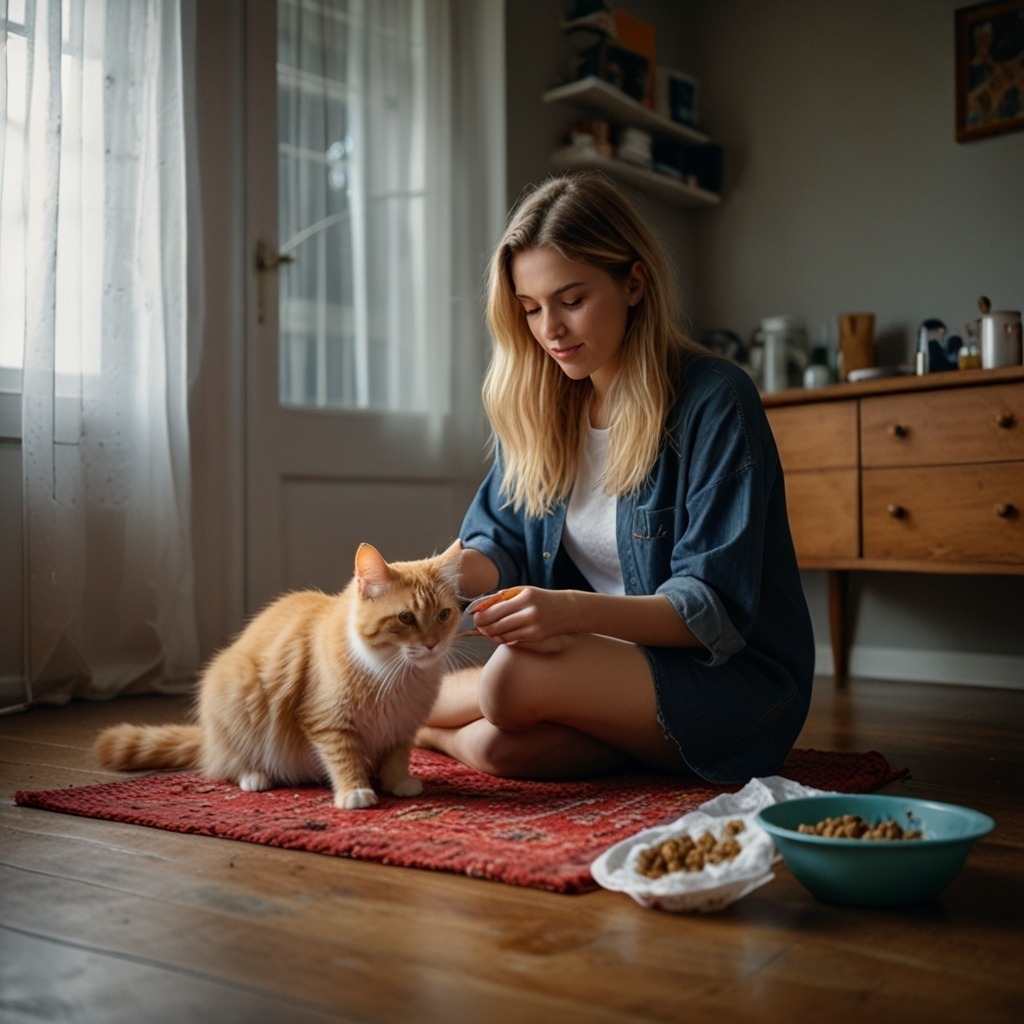
The single most important thing I learned is to start when the cat is already relaxed. Not wound up, not hungry, not in the middle of a zoomies episode. Find them loafed on the couch, half asleep, and just… sit down next to them with the brush hidden. Pet them with your hands first. Scratch the spot behind their ears that makes them melt. Then, pick up the brush but don't use it yet. Let them sniff it. Treat. Let them rub their face on it. Treat. Do this for a week if you've to. I once spent ten days just leaving Persimmon's comb next to her favorite napping spot so she'd stop regarding it as a weapon.
When you do finally brush, start with one stroke. On the back, where it's least sensitive. Stroke, treat, walk away. That's the whole session. If you push for five strokes and they tense up, you've blown it and you just reinforced that brushing is unpleasant. I made that mistake with my first build cat and it took months to undo. There's a whole post on my site about switching a cat's behavior from the couch to a scratching post that uses the exact same logic—it's not about the tool, it's about the slow, boring, repetitive exposure that makes the new thing normal.
Treat timing matters more than you think. The treat has to come within one second of the brush stroke, while the cat is still processing the sensation. If you stroke, then fumble for the treat bag for five seconds, the cat's brain doesn't connect the two. I use freeze-dried chicken crumbled into tiny pieces so I can deliver them fast. I keep a little bowl next to wherever I'm brushing so I don't have to move. This sounds obsessive, I know, but I'm the person who once threw a pair of nail clippers at a wall because my dog was terrified, so I've learned that precision timing is the difference between a cat that tolerates grooming and one that hides under the couch for an hour.
Brushing an armpit without starting a war
The armpit is the worst spot. The skin is thin, it's ticklish, and most cats have a visceral reaction to being touched there. I approach it like diffusing a bomb. I wait until Persimmon is on her side, purring, eyes half closed. I brush her back and sides for a few minutes first so she's in the zone. Then I gently lift the front leg—like I'm just admiring her—and use the comb to part the fur one tiny section at a time. If I feel resistance, I don't pull. I hold the fur at the base, close to the skin, so if I've to work a tangle, the pulling sensation is on my fingers, not her skin. That's a trick I learned from a groomer who specializes in cats with behavioral issues, and it honestly should be taught in every pet store.
What if your cat just hates it no matter what?
Some cats will never enjoy brushing, and that's okay. The goal isn't to make them purr through the whole thing; it's to get the job done without stress or injury. For those cats, I break brushing into micro-sessions. One armpit today. The other armpit tomorrow. A section of belly this morning. The back this afternoon. It might take four days to brush the whole cat, but mats don't care about schedules. If you're getting to every area within a few days, you're ahead of the game.
I've also had success with a technique I call “bribery plus distraction.” I smear a tiny bit of wet food on a lick mat and stick it to the bathroom mirror. While the cat is licking, I brush. They're too busy with the delicious thing to care about the brush. This is the only way I can brush Persimmon's belly without her deploying all four paws and her teeth. It's undignified for both of us, but it works. I've got an entire post about how my 3am yowler finally stopped screaming and the principle is identical: figure out what the cat wants more than they want to avoid the thing, and use it ruthlessly.
The Detangling Spray I Swore I'd Never Use (And Why I Was Dead Wrong)
For years I was a purist. Water and elbow grease, that's all you need, I said. Detangling sprays are just overpriced water with silicone, I said. Then I spent 45 minutes trying to work a mat out of Persimmon's tail with nothing but a comb and my own stubbornness, and by the end we were both panting and I had a clump of fur in my hand and a very angry cat. A groomer friend saw my Instagram story—a photo of the furball captioned “this is fine”—and DMed me immediately: “For the love of god buy a spray.”
She recommended a cornstarch-based grooming powder for dry mats and a leave-in conditioning spray for light tangles. The powder works by absorbing the oils that make mats slippery and compacted, giving the comb something to grip. The spray lubricates the hair shaft so tangles can be teased apart without snapping. I tried both. The powder felt weird and my cat sneezed, but it worked. The spray made combing through a mildly knotted area feel like running a knife through butter. I felt like an idiot for waiting so long. I now keep a bottle in every room where Persimmon naps, because mats love to form when you're not looking.
That said, you can't spray your way out of a true pelting situation. Some mats are beyond saving, and if the skin is involved, don't mess around. I've a firm rule now: if a mat is larger than my thumb, or if it's pulling the skin tight, or if there's any sign of redness or soreness, I stop and call the vet or a professional groomer. I learned this from the poodle sedation incident—sometimes the right move is to shave it and start over, not to torture the animal trying to save fur that's going to fall out anyway.
What I Do When I Find a Mat That Can't Be Brushed Out
This is going to be short because there's exactly one correct answer: you shave it. Low and slow, with a quiet electric clipper and a surgical-grade 10 blade that won't nick the skin. I don't use scissors. Ever. I don't care what YouTube says. The skin stretches upward into the mat, and you can't see where fur ends and flesh begins. I almost made that mistake once and I'll never make it again.
My process now: I put the cat on a towel, I've another person hold them—gently but firmly, like a hug that says “I love you, you're going to hate this, but you'll forgive me”—and I use the clippers around the edges of the mat, in the direction of hair growth. I work slowly, talking the whole time in a stupid sing-song voice that probably makes me sound unhinged. Once the mat is out, I check the skin. If it's angry, I dab on a little antibiotic ointment (from the vet, not my own medicine cabinet, because cats lick everything). The bald spot will look ridiculous. That's fine. It'll grow back. The mat would have only gotten worse.
I used to agonize over every shaved patch, convinced the whole world would judge me for having a cat that looked like she'd been attacked by a lawnmower. Now I take a photo, send it to my friends, and caption it “fashion.” The only real concern is sunburn if you"ve a white cat that goes outdoors, and honestly, if your long-haired cat is outside unsupervised, you've got bigger problems.
The Whole “Just Shave It” Myth and Why Your Cat's Skin Will Hate You
Every summer, the internet tells cat owners to shave their long-haired cats. “It keeps them cool!” “No more mats!” “It's so cute!” And every summer, I see cats with sunburned skin, ingrown hairs, and a coat that grows back weird and patchy. Cat skin isn't meant to be exposed to the elements. Their fur insulates them against heat just as much as cold—t's a complex system of air pockets and guard hairs that regulates body temperature. Shave it all off and you've removed their built-in climate control.
I learned this the hard way from a friend's cat, a beautiful black Persian who spent her summers as a naked mole rat on the advice of a pet store groomer. By year three, her coat grew back in coarse, uneven clumps that matted worse than before. She also got a skin infection from clipper burn that took months to clear up. I'm not saying you should never shave a long-haired cat—if the matting is severe, a veterinary shave-down under sedation is someitmes the kindest option—but shaving as a “preventative” is like cutting off your foot because you might stub your toe. Just brush the cat.
There's a particular kind of weeper I get in my DMs every spring: someone whose cat has a single mat and they're devastated because a groomer told them the only solution is a full-body shave. Don't let them do it. A small mat can be spot-shaved without touching the rest of the coat. Find a groomer who works exclusively with cats and has the credentials to prove it, or ask your vet to do it. And if anyone tries to sell you on a “lion cut” without first assessing your cat's coat and lifestyle, run. I've written about my build poodle's traumatic shave-down if you need proof that aggressive grooming can backfire.
My Actual Weekly Brushing Routine (That Takes 10 Minutes a Day)
After four years of trial and error, here's what I do. Every evening, after dinner and before I settle in to watch TV, I spend roughly ten minutes on Persimmon's coat. I don't schedule it, because cats can smell a schedule and will immediately become uncooperative. I just do it when she's relaxed, which is usually around 8pm when she's full of wet food and sprawled on the ottoman like a tiny, hairy queen.
I start with the comb. I part the fur on her back, checking down to the skin. I lift each front leg and gently comb the armpit area—just a few strokes on each side. I move to her chest, where the fur is short but dense, and I use the comb to make sure there's no debris or tangles. Then her belly, which she still hates, so I do the lick mat trick. I spread a dab of chicken baby food on a sikicone mat, stick it to the floor, and comb her underside while she's distracted. This takes two minutes max. If she's had enough, I stop. The whole point is that she never gets to the point of panic.
After the comb, I use the slicker brush lightly over her back and sides to remove any loose hair. I don't press hard—long-haired cat skin is like tissue paper, and aggressive brushing can cause brush burn, which leads to more grooming, which leads to more mats. The cycle of doom, I call it. I finish with a few strokes of my bare hand to smooth the fur and distribute natural oils. Then I give her a treat and walk away. That's it. Ten minutes, maybe fifteen if I found a tangle. But the key is frequency. I do this almost every day, and because of that, I rarely find mats anymore. If I miss a day, no big deal. If I miss three, I start checking her armpits obsessively.
I also use a little rubber brush in the bath—yes, I bathe my long-hairrd cat occasionally, which is a whole other nightmare—but for daily maintenance, it's just the comb and the slicker. I wash the tools once a week with soap and water because dead skin cells and oil build-up make them less effective and a little gross. The comb has lasted four years and shows no signs of wearing out. The slicker I replace every year because the pins get bent if I accidentally drop it.
What About Shedding Seasons and Hormonal Changes?
In the spring, Persimmon blows her coat like she's trying to build a second cat out of loose fluff. I've to brush twice as often and I might use a de-shedding tool—but the gentle one, not the Furminator, which I swear near a cat will take off the top layer of skin along with the undercoat. I'll link to my hairball prevention post again because during shedding season, the amount of fur they ingest is obscene. You'll find hairballs on your floor that look like small rodents. It's horrifying. Regular brushing reduces that significantly, but I also add a tiny dab of a hairball gel to her paw once a week, which she hates but tolerates.
Spayed and neutered cats sometimes develop a different coat texture—fluffier, softer, more prone to matting—because the hormones that used to regulate oil prouction are gone. I noticed this with a build cat who was spayed later in life. Her coat turned into cotton candy overnight and I had to completely overhaul her grooming schedule. If your long-haired cat's fur suddenly feels different, it's not your imagination, and you might need to step up the brushing or switch to a different tool.
Older cats with arthritis often stop grooming their harder-to-reach spots, leadign to mats along the back and hips. I had a senior build, a 16-year-old Maine Coon mix, who couldn't reach her lower back anymore. She needed daily help and I used a wide-toothed comb held flat against her body to avoid pressing on her sore joints. That cat taught me more about compassion and patience than any human ever did. She passed two years ago, and I still think about her when I'm rushing through a brushing session and Persimmon gives me a dirty look.
When Persimmon Finally Stopepd Running When She Heard the Drawer Open
It took a full year. A year of daily, low-pressure sessions. A year of treats and lick mats and stopping the instant she tensed up. A year of me learning to read her body language—the subtle ear rotation that meant “I'm annoyed,” the tail twitch that preceded a swipe, the slow blink that said “I trust you, keep going.” But one evening, I opened the grooming drawer and instead of bolting, she stretched, yawned, and rolled onto her side, exposing her belly. I nearly cried. She didn't love it, but she'd accepted it as part of the routine, like cleaning the litter box or filling the water bowl.
That's what I want for you. Not some magical bond where your cat begs to be brushed—that's a YouTube fantasy. Just a quiet, boring, manageable routine that keeps your cat healthy and your floors mat-free. If you're starting from zero, with a cat who panics at the sight of a comb, start smaller than you think you need to. One stroke. One treat. Tomorrow, one stroke again. A week from now, two strokes. If you rush it, you'll both be miserable and the mats will win. Take it from someone who once had to sit in an emergency vet's waiting room while her cat's armpit was shaved and disinfected: slow is fast. Slow is the only way.
Now if you'll excuse me, Persimmon is on the ottoman and it's 8pm. Time to go brush a cat.