I Let My Kitten Bite My Hands for 3 Weeks Because I Thought It Was Cute. Then She Became a Terror.
I've had fosters that turned playtime into a blood sport. Here's what I learned the hard way about stopping cat biting — no spray bottles, no yelling, just a really long stick with feathers on it.
The day my vet askde if I'd been cleaning fish with my bare hands
Dr. Nguyen — she's put up with my panic calls for 11 years, through three dogs and a divorce — looked at my forearms and said, dead serious, "Sarah, tell me you didn't try to bathe a feral cat in a sink." I was wearing eight band-aids. I'd stopped counting the scabs. My left hand looked like I'd stuck it in a paper shredder, and the worst part? This was from a 3.2-pound build kitten named Miso who'd been living in my spare bathroom for ten days.
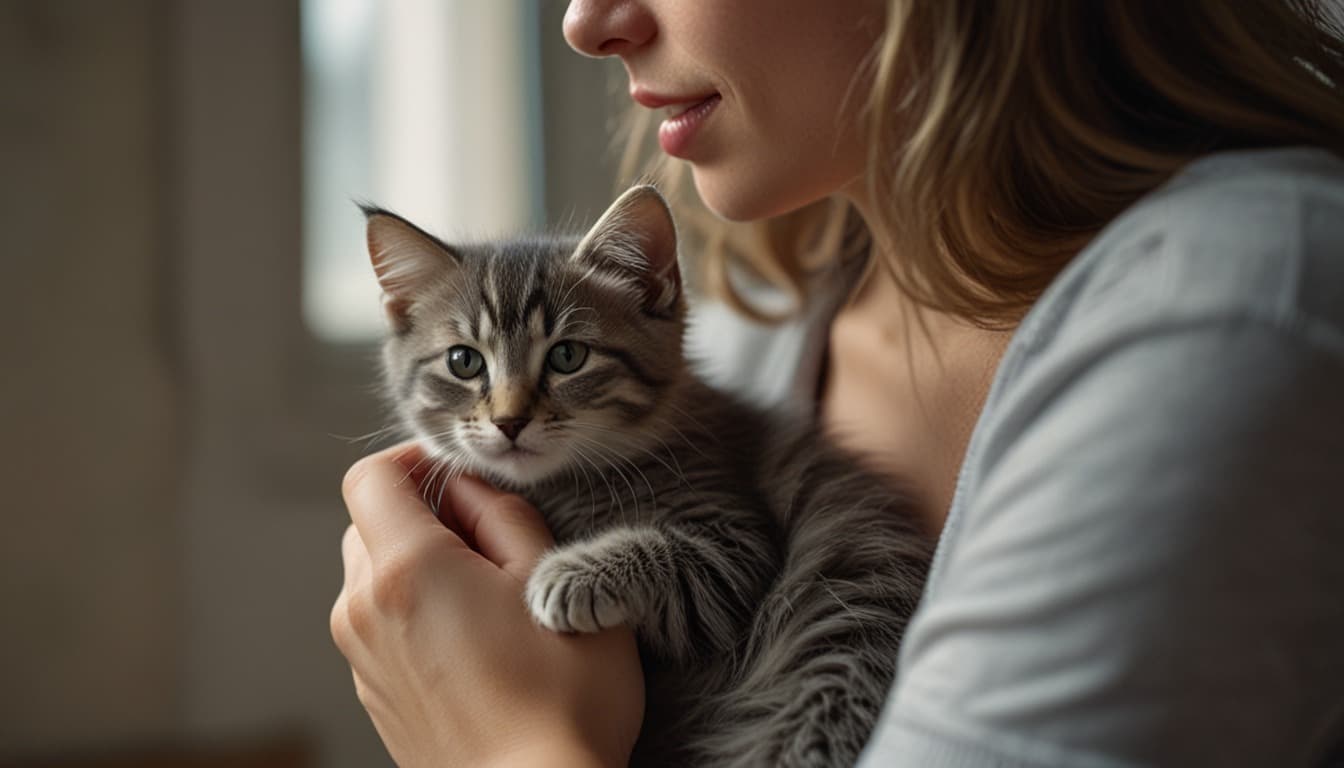
She was adorable. Fluffy gray with white socks, giant green eyes, and a purr like a tiny motorboat. Seh'd also launched herself at my face twice, latched onto my ankle like a gator while I was brushing my teeth, and once — I swear this is true — bit my eyelid. Not hard enough to draw blood there, thank god, but enough that I yelped and scared my dog, who knocked over a lamp. It was 6 a.m.
I've fostered 40+ cats. I've been biitten more times than I can count. I've had to explain the scratches on my arms to dates, coworkers, and random strangers at the grocery store. I wrote abot my dog turning my arms into hamburger meat and how I finally stopped that particular bloodshed, but cats? Cats are a whole different level of chaos. Their teeth are like little needles and they don't telegraph the way dogs do. A dog will growl or stiffen. A cat will be purring one second and attached to your wrist the next, and you're left standing thrre wondering what the heck just happened.
If you're googling "how to stop a cat from biting when playing" at 11 p.m. with your hand wrapped in paper towels, I see you. I've been you. And the standard advice — yelp like a littermate, redirect with a toy, never use your hands — is fine, I guess, but it misses so much of the real story. I'm going to tell you what actually worked, what made things worse, and why I spent three weeks blaming a kitten for something that was 90% my fault.
Your cat isn't being mean — they're being a predator in a tiny body
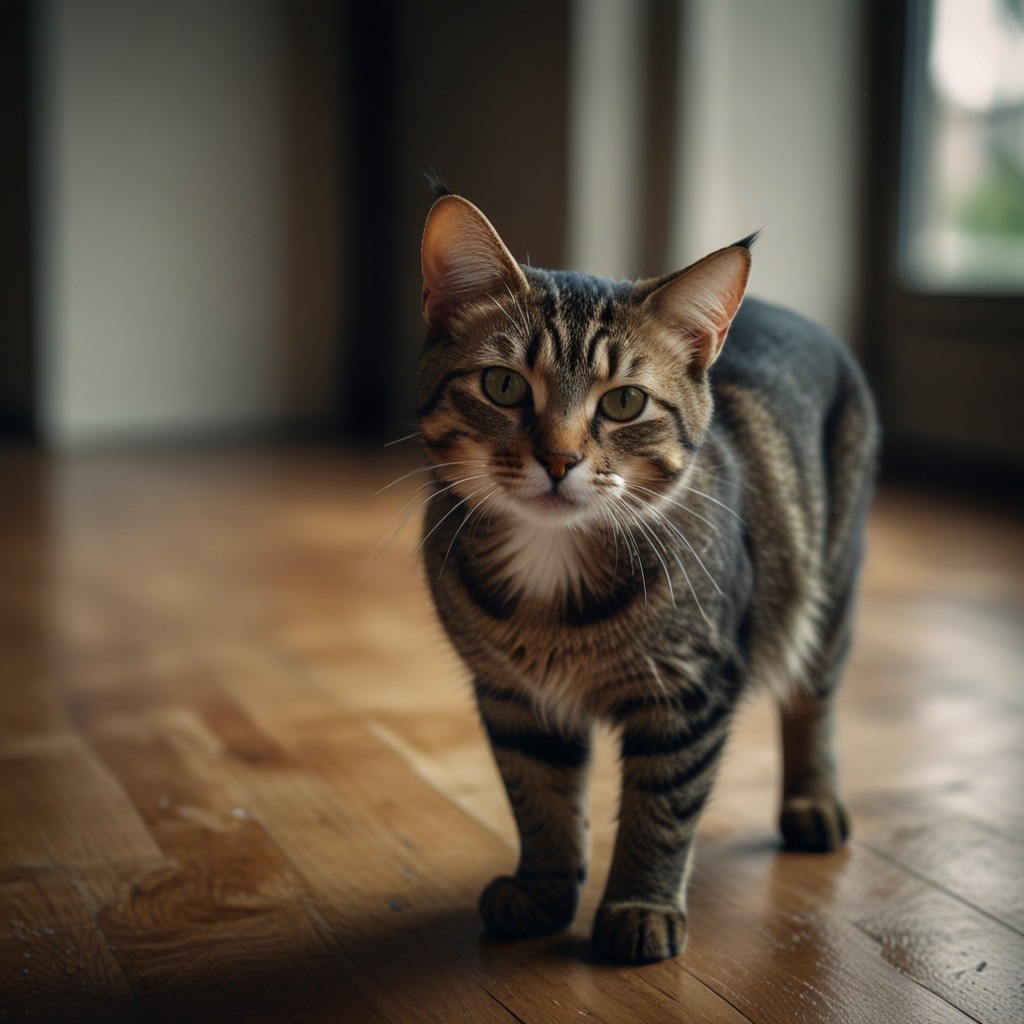
Here's the thing that took me way too long to accept: play biting isn't aggression. It isn't even "naughty." Your cat is doing exactly what millions of years of evolution programmed them to do. They're practicing the predator sequence — stalk, chase, pounce, grab, bite, kill. The only problem is the "prey" in this scenario is your hand, your foot moving under the blanket, or that dangly hoodie string you thought was totally safe.
Kittens especially bite because they're learning. In a litter, if a kitten bites too hard, the sibling yelps and stops playing. The biter learns bite inhibition. But a lot of bottle babies or singletons — like Miso, who was found alone at 4 weeks — missed those lessons. She never had a littermate to teach her that chomping on a face means playtime ends. So when she came to me, she treated my fingers like she'd treat another kitten's scruff: way, way too hard.
But even adult cats bite during play if they're overstimulated. And overstimulation is sneaky. It looks like they're hsving fun, and suddenly their pupils go huge, their ears swivel, their tail starts that jerky twitch, and WHAM. You're bleeding. Cats hit a neurological tipping point where the prey instinct overwhelms everything else. They literally can't help it. The circuit in their brain that says "this is my human, don't kill" just short-circuits.
I remember watching a Jackson Galaxy video years ago where he said something like "play with your cat until they're tired, not until they're wired." I nodded along like I understood. I didn't understand. I'd keep going because Miso was leaping and doing somersaults and it was so freaking cute, and I'd think "aww she's having a blast," and then she'd bite the web between my fingers and I'd be dripping blood on the carpet. Again.
So rule number one, which I'll say a dozen times in this post: learn to read the signs of an impending bite, and stop the game before it happens. I'll give you the checklist in a bit. But first, let me tell you all the things I tried that absolutely, miserably failed.
The crap that didn't work (and made everything worse)
Letting her chew on my hands because "she'll grow out of it"
I figured with Miso, since she was so small, I'd let her gnaw a little. You know, just a gentle mouthing. She'd nibble my knuckles while purring and I'd thik it was bonding. I'm an idiot. What I was actually doing was teaching her that human hands are chew toys. That didn't magically disappear at six months. It intensified. By the time she was 4 months old, she'd launch full-on ambush attacks on my hands while I was typing. I'd be trying to answer an email and suddenly have a kitten attached to my forearm like a furry bracelet. Not cute. Painful.
I hear people say "my cat nibbles but never breaks skin" and I want to scream gently that it's still a bad habit. One day they'll be startled or overarouseed and that nibble turns into a puncture. Just like the cats who hated my first scratching post taught me about proper outlets, I leaarned that teeth need appropriate targets too. Hands aren't targets. Period.
The spray bottle disaster
I'll admit it: in my early fostering days, I kept a spray bottle on the counter. I thought it was a harmless deterrent. One squirt when the cat bit, and she'd associate biting with an unpleasant sensation. What actually happened: Miso became terrified of me whenever I had the bottle nearby. She'd flich if I reached for a water glass. She started biting more aggressively because she was scared, and she'd hide under the bed for hours after a play session. I'd broken her trust. It took weeks of just sitting on the floor and tossing treats to rebuild any kind of bond.
Punishment doesn't work with cats. They don't connect the squirt to the bite 10 seconds ago — they connect it to YOU. You become the scary thing. And a scared cat bites more, not less. I threw the spray btotle in the trash and haven't owned one since. That was 2016.
Yelling and time-outs that confused everyone
I tried the "firm NO" thing too. I'd yelp "OUCH" and put Miso in the bathroom for a "time-out." She had no idea what was happening. She'd just meow at the door, and when I let her out, she'd be extra clingy and then bite me again ten minutes later because she was so worked up. Cats don't understand time-outs the way dogs sometimes can. To her, I just randomly yelled and then shut her in a room. That didn't teach bite inhibition. That taught her I was unpredictable.
What I should have done — and eventually did — was calmly disengage and leave the room myself. More on that later.
A totally unrelated story about a dog and a piranha (stay with me)
I once fostered a young pit mix with the mouth of a small alligator. He'd grab my sleeve and tug so hard I'd lose my balance, and I sat on a chair in the backyard and cried one afternoon because I thought I'd done something wrong. I've got a whole post about that nightmare and how I finally realized that play biting in dogs is also a natural behavior that needs redirection, not punishment. With the dog, I learned to shove a toy in his mouth the SECOND he opened it. With cats, it's similar but trickier because they don't fetch the same way and they're faster and more unpredictable. But the principle is the exact same: you're not suppressing the instinct, you're rerouting it to something that isn't attached to your body.
I bring this up because I was so deep in cat-land that I forgot dogs bite too, and the solution isn't species-specific — it's about understanding what the animal needs to do and giving them a safe way to do it. For cats, that means prey-like toys they can chomp on, drag off, and dsembowel with their back feet. Not your hands, not your feet, not your favorite sweater. A toy they can "kill."
The one thing that actually matters: reading the tail, not the teeth
Alright, here's the practical part, finally. Before I ever solved Miso's biting, I had to get good at one skill: predciting the bite before it happened. I started keeping a little notebook next to her play area and would write down exactly what happened 5 seconds before a bite. After about 30 observations, a pattern emerged that I'm embarrassed I didn't see sooner.
The "I'm about to murder your ankle" checklist
- Tail goes from slow swishing to fast twitching — like a rattlesnake with ADHD.
- Ears rotate backward, even slightly. The "airplane ears" are a loud warning.
- Pupils dilate so much her eyes look black. This happens fast.
- Her body gets low to the ground, belly almost touching the floor, and she freezes for a split second before the pounce.
- If you're holding a wand toy, she stops chasing it and stares at your hand instead. That's the switch — she's re-targeted from prey to you.
Once I knew these signs, I could stop the game before she bit 90% of the time. I'd see that tail twitch, drop the toy, sand up, and walk away, no drama. The first week I did this, Miso was visibly confused. She'd sit there looking around like "wait, where did the fun go?" Eventually she connected the dots: when I do THOSE things, the human leaves. So maybe I shouldn't do those things if I want the human to stay and keep playing.
This is called negative punishment in behavior terms — removing something the cat wants (your attention, the game) when the unwanted behavior occurs. It's way more effective than positive punishment (adding something aversive). And it doesn't break trust. You're just setting a boundary they can actually understand.
How I finally got Miso to stop drawing blood (and start dropping toys at my feet)
This section is the meat of it. The stuff that, after months of trial and error, turned my tiny terror into a cat who plays without leaving me looking like I lost a knife fight.
The wand toy that saved my hands (and my sanity)
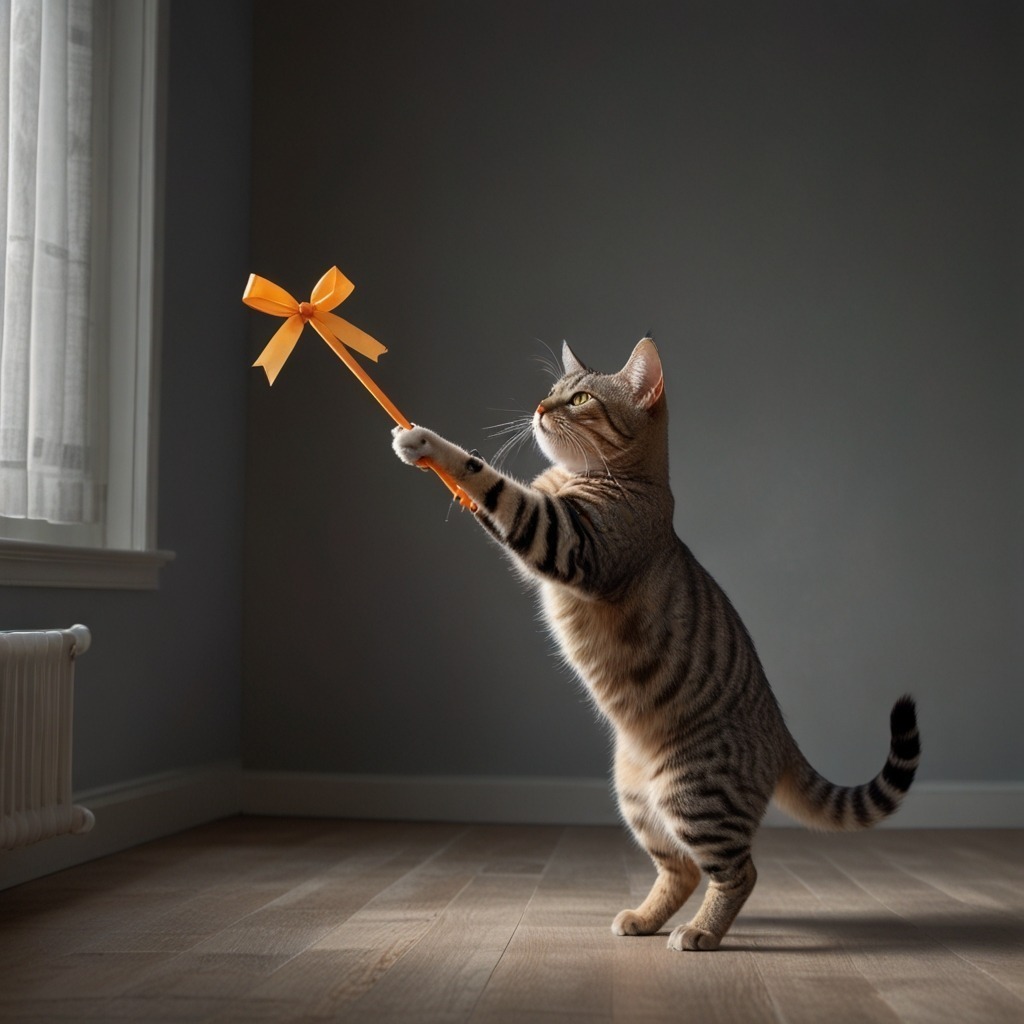
I've tested a lot of wand toys. The kind with the string and the feather on the end. The problem with most is the string is too sort and you've to get your hand close to the cat's face to make the toy move enticingly. I eventually found one with a five-foot pole and a long, durable ribbon — it's basically a fishing rod for cats. Miso could do backflips, pounce, and kill the thing at the end, and my hand was three feet away the whole time. big deal.
This is the toy that taught her that biting happens at the end of the stick, not at the end of my arm. I'm not going to say it's a magic cure because you still need to do the behavior reading, but having a long-distance toy eliminates a huge percentage of accidental hand strikkes. I'd also rotate toys — crinkle balls, kicker toys she could bunny-kick, a small stuffed mouse filled with catnip. The key was never, ever, not once, wiggling those toys with my bare fingers. I used a stick, a string, or tossed them across the room. My hands were boring. Boredom makes cats invent their own games, and those games usually involve teeth. With Miso, giving her a proper outlet for those bitey instincts meant she didn't have to manufacture one out of my ankles.
Stopping the game BEFORE the ears go flat
I set a timer for two minutes. I know, I know, but hear me out. I'd play intensely for two minutes, then I'd stop. Wand down, completely still. Miso would catch her breath, her pupils would shrink back down, and then we'd resume for another two minutes. Those breaks kept her below the overstimulation thrrshold. If she ever bit the toy and wouldn't let go, I'd just let her have it — let her parade around with her "kill," tail high, triumphant. That's the whole point. She needed to feel successful. Then we'd do another round.
Eventually I could stretch the sessions longer as her tolerance improved, but early on, short bursts were crucial. I'd rather have four five-minute sessions spread throughout the day than one twenty-minute frenzy that ended in blood.
The "ouch" method that worked on a 5-week-old but backfired on an adult
With young kittens who were in the litter-learning stage, I had success with the classic high-pitched "EEEE" and immediate freeze. It mimics a littermate's yelp, and many kittens will let go and look startled. But with Miso, who was already an adolesscent when I got her, the high-pitched sound just riled her up more. She'd interpret it as prey noise and clamp down harder. So I stopped. If she bit, I became a statue, no sound, no eye contact, and then I slowly removed myself from the room. Not dramatic, not punitive. Just "bye." I'd close the door and give myself a minute. She learned that biting made the human vanish, and vanishing humans are boring.
Why I stopped petting during play entirely
This one was hard because I love petting cats while they play. But I realized that petting adds sensory input to an already overloading system. A cat who's in hunting mode might be fine with a toy bouncing around but the second you touch their back, they redirect the bite reflex onto your hand because suddenly there's a new stimulus. I started keeping my hands completely still when near her during play — no reaching out to stroke her, no tickling her belly. I was just the operator of the magical prey on a string. Nothing more. Over time, I could reintroduce gentle pets after the session was fully over and she'd eaten a treat, but never during.
The two-minute rule that changed everything
If you remember nothing else from this absurdly long post, remember this: every play session ends on YOUR terms, not when the cat finally bites you out of overstimulation. I'd stop the game while Miso was still engaged but not frantic, toss her a small treat or a piece of kibble to simulate the "eating the kill" ending, and walk away. She'd groom herself and take a nap. Within a week, the manic bitey energy dropped by maybe 70%. She was satisfied. She had completed the stalk-chase-kill-eat sequence, and her little predator brain was content.
Failing to complete the sequence is what makes cats nuts. If they chase and chase and never catch anything, they stay in that heightened state and eventually explode like a shaken soda can. The treat at the end signals "hunt successful, now rest."
What I'd tell myself five years ago
This whole cat biting thing feels personal, but it's not. Your cat doesn't hate you. They're not trying to dominate you or show you who's boss. They're just doing what they'rre built to do, and you're the one who has to teach them the human rules. That takes patience, a lot of bandaids, and the humility to admit when you're the problem. I was the problem 90% of the time with Miso. Once I changed my behavior, hers followed. Not overnight — it was a solid two months of consistency — but it happened.
Six months larer, Miso brought me a crumpled receipt instead of biting my toe
I'll never forget the morning I was making coffee, and Miso trotted into the kitchen with a balled-up receipt in her mouth and dropped it on my foot. Then she looked up at me with that little gray face and chirped. No teeth. No claws. Just a gifft. I sat on the floor and cried a little, not gonna lie.
She still has her moments. If I'm careless and dangle my fingers while she's in full hunt mode, she'll remind me with a quick nip. But she knows the boundaries now, and so do I. She knows her wand toy is for biting, and my hands are for scritches behind the ears and treat distribution. It took a long time and more band-aids than I care to admit, but if I can get through to a scrappy little bottle baby who had zero social skills, you can get through to your cat too.
Just put down the spray bottlle and pick up a really long wand toy.