I Kept Getting Bit by Perfectly Nice Cats—Here's Every Body Language Mistake I Made So You Don't Have To
I still have a scar from a cat who slow-blinked at me then bit my hand. After 40+ fosters, here's every cat body language mistake I made—so you can skip the urgent care visits.
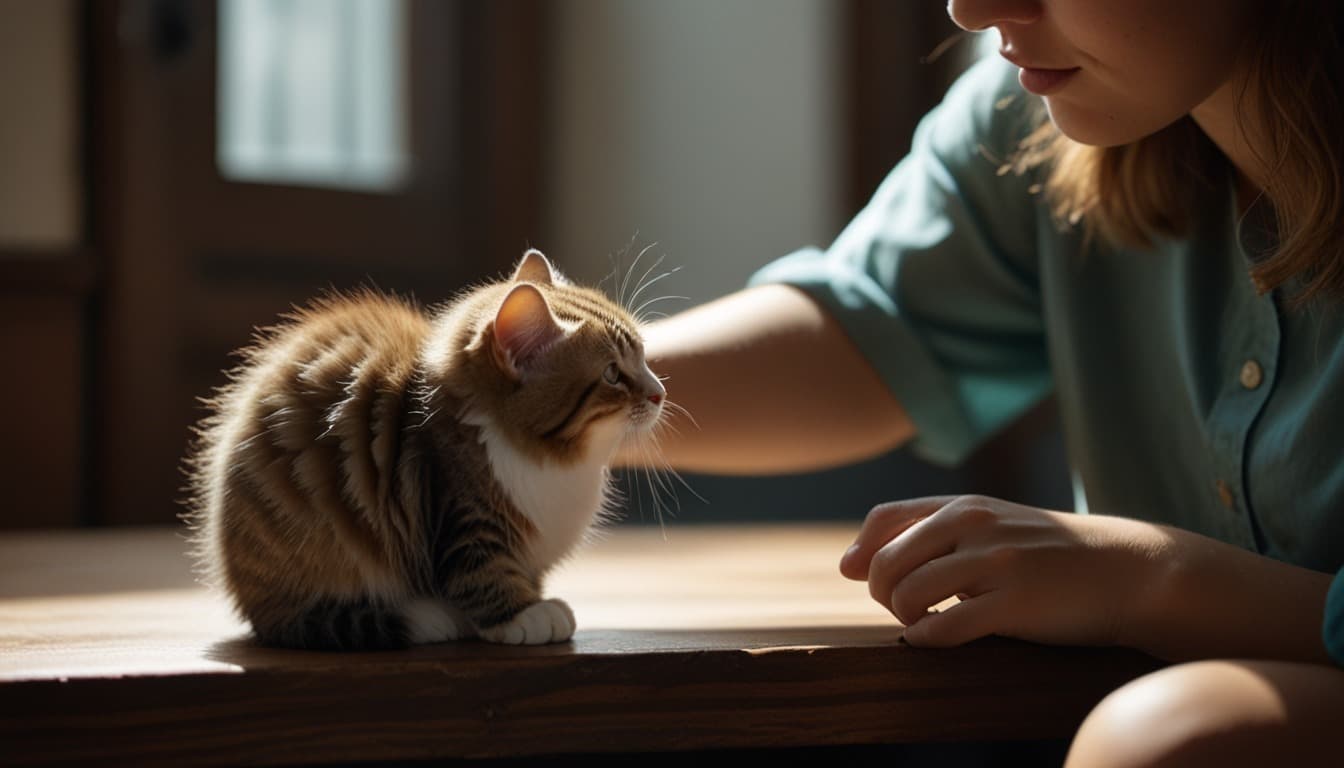
I still have a small scar on the back of my right hand from a cat named Marbles—a build who looked at me with big, slow-blinking eyes and then sunk a tooth into my knuckle so fast I didn't even register it happening. One second I was thinking "aw, he's settling in," teh next I was bleeding into a paper towel and cursing softly while Marbles sat three feet away, cleaning his paw like he'd just finished a shift at the biscuit factory.
That was year eight, maybe year nine of my rescue stint, and I'd already fostered over 25 cats by then. I thought I knew cat body language. I'd read the articles, I'd watched the Jackson Galaxy videos, I'd nodded along at adoption events while other volunteers cooed about the slow blink. But Marbles taught me something I clearly hadn't learned yet: cats don't read the same books we do. And sometimes the signals we interpret as "friendly" are actually a cat saying "I'm overwhelmed and I'm about to make poor choices."
I spent the next few years paying closer attention. Not just to the obvious stuff like hissing and flattened ears, but to the tiny shifts that happen in the seconds before a bite, a scratch, or the kind of full-body dump-and-dash where a cat goes from purring to shredding your forearm in under two beats. If you live with cats, work with cats, or just want to pet your neighbor's orange tabby without a trip to urgent care, this is the stuff I wish I'd known two decades ago.
Tail held high and quivering—what it actually means
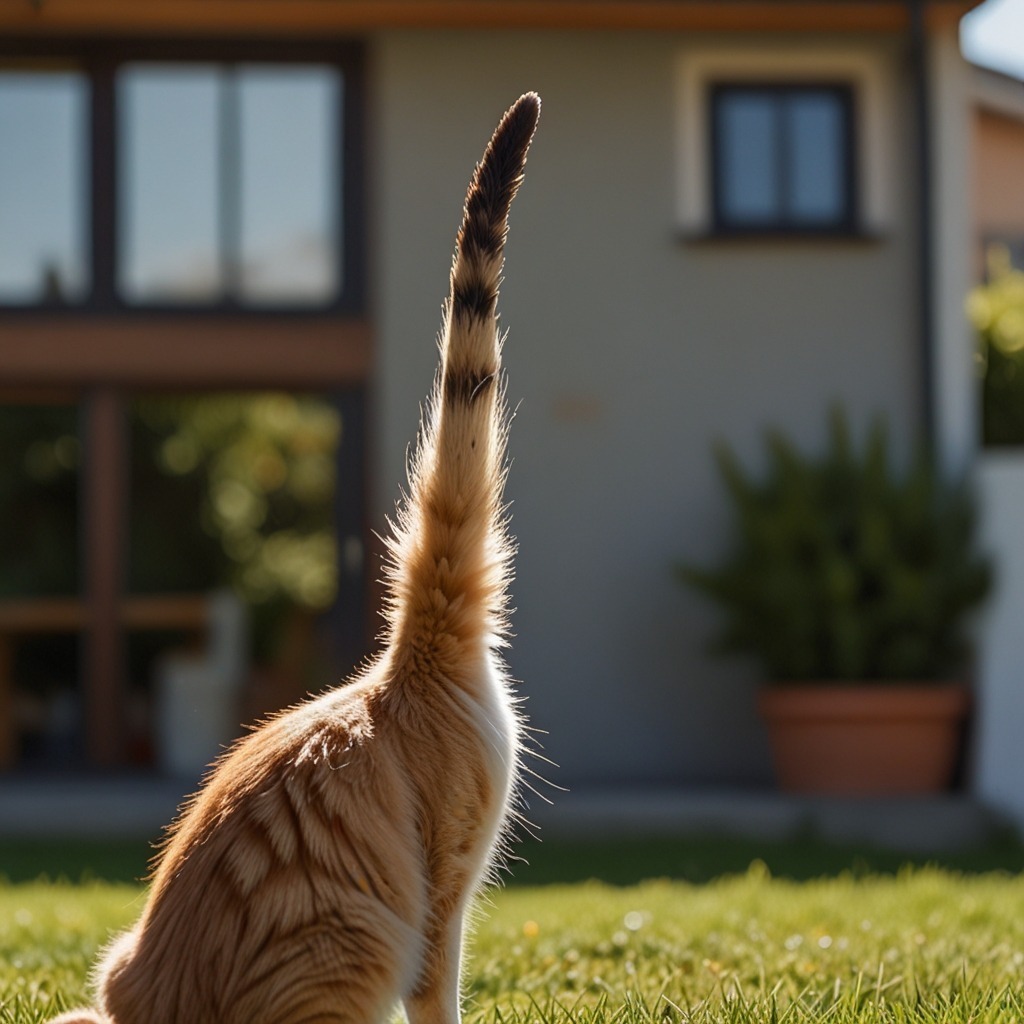
A tail straight up in the air with a little tremor at the tip? That's a friendly greeting. It's one of the few cat signals that's almost never ambiguous. Cats carry their tails like that when they're happy to see you, when they're excited abot dinner, when they're walking toward a familiar face. I've had feral-born fosters who took months to trust me, and the first sign of progress was almost always a tail that went from low to mid-level to full flagpole over the course of a few weeks. The quiver at the end is like a little exclamation point—I'm genuinely glad you exist.
But here's the thing that trips people up: a cat can have a happy tail and an unhappy face at the same time. I've seen cats walk into the shelter intake room with tails up and quivering, and then immediately flatten their ears when a stranger reached for them. The tail says "I'm greeting you," the rest of the body says "within strict limits and preferably from a distance." That nuance matters. Most of the really bad cat misunderstandings happen because we fixate on one signal while ignoring everything else.
If you want to respond to a tail-up greeting correctly, don't rush in. Let the cat close the gap. Blink slowly, say something in a low voice, and offer your hand palm-down at a distance where the cat has to take the last step to reach you. The cat who approaches your stationary hand is miles more comfortable than the cat who merely tolerates you touching him because you leaned in first.
The ears tell you everything your cat isn't about to say
Dogs talk with their tails and their entire bouncy bodies. Cats talk with their ears. I learned that the hard way after a series of fosters who seemed okay right until the moment they weren't.
Airplane ears: not just cute, it's pre-strike mode
When a cat's ears rotate outward and flatten slightly—the classic "airplane wings"—you'te looking at a cat who's feeling defensive, annoyed, or cornered. I've seen this most often when a cat is being handled by someone they don't fully trust, or when there's a loud noise and no escape route. If you see airplane ears and keep doing whatever you're doing, you're rolling the dice. I rolled those dice with a build named Splotch and wound up with four parallel scratches down my forearm that took two weeks to stop itching.
Airplane ears don't always escalate to violence, but they're a clear "stop" sign. Ignore them at your own risk. When I back off at the first sign of ear rotation, the cat almost always resets within a few minutes. When I push through, I'm the one resetting with antiseptic.
Swiveling like radar—that's when you should stop
Ears that flick rapidly between forward and sideways positions signal indecision or anxiety. I see it most in cats who are new to the rescue and haven't decided whether I'm a threat. The ears are tracking multiple sounds, trying to locate potential danger. A cat in this state isn't relaxed enough to enjoy petting. If you pet him anyway, you might get a tolerant cat who holds still out of politeness—or you might get your fingers nipped.
I learned to just sit still and wait when I see that swivel. Talk quietly. Maybe rustle a snack bag. Dn't reach out until the ears settle forward and stay there.
Flattened ears and dilated puipls: the combo that cost me a build home
Flat ears plus wide pupils is a five-alarm fire. I once tried to pick up a build named Tux who'd wedged himself behind the wshing machine because I thought I was "helping" him feel safe by relocating him to a cozy crate. Ears pinned, pupils black holes, tail lashing. I got him in the crate, but the trust we'd built over two weeks evaporated completely. It took another month of quiet ignoring and treat-bribery before he'd let me touch him again.
That combo means the cat is flooded—adrenaline pumping, fight-or-flight fully engaged. Even if the cat doesn't strike out, the psychological damage to the relationship can last for weeks. The only move when you see flattened ears and giant pupils is to back away, remove whatever stimulus is causing it, and give the cat time to decompress. No talking, no eye contact, no attempt at comfort. Cats don't process reassurance the way dogs do; they process space.
When a purr is a warning sign
Everybody knows cats purr when they're happy. Right? Except they also purr when they're in pain, when they're terrified, when they're giving birth, and when the'yre dying. The purr isn't a happiness indicator. It's a self-soothing mechanism, and sometimes it accompanies extreme distress.
I learned that with a cat named Goose who came in with a gnarly bite wound on his flank. He purred like a motorboat while the vet tech restrained him for the exam. His ears were flat, his body was rigid, his eyes were wide—but he was purring. The tech, who'd been doing this longer than I'd been alive, said, "Don't let the purr fool you, he's terrified." Goose didn't bite anyone that day, but he did try to launch himself off the exam table twice.
I once brought my own cat, Miso, to the vet for an infected tooth and he purred the whole time a stranger was probing his gums with a metal tool. Not because he was enjoying it. Because he was self-regulating through a miserable experience. If I'd assumed he was fine and let my guard down, I might have missed the signals that told me he needed a break.
A purr needs context. Check the ears. Check the eyes. Check the tail. A purring cat who's crouched low, tail wrapped tight around the body, ears anggled back, isn't a content cat. He's a cat trying to survive an ordeal.
Tanget: Dogs do something similar with tail wagging, which I tink throws a lot of cat owners off. A dog wagging its tail fast and high isn't being friendly—it's amped up, and it might bite. I've seen more "he wagged his tail right before he snapped!" incidents in my shelter years than I can count. Animals don't always express themselves the way we've been told they do. That book your aunt gave you about "what your cat is saying" is probably oversimplifying about half the signals.
Back to purrs. If you're petting a cat and he's purring, watch his tail. If the tip starts twitching, stop. The purr might still be going, but that tail is saying "I'm reaching my limit." I wish someone had told me that before I ruined what could have been a perfectly nice afternoon with a tabby named Biscuit.
The belly is a trap—and I kept falling for it
When a cat rolls over and shows you his belly, it's not an invitatin for a belly rub. I know this, I've known this since I was a teenager, and I still fell for it with a build named Butterbean just last spring. Showed me the fluffy white tummy, purred, blinked slow, eyes half-lidded. I reached down and got four sets of claws in a bunny-kick so aggressive I heard a seam rip on my sleeve.
The belly display is a sign of trust, yes. The cat feels safe enough to expose his most vulnerable area. But it's not a request for touch. It's a statement: "I trust you enough to lie here like this. Please don't prove me wrong." A belly rub is a violation of that trust unless the cat actively solicits it—and most cats don't. The ones who do are rare, and even they might change their mind after three seconds and punish you for overstaying your welcome.
My new rule: I say "nice tummy" from a distance and keep my hands to myself. If the cat wants attention, he'll get up and head-butt my hand.

Eyes, whiskers, and the silent freaking conversation
The half-lidded gaze vs. the unblinking stare
There's a world of difference between a cat who looks at you with relaxed, half-closed eyes and one who stares without blinking. The first means comfort, maybe affection. The second means a challenge, or at minimum, intense focus that can tip into aggression if you don't break eye contact.
I used to stare right back at nervous fosters because I thought looking away was "submissive" in a bad way. All that did was convince them I was predator. Now I slow-blink and look to the side whenever a cat's pupils are dilated and they're staring at me like I owe them money. A slow blink from you to a cat is basically you saying "I'm not a threat." A cat who slow-blinks back is saying "I believe you, for now."
Try it. Next time a cat is giving you the hard stare from across the room, soften your gaze, blink slowly, and look away. Then glance back and blink again. You'll see the cat's body loosen within seconds. It's like a reset button for feline tension. I've used it with hissy ferals and seen them start washing their paws ten minutes later.
Whisker position you probably never notice
Forward-pointing whiskers indicate curiosity or friendliness. Whiskers pulled back flat against the cheeks mean fear or defensiveness. Whiskers that are fanned out and slightly drooping often show a relaxed, neutral state. I watched a build named Cricket during a vet visit and realized the whole story was written in his whiskers: pushed forward while sniffing the carrier, flattened aaginst his face when the vet tech picked him up, then slowly inching forward again once he was on the exam table and being offered a Churu.
Most people don't pay attention to whisker position, but it's another piece of the puzzle. If the whiskers go flat with no other obvious signs? The cat is probably scared. Give him a route of escape and back off completely.
The full-body language of a cat who's about to lose his mind
The arched back and bottle-brush tail
That classic Halloween-cat silhouette? It's not a costume, it's a cat trying to look big because he's terrified. I've seen it happen at intake when a cat encounters another cat unexpectedly, or a dog, or me wearing a hat for the first time. The puffed tail, the arched spine, the sideways stance—it's all a desperate bluff. If you corner a cat in this state, you'll get raked. If you give him space, the fur settles in thirty seconds.
I once opened my door to a delivery driver while holding a build kitten, and the kitten—who had never met a human in a puffy coat before—transformed into a brstling pinecone in three seconds flat. I set him down and stepped back, and within a minute he was grooming like nothing happened. The signal was loud and clear: I need distance.
The crouch that looks like hunting but is actually fear
A cat pressed low to the ground, belly nearly touching the floor, with ears flattened and tail wrapped tight, isn't hunting a bug. He's trying to disappear. I see it most often in new fosters who haven't figured out hidinng spots yet. They'll crouch in the middle of an open room like they're bracing for impact. If you approach a cat in this posture and try to pick him up, you're very likely to get bitten. He's already convinced he's in danger; your hands just confirm it.
The other tricky one is the opposite: a cat standing tall on fully extended legs, back arched slightly, fur raised. Tha'ts the offensive aggressive posture—different from the sideways Halloween pose. This cat is trying to intimidate, not escape. His tail will be down or thrashing, not puffed. He'll stare directly at you. In this case, backing away slowly while avoiding eye contact is still the right move, but don't be surprised if he follows you for a step or two, still muttering. He's not hunting you. He just needs to save face while you retreat.
I thought I was rspecting his space. I was actually cornering him.
Tux was a big black cat with half an ear missing and a preference for hiding under things. I knew he was scared, so I gave him a whole room to himself with a covered crate, a cat tree, and food in the corner. Very progressive. Very "fear-free." Then I went in every afternoon and sat in the corner by the door to read out loud, so he'd get used to my presence. Good plan, right?
Except the room was set up so the only exit led past me to the door. And Tux was under the futon, which meant his only escape route if he got spooked was blocked by my legs. I didn't realize that until day four, when he decided he'd had enough of my audiobook and launched himself at my shins on his way to the hallway. I didn't get hurt badly, but I scared him worse by screaming in surprise. He hid in the bathroom cabinet for two days and wouldn't eat until I moved his food dish inside with him.
I thought I was doing everything right: slow introduction, respecting his signals, not reaching for him. But I'd set up the entire environment so that his "flight" option was gone. Any cat forced to choose between fight and flight when there's no flight is going to choose fight, even if they'd rather not. That bite was my fault, not his.
I later moved his crate to the far corner, placed a tall scratching post between us as a visual barrier, and sat in the middle of the room instead of by the door. He came out within a day. We've never been best friends, but he doesn't try to remove my epidermis anymore.
Not all cat aggression is about body language in the moment. Sometimes it's about spatial setup, about the exits you've accidentally closed, about the fact that your presence is blocking the one place the cat feels safe. The body language will warn you—flattened ears, tail low, eyes wide—but if you're not reading the whole room, you'll miss the why.
I'm not a behaviorist. I'm just a person with a lot of scars and a lot of build cats who eventually, mostly, stopped hating me. Take what I say and hold it up against your own experience. You know your cat better than anyone.
Oh, and speaking of spatial setup and ltiter boxes, if your cat is suddenly peeing on your stuff after a change in routine, stress is probably a bigger factor than spite. I wrote a whole separate breakdown of what finally stopped my build cat from peeing on everything I owned for six months—you can read that one here because it's too long to cram into this already sprawling post.
But for Tux, the fix wasn't a behavior mod. It was me getting my butt off the only exit route.
How I meet a new build cat now, without the bloodbath
I've stopped trying to be the cat whisperer. Now I just try to be a person who's not threatening. Here's what that looks like in practice—not a protocol, just the slow, boring habits that have kept my skin mostly intact for the past few years.
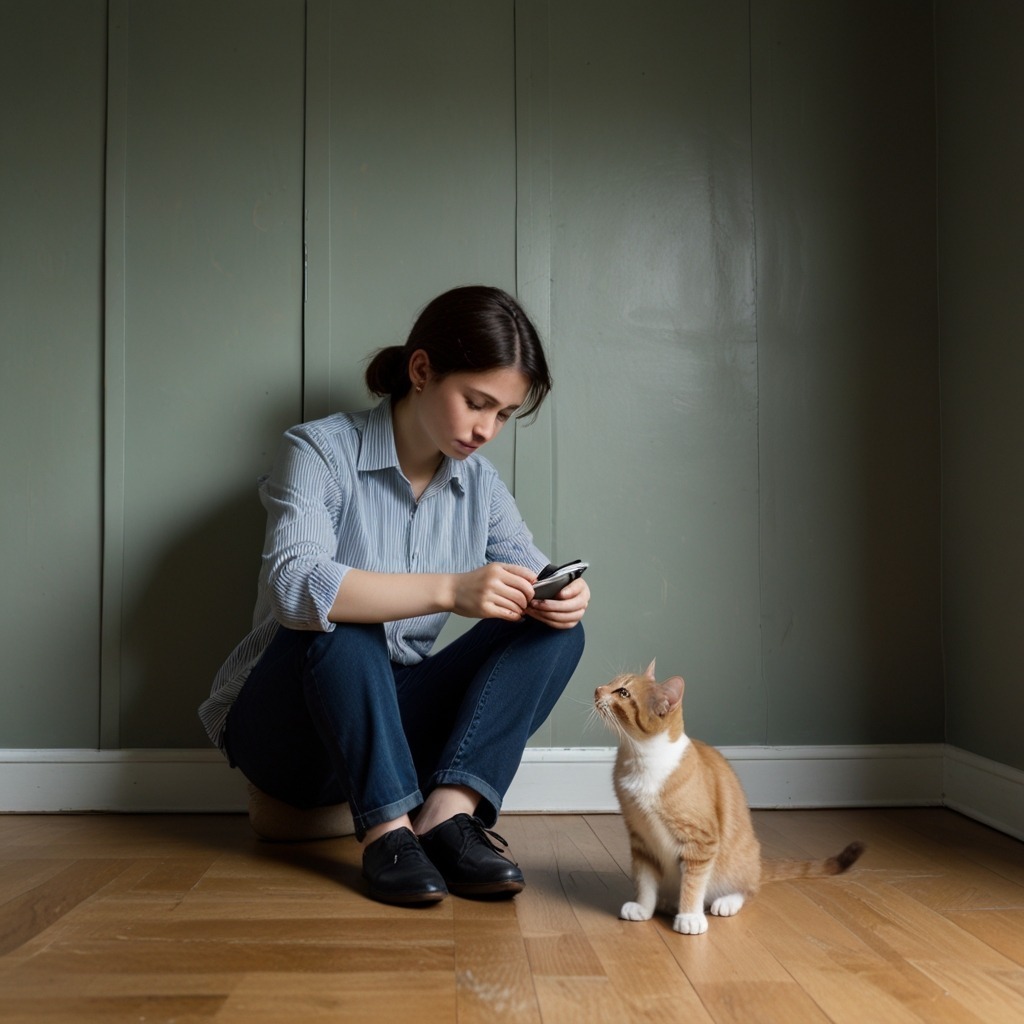
I sit on the floor. Not cross-legged and upright like I'm meditating, but sort of slumped against a wall, legs stretched out like I just gave up on the day. This makes me smaller and less interesting. I don't look directly at the cat. I scroll on my phone or read a book. I might scatter a few treats in a wide arc between us so the cat can approach at his own pace without having to come all the way to my hand.
I don't talk much at first. If I do, it's a low mumble, not a high-pitched "hi baby!" voice that some cats find alarming. I let the cat circle me, sniff my shoes, maybe rub against my knee. If he does, I still don't reach out. I let him bump into my stationary hand if he wants. The first contact should be the cat's choice, not mine. I've had cats take 30 minutes to make that choice. I've had some who took three daus. The ones I pushed too early almost always bit me, and I almost always deserved it.
If the cat's tail starts lashing, I stop everything and look away. If his ears go sideways, I slow-blink and yawn (yawning is a calming signal for mammals—I learned that from a dog behaviorist but it works on cats too, maybe, probably, ask your vet). If he hisses, I don't hiss back, don't scold, don't sigh. I just become more boring and more still until he decides I'm not worth the adrenaline.
It's not glamorous. It doesn't make for good Instagram stories. But it's kept me out of the emergency room and kept fosters from regressing. Two weeks of patient ignoring builds a better relationship than one afternoon of forced cuddling. Every cat I've rushed has taught me that lesson again. I'm a slow learner, but I get there eventually.
Tux, by the way, now greets me at the bedroom door with a tail up and a soft trill. He doesn't like to be held. He may never. But he's not afraid of me anymore, and I can read his "I've had enough" signal (a single ear flick to the side) well before he feels the need to escalste. That's the goal, I think. Not a cat who tolerates everything, but a human who listens before the cat has to raise his voice.
Miso's on the windowsill right now, tail wrapped around his paws, ears relaxed, slow-blinking at a moth on the glass. Classic content cat. I'm not going to interrupt him. I'm just going to sit here and be glad nobody's bleeding today.