I Got Bit By a Purring Cat and Blamed Myself for 3 Years — Here's the Body Language I Was Totally Missing
That purring cat wasn't happy—she was giving me every warning sign I'd been trained to ignore. Here's what 14 years of feline miscommunication taught me about tails, ears, and the slow blink you should stop forcing.
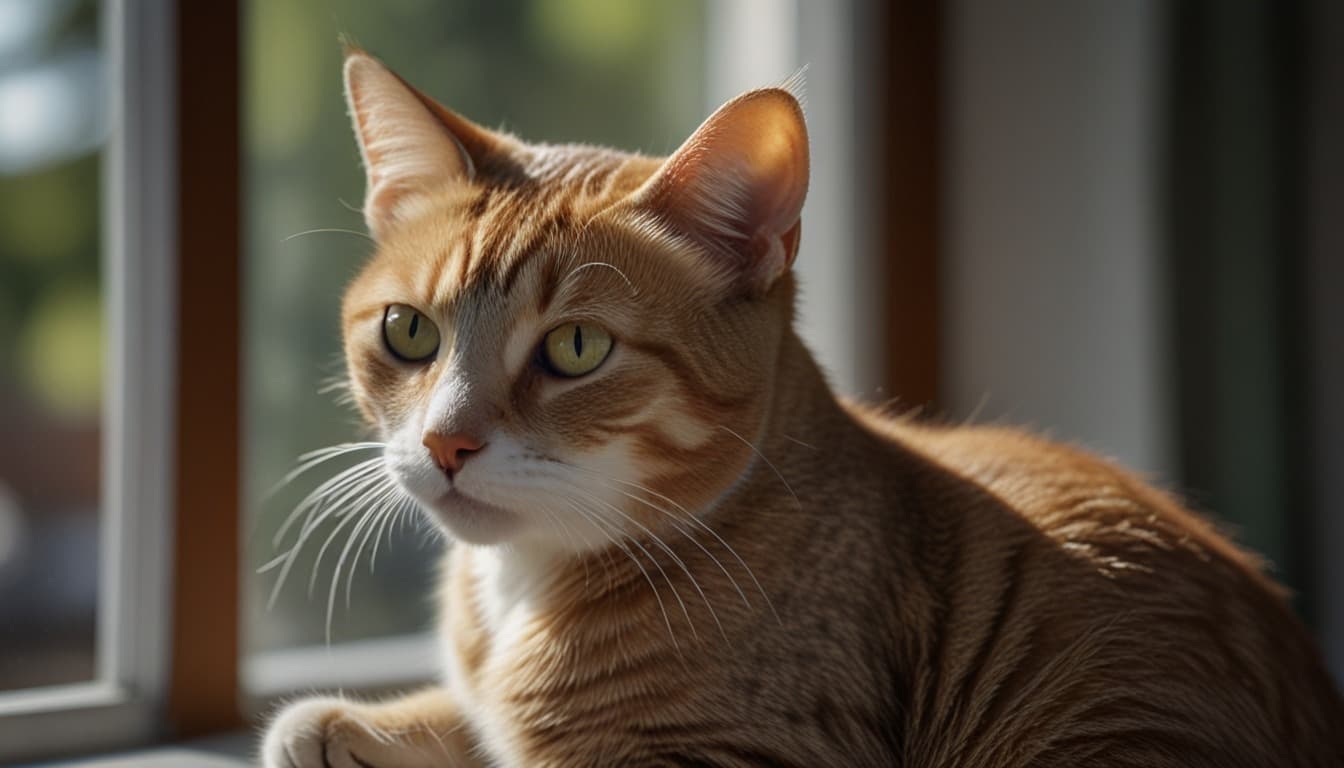
The first time I got tagged by a purring cat, I was 22 and working the adoption floor at the county shelter. A big orange tabby named Marmalade — already purring when I opened his kennel — rubbed his cheek against my hand like we were old friends. I remember thinking, Good, he likes me. This'll be the easy part.
I stroked from his head down his back exactly like I'd done a thousand times with my childhood cats. Slwo, gentle, full-length strokes. He leaned into it for maybe four seconds. Then his skin rippled. I didn't see it. His tail gave one fast twitch. Missed that too. By the time his teeth sank into the flesh between my thumb and forefinger, I'd already been ignoring a half-dozen signals that screamed stop.
The bite wasn't serious — didn't even need stitches — but I cried in the break room for twenty minutes. Not from pain. From pure embarraassment. I'd been working at that shelter for six months and I still couldn't read a cat who was basically holding up a neon sign. Purring, I'd been taught equals happy. Tail wagging equals happy. Right?
Turns out, that's like saying a person's smile always means they're thrilled to see you. Sometimes it means they're about to scream at the waiter. Context is eveerything. And cats — good lord — cats are masters of the mixed signal.
I've fostered over 40 cats since Marmalade. Made every mistake there's. Misread a slow blink, ignored a sideways ear, thought a puffed tail was cute instead of terrified. Took me years to get halfway decent at it, and I'm still lerning from the current build cat judging me from the windowsill as I type this.
So here's the stuff I wish someone had told me when I started. Not the textbook "cat body language chart" you can download from a vet clinic website. The actual, messy, I've-been-bitten-and-humbled version.
The Purr That Wasn't Friendly
That incident with Marmalade stuck with me. I started paying attention to when cats purr, not just whether they're purring. Because purring doesn't mean one thing. It can mean "I'm content," sure. It can also mean "I'm in pain," "I'm terrified," or "I'm trying to soohe myself because your giant hand is freaking me out."
Cats purr during labor. They purr when they're dying. They purr at the vet while their heart rate is thruogh teh roof. I once had a build kitten purr the entire time I was syringing medicine into her mouth, and I promise you she was not having a good time.
The key is looking at everything else. If the cat's body is stoff, ears are slightly back, tail is tucked or twitching at the tip, and they're purring — that's not a happy purr. That's a stress purr. And if you keep petting, you're going to get the teeth eventually.
Dr. Nguyen, my vet — she's put up with my panic calls for 11 years, through three dogs and a divorce — once said to me, "Sarah, when the purring is paired with a tail thumping like a metronome, back off. That cat is trying to calm itself down, and you're not helping." She was right.
"When the purring is paired with a tail thumping like a metronome, back off. That cat is trying to calm itself down, and you're not helping."
I still get it wrong sometimes. Last month a build named Pippi was purring in my lap and I missed the almost imperceptible tension in her haunches. She didn't bite, but she shot off like a bottle rocket, leaving three scratches across my thigh. I just sat there and added it to the mental pile of "stuff I should've seen."
Tail Positions I Had Wrong for a Decade
Dog people come into cat ownership with a serious disadvantage. A wagging tail on a dog? Usually excitement or happiness. A wagging tail on a cat? Can mean half a dozen things, and "excited to see you" is pretty far down the list.
The Question Mark Tail
A tail held straight up with a little curl at the tip — like a question mark — is one of the few universal happy signals. It means the cat is confident, comfortable, and in a friendly mood. My cats do this when I walk in the door, and it's basically a feline "hey, sup."
But hre's the trap: a cat can approach you with a question-mark tail and still not want to be touched. The tail says "I like you, I'm curious," but the ears, whiskers, and body tension will tell you whether petting is on the table. I've seen so many people see that friendly tail and immediately swoop in with both hands like they're scooping up a stuffed animal. Don't do that. Offer a hand, let the cat close the gap, and watch what happens next.
That Slow Swish isn't a Wag
If a cat's tail is swishing slowly from side to side — like a lazy pendulum — they're not calmly enjoying your company. They're over it. This is the precursor to the skin-ripple, the ear-twitch, and eventually the claw-laden swat. I thinks of it as the internal countdown: 5, 4, 3, 2…
My old cat Miso used to do this exact thing when I'd been brushing him too long. I'd be zoning out, watching TV, brushing, and the tail would start that slow, deliberate sweep. I'd ignore it. Then the skin along his back would ripple. Then the tail would pick up speed. Then he'd whip around and put his teeth on my hand — not hard, just a warning nip — and I'd finally get the message. Took me an embarrassing number of repetitions to learn to stop at the first swish.
I've found that when I scritch near the base of the tail and the tail starts moving faster, it's a 50/50. Some cats love it and will arch into it, but many get overstimulated really fast. you've to read the whole cat. If the ears go slightly sideways and the whsikers pull forward, that's a cue to move your hand somewhere else. Like their chin.
The Bottlebrush Tail Is Obvioud—But Here's What You Miss Before It Happens
The fully puffed, Halloween-cat tail is impossible to misinterpret. That cat is terrified or pissed, probably both. But before the tail goes full bortlebrush, there are smaller signs. The fur along the spine might start to lift — just a little ridge — and the tail itself might start to look thicker at the base. If you catch that early enough, you can do something about the situation before the cat's cortisol spikes through the ceiling.
I once had a build cat, Luna, who'd puff up whenever repair guys came over. The first time, I just thought, Oh, she's scared, I'll pick her up and reassure her. That was stupid. I ended up with a shredded shirt and a cat-shaped shadow that didn't come out from under the bed for four hours. Now when I see that telltale ridge, I make sure the cat has an escape route and I don't corner her. Giving them space is the single most effective move.
Ears Are the Honest Part (Even When You Think They're Not)
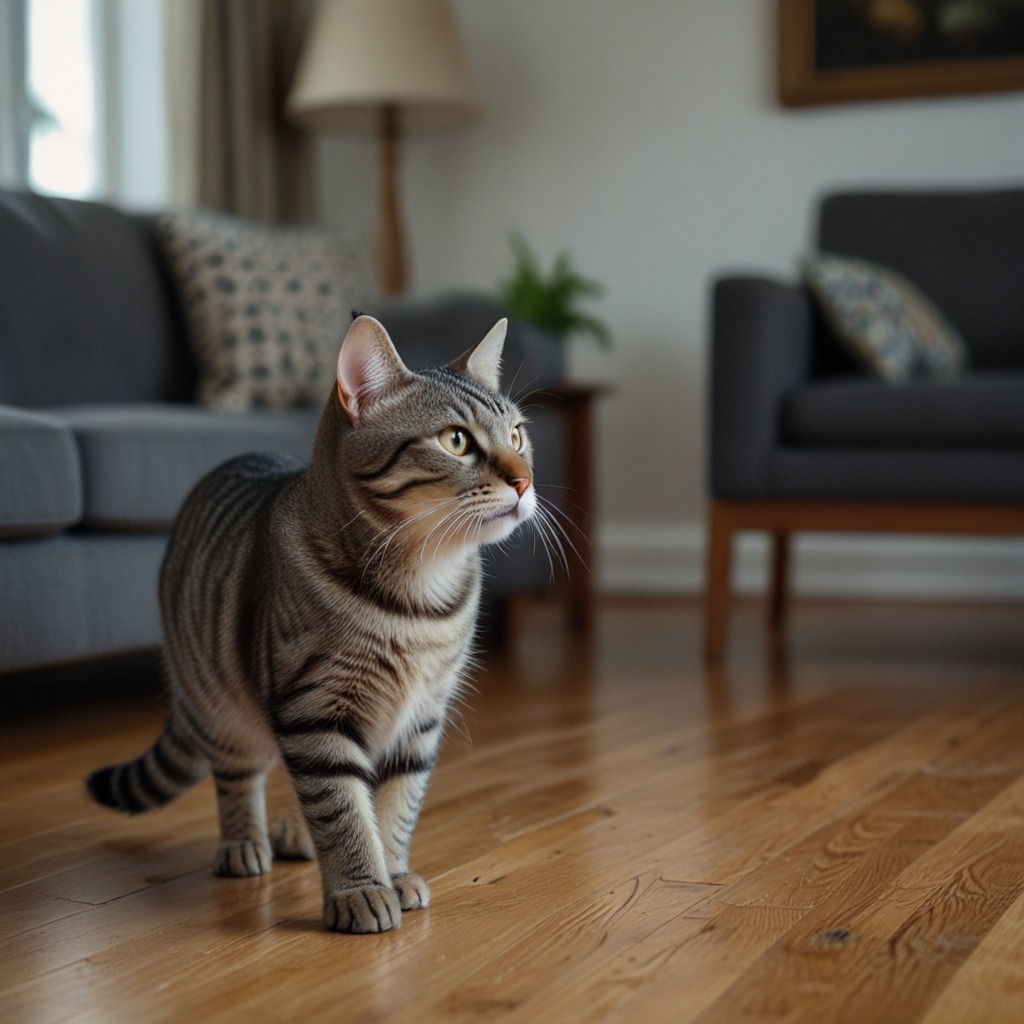
If I could only look at one body part to gaige a cat's mood, it'd be the ears. Tails lie. Purrs lie. Eyes can be ambiguous. But ears are the most honest, minute-by-minute readout of what's happening inside a cat's head.
Airplane Ears: The 3-Second Warning
You know the look — ears flattened sideways, like airplane wings. That's irritation, fear, or defensive posturing. It's the universal cat signal for "back off." And yet, I see people lean in closer when they see it. "Aww, he's making airplane ears!" No. No he's not. He's telling you to give him space and you're ignoring him.
When the ears go completely flat against the head, that's past warning. That's fight-or-flight territory, and if the cat can't flee — because you're holding them or they're cornered — they'll fight. I learned this the hard way with a semi-feral named Cora who flattened her ears the moment I entered the room. I should've just left her carrier open and backed away. Instead I tried to "soothe" her with soft words while reaching in. She nailed me right across the knuckles. I've still got a faint scar.
One Ear Forward, One Back: The Confused Signal I Used to Ignore
An ear that's swiveled one way and the other ear pointing differently usually means the cat is tracking two things at once and isn't sure what to focus on. It's a state of mild anxiety or indecision. I see this a lot when I introduce a new toy — they're interested but also uncertain. If you push for interaction when the ears are split like that, you might spook them. Better to wait and let them decide on their own.
The Slow Blink isn't a Magic Trick
I hate how the internet turned the slow blink into some mystical trust-building hack. Yes, a cat who slow-blinks at you is communicating relaxation and non-threat. But forcing a slow blink while you're looming over a cat who's already stressed? That's just you being weird. The slow blink works when the cat is already comfortable and you're just acknowledging them. It's not a shortcut to friendship. I've seen people slow-blink at hissing cats like they're casting a spell. Stop it.
Whiskers and Mizzle Tension: The Stuff Nobody Tells You About
Most casual cat owners don't look at whiskers. They should. Relaxed whiskers point slightly forward and down, kind of droopy. An alert, curious cat pushes them forward, like a radar dish. A frightened or agitated cat pulls them back tight against the cheeks. And a cat in pain will often have one side of the whiskers bunxhed differently than the other — it's subtle, but once you notice it, you can't unsee it.
I had a build once, Oliver, who'd been in a fight and had a hidden abscess on his flank. He seemed "fine" — eating, purring, doing the routine stuff — but his whiskers on one side were pinned back constantly. The vet found the abscess when I menntioned it. Didn't save him the vet visit, but it got him there faster.
Muzzle tension is another one. A cat who's content has a soft, rounded muzzle. When they'e stressed or in pain, the muzzle tightens and looks pointier. It's not dramatic, but combined with other signs, it's part of the puzzle.
That Time My build Dog Got Swatted for Not Reading Cat Language
This is a bit of a tangent, but it's relevant because interspecies miscommunication is the root of so many household chaos moments. A couple years back I had a build dog — a big, goofy Lab mix named Gus — who'd never lived with cats. I also had a resident cat, Pepper, who'd lived with dogs and was usually chill. Gus saw Pepper's tail twitch and thought it was an invitation to play. I've talked about dog socialization messes before — but this was a whole different ballpark.
Gus bounded over, tail helicoptering, and Pepper's ears went sideways, then flat. Gus didn't read it because, well, he's a dog and dogs are idiots about feline body language. Pepper swatted him across the nose so fast I barely saw it. Gus yelped and ran to his crate. He was fine, but it took three days before he'd walk past her without cowering.
The lesson wasn't just for Gus. It was for me. I should've seen Pepper's escalating signals and separated them before it got to the claw. Now when I've a dog in the house, I'm watching the cats' body language like a hawk. A tail twitch, a slight ear rotation, a shift in posture — those are early warnings that prevent vet visits and hurt feelings.
(And if you've ever had a dog who misread a cat that badly, you'll appreciate the thread I wrote about how I stopped dreading nail trims — because readng animal body language before a procedure saves everyone's sanity.)
When a Cat Freezes, They're Not "Being Good"
I hear this all the time: "My cat is so well-behaved, she just sits there and lets me hold her." And then I see the cat and it's frozen — rigid, eyes wide, paws braced, not moving a muscle. That's not a calm cat. That's a cat who has shut down and is praying you'll let them go.
In shelter work, we called this "fawning" or "freezing" — it's a fear response. A cat who's truly relaxed is loose, maybe even a bit floppy. They'll knead, they'll shift position, they'll look around. A frozen cat is holding their breath. The moment you loosen your grip, they're gone.
If your cat goes statue-still during handling, they're not enjoying it. Put them down gently and let them approach you later on their own terms. I forced this with Miso for the first year I had him, convinced he "loved being held" because he didn't fight. In reality, he was just too polite (or too scared) to protest. Once I started paying attention, I realized his pupils were dilated and his ears were pinned the entire time. I stopped picking him up without invitation, and weirdly enough, a few months later he started climbing into my lap voluntarily.
There's a connection here to scratching issues, by the way. When a cat feels cornered or over-handled, they often redirect that stress onto furniture. I wrote about breaking that cycle with Miso a while back in this post — turns out, when you learn to read the stress signals, you can prevent a lot of destructive behavior before it starts.
Why I Stopped Staring at Tails and Started Watching Breathing Instead
Sounds dumb, but a cat's breathing rate and pattern tell you so much. A relaxed cat breathes slowly, rhythmically, with a little belly movement. An anxious cat has shallow, rapid breaths, sometimes with a tight abdomen. When the berathing changes, everything changes. I now use that as my first checkpoint before I decide to interact.
The Little Things I Started Noticing Afer Fostering 40+ Cats
After a while, you stop needing a checklist. You just get a gut feeling, like "something's off" — and 90% of the time, your subconscious has already registered a cluster of body language red flags you didn't consciously notice. I'll be petting a cat and my hand will just stop. I'll realize the cat's tail tip is flicking, the ears are slightly rotated back, and the purring has a harsh edge to it. My brain did the math before I did.
But getting to that point took a lot of failed interactions. I had a build, Willow, who peed on my bed seven times in a month because I completely misread her territorial insecurity. Every time I thought she was cuddly and relaxed, she was actually stress-purring and leaking cortisol. The day I finally figured out the pattern was the day I watched her tail before bed: stiff, twitching, held low. Not relaxed. She was anxious the entire time I was cooing at her. If you've ever dealt with a cat who pees on everything you own, you know the kind of desperation I'm talking about. I detailed that nightmare — and the eventual fix — in this article, because lord knows I needed a map back then.
One thing I've learned: you can't treat cat body language as a menu of isolated signals. It's all connected. A tail position means something different depending on what the ears, eyes, whiskers, and body tension are doing. It's a whole sentence, not a word. And sometimes you still get it wrong.
The Moment I Realised I'd Been Ignorign the Most Obvious Sign All Along
About three years ago, I had a fospice cat — a 17-year-old dilute calico named Edith who'd been surrendered with kidney disease and a host of other issues. She wasn't expetced to live more than a few months, so I brought her home to give her a comfortable end. Edith was frail, mostly deaf, partially blind, and not particularly interested in people.
I spent weeks trying to bond with her using all the tricks. Slow blinks from across the room. Soft voice. Gentle approaches. Nothing. She'd tolerate me but never seek me out. I started thinking maybe she just wasn't a people cat.
Then one evening I was sitting on the floor folding laundry — absolutely not paying attention to her — and she walked over, bumped my knee with her forehead, and settled into the curve of my crossed legs. No slow blink. No question-mark tail. Just a quiet, deliberate choice. After weeks of me trying to decode her signals, she'd been reading mine the whole time and decided on her own terms that I was safe.
I held my breath for a solid ten seconds because I was terrified I'd move wrong and spook her. She stayed for an hour. Then she got up, stretched, and went back to her heated bed. That was the whole relationship, for the next eight months: small, quiet moments that she initiateed. No forced petting, no holding, no "trust exercises." Just me existing near her and letting her write the script.
I think about Edith a lot when I see people trying to manhandle their cats into affectioon. The biggest body language signal is often just the one where they walk toward you instead of away. And if you're busy chasing them, you'll never see it.
Anyway, the kettle's boiling and I've got a build kitten who's currently doing that slow bkink from her perch. I should probably go catch that before she decides to eat my phone charger.