I Fed My Cat 'Weight Control' Kibble for a Year and She Turned Into a Buttered Potato — Here's the Slow, Safe Weight Loss That Actually Worked
The vet said 'obese' and I nearly cried. After a year of 'light' kibble that made things worse, I finally helped my cat lose the weight safely—here's every mistake and the plan that worked.
The Day the Scale Laughed at Me
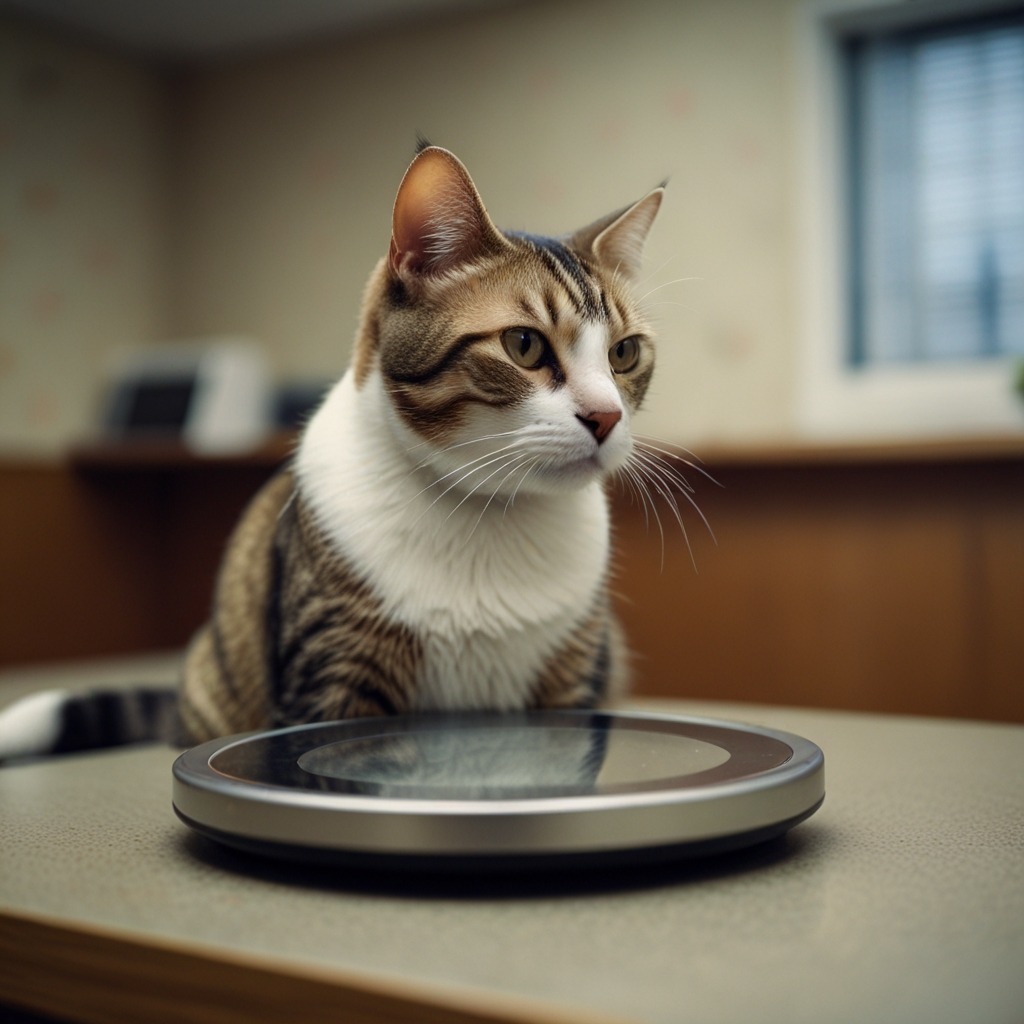
Miso weighed 18.3 pounds. The digital numbers on the exam table blinked twice, like they couldn't quite believe it either, and Dr. Nguyen—who's put up with my panic calls for 11 years, through three dogs and a divorce—glanced over her reading glasses and said nothing. That nothhing was worse than any lecture. I could feel the heat climb up my neck. A whole year of "weight control" kibble, carefully measured in that stupid little scoop the bag recommended. A whole year, and my cat was rounder than ever. She barely fit in the carrier anymore. I'd had to wedge her in that morning with a treat and a prayer.
The worst part? I'd been so proud of myself. Every time I poured that light-brown crunchy nonsense into her bowl, I thought I was being a responsible pet owner. Helping my rescue cat get healthy. What I was actually doing was starving her of protein and filling her with carbs while she beggrd for food an hour later. But I didn't know that yet. All I knew in that exam room was that my cat was officially obese, and I was the one who'd fed her there.
I started to say, "But she's been on the diet food—" and Dr. Nguyen cut me off with a wave of her hand. "That's marketing," she said. "Most 'light' kibblles are just lower fat, same carbs, less protein. For cats, that's backwards." She then said something that's burned into my brain: Your cat isn't a small dog. She's an obligate carnivorre who got tricked into eating cereal.
I sat down hard on the little stool they keep for nervous owners and tried not to cry. Miso licked a paw and glared at me like she knew exactly whose fault this was.
What 'Obese' Actually Means for a Cat
We all joke about chonky cats on the internet. Heck, I've fostered over 40 cats and some of the round ones are genuinely hilarious waddling across the floor. But in real life, feline obesity isn't cute. It sets them up for diabetes, arthritis, urinary blockages, skin fold infections, and a liver disease called hepatic lipidosis that can kill them in days if they stop eating for even a short period. That last one is the real nightmare. Overweight cats who go on a crash diet or get stressed and stop eating can accumulate fat in their liver so fast the organ shuts down. I'd seen it once in a build cat someone surrendered after "putting her on a diet" by just not feeding her much. The cat survived, barely, after a week of tube feeding and a $3,000 vet bill that the rescue drained its account to pay. I never forgot it.
Dr. Nguyen ran bloodwork on Miso right then. I sat and listened to the sound of her purring like a tiny tractor, completely oblivious that she was on the edge of some very serious problems. The results came back borderline on glucose and the liver values were beginning to creep. Not catastrophic yet, but a warning. She was only six years old. This wasn't a senior cat issue—this was a feeding issue. My feeding issue.
She could have told me to switch to a prescription diet and sent me on my way. Instead, she booked a 30-minute follow-up consult just to talk about nutrition and weight loss strategy, and handed me a sheet of paper with Miso's ideal weight written in sharpie: 11 pounds. I had to help her lose 7.3 pounds—almost 40% of her body weight—without triggering hepatic lipidosis, without making her miserable, and without losing my mind. If I'd known how slow this would be, I'd've cried again. But slowly turned out to be the secret.
Weight Control Kibble Is a Scam and I'm Still Mad About It
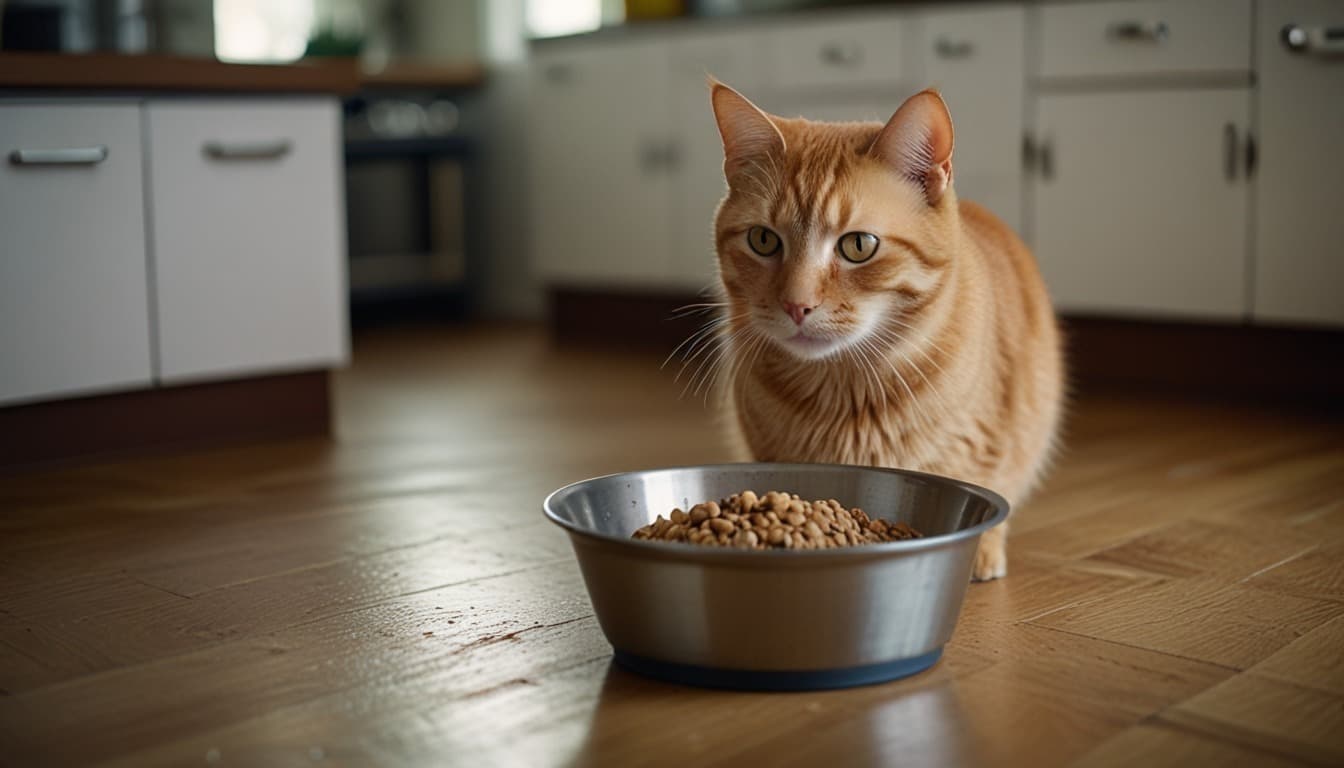
Let me back up a bit. A year earlier, Miso had weighed maybe 13 pounds—a little plush, but not alarming. The shelter vet had said "keep an eye on it" and so I'd marched to the pet store and grabbed a bag emblazoned with LEAN SUPPORT and HEALTHY WEIGHT and photos of svelte cats looking smug. I thought I was doing the right thing. And for the first month, she seemed okay. But then she started begging. Constantly. Pacing by the bowl. Meowing at 4 a.m. like a fuzzy alarm clock. The bag said I could feed her ¾ cup a day for weight loss, and I stuck to it. By month six, she'd gained three pounds. By month ten, her belly swung when she walked. That's when I started googling "why is my cat gaining weight on diet food" and found a rabbit hole that made me want to throw the whole bag into the sun.
Here's the ugly truth about most commercial weight control kibbles: they reduce the fat, but they don't reduce the carbohydrates. They might even bump the carbs up to replace the fat and still hold the kibble shape. And since cats are obligate carnivores whose natural diet is 2-5% carbohydrate by dry matter, dumping a 30% carbohydrate kibble into them—even if it's "light"—is like feeding a diabetic a bowl of rice cakes and calling it a weight loss plan. The cat's insulin spikes, the hnger starts, and the weight sticks or climbs. I fell for it completely, and so do thousands of well-meaning owners every day.
I once tried those same light kibblles on my dog Gus—a senior lab mix with creaky joints—and he turned into a sausage. I wrote about that disaster over here, and the same principle applied to Miso: high carb, moderate protein, low fat is a recipe for a hungry, overweight pet. The exception might be the expensive prescription weight loss diets that are actually higher protein and fiber, but even thosse need to be fed carefully. The $40 bag of grocery store "lean" kibble? Garbage. Save your money for real food.
I'm not a vet nutritionist, but after six years working in a shelter and fostering more cats than I can count, I've seen this pattern over and over. Cats on dry food, especially free-fed, are far more likely to get fat. I'm not saying all dry food is evil—some high-protein, low-carb commercial dry foods exist—but the ones marketed for weight control are often the worst offenders. Dr. Nguyen explained it with a simple sentence: "If the first three ingredients aren't named meat, don't buy it." Miso's former kibble? Corn gluten meal, wheat, chicken by-product meal. Only one meat in the top three, and it was by-product meal. No wonder she was hungry all the time.
The First Thing My Vet Made Me Do: Math
I'm terrible at math. I droped out of vet tech school partly because the pharmacology calculations gave me cold sweats. But Dr. Nguyen wrote down a number on a sticky note and said, "This is the most important number you'll ever feed your cat." The number was 180. That was Miso's starting daily calorie target for weight loss—180 kilocalories, not the 250+ she'd been getting on the "light" kibble and certainly not the untracked amount she'd been scrounging when I left the bowl out. I had to calculate every calorie that went into her mouth, from meals to treats to the tiny piece of chicken I'd slip her while cooking. No exceptions.
The formula she used was (ideal weight in kg x 30) + 70, then multiplied by 0.8 for weight loss—a starting point. For a cat whose ideal weight is 5 kg (11 lbs), that's (5 x 30) + 70 = 220, and 80% of that's 176, rounded up to 180. This is a rough estimate, and every cat is different, so the vet might adjust based on weekly weigh-ins. But it gave me a number to cling to when I stared at the wet food label and felt my brain short-circuit.
How Many Calories Does a Cat Actually Need?
You'd be shocked how little a cat needs. The average 10-11 lb indoor cat maintains on about 200-230 calories a day. A chunky cat trying to lose weight? Around 170-190. If you're free-feeding dry food, a single cup can easily contain 400+ calories. That means even a "measured" half-cup a day can be too much. I realized with horror that Miso had probably been eating the equivalent of 300-350 calories some days if you counted the treats and the occasional lick of butter on the counter. No wonder she was the size of a fuzzy football.
The $12 Kitchen Scale That Saved My Sanity
I bought a cheap digital kitchen scale from the grocery store and started weighing every meal in grams. Wet food labels usually say something like "95 kcal per 100g" or per can. I'd do the math once, write the grams-per-day on the can with a sharpie, and portion out her daily allowance into little containers every morning. It took maybe two minutes a day. That small habit was the single biggest factor in getting her weight to budge.
I also started keeping a food log in a notebook—just scribbled notes like "Miso 180 kcal: 1/2 can turkey + 15g freeze-dried chicken treat." When I'd hit a plateau or see a slight gain, I could look back and see if I'd been slipping. Nine times out of ten, I had been. The "just a tiny piece" of cheese here, the "she looked sad" extra scoop there. Cats are masters at training you to overfeed them, and a log is your only defense.
Why That 'Cup' Measurement on the Bag Is Whiskey-Tango-Foxtrot Useless
Feeding guides on kibble bags are a joke. They often overestimate massively—sometimes by 50%—because they want you to go through the bag faster. With dry food, a "cup" can vary wildly in calorie drnsity depending on how big the kibble pieces are. When I used the measuring cup that came with the "light" kibble, I later scooped it out and weighed it: a "level cup" actually held 10% more than the bag's standard definition because the kibble settled. That 10% extra over months adds up to a butterball. Weigh your food, people. Don't trust scoops.
Free-feeding: The One Habit I Kicked Immediately
I used to think keeping the bowl topped up all day was the kind, natural thing to do. Then I watched Miso eat the equivalent of three meals in 20 minutes and realized she was living in a perpetual buffet. Free-feeding is basically asking a cat to self-regulate with zero impulse control—and some cats, like some humans, just can't. My neighbor Carol free-fed her cat for 12 years and he died of diabetic complications at 13, because the constant carb intake trashed his pancreas. She still blames genetics, but I watched that cat waaddle to the bowl ten times a day. Free-feeding is a slow-motion wreck for any cat prone to weight gain. I threw the gravity feeder in the donation bin that same afternoon and never looked back.
How I Switched to Wet Food Without Miso Pooping on My Rug (This Time)
Dr. Nguyen suggested switching Miso to a high-protein, low-carb wet food. Cats are desert animals—they get most of their water from prey, so wet food helps with hydration, kidney health, and satiety because of the moisture and protein. I knew this intellectually from the shelter days, but I'd never fully committed because, honestly, dry food is cehaper and easier. But for weight loss, it's night and day. The protein keeps them full, the water fills their belly, and the carb load is much lower. There's a reason you rarely see a feral cat obese—they're eating birds and mice, not corn puffs.
The Carb Problem with Dry Food
Dry food needs starch to hold its shape—without it, it's dust. Even the "grain-free" dry foods often swap in potatoes or peas, which are still carbs. Cats have no dietary requirement for carbohydrates at all. They can metabolize them, but their pancreas has to work harder, and excess carbs get stored as fat. It's the same metabolic price we pay when we eat too much sugar. When I looked at the guaranteed analysis of Miso's old kibble (crude protein 28%, fat 9%, fiber 5%, moisture 10%, remaining 48% being carbohydrate by default), I wanted to scream. That's almost half the diet as stuff a cat doesn't need. The wet food I switched to was around 60% protein, 30% fat, and 3-5% carb on a dry matter basis—closer to a natural mouse diet. She started to shed weight immediately, even on the same total calorie count. I'm not making this up: the macronutrient composition matters just as much as the calorie number.
Transitioning Slowly Enough That She Didn't Revolt
If you've ever had a cat who's addicted to kibble, you know they can be stubborn little gremlins. Miso loved her crunchy cardboard. I knew from past build fails that a sudden switch could cause diarrhea, vomiting, and the kind of protest poop that I wrote about when I tried to change food with another cat here. So I went slow. I mixed a teaspoon of wet food into her kibble for three days. Then a tablespoon. Then half-and-half over the course of two weeks. She sniffed it suspiciously on day four, batted a piece of kibble out of the bowl, and staared at me like I'd personally betrayed her. But by day eight, she was eating the mixture and by the end of the second week, she was on 100% wet food with no digestive upset. If your cat is particularly stubborn, try warming the wet food slightly or sprinkling a little parmesan cheese on top—smells like cat crack and can entice them over the hump.
The One Wet Food That Made Her Vomit (and Why I Don't Demonize It)
I tried a particular salmon-based pâté that was super high fat and rich. Miso gobbled it, then promptly yakked it up on the only non-machine-washable rug I own. I cleaned it up, returned the rest of the case to the store, and moved on. The lesson: not every wet food agrees with every cat. Some cats do better with poultry than fish. Some need a limited ingredient diet. I eventually landed on a turkey-and-liver recipe that she tolerated beautifully and that kept her satisfied for hours. I won't name the brand because I'm not here to shill, but I'll say look for fopds with animal protein as the top three ingredients, no corn/wheat/soy, and a carbohydrate content below 10% on a dry matter basis. Use online calculators if you're unsure—just type in the guaranteed analysis and it'll do the math. Your vet can help too.
Switching to wet food also meant I had to be more disciplined about meal timing. I fed her four small meals a day initially to mimic a more natural eating pattern—dawn, mid-morning, late afternoon, and before bed. That scheule was a pain at first, but I got an automatic feeder that could dish out wet food in ice-pack trays, and that changed everything. I tested a bunch of those feeders on my three utterly shameless cats and only a few survived—here's my full feeder survival guide if you'te looking for one that won't fail on day two.
The Puzzle Feedder That Made My Cat Hate Me for Three Days
Someone in a cat Facebook group convinced me that a puzzle feeder would both slow Miso's eating and give her mental stimulation. I ordered a $25 ball with holes that she had to roll around to dispense her kibble (yes, I used it for a few dry treats even on the wet food plan). The first time I put it down, Miso sniffed it, tapped it with one paw, and then sat down and glared at me. For three days, the ball sat untouched. She'd stare at it, then at me, then at the spot where her bowl used to be. I tried demonstrating, rolling it around like an idiot while she watched from the cat tree with utter contempt. On day four, she finally batted it once, a piece fell out, and she ate it. By day seven, she was chasing that ball around the living room like a tiny panther. The moral: cats hate change until they don't. Give them time and don't panic if they boycott at first.
I'll say this: some cats never take to puzzle feeders, and that's okay. If your cat is food motivated but lazy, you might need to start with a stationary slow-feeder bowl with ridges (those $5 silicone mats work) before graduating to rolling toys. And for the love of all that's holy, don't try to trick a hungry overweight cat into working too hard for her food—she might just give up and stop eating, which is dangerous. I kept a regular bowl as backup for the first week, just in case. When Miso had a day where she refused to interact with the puzzle, I'd put a small amount of her meal in the normal bowl so she never went more than a few hours without eating.
Getting a Chonky Cat to Move Is Like Negotiating With a Brick
Diet alone wasn't going to do it. Miso had the activity level of a throw pillow. She'd find a sunbeam and convert it to naps. Exercise was laughable in her condition—she'd take three steps and flop over. But I knew even tiny increases would help her metabolism and keep muscle mass intact. So I became a cat fitness coach, whhich is the most ridiculous sentence I've ever typed.
The Wand Toy That Finally Clicked (After 47 Failures)
I've a graveyard of wand toys. Feathers, mice, crinkle balls on strings—Miso ignored them all. Then a friend gave me a wand with a slightly heavier leather end that scuttled like a bug. The first time I dragged it across the floor, her eyes dilated and her butt wiggled. She pounced. That was the beginning. I'd do two 5-minute play sessions a day, gradually stretching to 10 minutes as she got fitter. The key was finding something that mimicked prey behavior, not just a floppy toy. I used a technique of darting and hiding behind furniture, making it disappear so she'd stalk. It worked like magic, and after a month, she'd actualky initiate play by staring at the wand and meowing. If you're struggling, try different textures and movements—some cats prefer air prey (fluttering), some prefer ground prey (scuttling). Your cat will tell you.
Cat Sheles on a Budget and the Stud Finder Disaster
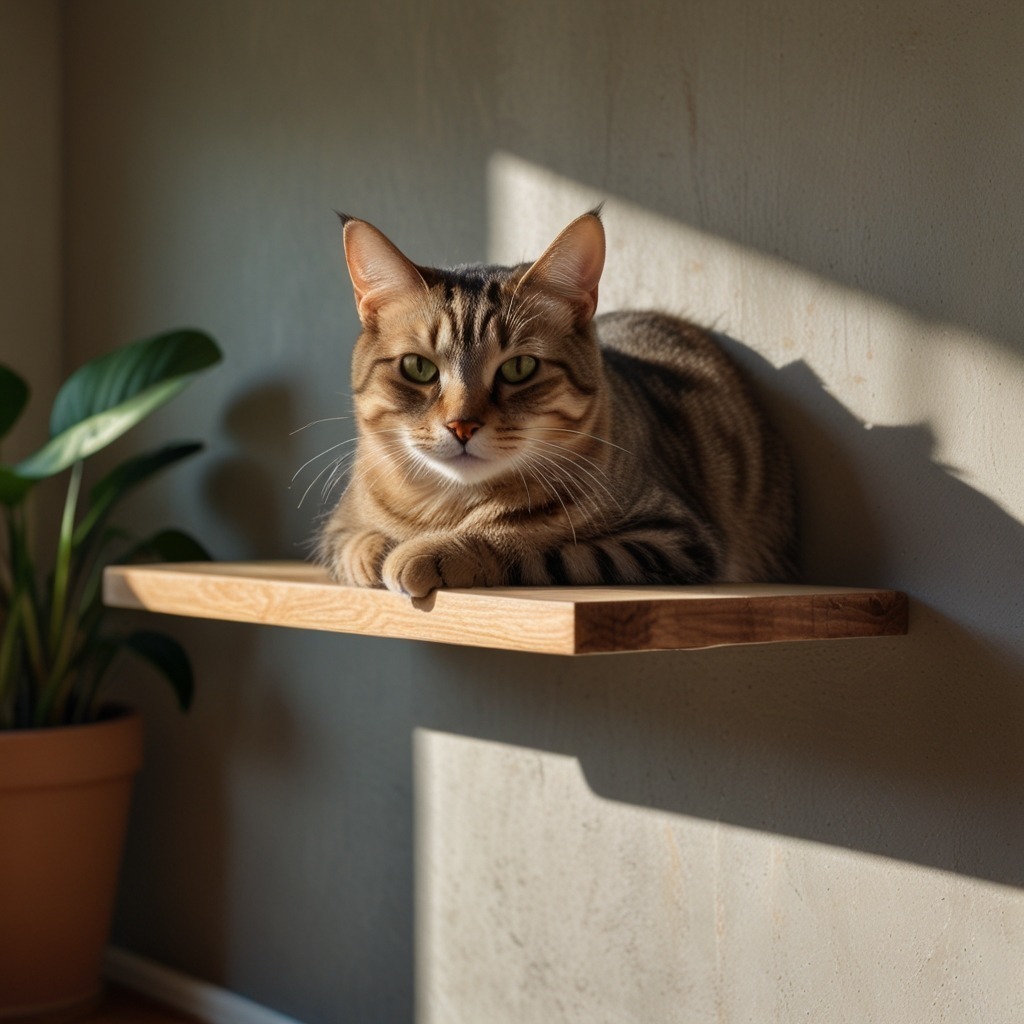
I wanted Miso to climb more. Climbing burns calories and builds confidence. So I tried to install a couple of wall-mounted cat shelves. The first one I put up crashed down because I missed the stud—cue a furious cat, a scattered shelf, and a hole in my wall that looked like a fist had gone through it. Eventually, I got a stud finder that actually worked and mounted some simple shelves in a staircase pattern. Miso was suspicious for two days, but once she realized she could survey the kitchen from above, she was up there all the time. Total cost was under $40. Litterally life-changing for her mobility. (See what I did there? Litterally. I'll show myself out.)
Laser Pointers: A Slippery Slope I Almost Regretted
I bought a laser pointer to get her running. And run she did. For about three glorious days, she'd chase that red dot like a maniiac, and I'd cackle from the couch. Then she started looking for the dot all the time. 3 a.m., she'd be pacing, crying for the dot. She'd stare at my hand, at the drawer where I kept it, then back at me with an expression that said, "Make the red bug appear, servant." I'd created a laser-obsessed gremlin. I had to wean her off cold turkey and replace the sessions with a wand toy that actually resulted in a "kill" reward. Lasers can be fine for some cats if you always end with a physical toy so they can capture something, but Miso was prone to neurotic fixation. I pulled the plug. Now I use the laser once a month as a rare treat and immediately toss a toy for her to pounce on at the end. I'm not risking that again.
The Weekly Weigh-In That Kept Me Sane
You can't manage what you don't measure, another Dr. Nguyen-ism I've stol—uh, adopted. I bought a baby scale from a local mom's Facebook group for $15, placed a non-slip mat on top, and started weighing Miso every Sunday morning. I'd write the number in my notebook next to her calorie log. The first two weeks, she lost nothing. I wanted to scream. But Dr. Nguyen told me to expect that—the body holds water and adjusts. By week three, she was down 0.2 pounds. Week four, another 0.2. By week eight, she'd dropped a full pound. That's right: eight weeks to lose one pound. That's seven months to get near her target weight, if all went smoothly. Which it didn't.
The Baby Scale I Bought from a Mom Group
If you can, get a scale that measures in ounces or tenths of a pound. A standard bathroom scale won't be precise enough for a cat—you need to see those fractional changes. I'd zero out a small basket on the scale, lure Miso in with a treat, and voilà. She caught on quickly and would jump in voluuntarily because the basket meant treats. That's another tip: always associate the scale with something positive. One bad experience and your cat will be a furry octopus whenever you try to weigh her.
Celebrating Ounces, Not Pounds
When you're used to seeing weight loss before-and-afters that happen in a few months, watching a cat lose 0.1 lb a week is brutally slow. But that's the safe speed, because anything faster puts their liver at risk. I learned to celebrate those tiny victories: "New number! She's 17.8!" I'd text my friend Jen, who probably thought I'd lost my mind, but she cheered me on anyway. The social proof kept me going when I wanted to throw extra food at her just so she'd stop staring at my dinner plate.
There were plateaus, too. At 15.8 pounds, she stuck for three weeks. I recalculated her calorie needs based on her new, lower weight (the formula changes as they slim down—a smaller cat needs fewer calories) and slightly cut to 170 kcal/day. The scale started moving again. I checked in with the vet during the plateau to rule out any metabolic issue, and she confirmed we were on track. That check-in was critical. I've seen too many people guess and end up starving their cat unknowingly. Vet involvement isn't optional with feline weight loss; it's the safety net that lets you sleep at night.
The Saggy Belly Panic and Other Post-Weight Loss Weirdness
Six months in, Miso looked like a deflated balloon. Her primordial pouch—that loose flap of skin—hung lower than ever, and I panicked that something was wrong. Dr. Nguyen laughed (kindly) and said it's totally normal. The skin loses elasticity after rapid fat loss, and it may never fully tighten. It doesn't bother them. A lot of formerly chunky cats walk around looking like they're smuggling extra fur. Miso was still beautiful and, more importantly, healthy. So if your cat's belly swings a bit after weight loss, don't waste money on "firming" supplements. Just let it be.
Six Motnhs Later: Miso's Vet Visit and the Words I Never Thought I'd Hear
Yesterday, I took Miso back for her follow-up. She hopped onto the scale—11.2 pounds, right on target—and Dr. Nguyen grinned and said, "You've added years to her life." I didn't cry, but I definitely huggd that cat tighter than she appreciated. The bloodwork came back clean. No sign of diabetes. Liver values normal. She can now jump onto the kitchen counter without a running start (which created a whole new set of problems, but I'm not complaining).
Maintenance is a slightly higher calorie allowance (around 200-210 kcal/day) and continued wet food, weighed absolutely still. She gets the occasional treat—I'm not a monster—but I account for it. I'll never go back to free-feeding, never trust a kibble bag's promises, and never underestimate the power of a $12 kitchen scale and a vet who sees through marketing bullshit. Miso now chases my dog Max around the living room for fun, and last week I caught them napping in the same sunbeam. If you'd told me a year ago that my butterball would be the one initiating play, I'd have laughed and cried at the same time. But here we're.
If your cat needs to lose weight, start with a vet visit. Get a blood panel, get a target calorie number, and then settle in for a very slow, very uneven ride. You'll make mistakes—I made plenty—but as long as you're measuring and adjusting and not starving your cat, you'll get there. And sometime about a year from now, your vet will say something that makes the whole agonizing process worth it. I promise.
Quick Reminder: I'm not a vet. I'm a blogger with a rescue habit and a big mouth. Always run any diet changes past your own vet first. Hepatic lipidosis is real and it's terrifying—don't fast your cat or drastically slash calories without professional guidance.