Can cats eat tuna?
Tuna seems like the ultimate cat treat, but my foster cat Miso's obsession cost me $340 in vet bills and a destroyed pantry door. Here's the messy truth about mercury, thiamine deficiency, and junk-food cat addiction — from someone who's made every mistake.
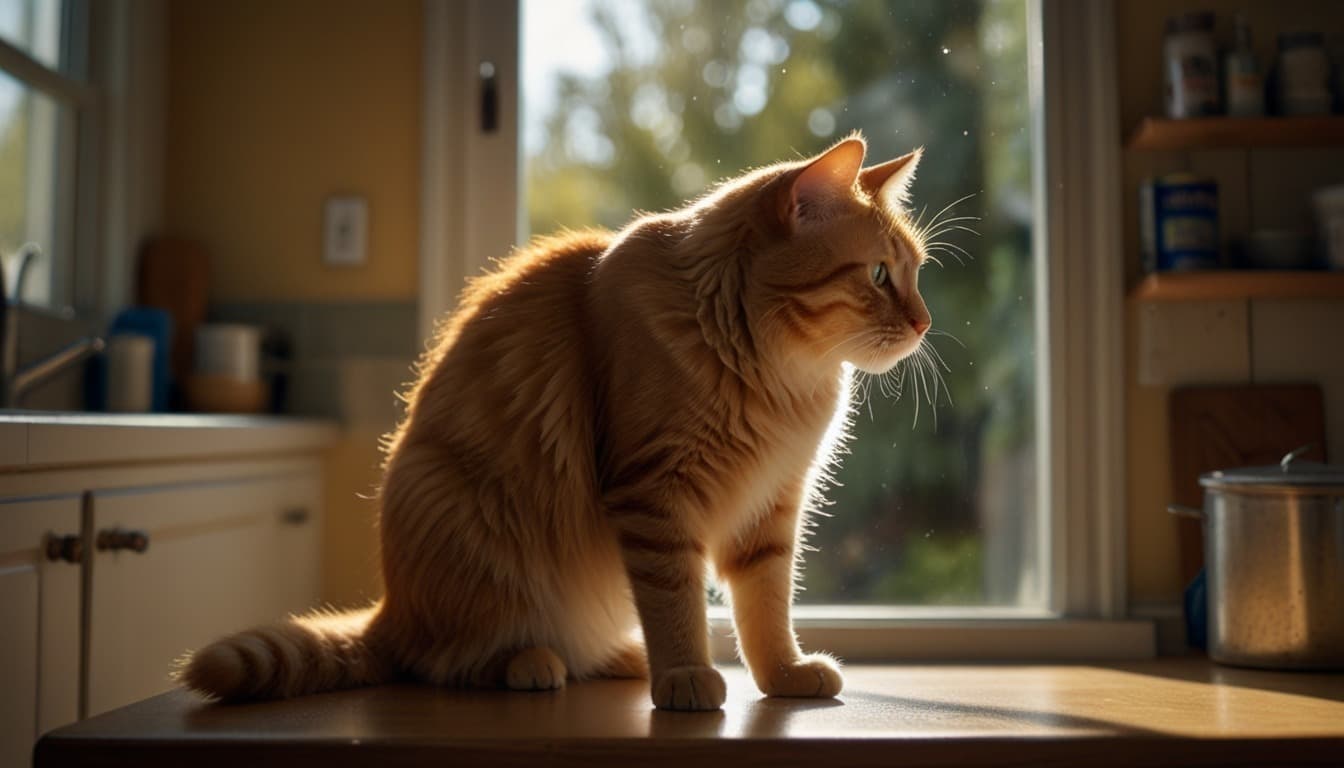
The first time I opened a can of tuna in this house, my build cat Miso knocked a full glass of water off the counter trying to reach my elbow. Water everywhere. Glass shards. The dog started barking. I was holding a can of chunk light tuna in water and suddenly it was the most valuable object on earth. Miso — eight pounds of orange chaos — levitated onto the counter and screamed directly into my ear. I gave her a tiny flake. She inhaled it, then spent the next 40 minutes trying to break into the pantry. Tore a hole in the door. Actual drywall damage. So yeah, cats can eat tuna. But should they? That's a messier question, and I've made every mistake answering it.
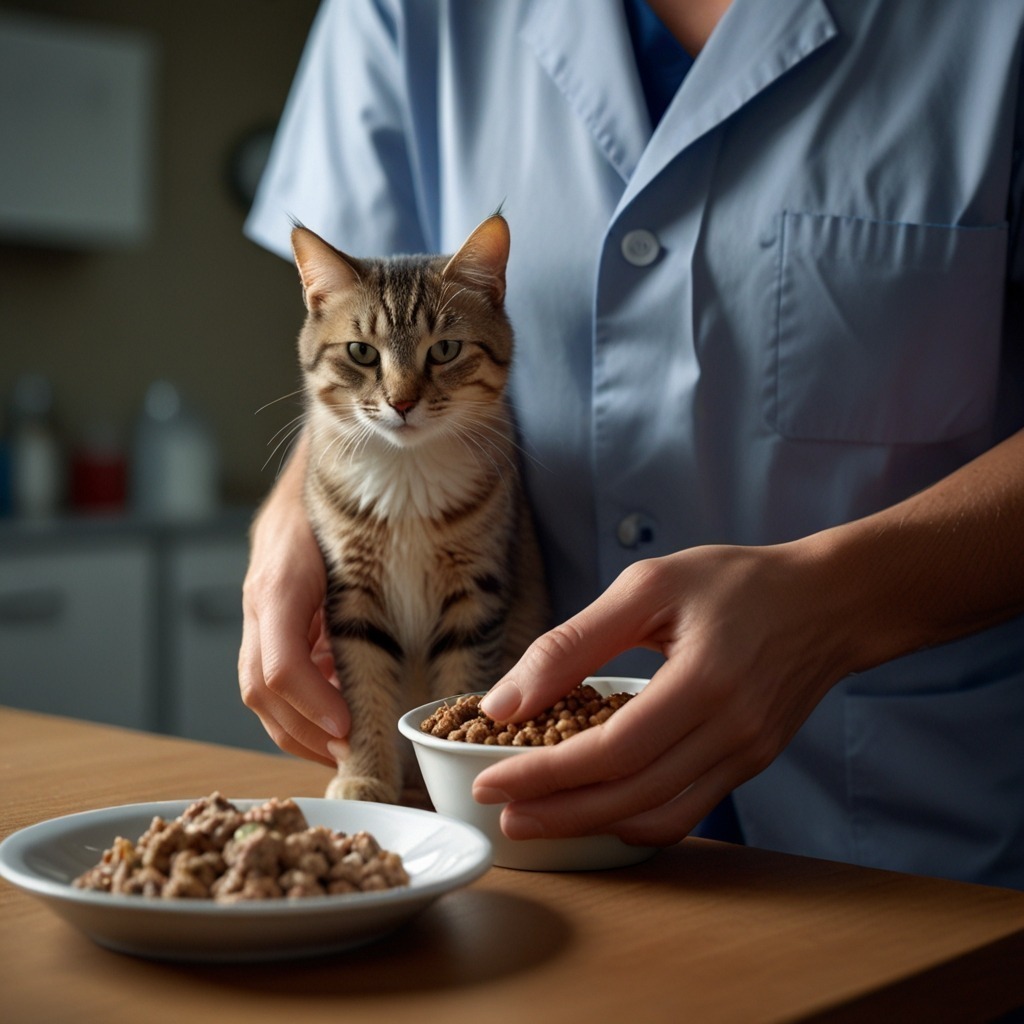
I'm not a vet. I dropped out of vet tech school 16 years ago after a particularly bad day involving a Rottweiler, a rectal thermometer, and a panic attack. But I worked at a shelter for six years after that, I've fostered over 40 cats and dogs, and I currently have three rescue dogs under my kitchen table and a build cat judging me from the windowsill. I've also dealt with cat nutrition drama more tmes than I can count. Tuna is probably the most common thing people ask me about, after litter box problems and why their cat won't stop attacking their feet at 3 AM. Everyone thinks they're treating their cat. And that little mrrrp? sound they make when you peel back the lid is hard to argue with.
But here's the thing: I once fed a cat so much tuna she stopped eating anything else, dropped a pound and a half in three weeks, and cost me $340 in bloodwork and B12 shots. I'll get to that. First, let's talk abuot what actually happens when tuna becomes your cat's primary food source — because it's not what the cartoon cats led you to believe.
The cat-tuna obsession is real (and I've got the destroyed pantry door to prove it)
Cats go stupid over tuna. Not all of them, but a surprising number. It's the smell. Tuna is rich in compounds called inosine monophosphate and certain amino acids that hit feline umami receptors like a freight train. Your cat is't just being a jerk — they're biologically programmed to find that scent irresistible. In the wild, a strong-smelling protein source meant high-value calories. Their little brains never got the memo that a can opener doesn't mean they've hunted down a seabird.
Miso, my build fail who never actually left, was the wort tuna addict I've ever met. If I so much as touched a can opener, she'd teleport from wherever she was — dead asleep under the bed, mid-battle with a toy mouse — and start weaving between my ankles like a furry orange shark. I thought it was cute. For about three months, I'd give her the juice from the can after I made tuna salad for myself. Just the water, I told myself. That's basically free flavor. What's the harm?
Well. The harm is that she started refusing her regular food. Completely. She'd look at her bowl of high-quality wet cat food — the stuff I recommended to every adopter — and then look at me like I'd served her warm garbage. She'd sit by the pantry and yowl. She'd follow me around the kitchen, tripping me, making this pathetic little chirping sound that I swear she invented just to manipulate me. I cracked. I started mixing a teaspoon of tuna into her dinner. Then a tablespoon. Then I was just opening cans for her.
This went on for maybe two months before I noticed she was losing weight. Her spine startrd to feel too prominent when I'd pet her. She got picky even about the tuna — only the expensive albacore packed in water, none of that chunk light crap. And her coat, which had always been sleek, started looking greasy and dull. I took her to my vet, Dr. Nguyen, who has put up with my panic calls for 11 years through three dogs and a divorce and has the patience of a saint.
Dr. Nguyen did the exam, felt Miso's spine, and asked what she'd been eating. I told her. She didn't even look surprised. She just said, "Sarah, you've turned a perfectly healthy cat into a junk-food vegetarian's nightmare. Tuna isn't a meal. It's basically cat candy with a mercury chaser."
Why a little tuna is fine but a lot is a dumpster fire
Here's where I back up and explain the actual nutritional problem, because I wish someone had smacked me over the head with this back when I thought I was being a good cat mom. Tuna fish, on its own, isn't balanced cat food. It's missing a bunch of nutrients cats need, and it has things cats absolutely shouldn't get in large quantities. Let's break it down.
Mercury: not just for thermometers
Tuna is a large, predatory fish. It sits near the top of the marine food chain, which means it accumulates mercury from all the smaller fish it eats over its lifetime. Mercury is a heavy metal that affects the nervous system. For humans, the FDA puts out guidelines about limiting tuna consumption during pregnancy. For cats, a fraction of our body weight, the risk is proportionally higher.
I'm not saying one flake of tuna will give your cat mercury poisoning. But if you're feeding tuna as a meal replacement — even a couple times a week — you're dosing your cat with low levels of mercury over time. The symptoms are subtle until they're not: loss of coordination, tremors, weakness, behavioral changes. I've never personally seen full-blown mercury toxicity in a cat, but Dr. Nguyen has. She told me about a cat who'd eaten a can of oil-packed tuna every day for two years. The owners thought they were spoiling him. He was slowly going blind and stumbling into walls by the time they brought him in. Some of the damage was permanent.
And here's the thing that keeps me up at night: different tuna species have different mercury levels. Albacore (white tuna) has roughly three times the mercury of chunk light tuna. So if you're giving your cat the "good stuff" — the fancy solid white albacore packed in water — you're actually giving them more mercury per bite. I was doing exactly that with Miso, because of course I was. I'm the idiot who springs for the premium cat candy.
The thiaminase problem nobody warned me about
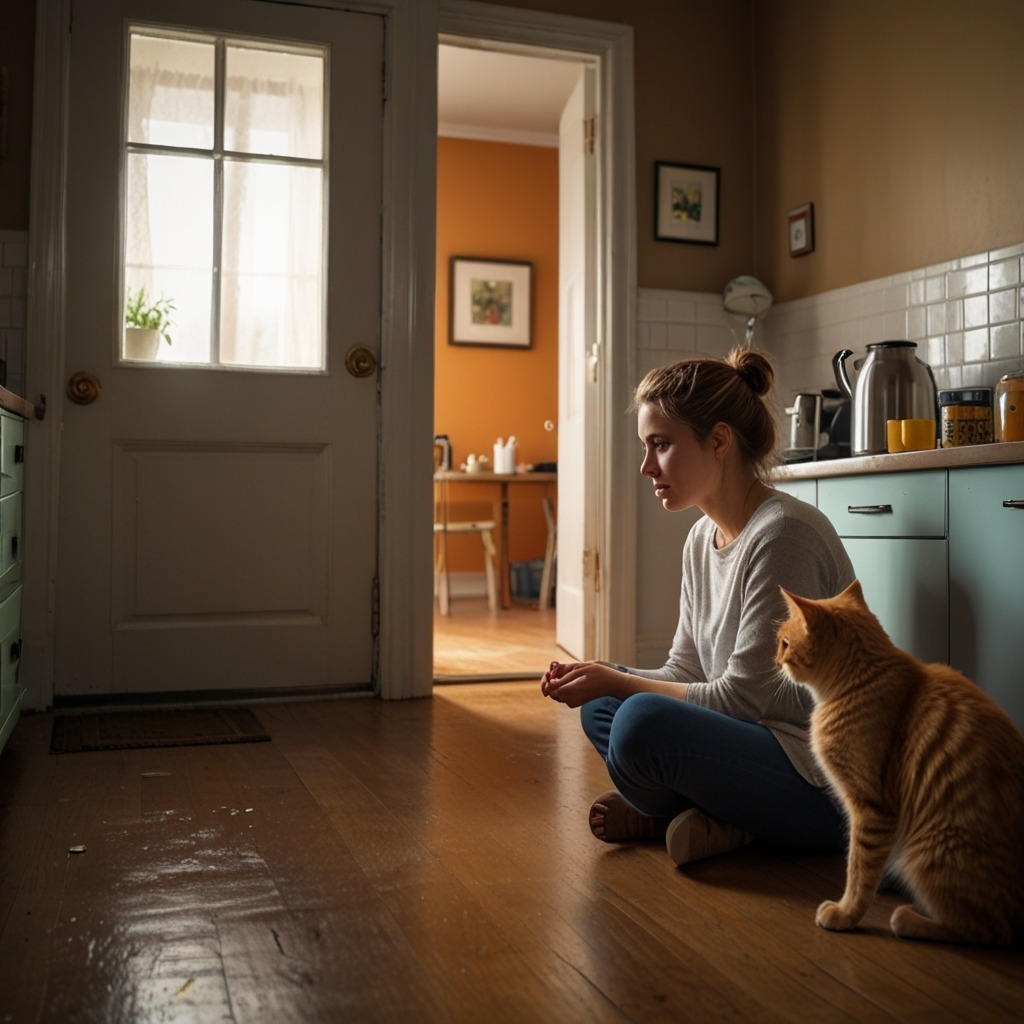
This is the other big one, and it's less well-known. Raw fish — including raw tuna — contains an enzyme called thiaminase that breaks down thiamine (vitamin B1). Cats have a particularly high requirement for thiamine, and a deficiency can cause serious neurological problems: head tilt, circling, seizures, even death. Cooking destroys thiaminase, so canned tuna is safe in that regard (the canning process involves cooking). But here's the catch: some fish, even when cooked, still contain compounds that can interfere with thiamine absorption if fed in large quantities over tiime. The science isn't 100% settled, but there are plenty of documented cases of cats developing thiamine deficiency on all-fish diets, including cooked fish.
I learned this the hard way in a roundabout fashion. A build cat I had back in 2016 — a scrawny tuxedo named Sushi (because of course) — was a picky eater and would only touch fish-based wet foods. I rotated brands, but fish was the constant. After about a year, she started acting strangely: head tilt, dilated pupils, no balance. Emergency vet visti. $600 later, thiamine deficiency. The vet asked me what I'd been feeding, and when I said "mostly fish formulas," she just nodded. Told me to switch to poultry-based foods and supplement B12 for a while. Sushi recovered, but it scared the crap out of me. Ever since then, I've been real careful about how much seafood I let my cats eat, tuna or otherwise.
Nutritional imbalance: missing the forest for the fish
Tuna alone doesn't come close to meeting the nutritional profile of a complete cat food. Cats are obligate carnivores, meaning they need specific amino acids (taurine being the most famous), fatty acids, vitamins, and minerals in precise ratios. Commercial cat foods are formulated to meet AAFCO standards — they're balanced. A can of chunk light tuna? It's just muscle meat, water, and maybe salt. No taurine added. No calcium with the right phosphorus ratio. No vitamin E. No essential fatty acids in the right amounts.
When you feed tuna as more than maybe 10% of the daily calorie intake, you're diluting all those essential nutrients. Over weeks and months, you get deficiencies. The first one I akways notice is vitamin E deficiency, which shows up as a greasy, flaky coat and sometimes actual inflammation of the fat tissue (steatitis). It's painful and completely avoidable.
Then there's taurine. Commercial tuna for humasn doesn't have added taurine, and while fish does contain some taurine naturally, it's often not enough, especially if the tuna has been processed. Taurine deficiency causes dilated cardiomyopathy — a heart condition that can be fatal. I've seen it in a rescue cat who'd been fed a home-cooked diet of chicken and rice for two years before he came to us. His heart was barely pumping. We got him on proper food and taurine supplements and he lived another four good years, but it was a close thing. Tuna as a main diet is the same kind of risk, just with a fishy wrapper.
What about the fancy tuna? (Spoiler: still not ideal)
I can hear someone out there thinking, "Okay Sarah, but I only give my cat that gourmet wild-caught skipjack packed in spring water with no added salt." I get it. I've been that person. I've stood in the grocery aisle comparing labels and thinking I was being responsible. But the core problem isn't the quality of the tuna — it's the quantity and the fact that it's not a complete food.
Skipjack does have lower mercury than albacore, so if you absolutely must give tuna as a treat, it's a better choice. Tuna packed in water is better than oil, because oil adds unnecessary fat calories and can cause pancreatitis in sensitive cats. But even the best tuna in the world is still just a treat. It shouldn't make up more than 10% of your cat's daily calories, and honestly, less is better.
Also: watch out for tuna packed with added salt or — god forbid — spices. Some brands do a "tuna in water with added vegetables" thing. Those vegetables could include garlic or onions, both of which are toxic to cats. Always check the ingredient list. If there's anything other than tuna and water, skip it for the cat. Plain, low-sodium chunk light tuna packed in water is the safest minimum-worst option. But it's still not a meal.
My vet's exact words: "Sarah, stop romanticizing canned fish"
When I brought Miso back for her follow-up appointment after switching her to a proper diet, I was still wihning about how she'd glare at me every time I made a tuna sandwich. Dr. Nguyen leaned against the exam table and said, "Sarah, you're not rejecting her. You're giving her a shot at not having seizures at age nine. Stop romanticizing canned fish."
She was right. I'd built up this whole narrative in my head: Miso loves tuna so much, it's her favorite thing, I'm treating her. But cats love a lot of things that aren't good for them. They'd happily eat plastic ribbon if you let them. My last build puppy once ate an entire tube of Blistex and showed zero remorse. Our job isn't to give them everything they want — it's to keep them healthy for as long as possible, even when they're yowling at the pantry at 2 AM.
If you absolutely must give tuna to your cat, here's the damage-control approach
Look, I'm not the cat food police. I know some people are going to give their cat tuna no matter what I say, so let me at least give you the safest way to do it.
- Frequency: Once a week, tops. A tiny amount — think a flaake or two the size of your pinky nail. Not a spoonful. Not a can. A flake.
- Type: Chunk light tuna in water, no salt added. No oil. No flavored pouches. No "premium white albacore." The cheap stuff, ironically, is safer because the smaller tuna species have less mercury.
- Never as a meal: Tuna is a treat, not a dinner. If your cat won't eat anything else, you've got a bigger problem — and continuing to give tuna is making it worse.
- No tuna water: I know it's tempting. The juice. Don't. It's basically concentrated fish-scented saltwater, and for cats prone to kidney issues or urinary crystals, it's extra stress on their system. Mios's tuna water habit was the start of all my problems.
- Monitor for any changes: If your cat starts refusing regular food, losing weight, vomiting, or showing any weirrd neurological signs, stop the tuna entirely and see a vet.
I know that's a bummer. I'm sorry. If it helps, there are plenty of cat treats that taste fishy without the mercury baggage — freeze-dried minnows, bonito flakes, even some commercial cat food brands have tuna-falvored formulas that are actually nutritionally complete. Those are a much safer way to scratch the tuna itch.
A tiny victory: how I weaned my builld off tuna without losing a finger
This is the part where I tell you what finally worked for Miso, because I know there are other cats out there with the same tuna crack addiction. After that $340 vet visit, I went cold turkey — but on the tuna, not the cat. Miso was furious. She threw tantrums. She knocked things off shelves with targeted malice. She'd sit outside the pantry and scream for 20 minutes straight. I wore earplugs.
Here's what I did:
Day 1-3: No tuna at all. Just her complete wet food.
She didn't eat much. I panicked, but Dr. Nguyen told me to wait. A healthy cat wo't starve themselves — they'll eventually eat. By day 3, she was nibbling at her wet food grudgingly.
Day 4-7: Started mixing a fish-flavored complete cat food with her old stuff.
This was the trick. I used a high-quality poultry-based paté but added a spoonful of a fish-flavored complete wet food — something that had actual taurine, vitamins, and balanced nutrition, but still had that fishy smell. Miso was suspicious but hungry. She ate.
Week 2-4: Phased out the fish flavor.
Slowly reduced the fish formula until she was eating plain chicken/turkey paté. By week 3, she was eating normally. Her weight came back. Her coat stopped looking like an oil slick. She stil stares at me when I open tuna for myself, but the yowling has stopped. Mostly.
I also started giving her a tiny sprinkle of bonito flakes — like, half a teaspoon — once or twice a week as a treat. It satisfies the fish craving without the mercury load or nutritional fuckery. She doesn't know the difference. Or if she does, she's decided I'm not worth the fight.
Oh, and I replaced the pantry door. It's got a freesh coat of paint and a new latch that Miso can't pry open. I'm not proud of how long it took me to childproof my own kitchen against an eight-pound animal, but here we're.
When Miso accidentally ate the entire tuna salad sandwich I left unattended
I've to tell this story because it's so on-brand for my life. About six months after the great tuna weaning, I made myself a tuna salad sandwich — the kind with mayo and celery and a little lemon juice — and put it on the counter while I went to pee. I was gone maybe 90 seconds. When I came back, Miso was on the floor with a glob of tuna salad between her paws, licking aggressively. She'd pulled the entire top slice of bread off, eaten most of the tuna mixture, and left a trail of mayo paw prints across my counter into the sink.
I freaked out. Mayonnaise itself isn't toxic, but it's fatty and can upset a cat's stomach. Also, I'd added a little bit of garlic powder to the tuna salad — not a lot, but enough to worry me. Garlic is in the same family as onion and is toxic to cats in sufficient quantities. So I called Dr. Nguyen, fully expecting her to tell me to induce vomiting.
She actually laughed. Said the amount of garlic powder in two tablespoons of tuna salad was unlikely to hurt a healthy adult cat, but to watch for any vomiting or lethargy. Then she said, "You know, Sarah, for someone who writes about pet health for a living, you sure do leave a lot of deadly snacks on your counter." She's not wrong. I once wrote an entire post about my build puppy eating a bottle of ibuprofen and then left a half-eaten chocolate bar on the coffee table the very next week. I'm not a role model. I'm a cautionary tale.
Miso was fine. She had some stinky farts for a day and looked very pleased with herself. But it reinforced something important: cats are opportunistic little monsters, and if you bring tuna into the house, you'd better guard it like a hawk. This is the same cat who once licked bacon grease off a cooling pan and then threw up on my pillow at midnight. I've long since accepted that my home is her home and she's going to find a way into anything that smells like meat.
Grain-free, raw, home-cookrd — why people turn to tuna in the first place
I see it all the time in rescue: someone wants to feed their cat a "natural" diet, gets overwhelmed by the complexity of properly balanced raw or home-cooked food, and defaults to canned tuna because it feels like real meat. It's understandable. The pet food industry is a minefield of marketing nonsense, and there's a certain appeal to feeding something you could theoretically eat yourself. But this shortcut is dangerous.
If you're interested in feeding your cat a whole-food diet, I'm not the person to walk you through it — I've made too many mistakes. There are board-certified veterinary nutritionists who can formulate a balanced recipe. I've seen too many cats come into rescue with nutritional deficiencies because well-meaning owners thought they could wing it. One cat, a beautiful Siamese named Luna, had been fed a diet of mostly cooked chicken breast and tuna juice for three years. She came to us with a heart murmur from taurine deficiency, brittle bones from calcium deficiency, and a coat so dull it felt like straw. She survived, but that kind of damage takes months to reverse and some of it never fully does.
All of this to say: if you're feeding tuna because you don't trusst commercial cat food, I get it. But a can of tuna from the grocery store isn't the solution. There are high-quality, transparent cat food brands out there that use whole ingredients and third-party testing. Start there. Or consult a professional. Don't let your cat be the next Luna.
If you're wrestling with chronic stomach issues in your cat, my adventure with a build cat whose stomach was a warzone might be useful. I went through six brandds before finding one that didn't cause carpet cleanups.
The stray thought about feeding cats that I can't let go of
Here's a tangent that's only loosely about tuna. I think part of why people give their cats tuna — or milk, or little bits of cheese, or whatever — is that we want to share something with them. Food is love, culturally. When my cat stares at me with those big eyes, I feel a primal urge to give her a piece of whatever I'm eating. It's a bonding thing. I get it.
But the kindest thing I've learned to do for my animals is to love them in ways that don't hurt them. For Miso, that meant no more tuna, even though it made her happy in the moment. Instead, I sit on the floor with her while she eats her boring balanced paté and I talk to her. I give her chin scratches. I play with her before meals. The bonding still happens, just without the mercury.
I don't know. Maybe that's spapy. But after 14 years of cleaning up vomit and paying vet bills, I've gotten a lot more pragmatic about what "treating" a pet really means.
If you're navigating a cat's picky eating, I wrote a whole messy guide about what actually helped when I was chasing 'natural' fixes and the three things that made everything worse. Tuna was one of them.
The $340 lesson I'll never stop talking about
So, final answer: yes, cats can eat tuna in tiny amounts as an occasional treat. No, they shouldn't eat tuna as a regular part of their diet. And if your cat has already developed a tuna addiction, you can break it — but it'll suck for a couple weeks and your pantry door might need therapy.
Miso is curled up on my lap as I write this, purring. She's at a healthy weight, her coat is glossy, and she hasn't tried to break into the pantry in months. She still gives me the eyes when I open a can of tuna for myself, but I hold the line. I'll give her a single flake, sometimes, and then I put the can on the highest shelf behind a closed door. She'll never stop hoping. And honestly? I think the hope is its own kind of treat.
Just don't let it get out of hand. Because the vet bills for "oh I was just spoiling her" aren't worth it. Trust me. I've the receipts.