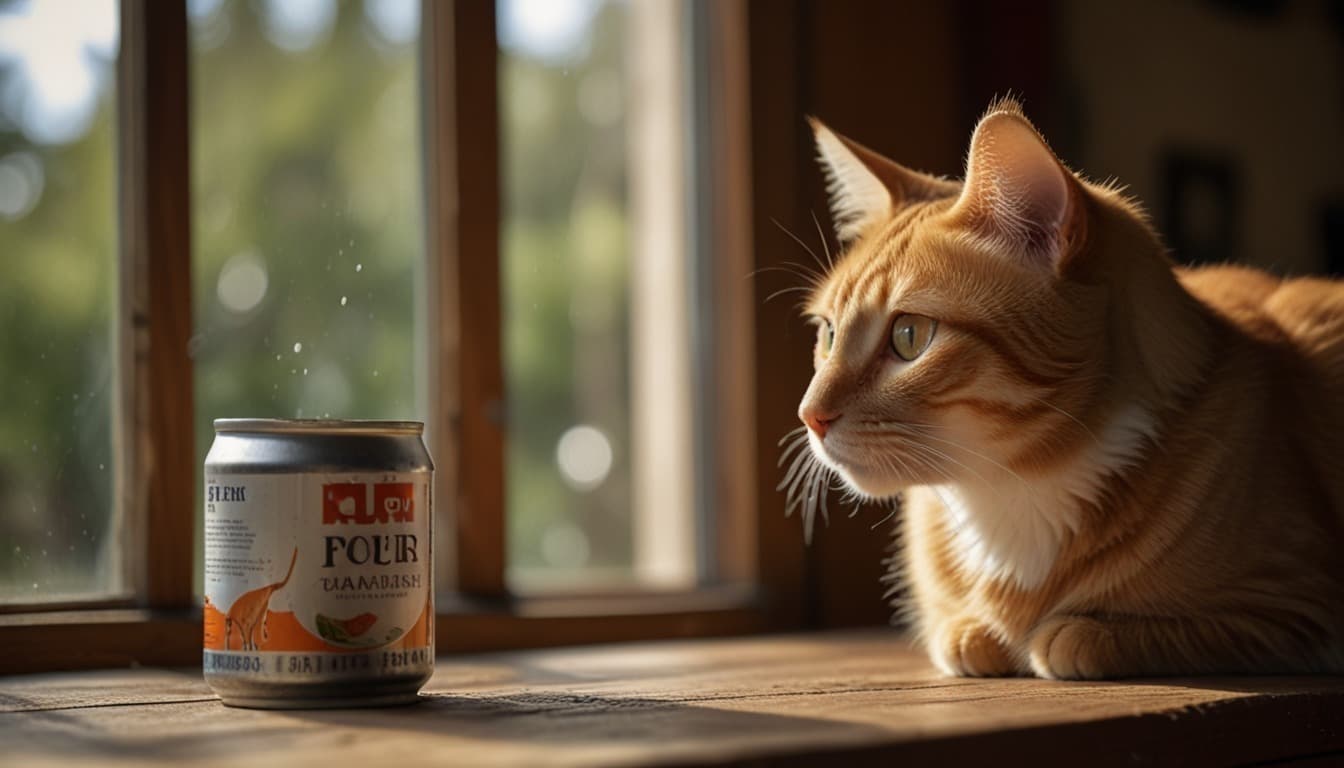
Can cats eat tuna?
Tuna seems like the perfect cat treat—until you're cleaning up projectile vomit at 2 AM. I've learned the hard way what happens when cats get too much, and why even a little can be risky.
The first time I gave a build cat tuna, it was 11:47 PM on a Tusday. I had a 14-year-old orange tabby named Miso who hadn't eaten anything in 36 hours—teh shelter had warned me he was a picky senior with dental issues and a stubborn streak wider than his whiskers. I'd tried three different wet foods, some boiled chicken, even those lickable tube treats that my own cats go feral for. Nothing. He just sat in the corner of the laundry room, blinking slowly, judging my entire existence.
In desperation, I cracked open a can of chunk light tuna I'd bought for my own sad desk lunch. The second that metallic pssshht sound hit the air, Miso teleported from the laundry room to my ankles. I'm not exaggerating. He moved faster than any 14-year-old cat with arthritis should be capable of. I gave him maybe a tablespoon. He inhaled it. Purred for the first time since he'd arrived. I remember thinking, "Oh good, I solved it. I'm a genius."
Four hours later, at 3:47 AM, Miso threw up so violently on my bedroom carpet that I woke up thinking someone was breaking in. White foam, chunks of undigested tuna, and a sound I can only describe as a dying chainsaw. He was panting, his third eyelids were showing, and I spent the next 20 minutes on the phone with the emergency vet, convinced I'd killed him.
He was fine, eventually. But I wasn't. That was the night I learned that the "cats love fish" trope we've all absorbed from cartoons and cat food commercials is, frankly, a bunch of crap that's sent more cats to the vet than I care to count. I've fostered over 40 cats since Miso, and I've made every mistake there's with human food. But tuna? Tuna is the one that catches people off guard the most. It looks innocent. It smells like cat heaven. And it can really, truly mess your cat up if you don't understand what's actually going on.

My build cat Miso and the tuna can that ruined my Tuesday night
I should back up a bit because that story above makes me sound like an idiot. I'm not saying I'm not an idiot—I absolutely am, in many specific ways—but I did at least know that tuna could be a problem. I'd heard somewhere that cats shoulfn't have too much fish. I just didn't know why, or how much "too mich" actually was, or what the warning signs looked like. And honestly? Most cat owners I talk to are in the exact same boat.
Miso was a hospice build. He'd been surrendered at the shelter after his owner passed away, and his medical file was thicker than a novel—kidney issues, arthritis, a heart murmur, and teeth that looked like they'd been through a war. The shelter vet had told me to get calories into him however I could because he was losing weight and mucsle wasting was setting in. So when he turned his nose up at everything except that stinky tuna, I figured the calories were more important than some vague worry about "too much fish."
What I didn't know—what nobody had bothered to explain—was that tuna can actually cause neurological problems in cats if they eat it regularly, even in small amounts. It's not just about mercury, although that's part of it. There's something called thiamine deficincy, and it's terrifying when you see it up close. Miso didn't have it that night—what he had was probably just an upset stomach from the oil and salt—but I later learned that if I'd kept feeding him tuna every day, I could have given him seizures. Actual seizures. From a can of fish.
Let that sink in for a second. I'll explain the science in a minute, but forst I want to talk about why we're all so conditioned to think cats and tuna go together like peanut butter and jelly. Because that's where the problem really starts.
Tuna isn't the "natural" cat food carotons make you think
Pop culture lied to you. I'm sorry, but it did. Every cartoon cat from Sylvester to Garfield has been shown eating fish, and cat food companies have spent millions reinforcing the idea that fish = cat happiness. But here's the thing: domestic cats evolved from desert-dwelling wildcats in Africa and the Mddle East. Their ancestors ate small mammals, birds, reptiles—things that scampered on dry land. They didn't evolve catching tuna in the ocean. A tuna is a massive, deep-water predator that a cat would never encounter in the wild. Not ever.
The whole "cat who loves fish" thing probably started with dockide cats in coastal villages who learned to scavenge fish guts from fishermen. Those cats weren't thriving on a seafood diet—they were surviving on scraps because cats are opportunistic. Over thousands of years, we humans projected that behavior onto all cats and decided it was cute. Now we're shocked when feeding our indoor cats a can of StarKist has consequences.
I'm not saying cats don't like the taste. Oh, they like it. They like it the way a toddler likes birthday cake—it's intense, it's fatty, it hits every pleasure receptor in their brain. But "likes it" and "should eat it regularly" are two completely different conversations. My build Chihuahua once lkied the taste of a used dryer sheet and I had to pull it out of his throat. Liking something doesn't make it safe.
What exactly is in a can of tuna that can mess up your cat?
Alright, let's get into the actual problems. I'm not a vet—I dropped out of vet tech school, remember—but I've had enough emergency conversations with actual vets to know this stuff by heart now. There are four main issues with tuna, and they all overlap in ways that make it worse than the sum of its parts.
Mercury: the slow poison nobody tslks about until it's too late
Tuna is a large predator fish that lives a long time and eats smaller fish, which means it accumulates mercury in its tissues over years. Albacore (white) tuna has significantly more mercury than chunk light tuna because albacore are bigger and older when caught. When a cat eats tuna regularly, that mercury builds up in their system over time—just like it does in humans, except cats are much smaller.
The scary part is that chronic mercury poisoning in cats doesn't look dramatic at first. It's slow. You'll see subtle neurological signs like wobbliness, loss of coordination, changes in behavior, maybe some vision problems. By the time you notice something's really wrong, significant damage may have already happened. And here's the kicker: most routine blood panels at your vet don't check for mercury. You'd have to specifically ask for a heavy metal panel, which most people never think to do because why would you? It's just tuna.
I remember talking to a vet—Dr. Nguyen, the one who's put up with my 2 AM panic calls through three dogs and a divorce—and she told me she'd seen a cat come in with such severe mercury toxicity that it couldn't walk in a straight line anymore. The owner had been feeding it tuna almost every day for three years because it was the only thing the cat would eat. They thought they were being good pet parents, giving their picky senior whatever made her happy in her golden years. Instead they gave her brain damage.
That story has stuck with me for seven years now. Every time I open a can of tuna for my own sandwich, my cats come running like I've summoned them with a dinner bell, and I've to remember that story. It's easy to give in. It's also dangerous.
Thiamine deficiency: the invisible emergency
This one is less well-known than mercury but honestly it's the thing that scares me more in the shprt term. Tuna—and many raw fish—contains an enzyme called thiaminase. That enzyme destroys thiamine (vitamin B1) in the cat's body. Thiamine is critical for neurological function, and cats need a lot of it relative to their size. When thiaminase breaks it down too fast, the cat can develop a deficiency in a matter of weeks.
What does that look like? It looks like a cat suddenly going blind, having seizures, walking in circles, or holding its head at a weird tilted angle. It can also cause heart problems because the heart muscle depends on thiamine to function properly. The condition is called polioencephalomalacia if you want a scary word to Google at 2 AM, and it can be fatal if not caught quickly.
Here's the wild thing: cooked tuna still has thiaminase? Actually, cooking does denature the thiaminase enzyme—so cooked tuna is safer than raw, but the problem is that most canned tuna is cooked during the canning process anyway. So the thiaminase risk from canned tuna specifically is lower than from raw sushi-grade fish. But—and this is a huge but—commercial pet foods that contain fish are supplemented with extra thiamine to compensate. A can of human tuna isn't. So even if the thiaminase is minimal after cooking, you're still giving a food that has no thiamine added back, which creates a nutritional imbalance over time if it's a regular thing.
I learned this the hard way with a build cat named Pickle (yes, his shelter name, don't ask). Pickle came to me already exhibiting mild neurological weirdness—he'd stare at walls for 20 minutes and occasionally twitch like he was chasing something invisible. His previous owner had fed him almost nothing but tuna and cheap fish-flavored dry food. By the time I got him, his thiamine levels were dangerously low. The vet put him on injections and a prescription diet, and he recovered thank god, but it took months. I've got a soft spot for broken cats, and Pickle was one of the most broken I'd ever seen. I've already written about my obsession with "natural" fixes and how that blew up in my face more than once. This was definitely one of those times—thinking a "natural" food like plain tuna was healthier than formulated cat food. Wrong.
Salt and oil: the immediate gut punch
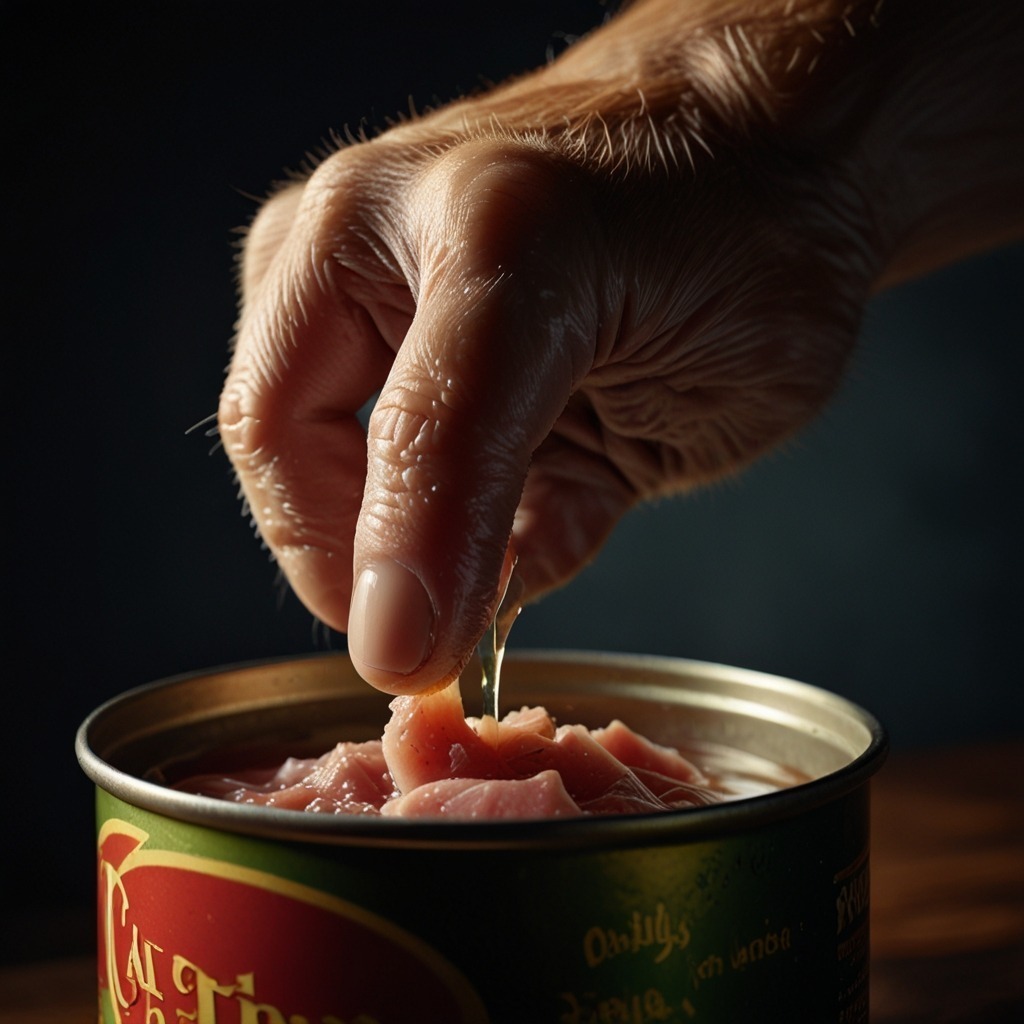
This is the one that got Miso that night. Canned tuna packed for humans often contains added salt (even the "low sodium" versions) and oil. A cat's kidneys are exquisitely sensitive to salt—too much can cause sodium ion poisoning, which leads to vomiting, diarrhea, excessive thirst, and in severe cases, tremors and seizures. A tablespoon of tuna might not seem like much to us, but to a 10-pound cat, the salt concentration in a serving of human-grade canned tuna can be massive relative to their body weight.
Oil is a separate problem. Tuna packed in oil (vegetable oil, olive oil, whatever) is incredibly rich and fatty, and cats' digestive systems often can't handle it. Pancreatitis is a real risk—and if you've never nursed a cat through pancreatitis, I hope you never have to. It's painful, it's expensive to treat, and it's sometimes fatal. My own cat Gus (a chunky tuxedo who would sell my soul for a sardine) got into a can of oil-packed tuna once and spent 24 hours vomiting bile and refusing to move. $340 later, the vet told me he'd given himself a mild case of pancreatitis and would need a bland diet for two weeks. I've detailed my struggles with cat stomach issues elsewhere, and let me tell you, the carpet cleanups from a cat with GI distress will make you question every life choice you've ever made.
The nutritional imballance nobody thinks about until their cat looks like a skeleton
Here's a more subtle problem. Cats are obligate carnivores with very specific nutritional requirements. They need taurine, arginine, arachidonic acid, pre-formed vitamin A—nutrients that, in the wild, they'd get from eating whole prey animals including organs, bones, and blood. A slab of tuna muscle meat is missing most of that stuff. If your cat fills up on tuna and skips their balanced cat food, they're essentially eating junk food that tastes amazing but leaves massive nutritional gaps.
Over weeks and months, that can lead to taurine deficiency (which causes heart disease and blindness), vitamin A deficiency (skin problems, poor coat), and calcium/phosphorus imbalances (bone issues). I've seen this in senior build cats who were fed an all-fish diet by well-meaning owners—they come in with dull, flaky coats, weak hind legs, and sometimes undiagnosed heart murmmurs that could have been prevented with a complete diet. My post about my 14-year-old cat wasting away on the wrong food is basically the same lesson in a different wrapper: cats can't live on one trendy ingredient, no matter how much the internet loves it.
I ran a quick poll at the shelter and the results made me cringe
A few years ago, I was working a Saturday shift at the shelter (this was back when I still worked there, before I started writing full-time from my kitchen tabel). I got curious and asked 45 people who were surrendering or adopting cats one simple question: "Have you ever fed your cat tuna from a can?"
38 said yes. Of those, 22 said they fed it at least once a week. 14 said it was the only thing their cat would eat. And 6—six people—said they'd taken thir cat to the vet for vomiting or diarrhea and never connected it to the tuna because "it's just fish, it's supposed to be healthy."
I'm not sharing this to shame anyone. I was one of those people before Miso. The problem isn't that we're bad pet owners—it's that nobody tells us this stuff. Vets don't hand out a pamphlet called "Human Foods That Seem Fine But Aren't." The cat food aisle is covered in pictures of fish. The disconnect is massive.
Actually, wait, let me go on a quick tangent here because this has been bugging me for years. Why do cat food companies use salmon and tuna imagery so heavily when fish-based diiets are linked to so many health problems in cats? I genuinely believe it's because fish smells stronger, which makes the food more appealing to cats (and more palatable to the humans buying it because we associate strong smells with freshness). It's marketing. It's not nutrition science. And it works so well that we've internalized "fish = cat" without ever questioning it. I've watched friends buy $40 bags of "wild-caught salmon recipe" kibble thinking they're doing something premium for their cat, when in reality a rotation of poultry-based wet foods would probably be healthier in the long run. But poultry doesn't sound fancy, and it doesn't have the same Instagram aesthetic as a cat licking a piece of salmon. I hate it here.
Anyway. Back to the pokl. The point is, we're all making decisions based on bad information. And the worst part is that the information we need is actually simple. It's just not loud enough.
So can cats eat any tuna at all? (the answer that'll make nobody happy)
Alright. You came here with a straightforward question and I've been dancing around it for a thousand words. Here's the direct answer: yes, technically, a tiny amount of tuna as a very occasional treat is unlikely to cause immediate harm to a healthy adult cat. But the emphasis is on "tiny," "very occasional," and "healthy." And even with those caveats, there are safer treats you could be giving instead. So the real answer is: why bother?
The "sometimes" rules that vets grudgingly accept
When I pressed Dr. Nguyen on this after Miso's incident, she sighed—a deep, weary sigh that I've heard many times—and gave me the following guidelines for people who absolutely refuse to stop giving their cats tuna:
- Frequency: No more than once every two wees, and that's generous. Once a month is safer.
- Amount: Half a teaspoon for an average-sized cat. Not a tablespoon. Not a whole can. Half a teaspooon. You know those tiny plastic measuring spoons? Use the smallest one.
- Type: Skipjack or chunk light tuna in water, not oil. Rinse it thoroughly with water to remove as much added salt as poossible. Never, ever use albacore or tuna packed in oil or brine.
- Cat's health: If your cat has kidney disease, heart issues, or any neurological condition, don't give them tuna at all. Period. The risks are too high.
- Watch for reactions: The first time you give a tiny bit, watch your cat for 24 hours. Vomiting, diarrhea, lethargy, or any weidr behavior? Skip the tuna forever.
She also said—and I'm paraphrasing—"I'm telling you this because I know people will do it anyway, but I'd rather you just feed a commercial cat treat that's actually designed for cats." I've never forgotten that. Vets aren't trying to ruin your fun. They're just exhausted from treating avoidable problems.
What I do when Miso gives me the eyes
Miso never went back to tuna after that night. But he did become a permanent resident of my house (fospice fail, the shelter calls it) and he still tries to mind-control me every time I open a can of anything. I've found a few alternatives that satisfy the fish craving without the danger, and I'll get to those later. For now, just know that I avoid tuna entirely now—not because a single flake will kill my cat, but because the slippery slope is real. A tiny bit this week, a little more next week, and suddenly you're that owner who's feeding tuna every day and wondering why the cat is sick.
Oh, and an important note I forgot to mention: never give a cat tuna that's been mixed with mayonnaise, onions, garlic, or spices. Mayonnaise is fatty and can cause pancreatitis; onions and garlic are toxic to cats and can cause hemolytic anemia. Even a tiny bit of onion powder can be dangerous. If you wouldn't feed it to a tiny baby, don't feed it to your cat.
The time I thought I found a "safe" tuna treat and my vet nearly strangled me
I need to confess something embarrassing. A few years after Miso, I stumbled upon these "tuna flakes" cat treats at a pet boutique. They were marketed as 100% wild-caught tuna, freeze-dried, no additives. I thought, "This must be safer—it's literally made for cats, right?" I bought a bag and started giving a few flakes to my cats as a high-value reward during nail trims.
Three months later, my cat Beans (a tortie with an attitude and a history of urinary crystals) had a flare-up and neefed a vet visit. When I mentioned the treats, Dr. Nguyen looked at me like I'd just told her I feed my cats battery acid. "Sarah," she said, with the patience of a saint who's been tested too many times, "those treats are still just dehydrated tuna. Still high in phosphorus, still high in magnesium, still potentially problematic for a cat with urinary issues. The fact that someone put it in a cute package doesn't change the chemistry."
Beans was fine after treatment, but I stopped the tuna flakes immediately. The lesson—which I apparently needed to learn twice—was that repackaging a problem doesn't solve the problem. Kind of like how I tested 17 cat litters and learned that prerty packaging means nothing if the product underneath is garbage.
I'm not saying all fish-based commercial cat treats are inherently evil. There are some that use fish meal or fish oil as minor ingredients in a nutritionally balanced formula. But if the ingredient list looks like "tuna, tuna, and more tuna" with nothing addded to balance it, you're basically paying premium prices for the same risks as a can of human tuna. Read labels. Trust no one.
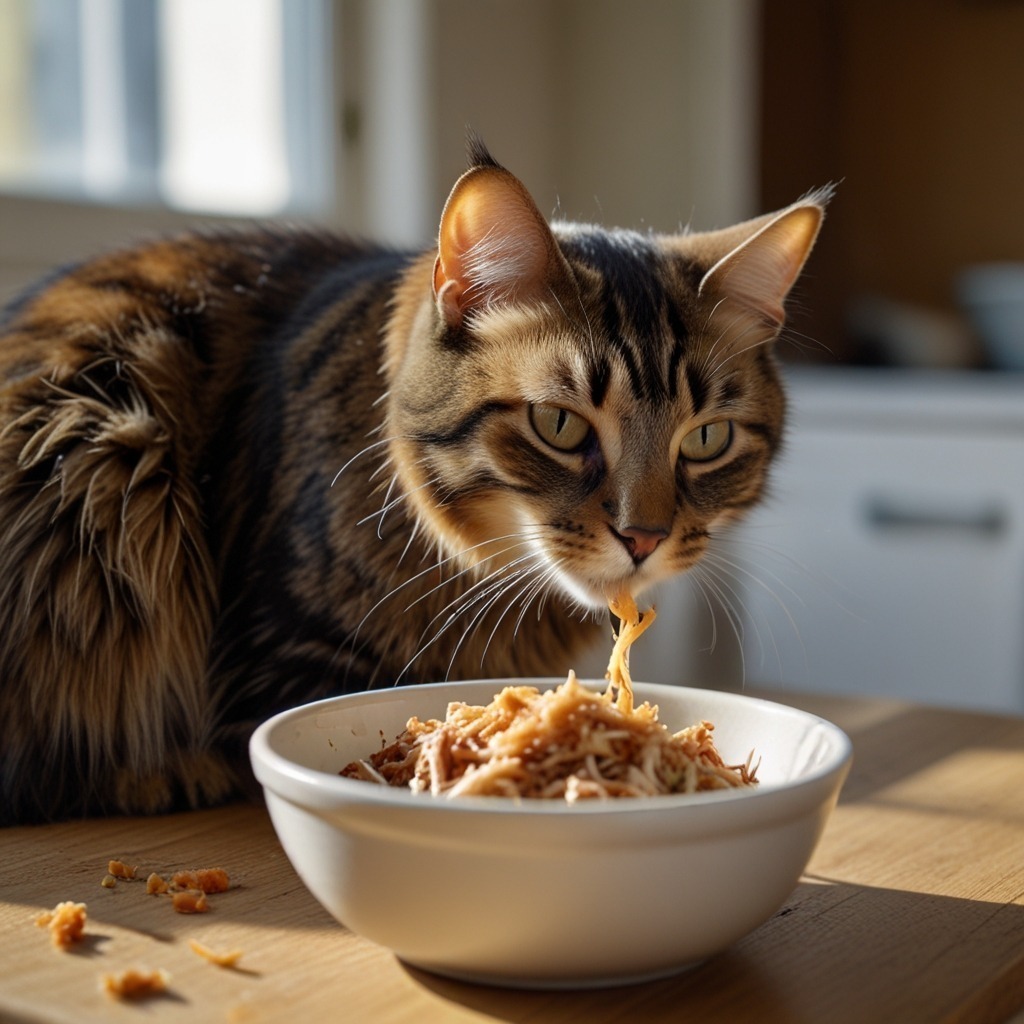
What I axtually feed my cats now instead of tuna
Okay, so tuna is mostly off the table. What do I use instead when I want to give my cats a special treat or bribe them into a carrier without losing a pint of blood? I've experimented with a lot of things over 14 years and 40+ fosters, and here's what's worked consistently without sending anyone to the emergency vet.
Cooked plain chicken or turkey. This is my go-to. Boiled, no salt, no skin, no bones—just plain meat shredded into tiny pieces. Cats go nuts for it, it's lean protein, and you can make a batch once a week and keep it in the fridge. I've seen it pull even the most stubborn cats out of hifing. It's also what I use when a cat is recovering from surgery or illness and needs something easy to digest.
Freeze-dried chicken or turkey treats. These are essentially just dehydrated meat with no additives, and they've the same appeal as junk food without the junk. I buy the ones that are single-ingredient from brands that do batch testing for pathogens. A bag lasts a while because a little goes a long way. My cat Gus does backflips for these—or at least, the cat equivalent of a backflip, which is a dramatic flop onto his side with all four paws in the air.
Sardines packed in water (occasionally). Here's my hot take: if you absolutely must give a fish treat, sardines are a better choice than tuna. Sardines are smaller, shorter-lived fish that don't accumulate nearly as much mercury. They're also packed with omega-3 fatty acids that are good for skin and joints. The same rules apply—packed in water, rinsed, tiny amount, very occasional—but the risk profile is lower. I give my cats a mashed-up sardine about once a month as a coat booster, and I've noticed their fur gets noticeably softer afterward.
Commercial cat treats with actual nutritional balance. I know, boring answer. But there are some excellent treats on the market now that are designed to be nutritionally complete or nearly complete. I look for ones with high protein, low carbs, and added taurine. They're not as exciting as human food, but they're safer, and my cats don't seem to mind the lack of drama.
Something I want to try but haven't yet: I've heard from other build parents that dehydrated minnows or smelt (tiny fish) are a great tuna alternative for cats who fixate on fish flavors. I haven't personally tested these because my current crew is happy with chicken, but I know a few peolpe who swear by them. If you try that route, same caution: check the sourcing, make sure there are no added salts or preservatives, and don't overdo it.
The night I called my vet at 1 AM and she said three words I'll never forget
I want to end with another story because honestly stories are what stick with us. Facts and guidelines are great, but it's the 1 AM panic moments that change your behavior permanently.
About six years ago, I had a build kitten named Pixel—a tiny gray thing with eyes too big for her head and a tendency to eat anything that wasn't nailed down. She was about 5 months old, and I was fostering her through a bout of ringworm. One evening, I'd made myself a tuna sandwich and left the empty can on the counter while I went to answer the door. I was gone maybe 90 seconds. In that time, Pixel launched herself onto the counter, knocked the can onto the floor, and licked every last scrap of tuna residue and oil from the inside. It couldn't have been more than a teaspoon of oil and a few flecks of meat. I didn't even think anything of it at the time—she was so small, but it was such a tiny amount, surely it was fine?
At 1 AM, Pixel woke me up by seizing in her crate. Full body tremors, eyes unfocused, foaming at the mouth. I've never gone from asleep to fully panicked that fast in my life. I called the emergency vet, and the tech on duty (a guy named Marcus who I'd later learn was an ex-Marine with the calmest presence I've ever encountered) walked me through getting her stable enough to transport while I sobbed into the phone. He told me to wrap her in a towel, keep her warm, and get her to the clinic immediately.
At the clinic, the vet on call—not my regular Dr. Nguyen, but a young guy fresh out of vet school—ran bloodwork and asked me a bunch of questions about what she'd eaten. When I mentioned the tuna can, he nodded slowly and said something I'll never forget: "Thiamine deficiency doesn't wait." Three wordds. That's all it took. Over the next few hours, they gave Pixel thiamine injections and IV fluids, and by morning she was groggy but stable. She made a full recovery, but I spent the rest of the week feeling like the world's biggest idiot because I'd let a 5-month-old kitten near a tuna can I knew was dangerous.
Pixel got adopted a few months later by a wonderful couple who spoil her rotten with safe, appropriate treats. I think abuot her every time I open a can of tuna in my kitchen. I put the empty can directly into the outside trash now. Not the kitchen trash. Outside. Because cats are fast, and trauma is a powerful motivator.
If you take one thing away from this whole rambling mess of an aticle, let it be this: tuna and cats aren't the happy pair the world wants you to believe they're. A tiny, rare taste probably won't hurt a healthy cat. But the margin for error is slimmer than you think, and the consequences are so much worse than missing out on a treat. Your cat will be just as happy with a piece of plain chicken—and you'll sleep better knowing you're not accidentally playing roulette with their brain function.
I can hear my cat Beans scratching at the door to go outside (she's indoor-only, but try telling her that), so I'm going to wrap this up before she figures out a way to open it. If you'e got a tuna-obsessed cat at home, just… be careful, okay? And maybe keep an eye on them after you make yourself a sandwich. They're sneakier than you think.