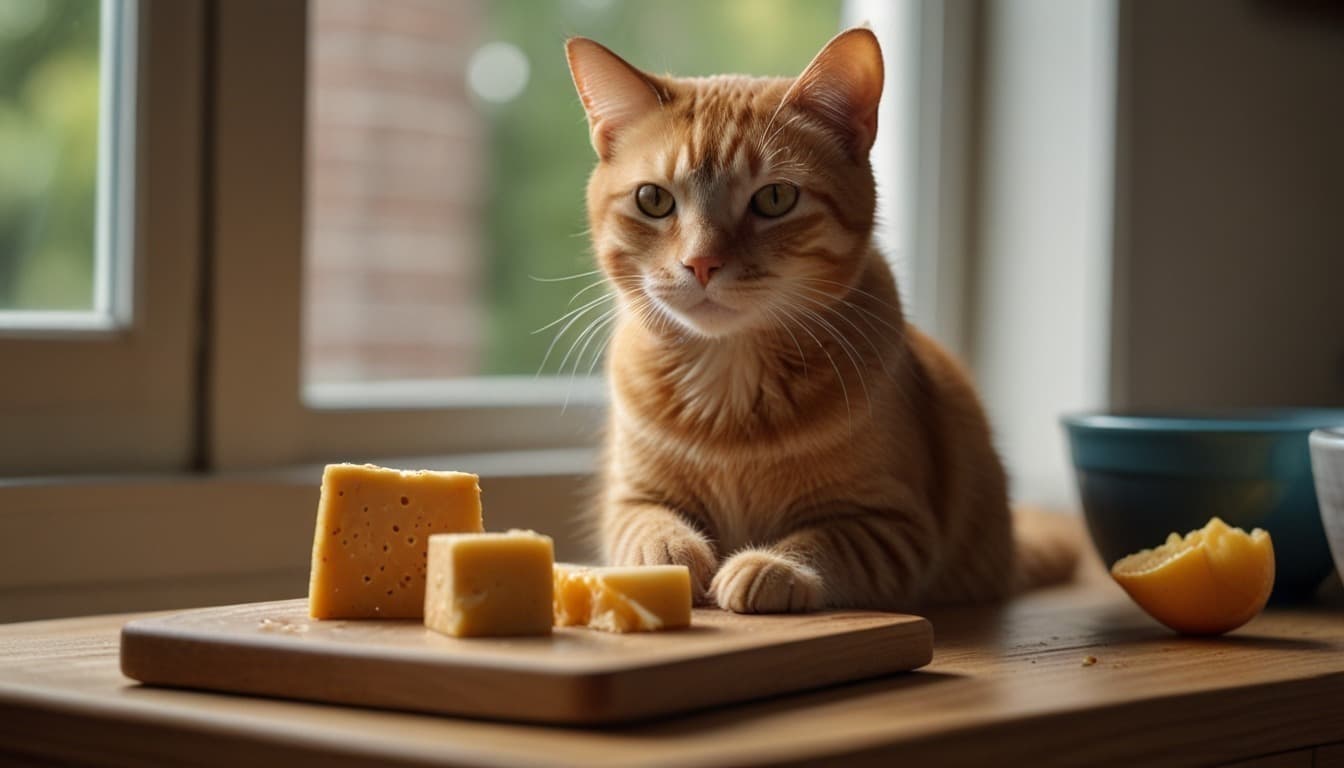
Can cats eat cheese?
I've fostered 40+ cats, and the cheese debate still makes me call my vet at 11 p.m. Here's the messy truth about lactose, safe cheeses, and the foster cat who stole my cheddar.
The first time a build cat stole a chunk of cheese off my counter, I did what any rational person would do at 11 p.m. — I googled "can cats eat cheese" while the cat in question sat there licking his chops and looking far too pleased with himself. That cat was Miso, a fat orange tabby with a rap sheet that included knocking over three glasses of water and once peeing in my laundry basket. He'd snagged a cube of sharp cheddar I'd left out to soften for a grilled cheese I never got to eat. I called my vet. She laughed. Then she told me exactly how stupid I'd been — and exactly how much I should worry.
The cheddar heist that started a three-day debate
Miso was one of those fosters who arrived at my place already convinced he owned it. He weighed about 17 pounds, and most of that was attitude. The cheese wasn't even his first crime. Two days earlier, he'd cllawed open a bag of tortillas while I was in the shower. But the cheddar felt different — I'd actually seen him jump onto the counter (a move I'd assumed his bulk made impossible), bat the cube onto the floor, and inhale it before I could cross the kitchen. The sound he made was somewhere between a purr and a tiny engine starting up.
My brain immediately jumped to worst-case scenarios. I'd fostered dozens of cats, but cheese had never been on my radar as a danger food — not like chocolate or onions or grapes, which I knew cold because I'd made similar panicked Google searches for dogs. So I did what any sleep-deprived pet owner does: I called Dr. Nguyen, my vet of 11 years, at 11:15 p.m. She's put up with my panic calls through three dogs, a divorce, and roughly 40 build cats. She didn't even sigh this time, just said, "Sarah, what did he eat and how much?"
"A cube of cheddar. Maybe half an ounce?"
"Sharp cheddar?"
"Yeah."
She paused. "He's going to be fine. Might get some gas. Might get some diarrhea. But you're not going to let him have a whole block, right?" I told her I wasnt planning on it. She laughed again and told me to keep an eye on his litter box for the next 24 hours and to call her if he started vomiting or acting lethargic. Then she added, "You know, most cats are lactose intolerant. But cheddar's pretty low in lactose. He probably just ate a salty chunk of fat that's going to slide right through him."
Three days later, Miso was perfectly fine. The litter box was… fragrant, but nothing catastrophic. And I'd spent the previous 72 hours reading every scrap of research I could find on cats and dairy because that's what I do when I feel dumb: I overcompensate. Here's what I actually learned.
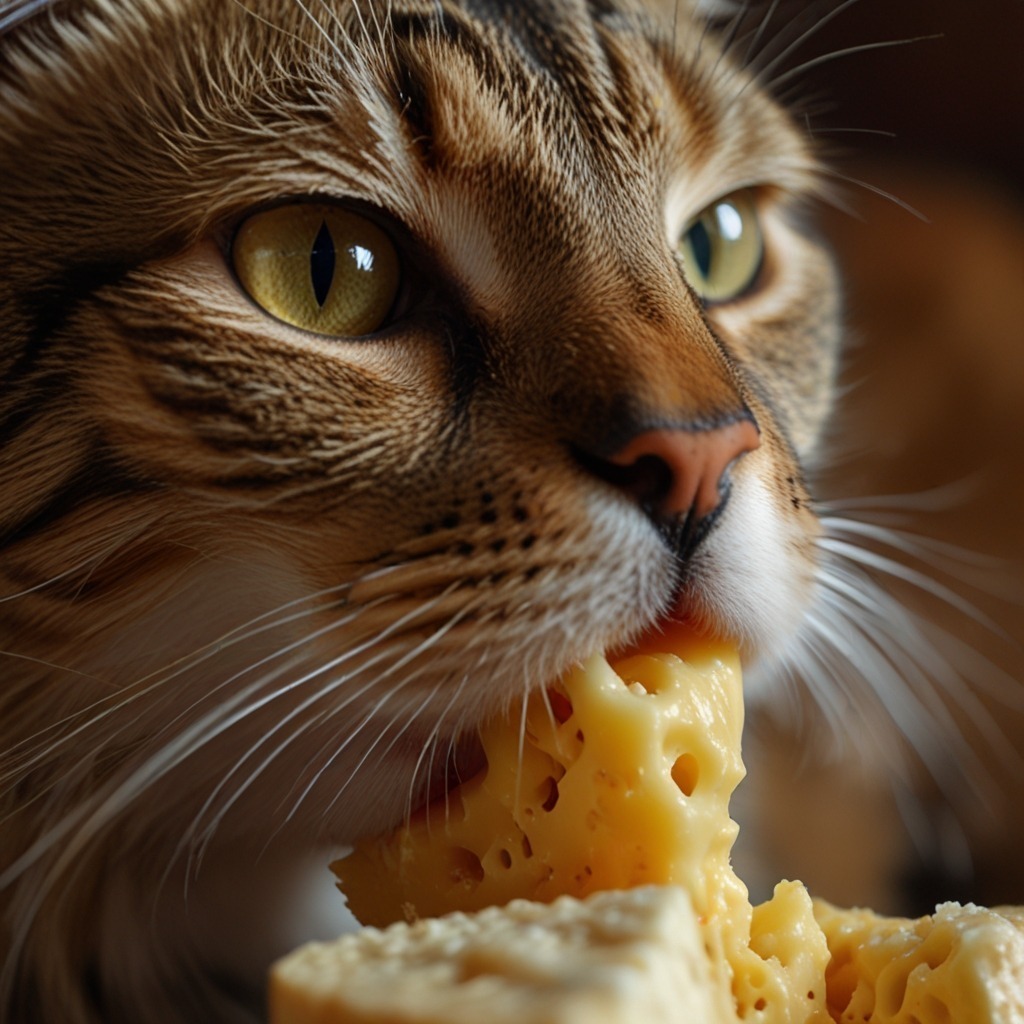
Technically, yes. Realistically? It's complicated.
Can cats eat cheese? The short answer: they can, in the same way I can eat an entire bag of Doritos for dinner. It won't kill them outright, but it's not a great idea.
The longer answer involves a quick biology lesson. Most adult cats are lactose intolersnt — somewhere around 50-70% of them, depending on which study you read. After kittens are weaned, their bodies stop producing lactase, the enzyme that breaks down lactose. So when a cat eats something with significant lactose (like milk or soft cheese), that sugar sits undigested in their gut, ferments, and causes the kind of gastrointestinal chaos that usually ends up on your favorite rug. I've cleaned up enough build-cat diarrhea to know that the rug is always the first casualty.
Cheese, howveer, is a tricky exception because the cheesemaking process removes a lot of lactose. The longer a cheese ages, the less lactose it contains. That's why hard cheeses like cheddar, parmesan, and swiss are technically less risky than, say, a dollop of cream cheese. But "less risky" doesn't mean "safe." Cats still have zero nutritional need for dairy. They're obligate carnivores — their bodies are designed to extract nutrients from meat, not cow secretions. Feeding them cheese is like giving a toddler a multivitamin made of candy. The toddler will love it, but you're not actually helping.
The lactose problem: why cheese isn't just "milk"
Here's the thing that drives me nuts about most "can cats eat X?" articles: they skip over the why and just tell you yes or no, like a traffic light. But the why matters, especially if you've got a cat who's already eyeing your cheese plate and you're trying to decide whether to cave.
Kittens vs. adult cats
Kittens produce lactase like champs because they need to digest their mother's milk. But around 8-12 weeks, as they shift to solid food, lactase production drops off a cliff. By the time a cat is 6 months old, they're usually as lactose intolerant as they'll ever be. So if you've got a kitten and you're thinking a little cheese isn't a big deal — stop. Their digestive systems are still delicate, and you don't want to be the person who gave a 10-week-old kitten explosive diarrhea at 3 a.m. Trust me on this. I did that once with a build kitten named Turnip who'd gotten into some cottage cheese I'd left on the counter. The clean-up involved paper towels, tears, and a bath for both of us. Turnip was fine, by the way. My bathroom rug wasn't.
Incidentally, if you're wondering about other foods that are surprisingly dangerous for pets, the whole raisins-and-dogs thing I linked earlier is a nightmare. But cats have their own list of toxic foods — onions, garlic, chocolate, alcohol, grapes, and anything with xylitol are all hard no's. Cheese isn't toxic; it's just unnecessary and potentially messy.
Lactose content varies by cheese — here's a cheat sheet nobody asked for
Because I'm the kind of person who speent an afternoon cross-referencing USDA food databases with anecdotal reports from cat forums (yes, I know how that sounds), here's a rough breakdown of cheeses from lowest to highest lactose:
- Parmesan, aged cheddar, swiss, gouda — very low lactose (less than 1 gram per ounce). These are the "safest" — if you must.
- Mozzarella, provolone, monterey jack — moderate lactose (1-3 grams per ounce). Riskier.
- Cream cheese, ricotta, cottage cheese, american slices — high lactose. Just don't.
But even the low-lactose cheeses are still high in fat and salt, whch can cause pancreatitis in cats if they get too much. And pancreatitis isn't something you want to mess with. I've seen it once in a build cat named Bongo who'd been fed table scraps by his previous owner. The vet bills were north of $2,000, and Bongo spent three days on IV fluids at the emergency clinic. He pulled through, but I still think about the look on his face when he was shaved and wrapped in a little heated blanket. If you're feeding a cat cheese as a treat, you're playing a game with very small margins.
Signs your cat might regret that bite
If your cat has eaten cheese (or any dairy) and you're watching them like a hawk, here's what to monitor for over the next 12-24 hours:
- Diarrhea or loose stools: The most common reaction. Look for soft, unformed poop. It might smell worse than usual — like, "what died in here" worse.
- Vomiting: Not always, but it happens. A build cat of mine once threw up white foam after sneaking a piece of brie — it scard me half to death. (I wrote about that panic spiral here.)
- Tummy gurgles and gas: You'll hear it before you smell it. The cat won't care, but you might.
- Lethargy or hiding: If your normally social cat suddenly hides uder the bed, that's a red flag.
- Pawing at the mouth or excessive drooling: Culd be a sign of nausea, or in rare cases, an allergic reaction.
Most mild cases pass within a day. But if your cat stops eating, can't keep water down, or seems painful when you touch their belly, get to a vet. Don't Google it. Don't wait. I learned that lesson the hard way when Bongo's pancreatitis first presented as "just a little vomiting" that I ignpred for 24 hours. The $2,000 bill was the penalty for my procrastination.
But why do cats even like cheese?
I mean, they're obligate carnivores. They cam't taste sweetness. So what's the deal?
The current theory — and I say "theory" because nobody's exactly funding massive studies on cat cheese preferences — is that cats are drawn to the fat and protein in cheese. Cheese smells intensely savory, and to a cat's nose, it probably registers as a concentrated version of animal fat. Their wild ancestors learned that fatty tissue was a high-calorie jackpot, so cats evolved to seek out those smells. Your house cat doesn't need to hunt, but the instinct is still there. That cheddar block isn't prey, but their brain doesn't know the difference.
There's also the texture thing. Some cats like the semi-firm rub of a cheese cube against their teeth. My cat, Gribble (a 15-year-old ginger tabby who judges me from the windowsill), goes absolutely bonkers for the crinkly sound of a plastic cheese wrapper. He'll materialize out of thin air the second I open a pack of string cheese. He doesn't even want to eat it half the time — he just wants to lick it and bat it around the floor like a tiny hockey puck. I've given up ttying to understand his brain.
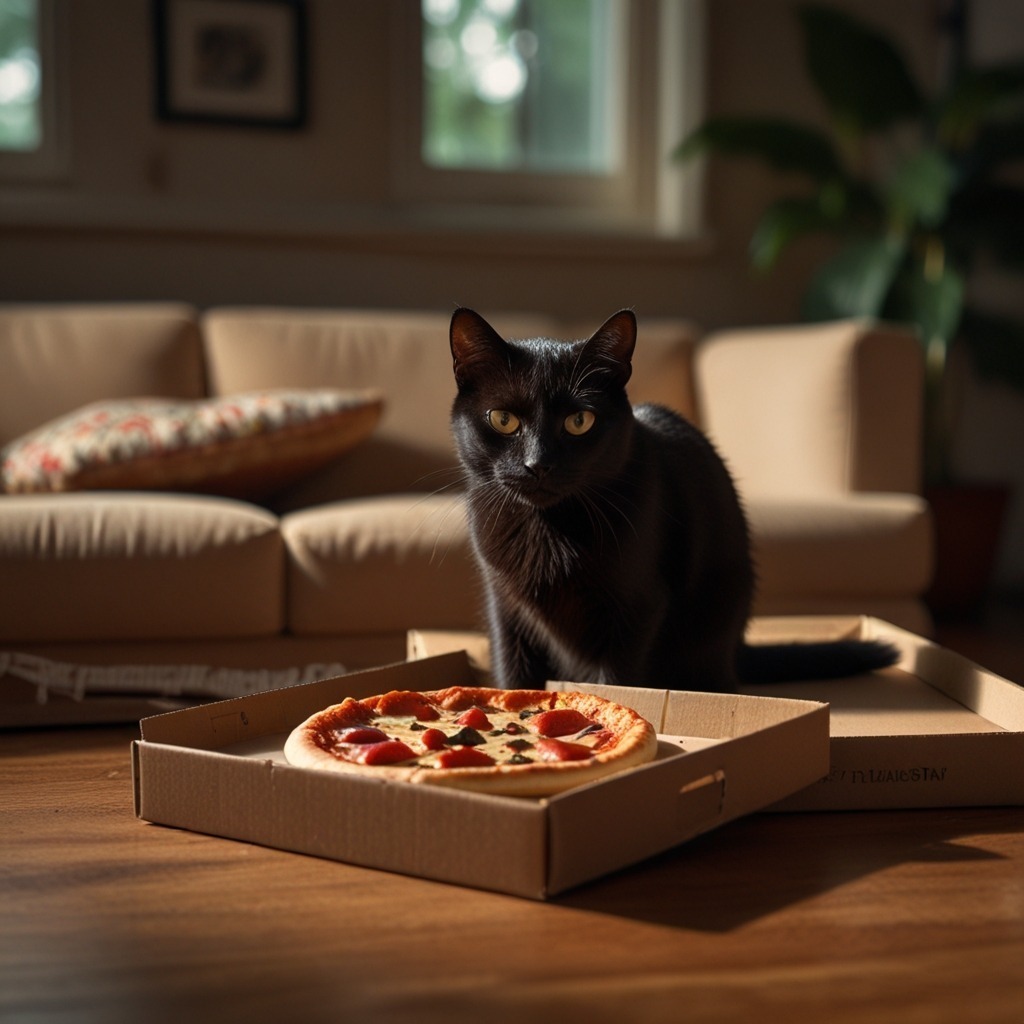
That time my friend's cat ate an entire slice of supreme pizza
Okay, this is a tangent, but it's relevant and honestly it still makes me laugh. My friend Jenna has a cat named Cheese (ironically, or maybe prophetically). Cheese is a sleek black cat with zero survival instincts and a stomach that would make a goat jealous. One Friday night, Jenna ordered a large supreme pizza — pepperoni, sausage, green peppers, onions, the works. She left the box open on the coffee table while she went to get napkins, and in the 90 seconds she was gone, Cheese dragged an entire slice off the table and consumed roughly two-thirds of it before Jenna came back.
The slice included cheese (obviously), but also onion and garlic, which are toxic to cats. So this wasn't just a "will he get the runs?" situation. This was a "we need to induce vomiting NOW" situation. Jenna called the emergency vet, who told her to bring Cheese in immediately. They gave him something to make him throw up — he produced what Jenna described as "a pizza puddle" — and then put him on fluids and monitoring for 24 hours. Total bill: $847. The moral of the story: a single slice of pizza can turn into a very expensive night. Aslo, never let a cat near onions or garlic. Not even a little bit.
This story gets told at every party Jenna hosts now, usually accompanied by the photo she took of Cheese at the vet, looking utterly betrayed and slightly damp. I think about it every time someone asks me if it's okay to give their cat "just a little nibble" of their dinner. Sure, maybe your cat won't eat a whole slice of pizza. But cats are opportunistic chaos machines. They'll lick butter off a countertop, chew through a bread bag, and yes, they'll absolutely steal a piece of cheese the size of their face if you look away for two seconds. Better to not make cheese a "thing" they expect.
Weighing a pea-sized piece of cheese at 2 AM
isn't how I expected my life to go.
But that's where I found myself last year with a build cat named Paorika, who was on a restricted diet because of chronic diarrhea. Paprika had a condition that made her gut as fragile as wet tissue paper — I'd spent months finding a food that didn't trigger her, and I'd documented every step in a post about cat stomach warzones. Then my roommate left a piece of gouda on the counter. Paprika ate it. I founnd myself at 2 a.m., googling the lactose content of gouda, converting ounces to grams, and trying to calculate exactly how much lactose Paprika had ingested relative to her body weight.
She was fine. The irony is that gouda is pretty low in lactose, and the piece was maybe half a pea-sized amount. I'd panicked for nothing. But the experience cemented my rule: if you're going to give a cat cheese, the portion should be no bigger than a pea. Not a grape. Not a sugar cube. A pea. And you should never do it regularly — once a week at most, and ideally only on special occasions like "I need to trim your claws and I'm bribing you" or "you just came back from a vet visit and you deserve something that isn't a needle."
But honestly? There are better bribes. Freeze-dried chicken. Tuna flakes. Even the tiniest speck of plain, cooked salmon. Those are all safer and more species-appropriate. Cheese is just… easy for humans. It's in our fridge. It doesn't require cooking. I get it. But your cat doesn't know the difference between a high-value treat and a low-value one — they just know you're giving them something delicious, and they'll see cheese as the gold standard if you let them.
The "safe-ish" cheeses (if you're going to do it anyway)
Look, I'm not your mom. If you've weighed the risks and still want to give your cat a tiny taste, here's the breakdown of which cheeses are least likely to cause immediate disaster. This isn't veterinary advice. I'm just a lady with too many cats and a Google Scholar habit.
Hard, aged cheeses — lowest risk
Parmesan, aged cheddar, asiago, pecorino romano, grana padano — these are the ones Dr. Nguyen said were "technically fine in minuscule amounts." They're dry, crumbly, and have had most of their lactose converted to lactic acid during aging. A few shreds of parmesan on your cat's food (like, three shreds) probably won't do anything except make them happy. But don't let them lick the block. The salt content in aged cheeses is sky-high, and cats' kidneys aren't designed to process large amounts of sodium. I once fostered a senior cat with early kidney disease — you can read about how I almost missed his weight loss here — and the vet was adamant abot zero salty treats. Kidney issues in cats are terrifyingly common, and salt makes them worse.
Mozzarella, provolone, and other semi-soft cheeses — proceed with caution
These have more moisture and therefore more lactose. A tiny cube of fresh mozzarella (say, the size of your pinky nail) might be okay for a cat with an iron stomach, but you're rolling the dice. If I absolutely had to choose, I'd go with low-moisture part-skim mozzarella rather than the fresh stuff paacked in water, because the water-logged fresh mozzarella tends to have higher lactose.
Provolone is similar, but watch out for smoked varieties — some smoked cheeses are flavored with onion or garlic powder, and that's a one-way ticket to anemia in cats. Always read the label. Actually, just dno't give them smoked cheese.
Soft, moldy, and processed cheeses — just don't
Cream cheese, ricotta, cottage cheese, brie, camembert, blue cheese, feta, goat cheese, and anything labeled "cheese product" or "american slices." These are high-lactose hellscapes. Brie and blue cheese also carry tiny amounts of mold that can upset a cat's stomach even if the lactose doesn't. The processed slices are basically oil, salt, and mystery binders sahped into a square — no living creature should eat those, including you. I'm not judging. Okay, I'm judging a little. Throw them out.
What vets actually say (and why I still occasionally ignore them)
I've asked multiple vets over the yeasr — including Dr. Nguyen and a feline nutrition specialist I cornered at a conference once — whether cats can have cheese. The consensus is uniformly this: "It's not toxic, but it's not recommended." They all say the same thing: cheese offers zero nutritional benefit, adds unnecessary calories (which matters when you consider that an average cat only needs about 200-250 calories a day), and risks digestive upset. They'd rather you give a commercial cat treat that's formulated for feline nutrition.
And I agree! Intellectually. But then there's Gribble, my ancient ginger tabby, who has been with me for 15 years and has eaten roughly 47 things he shouldn't have and survived all of them. About six years ago, when he was going through a phase of refusing his kidney diet food, I sprinkled a microscopic amount of parmesan on top — like, literally dusted it from a microplane — and he ate the entire bowl. My vet at the time sighed and said, "If it gets him to eat his prescription food, fine. But keep it to an absolute minimum." So I did. And he's still alive. I'm not saying it's a longevity strategy. I'm saying that in the messy real world, sometimes you make trade-offs.
Dr. Nguyen once told me: "The problem isn't the cheese itself. It's that people don't treat it as a 'treat.' They give a chunk because the cat's cute, and then they give another chunk because the cat's still cute, and suddenly the cat's eaten an ounce of cheddar and the person's wondering why the litter box looks like a crime scene."
That's the real issue: portion creep. One pea becomes three peas becomes half a cheese stick because your cat is staring at you with those eyes. (By the way, if your cat stares at you unblinkingly while you're etaing, that's not love — that's manipulation, and I broke down exactly what they're communicating in this post). Cats are master beggars. They know exactly how to look pathetic enough to override your common sense.
The pee-on-the-couch connection nobody talks about
Here's a weird one I stumbled across while researching cheese and cat health: urinary issues. Cats are prone to urinary crystals and blockages, especially male cats. A diet high in calcium and phosphorus — both abundant in cheese — can contribute to cyrstal formation in some cats. This isn't a guaranteed outcome, and the research isn't ironclad, but multiple vets have told me they see a pattern. A cat eats a lot of dairy treats, and the next thing you know, they're straining in the litter box or peeing outside it because they associate the box with pain.
I made this mistake exactly once, with a build cat named Oyster (yes, my fosters get food names; it's a thing). Oyster was a big, sweet tuxedo who loved cheese to an absurd degree. I'd give him a tiny crumble of cheddar maybe twice a week. After a month, he started peeing on the couch. I thought he hated me. Turns out he had the beginnings of a urinary tract infection and the dairy was probably making it worse. You can read the full saga of me being a jerk and misreading cat signals over here, but the short version: cheese treats stopped, antibiotics happened, couch was professionally cleaned, and I now watch calcium intake like a hawk for any cat with urinary tendencies.
Alternatives that won't make your cat fart like a truck driver
If you're giving cheese as a treat because you think your cat loves it, there are safer options that scratch the same itch — high-protein, fatty, savory, and intensely smelly.
- Freeze-dried chicken or salmon treats: Single-ingredient, crumbly, and straight-up meat. Most cats go insane for them. I buy the big tubs and dole out tiny pieces like a treat dealer.
- Bonito flakes: These are shaved, dried fish flakes (often tuna or skipjack) that smell like the ocean condensed into a tiny bag. A pinch on top of wet food can make a picky cat eat, and it's a great substitute for cheese as a topper.
- Plain cooked meat: A shred of unseasoned chicken, turkey, or beef. No salt, no oil, no spices. Just meat. Your cat won't complain.
- Commercial cat treats that look like cheese but aren't: There are even some cat treats shaped like cheese wedges that are lactose-free. I'm not saying they're the healthiest thing ever, but they're formulated for cats and won't cause digestive armageddon.
If your cat is hell-bent on dairy and you want to satisfy the craving, a tiny dab of plain, unsweetened Gteek yogurt is lower in lactose than milk or cheese and has some probiotics. I'm talking a dab the size of a pencil eraser. Not a spoonful. A dab. And only if your cat has a stomach of steel.
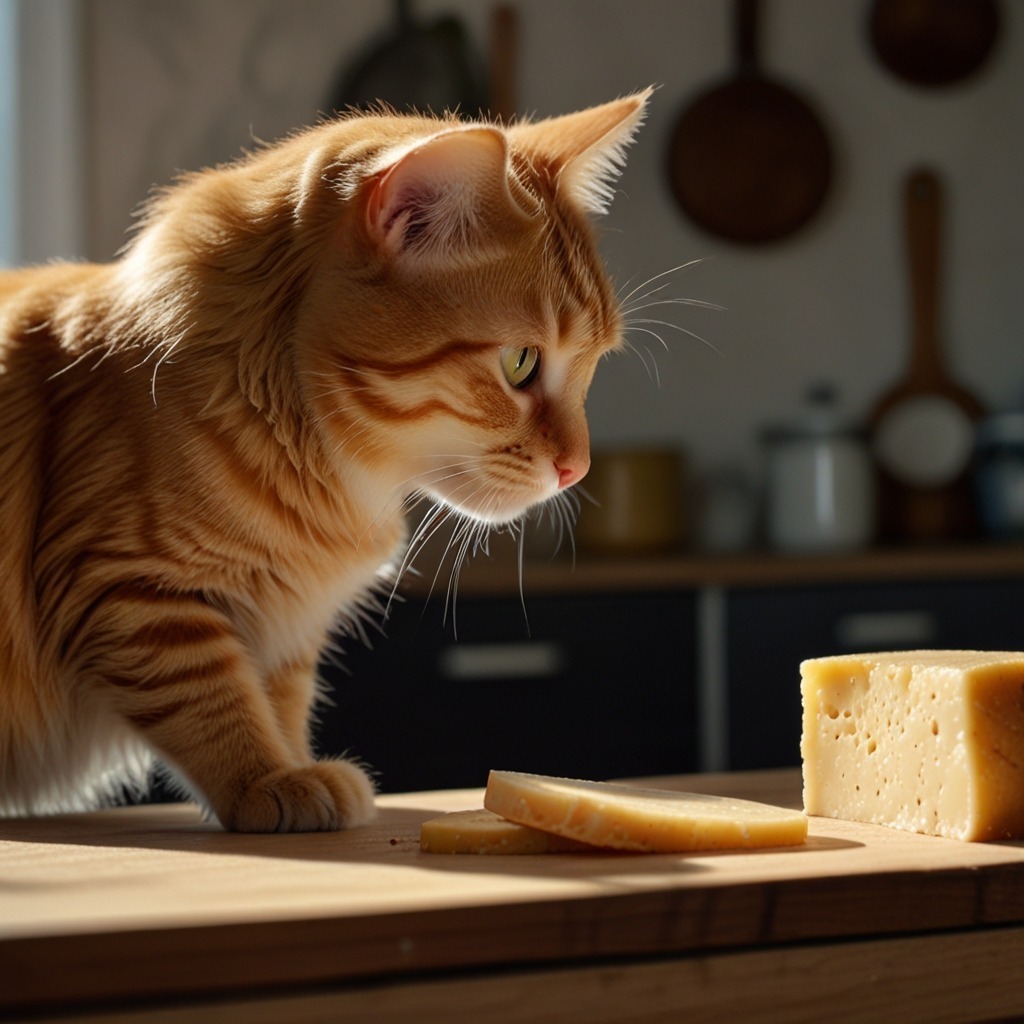
What finally worked for Miso (and the $87 lesson I learned)
After Miso's cheese heist, I decided to do a very unscientific experiment. Over the next two weeks, whenever I was eating cheese — which is, admittedly, often — I offered him a pea-sized amount of three different cheeses on separate days: aged cheddar, cream cheese, and parmesan. (Before you yell at me: he was a healthy adult cat, I monitored him closely, and I had Dr. Nguyen on speed dial.) The cheddar and parmesan produced no visible reaction. The cream cheese, on day three, gave him gas so horrifying that I opened all the windows in January. Lesson learned: lactose content is everything.
I also learned something else: Miso only wanted cheese when I was eating it. If I put a piece in his bowl, he'd sniff it and walk away. The appeal was the shared experience — the "I'm stealing from your plate and that makes it 10 times tastier" factor. So the easiesst solution was simply to not eat cheese around him. I started eating my cheese plate at the kitchen counter instead of the couch, and the problem vanished. No more counter surfing, no more pleading stares, no more 11 p.m. panic calls.
The $87 lesson? That's what I spent on a cat-proof cheese container — one of those heavy glass domes with a locking lid. Totally unnecessary, because the real fix was free: change my behavior. Cats are creatures of habit, and if you make cheese inaccessible and uninteresting, they'll stop caring. I wish I'd figured that out before buying the stupid dome. It now holds my spare buttons.
So can cats eat cheese? Yes, in the same way I can technically eat a spoonful of butter and call it a snack. It won't kill them, but it's not doing them any favors. If you must, pick a low-lactose hard cheese, keep the portion pea-sized, and don't make it a habit. And if your cat ever eats a whole slice of pizza, you're on your own. I'll be here, laughing about it, because honestly, cats are ridiculous and we love them for it.