Your Cat’s 3 AM Screaming Isn’t Just to Annoy You — Here’s What I Learned After 14 Years of Losing Sleep
Your cat’s 3 AM screaming probably isn't random. It might be hunger, boredom, or something far more worrying. After 14 years of fostering loudmouth cats, here’s what actually stopped the noise.
3:47 AM. The wailing begins.
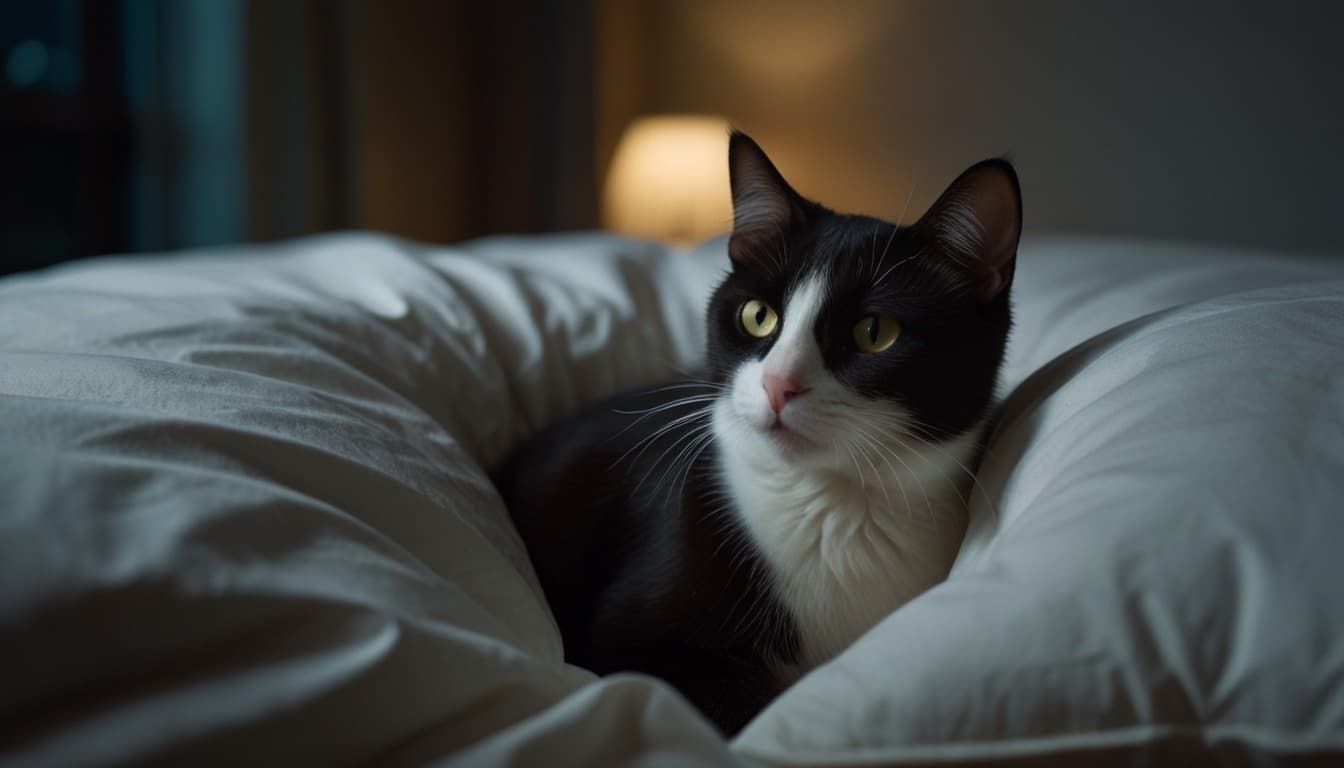
It was 3:47 in the godforsaken morning when Miso — a tuxedo build cat with the lung caoacity of a freight train — decided my left ear was a megaphone. Not a little whimper. Not a polite chirp. A full-chested YOOOOOWWWWL that rattled the bedside lamp. I’d been asleep for maybe two hours, tops, and I was so groggy and furious I nearly knocked my water glass onto the dog. And this wasn’t the first time. Or the tenth. Miso had been pulling midnight opera for three straight weeks, and I was turinng into a sleep-deprived version of myself that even my dogs didn’t recognize.
If you’re reading this at 4 AM with a cat screaming in the hallway, I get it. You’re probaly googling “why does my cat meow loudly at night” while questioning every life choice that led to this moment. I’ve been there. I’ve lived there. Over 14 years of fostering and owning cats, I’ve been screamed at by felines of all ages, sizes, and medical conditions. Some of them were hungry. Some were lonely. One had a thyroid that was basically a party DJ. One was 18 and had decided she’d forgotten where the kitchen was. And one — a build named Gizmo — yodeled every night for six weeks straight because he was grieving his previous owner. That one nearly broke me.
Here’s the thing: nighttime yowling is rarely about one simple cause. It’s a messy, overlapping Venn diagram of instinct, boredom, medical crap, and sometimes just your cat being a furry jerk. But you can fix a lot of it — or at least make it quieter — once you know what you’re dealing with. I’m going to walk you through the stuff that actually worked in my chaotic, cat-hair-covered house, and the expensive mistakes I made along the way. Strap in. I need more coffee.
That wasn’t a love song — it was a dinner bell
Most cats who scream at 3 AM are, quite simply, hungry. And they’ve learned that if they yell long enough, a sleep-deprived human will eventually stumble to the kitchen and dump kibble into a bowl. I’ve reinforced this behavior myself more times than I can count. Back when I had my first cat, a tabby named Cheeto, I’d wake up to his screeching, shuffle to the food bin like a zombie, and reward his persistence. Took me two years to realize I’d trained him to be a tiny, furry alarm clock. Crap.
The 9 PM snack that changed everything
This sounds stupidly simple, but the single biggest shift for my night-yowlers came from giving them a high-protein meal right before I went to bed. I’m talking a hefty portion of wet food around 10:30 or 11 PM — not a handful of dry kibble, which is mostly carbs and burns off fast. Cats are obligate carnivores. Their digestive system is built for small, frequent meals of meat, not a giant bowl of cereal left out all day. When their stomach empties at 2 AM, that ancient hunting brain kicks in and they start singing the song of their people. With a belly full of tuna or chicken pâté, they’re much more likely to snooze through till 5 or 6 AM. Not always. But often.
I learned this trick from a vet tech when I was coplaining about a build kitten who’d woken me up at 2:22 AM four nights in a row. She said, “You’re feeding him at 7 PM and expecting him to be full at dawn? That’s like you eating dinner at 4 PM and not getting a midnight snack.” Fair point.
Why your cat’s stomach runs on a different clock
Cats are crepuscular — they’re naturally most active at dawn and dusk. That means their internal dinner bell rings when the sun starts dropping and again when the first birds start chirping. If you’re feeding them at 6 PM because i’s convenient for your schedule, you’re ignoring about 12 hours of evolutionary wiring. Their body says “hunt now” at 5 AM, but they've no mice to chase, so they come tap-dancing on your head instead. Aligning meal times closer to their natural rhythm can really take the edge off.
Automatic feeders saved my sanity
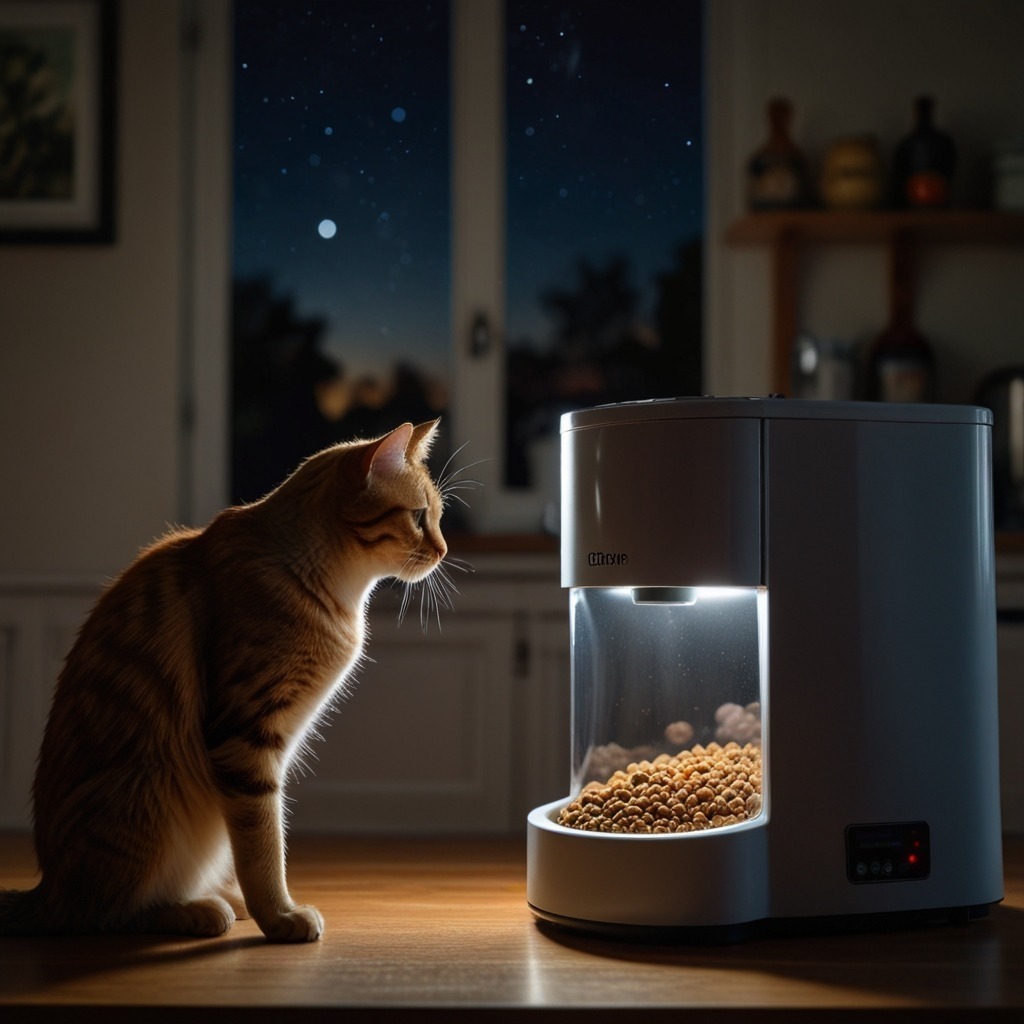
For cats who refuse to adjust their internal alarm clock, an automatic feeder can be a game—wait, I can’t say that word. It’s just really, really helpful. I’ve used them for fosters who needed a 4 AM kibbel drop because no amount of late-night wet food would hold them. The key is to set the feeder to dispense a small portion around the time they usually start screaming, before they wake you. If you reward the screaming by getting up, they learn. If the machine quietly dispenses food at 3:45 AM before the concert starts, the cat learns that the machine — not you — is the source of breakfast. I’ve tested about a million of these things, and let me tell you, not all are cat-proof. I once had a build named Beans who figured out how to wedge his paw into the dispenser and shake it like a vending machine. That was a mess. I wrote about the few models that actually survived my three utterly shameless cats here — worth a look if you’re considering one.
The 3 AM scrram that wasn’t about food at all
Sometimes the yowling has nothing to do with hunger. That’s the scarier possibility, because it usually means a vet visit is in your future. I learned this the hard way with a senior build named Elsie. She was 15, sweet as pie, and she’d start wailing around midnight every single night. At first I thought she was just confused or lonely. I’d pick her up, briing her to bed, and she’d quiet down for an hour before starting again. I was so busy assuming it was behavioral that I missed the real problem: her thyroid was going haywire. By the time I got her bloodwork done, her T4 levels were through the roof. Once we started medication, the night screaming stopped in four days. Four days. I’d lost weeks of sleep for something that could have been caught earlier if I’d stopped thinking like a behaviorist and started thinking like a vet.
When their thyroid turns into a speed metal band
Hyperthyroidism is shockingly common in cats over 10. It revs up their metabolism so they’re burning energy like crazy, which often makes them restless and loud — especially at night. Other signs: weight loss despite eating like a horse, a weird unkempt coat, and sometimes vomiting. If your older cat is suddenly screaming at night after years of being quiet, a blood panel should be your first stop. Don’t be me and wait three weeks while googling home remediees. That trip to the vet gave me answers, but I wasted time and sleep I’ll never get back. The same lesson came back around when I spent $340 figuring out my cat’s “hairball” wasn’t a hairball — that saga is here, and the parallel is real: cats hide their pain and mimic other conditions constantly.
The 16-year-old cat who forgot where she was
Cognitive dysfunction syndrome — feline dementia, basically — can cause night wakefulness, disorientation, and loud crying. It’s heartbreaking. I had an old cat named Agatha who’d wander into the hallway at 2 AM and cry because she couldn’t remember how to get back to the living room. She wasn’t in pain. She was lost in a house she’d lived in for ten years. We added night lights, kept furniture in the exact same spots, and used Feliway diffusers to lower her anxiety. It helped, but honestly, some nights she just needed to hear my voice. I’d call her name gently from bed and she’d toddle back, purring. This isn’t a problem you “solve” so much as one you manage with compassion. That said, if your vet rules out medical causes and suggests Anipryl or supplements like SAMe, it’s worth discussing. Not a cure, but it can take the edge off.
Pain you can’t see
Arthritis, dental disease, a brewing urinary tract infection — any of these can make a cat vocalize at night when the house is quiet and they’re trying to settle. Cats are masters at hiding daytime discomfort, but at night, when distractions disappear, pain becomes louder. If your cat doesn’t have an obvious behavioral or hunger reason, please get a thorough exam. I once had a cat who screamed every time he tried to jump off the bed. Turns out he had a cracked tooth that radiated pain into his jaw when he landed. A dental extraction later, he was silent. The ear infection saga I went through with another cat, where he scratched his ears raw until they bled, taught me nevre to ignore subtle physical cues — that one I wrote about here. Lesson: night noise is sometimes the only SOS they can give.
But what if your cat is just… bored?
I’ll keep this short because it’s frustrating: sometimes your cat is screaming bceause you’re not providing enough stimulation during the day and they’ve got energy to burn at midnight. Simple as that. Play with your cat, people. A feather wand for 15 minutes before bed can work wonders.
The litter box connection I ignored for 9 years
I used to think litter box issues and night meowing were completely separate problems. Then I adopted a cat who’d cry, run to the box, scratch around, and cry louder. Turned out she was dealing with recurring cystitis and the discomfort peakd at night when her bladder filled. I had no idea the two were linked until my vet explained that cats often associate the box with pain and will vocalize their distress — sometimes before they even try to pee. If your cat’s nighht routine includes a trip to the box followed by wailing, please don’t ignore it.
The 11 PM scoop that stopped the screaming
Here’s a stupidly easy fix that blew my mind: scoop the litter box right before bed. Some cats will refuse to use a dirty box and will cry to announce their displeasure. I learned this lesson in the most humiliating way posdible when my cat Mochi peed on my pillow. I’d been scooping once a day and thought it was “good enough.” It wasn’t. The full story of my shame is over here, but the short version: a pristine box at 11 PM eliminated about 30% of her nighttime drama. She wanted a clean bathroom. Could I blame her?
The build cat who yodeled for 6 weeks straight
Alright, this has basically nothing to do with practical advice and everything to do with me needing to tell you about Gizmo. Gizmo was a 7-year-old orange tabby I fostered after his owner passed away. The shelter told me he was “a little vocal.” That was the understatement of the century. From night one, he sat in the living room and yodeled — and I don’t mean meowed, I mean yodeled — from midnight until abuot 4 AM. Every. Single. Night.
I tried everything. Late meals, calming treats, a thunder shirt (don’t ask), even sleeping on the couch next to him. He’d be quiet for ten minutes, then start up again. The vet cleared him medically. He wasn’t hungry. He wasn’t in pain. He was grieving. This cat had spent seven years sleeping next to a person who was now gone, and the silence of my house at 2 AM was just unbearable to him. I spent those six weeks exhausted, frustrated, and occasionally crying into my coffee. But eventually — and I mean slowly — he started settling earlier. He’d yodel for an hour instead of four. Then he’d crawl into bed and purr instead of screaming. It wasn’t a technique that fixed him. It was time. And patience. And a lot of me talking to him in the dark like a lunatic. Sometimes that’s all it's.
“Night meowing in cats is rarely random — but it’s often a mosaic of smakl unnoticed things adding up to a big loud problem.” — Something I scribbled on a sticky note at 4 AM after Miso’s seventh night concert.
What actually workd for Miso (and why it wasn’t just one thing)
Miso was complicated. She was young — maybe 3 years old — physically healthy, and she’d been through the shelter system twice. Her night screaming felt like a combination of insecurity, hunger, and a weird obsession with the birds outside my window that started chirrping at 4:30 AM. No single fix worked. I had to stack solutions until something clicked. Here’s what finally turned down the volume.
Step 1: The 10:45 PM banquet
She got a full 3-ounce can of grain-free wet food right before I turned off the lights. I also hid a few kibble pieces in a puzzle toy so she’d have to “hunt” if she got peckiish later. That knocked out the hunger-related yelling almost immediately. But she still paced.
Step 2: Playtime that left her panting
I bought one of those feather wands with a 6-foot string and made her sprint up and down the hallway for 20 minutes around 10 PM. The goal was to mimic a full hunt — stalk, chase, pounce, catch, eat. Right after play, she got her meal. This prey sequence is literally wired into cats’ brains. If you skip the play and just feed, you’re missing half the satisfaction. I learned this trick from a cat behaviorist and it sounds like common sense, but I’d been too lazy to do it consistently. Once I started, Miso slept harder and longer.
Step 3: Closing the blinds and adding white noise
She loved sitting in the window at night, watching bats and bugs. But when the birds started at dawn, she’d lose her furry mind. I put up blackout curtains and ran a white noise machine near the window. She could still hear some birds, but the visual trigger was gone and the sound was muffled. It helped. Not a magic bullet, but part of the puzzle.
Step 4: The pheromone diffuser gamble
I’m honestly still on the fence about Feliway. Some cats respond beautifully; others don’t give a damn. Miso seemed slightly calmer with the diffuser plugged in near her favorite sleeping spot. Maybe it was placebo, maybe it was real. I kept it because it didn’t hurt and the placebo effect on ME was worth $25 a month.
Step 5: When she cried, I didn't move
This was the hardest part. The first few nights after I’d addressed hunger, play, and environment, Miso still let out a few test yells around 3 AM. I trained myself to lie perfectly still and breathe like I was asleep. No “shush,” no tossing, no eye contact. Any reaction on my part was attention. After three nights of my corpse impression, she stopped the demand meowing. This is cruel in the moment — your heart says “my baby needs me” — but your brain has to remind yourself that you’ve already met all her needs. She’s just testing the system. Don’t give in.
Speaking of slep deprivation — that time I put cat food in my coffee
I said I’d keep this whole thing friendly and honest, so here’s a tangent that has nothing to do with cat behavior and everything to do with how tired I was. One morning after a particularly brutal night of Miso’s screaming, I stumbled into the kitchen, filled my French press with coffee grounds, poured hot water… and then, in a half-asleep fugue, I spooned a tablespoon of wet cat food into my mug instead of sugar. Yes, I took a sip before I noticed. It was fish-flavored coffee. I’m not proud. But it’s the kind of ragged lunacy that night-yowling cats produce in otherwise sane people. So if you’re currently losing it, know that you’re not alone. I’ve literally consumed cat food.
But seriously, check for stray cats outside
One build of mine, a solid gray boy named Orion, would sit on the back of the couch and scream at the sliding glass door from 11 PM till 2 AM. I thought he was bored or sick. Then I realized there was a stray tabby marking the fence every night right outside that door. To Orion, this was a territorial crisis. The solution was motion-activated sprinklers and a vinyl privacy screen on the lower half of the glass so he couldn’t see the intruder. Problem solved. If your cat fixates on one window or door, check what’s on the other side before you spend money at the vet.
When you’ve tried everythiing and they still won’t shut up
Alright, so you’ve done the late meal, the play session, the vet check, the litter box scooping, the environmental fixes — and your cat is STILL screaming. This is where it gets real. Some cats have anxiety disorders that need actual medication. I’m not talking about herbal calming chews that smell like a head shop. I mean prescription anti-anxiety meds like fluoxetine or gabapentin, which a vet can prescribe after ruling out physical causes. One of my long-term fosters needed a low dose of gabapentin at bedtime for her first year with me because she was so panicky when lights went out. She wasn’t drugged into a stupor; she was just… normal. Able to relax. We weaned her off eventually, and now she sleeps through the night like a champ. There’s no shame in using modern medicine if your cat’s quality of life — and yours — is suffering.
The Tuesday morning Miso chose purring over screaming
I wish I could tell you the exact thing that finally shut Miso up. But the truth is, it was a messy combination of all the stuff I’ve rambled about here: a 10:45 PM chicken pâté, a 15-minute wand–sprint through the hall, blackout curtains, and a Feliway diffuser humming in the corner. And time. She was a shelter cat who’d been bounced around, and she needed to learn that nighttime didn’t mean abandonment. It took about three weeks for her nights to quiet down. Then, on a random Tuesday around 4 AM, I woke up not because of a scream, but because she was purring on my chest, kneading the blanket, her eyes half-closed. She’d finally figured out that the dark wasn’t so scary.
She still grumbles sometimes if she hears a raccoon outside. But the full-scale opera? Gone. I don’t have a magic bullet for you. I've a whole bunch of small, imperfect things that add up to a house with more sleep and fewer ear-splitting yowls. Start with the vet. Then try the food. Then the play. And for the love of god, stop yelling “shut up” at 3 AM — your cat doesn’t understand English and you just sound insane. I know. I’ve been there.