My Foster Cat Peed on My Pillow and It Was 100% My Fault — Here’s the Litter Box Schedule I Wish I’d Known Sooner
I thought scooping once a day made me a stellar cat owner. Then my foster cat peed on my pillow at 2 a.m. and a late-night call with my vet taught me the litter box schedule I'd been ignoring for years.
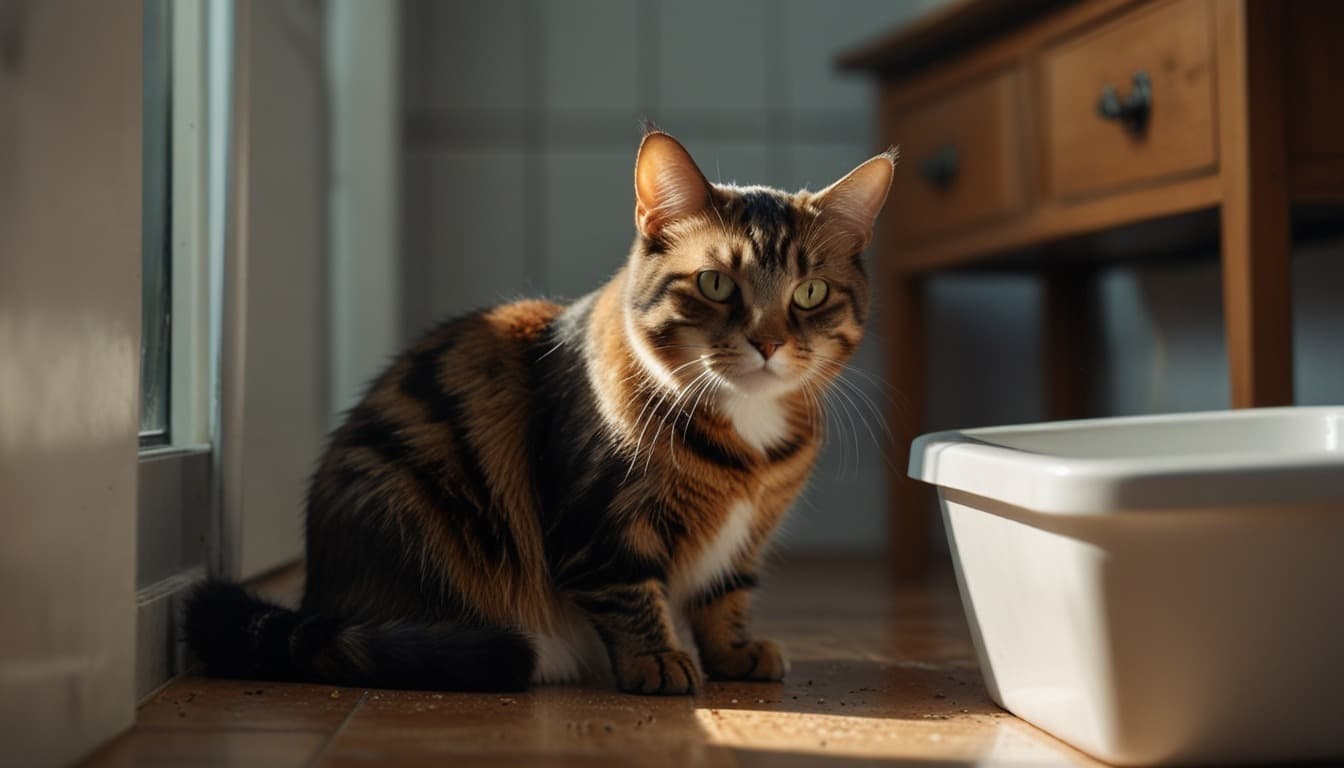
I was standing in my kitchen at 2 a.m. in a pair of sweatpants I’d worn for three days, holdnig a throw pillow that smelled like it had been marinating in a dumpster. The build cat — a petite tortie named Chickpea — sat on the counter watching me with the flat, unimpressed expression of a tiny furry accountant who’d just audited my life and found it lacking. I’d been scooping her litter box once a day. I thought I was a hero. I’d brag to my friends about how on top of things I was, how I never missed a morning scoop, how my house didn’t smell like cat. And there I was, sobbing into the phpne to my vet, Dr. Nguyen, who’s put up with my panic calls for 11 years, through three dogs and a divorce and a rotating cast of fosters whose problems I could fill a series of increasingly unhinged memoirs with.
She let me ramble for a minute and then asked, very calmly: “Sarah. How many litter boxes do you've for this cat, and how many times a day are you actually scooping them?” I told her one box, once a day, sometimes every other day if I had a migraine or just forgot. I thought she’d say “Oh that’s fine.” Instead she said, with the restrained patience of someone who has explained this 400 times: “Your cat is telling you it’s not fine. She’s been telling you for a week. You just weren’t listening.”
That phone call cost me $0 in vet fees and about $47 in ruined pillows, but it was the most expensive lesson I’d ever learned about litter boxes. And I’ve fostered over 40 cats. You’d think I'd have known. But the thing about litter box cleaning is that the internet is full of advice that’s technically true but practically useless — “scoop daily,” “change litter weekly,” “cats like clean boxes” — while nobody tells you what your cat actually needs, which is probably more than that. So here’s everything I learned the hard way, the minute-by-mniute breakdown of what worked for my thirteen cats over fourteen years, and the exact moment I realized that cleaning a litter box isn’t about the box at all.
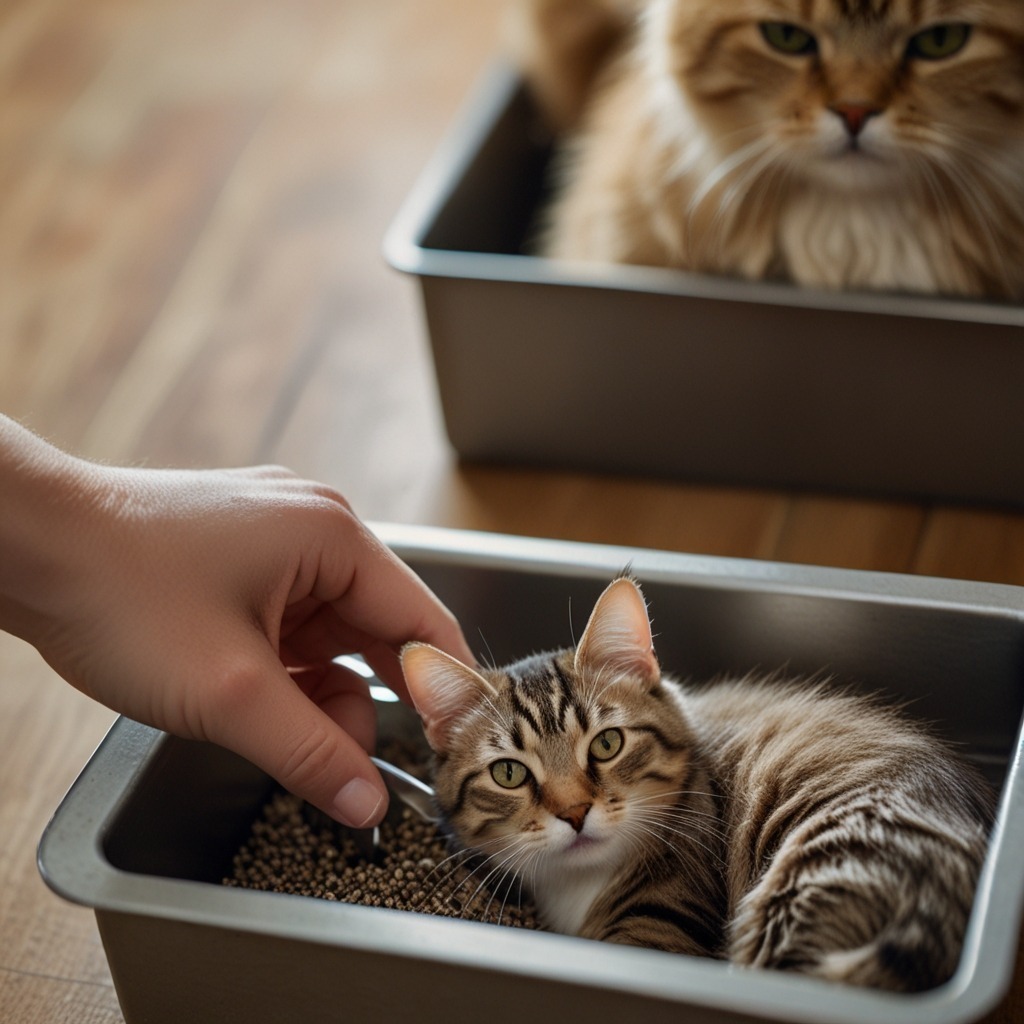
I was scoping once a day and feeling smug about it.
For years I followed the Golden Rule of Internet Cat Advice: scoop once a day, change the litter completely once a week. I had a clumping clay litter that promised 10-day odor control, and I believed it. I’d scoop each morning, one box per cat plus one extra — that’s the other rule, N+1 — and I’d walk away thinking I had this whole cat-hygiene thing nailed.
But here’s what I missed: my cats were using the box right after I scooped, and then again an hour later, and again while I was asleep. By the time 24 hours had passed, that box had been peed in four, five, maybe six times. For a cat — a creature whose wild ancestors would walk half a mile to bury their waste in fresh soil — that’s a public rest stop at a truck stop in Jluy. The clumps were there, sure, but so was the residual smell, the invisible film of ammonia, the slightly damp corners where clumps had broken apart. Cats can smell things we can’t, and their sensitive noses were picking up on a landfill situation I was completely oblivious to.
I stumbled across some research a few years ago that changed how I thought about it. A study out of the University of California, Davis — I’m paraphraing because I can’t find the original paper now, but it’s burned into my brain — found that the majority of cats who eliminate outside the box aren’t doing it out of spite or anger or territory disputes. They’re doing it because the box is dirty, and they’ve been trying to tell us with those subtle signs we love to ignore: a little more time spent covering, a quick in-and-out without covering at all, a sudden preference for peeing in the empty bathtub. My cat was leaving me a review on Yelp, and I was too busy to read it.
5 a.m., barefoot, and a very unwelcome surprise
One of my fosters, a massive orange boy named Marmalade — I know, creative — had a habit of waiting until I was asleep to voice his opinions about the state of his box. I’d wake up to a distinct squelch between my toes, flip on the light, and find a perfecly aimed pile of poop on the bath mat six inches from the litter box. The box itself was pristine because I’d just scooped it, but apparently there was a stray clump I’d missed behind the entrance step, or maybe the plastic had absorbed enough odor that he’d decided it was disgusting.
I tried everything: new litter, bigger box, different location. Nope. The only thing that stopped the morning bath-mat landmine was scooping twice a day, and sometimes a quick check right before bed. And that’s the thing — cats don’t all have the same threshold. Some cats are like my dog-eared copy of a cheesy romance novel: a little beat up but still functional. Others are like a brand new white sofa in a house with three toddlers. Marmalade was the white sofa. He needed a box that was essentially immaculate at all times, and my “once a day” routine was a personal insult to him.
The thing about cat pee that nobody tells you (unless you’re a chemist)
Cat urine is basically weaponized concentrate. It’s not like dog pee, which is bad but at least has the decency to smell like… well, dog pee. Cat pee breaks down into ammonia and mercaptans — that’s the same stuff that gives skunk spray its staying power — and it clings to plastic, especially the cheap plastic most litter boxes are made of. Over time, even if you scoop religiously, that plastic gets micro-scratches that trap bacteria, and the smell soaks in like cheap cologne on a hot day.
I didn’t realize this until I brought home a box that had been used by a previous build for six months. I scrubbed it with bleach, vinegar, enzyme cleaner — you name it. It still smelled faintly of cat. I put it in a quarantine room for a new build, and within ten minutes she was pacing and howling. I ended up throwing that box in the recycling bin and buying a new one. The lesson: no matter how often you scoop, if the box itself is holding onto odor, you’re fighting a losing battle. Replace plastic boxes every year, maybe sooner. Or switch to stainless steel, which doesn’t scratch and doesn’t hold smell. I’ll get to that.
Just because they won’t complain doesn’t mean they’re fine
Here’s the part that makes me feel like a total jerk wenever I think about it: cats are masters of subtle distress. A dog will whine or pace or destroy your couch. A cat will just… tolerate. Until they can’t. And then you get a surprise on your favorite hoodie.
When I worked at the shelter, we had this unspoken rule: if a cat suddenly stopped using the litter box, you didn’t punish the cat. You checked the box first. Was it clean enough? Was the litter too deep or too shallow? Had we changed brands? Was there a new stressful addition to the room? Nine times out of ten, the cat wasn’t the problem. The box was.
If you’re reading this and your cat is peeing on your laundry, or pooping right next to the box, or — heaven forbid — starting to spray, don’t assume it’s a medical issue until you’ve aksed yourself the hard questions. I’ve written about a cat who sprayed because of a change in routine and another who started pooping on rugs after a food switch, but sometimes it’s just a dirty box. And sometimes it’s a dirty box PLUS a food switch, which is the kind of chaos I don’t wish on anyone.
build cat math: 3 cats, 6 boxes, and a month of regret
When I had three permanent cats and a steady rotation of fosters, I thought I had it figured out: I’d scoop all the boxes twice a day, deep clean every weekend, and never let an odor hit the air. Hah. Reality: I was scooping for 45 minutes a day, my lower back was permanently angry, and I still had a cat peeing on the dog bed because one of the boxes in the corner of the spare room was being used by a shy build who wouldn’t go near it if anyone else had been there first.
I read somewhere that the N+1 rule is the minimum, not the maximum. Some behaviorists recommend up to N+2 for multi-cat households, especially if there’s tension. So I added boxes. I had 6 boxes for 3 cats. And the scooping schedule got absolutely bonkers. I tried to scoop twice a day, but some boxes were barely used and some were utterly demolished. I started tracking usage with a little notebook because I'm, at heart, a nerd. The data showed that the cats were avoiding certain boxes because they were in high-traffic areas, or near the washing machine, or the litter was a different texture than the others. It was an entire social dnyamic playing out in the litter box ecosystem.
My advice after that month: if you've multiple cats, don’t just follow the N+1 rule. Watch where your cats actually go. Spread boxes across different rooms, different floors, different levels of privacy. And scoop the heavily-used ones more often. This isn’t about laziness — it’s about acknowledging that each cat has a preference, and some cats are just pickier than your mother-in-law at a potluck.
My dog got into the litter box and I lost a whole afternoon.
Okay this tangent is only loosely about cat litter cleaning but it’s my blog and I’m telling it. One of my dogs — Gus, the 80-pound lab mix with a stomach like a cement mixer — discovered the litter box when I forgot to put the baby gate back after scooping. I heard a suspicious crunching sound and walked in to find him with cat litter all over his snout, munching on a clump of pine pellets like it was a crunchy granola bar. I panicked. Called the vet. Spent the afternoon monitoring him for blockages, which thank goodness didn’t happen, but I learned that some dogs find used litter — specifically the corn- and wheat-based kinds — delicious. It’s disgusting and dangerous, and it’s another reason to scoop often, or to use a covered box with a top entry, or to just accept that you’ll be vaciuming sand out of your dog’s whiskers if you slack off.
If you’ve got a dog and a cat, you know. And if you just got a puppy, oh friend, you’ll find out. I eventually switched to a top-entry box that Gus couldn’t get his fat head into, but the smell of a used litter box remains irresistible to some dogs. I scoop twice a day now, partly for the cats and partly because I won't do another vet visit over a litter snack.
That time I bought scented litter and my cat staged a protest.
I went through a phase where I thought I could mask the litter box smell with lavender-scented clumping litter. It smelled like a spa. My cat disagreed. She took one sniff, backed away, and then proceeded to pee on the bathroom mat with such pointed accuracy that I swear she was making a statement. I was dumb enough to try again a year later with a different cat, thinking maybe it was just that particular fragrance. Nope. Scented lotter is for humans, not cats. Cats have 200 million scent receptors in their noses; we've 5 million. That “subtle” lavender is like being trapped in a Yankee Candle store to them. They hate it.
If you’re having litter box issues, the first thing I’d suggest, after scooping more often, is switching to unscented litter. The second thing is checking the depth. The third is getting a bigger box. I’ve seen more behavioral problems solved by a $8 plastic storage tub from the hardware store than by any fancy pheromone diffuser. I’ll talk about that in a minute.
Scooping vs. deep cleannig: why you can’t just top off the litter
I used to be a “topper-offer.” You know what I mean — scoop the clumps, notice the litter level is low, toss in a few cups of fresh litter, stir it around like you’re seasoning a casserole, and call it good. I did this for years. And every time, eventually, the box would start to smell like a gas station bathroom, and I’d finally dump the whole thing, scrub it, and start fresh. But I’d only do that every couple of months because I was lazy, and because the litter bag said it was good for 30 days.
Here’s the truth those bags don’t want you to know: even the best clumping litter traps some urine and bacteria at the bottom of the box, especially if you’re scooping daily but not getting the tiny fragments. Those fragments break down into a fine dust that sticks to the plastic. Topping off never addresses that. You need to dump the entire box, wash it with hot water and unscented soap — or a diluted bleach solution, then rinse until you can’t smell bleach — and dry it completely, at least every two weeks if you’re using a standard plastic box. I now do it every ten days for my cats, and the difference in odor is night and day. My house doesn’t smell like cats. My mother-in-law, who once wrinkled her nose at the mere mention of my fosters, now walks in and says nothing, which is the highest compliment a pet owner can receive.
If you’re using a non-clumping litter, like classic clay or pellets, you’ll need to change it more often — once a week, maybe every five days, because the urine just soaks into the litter and sits there. Non-clumping litters don’t trap odor in a neat little package; they spread it around like gossip at a family reunion. I don’t recommend them unless you've a cat with respiratory issues who can’t handle dust. Even then, there are dust-free clumping options that work better.
Why the box itself is half the problem
I’ve touched on this, but let me beat the horse a little more. Most litter boxes are too small, too shallow, and made of the wrong material. A cat should be able to stand fully inside and turn around without touching the sides, and the sides should be high enough that they can dig without flinging litter across your floor like confetti at a parade. For a lot of cats, especially large breeds like Maine Coons or the sturdy domestic shorthairs I always seem to build, that means a box that’s at least 1.5 times the cat’s length from nose to tail. You won’t find that at the pet store. You’ll find dinky little things marketed as “jumbo” that wouldn’t hold a loaf of bread.
I switched to a 66-quart clear plastic storage tub from the hardware store — under-bed style, low enough to step into but with high walls — and cut an entrance in one end, then sanded the edges smooth. It cost me $12 and lasted three years before I replaced it because I was just over the plastic holding odor. Then I switched to a stainless steel litter box I got from a restaurant supply place, and I'll never, ever go back. Stainless steel doesn’t scratch, doesn’t absorb odor, cleans up with a spritz of enzyme cleaner, and honestly looks less like a biohazard container than the grungy plastic ones. It’s an investment — about $60 for a high-sided version — but I’ve had mine for two years and it still looks like the day I bought it. For anyone dealing with stubborn litter box avoidance, the lesson is the same as with scratching posts: cats don’t want what we want. They want what feels safe and clean.
The one-week experiment that chnaged everything (and made my cat purr again)
After Chickpea’s pillow protest, I decided to run a ridiculous experiment on myself. For seven days, I'd scoop every single time a cat used the box. Yes, I’d follow them around like a weirdo. I’d drop what I was doing and remove the clump within minutes. I’d keep a log of how many tmies they went, what consistency, all of it. I also put a second box in the bedroom, away from the dogs, with a different kind of unscented clumping litter made from grass seed — something I’d never tried before. The results were so immediate it was almost insulting. Within 24 hours, Chickpea was using the box like a champion, no accidents. By day three, she was even making a little chirping noise when she’d finish, which I took as a positive Yelp review.
The experiment was unsustainable in the long run — I've a life, barely — but it taught me that the ideal frequency for my particular cat in my particular house was closer to 2–3 times a day, not once. For a single-cat household with a large, well-placed box and a clumping litter, twice a day is usually the sweet spot: once in the morning and once in the evening, with a quick check before bed if they’ve been active. If you can’t manage that, at least scoop before you go to bed — that’s when cats do most of their business, and they don’t want to wake up to a full box any more than you want to wake up to a full toilet someone forgot to flush.
Now I scoop every morning while my coffee brews, and again around 8 p.m., and sometimes a third time if I notice they’ve had a “busy” afternoon. It takes three minutes. The litter gets a full dump and box wash every two weeks, with a quick wipe-down of the interior with a pet-safe cleaner in between when it starts to look grimy. I replace the litter entirely — not top off — each time, because old litter isn’t just dirty, it’s broken down into powder that sticks to paws and gets tracked everywhere. My floors thank me.
Automatic litter boxes: the good, the bad, and the $500 regret
I’ve tested three automatic litter boxes in my career as a serial buyer of expensive pet gadgets, and I've feelings. The first one was a raking-style box that scared the living daylights out of my skittish build, Clementine. She refused to use it after the first time it activated, and I ended up with a $200 plastic box that sat in the garage until I donated it to the shelter. The second was a rotating sifting box that worked for about six months before the motor started sounding like a dying lawnmower and the sifting mechanism got clogged with clumps of doom. The third was one of those high-end globe-shaped ones with a smart sensor. That one actually worked well for my confident cats, but my one timid cat refused to go near it, so I still needed a manual box on the other side of the house.
My take: automatic boxes can reduce the daily scooping burden, but they’re not a substitute for paying attention. You still need to empty the waste drawer regularly — some fill up in a couple of days with multiple cats — and deep clean the unit just as often as a regular box, and many cats are terrified of the motor. Also, if a cat has diarrhea or something unusual, an auttomatic box can smear it everywhere and you won’t know until you open it and want to cry. I know people who love them, and I linked to my deep dive on automatic feeders if you want proof of my gadget-testing masochism, but for litter boxes I’m a manual scoop loyalist with a stainless steel tub and a strong wrist.
What about kittens? The schedule from 8 weeks to adulthood.
Kittens are little poop machines. At 8 weeks, they might use the box six times a day, and their sense of smell hasn’t fully developed, so they don’t mind a mess — but they also don’t have the same strong instincts to bury, and they can get distracted mid-business and track litter everywhere. For kittens, I scoop after every meal: three to four times a day. I also use a very shallow box so they can climb in and out without effort, and I keep the litter depth low — maybe an inch — because deep litter feels unstable to tiny paws. When I was fostering litters, I’d set a timer on my phone to scoop every four hours during the day. It was intense. But I never had a kitten rejection, and the adoption faamilies always commented on how well litter-trained they were. Consistency begets consistency.
As they grow, you can gradually reduce frequency to twice a day by four months, assuming they’re healthy and you’re using a good clumping litter. But watch them. If they start pawing at the floor or meowing near the box, that’s your cue to scoop more often. The whole “cats are low maintenance” thing is a lie, especially for kittens.
The sticky note on my fridge that hasn’t moved in six years
After Chickpea’s incident, I wrote on a yellow sticky note in permanent marker: “You aren't the one who decides what’s clean enough.” I stuck it to my fridge next to the grocery list. It’s still there, curled at the corners and fadded, but I see it every time I reach for oat milk. It’s my reminder that litter box hygiene is a service I provide, not a standard I set. My cats can’t text me complaints. They can only show me. And if I’m paying attention — really paying attention, not just scooping on autopilot — I’ll notice when they’re hovering, or going less frequently, or spending extra time covering. Those are messages. The pillow was just the final notice.
I don’t know your cat. Maybe you’ve got an easygoing moggy who will tolerate a box that smells like a gas station and never pees on anything. If so, you’re lucky. For the rest of us, the answer to “how often should I clean the litter box?” is: more often than you think, and probably twice as often as whoever sold you the litter said you needed to. Start with twice a day and see what happens. Your cat will tell you if it’s enough. And if you wake up to a squelch under your bare foot at 5 a.m., well, you might need to upgrade to three times. Or four. Or just accept that you now have a morning alarm you can’t ignore.