I Thought My Cat Was Just a Jerk in the Car. Turns Out He Was Terrified.
My foster cat peed on my lap 17 minutes into a road trip, and I cried in a gas station. Here's what I've learned since about cat travel anxiety — the stuff that works, the products that don't, and why a little patience goes further than any $70 gadget.
Miso peed on my lap 17 minutes into a 2-hour drive to my mom's house. Not a little dribble. A full-blown, this-is-happening, I-hope-you-wore-dark-pants kind of event. The car smelled like ammonia and betrayal for weeks. I pulled over at a gas station, cried a little, and seriously considered whether I'd be an awful person if I just turned around and cancelled Christmas.
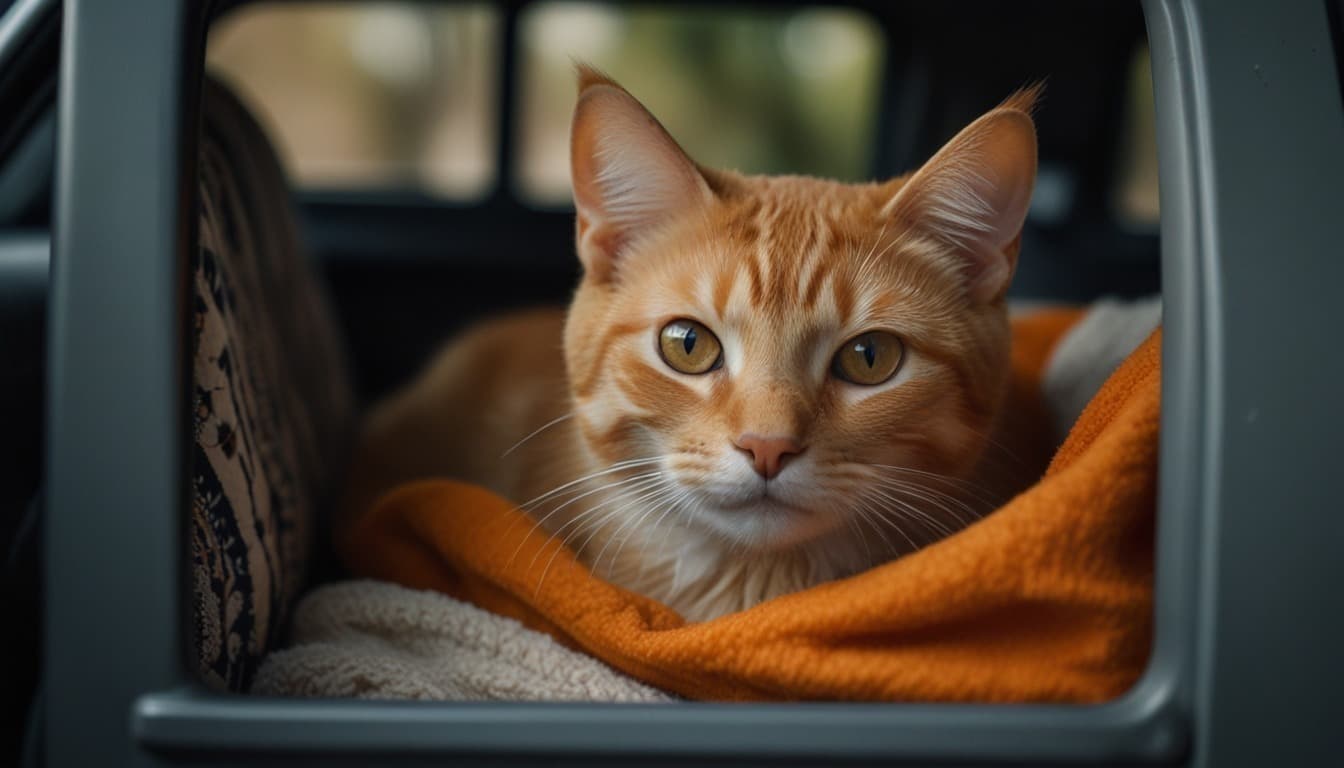
That was my first build cat, a scrawny orange tabby who'd been dumped at the shelter with a note that said "he doesn't trabel well." They weren't wrong. But here's the thing — Miso wasn't being difficult. He wasn't punishing me for putting him in a carrier. His little brain was screaming danger, and everything in his body was telling him to flee or shut down. I just didn't know enough back then to see it.
Over the next 14 years and 40-some fosters, I've cleaned up more travel-induced bodily fluids than I care to count. I've also made every mistake there's. Sedating a cat too heavily before a flight (never again). Forgetting to secure the carrier door (the resulting loose cat in a moving car is a story for another day). Assuming a cat who seems "fine" at the vet will be fine on a 6-hour road trip (narrator: he wasn't fine).
This isn't a perfect 10-step plaan. I don't have one of those. What I've is a collection of things I've learned the hard way, some stuff that actually worked, and a couple things that were a total waste of money. If your cat turns into a howling, drooling, puddle of panic the second the car engine starts, I see you. Let's figure out what might help.
Why your cat hates the car (and it's not because they're spiteful)
Cats are creatures of territory. Their entire sense of safety is built on familiar smells, predictable routines, and the knowledge that every corner of their domain has been thoroughly investigated and deemed threat-free. A car is the opposite of all that. It smells like metal and gasoline and stramgers. It moves in ways that make no sense to a creature designed for stalking prey, not hurtling down highways. And it's loud — loud in frequencies we can't even hear, but your cat sure can.
Dr. Rachel Geller, a cat behaviorist I follow and occasionally pester with panicked emails, once explained it to me like this: "Imagine you're sitting in your living room and suddenly the floor starts vibrating, the walls start moving, and you've no idea why or when it'll stop. You'd be terrified." She's right. We expect cats to just accept car rides because we understand the concept of "going to the vet" or "moving to a new house." They don't. To them, it's abduction.
The physiological response is real, too. Adrenaline spikes, cortisol floods their system, heart rate shoots up. Some cats pant, some drool, some vomit, some shut down and freeze. Miso always went for the latter — he'd curl into a tight ball, pupils blown wide, barely breathing. I used to think that meant he was calming down. Turns out freezing is a profound stress response. He was essentially playing dead because his brain had decided fighting or fleeing weren't options.
And if you've got a cat who's only ever left the house to go to the vet — where they get poked, prodded, and sometimes stabbed with needles — they've made the association loud and clear: carrier + car = terrible things happen. You're fighting an uphill battle from the get-go.
The $70 gadget I bought that made everything worse
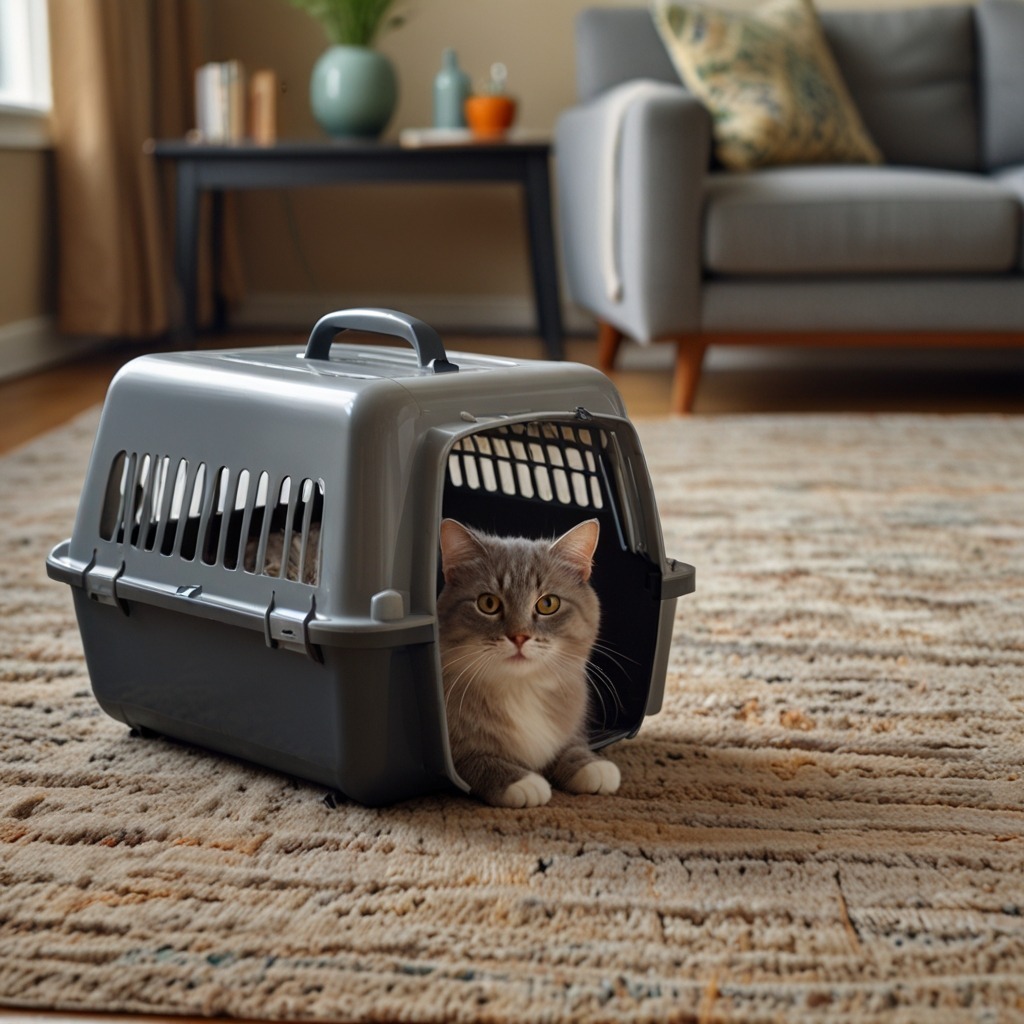
Here's a tangent, because I'm still mad about it. A few years ago I saw an ad for this "calming" cat carrier with built-in pheromone diffusers, a little hammock thing inside, and panels that supposedly made the cat feel swaddled. It cost $70. I bought it. I was so exited. I introduced it gently, left it open in the living room for two weeks, put treats inside, the whole thing. My cat Frankie (a build fail, big gray boy, terrified of his own shadow) seemed fine with it — as long as it didn't move.
The first time I actually put him in it and carried him to the car, he started yowling before I even got out the door. The "calming" pheromones did jack squat. The swddle panels? He thrashed so hard he tore one. By the time we got to the vet — a 12-minute drive — he'd worked himself into such a state that his temperature was elevated and they couldn't do the exam. $70 plus a wasted vet visit. Not my finest moment.
I tell this story because the pet industry will sell you a million products that promise to fix travel anxiety, and most of them are garbage. I've learned to be deeply skeptical of anything labeled "calming" unless there's actual science behind it. The carrier itself? A basic hard-sided one with good ventilation worls better than half these fancy contraptions. Don't fall for the marketing. I did so you don't have to.
Start with the crrier — long before you need it
If your cat only sees the carrier when it's time for a vet visit, you've alresdy lost. Their brain has built a direct neural pathway: Carrier Appears = Bad Things Imminent. You've got to break that association, and the only way to do it's time and patience. A lot of both.
Here's what I do now with every new build who comes through my house. Day one, the carrier comes out of the closet and stays out. I put it in the living room, door removed or propped open, with a soft blanket inside that smells like me (I sleep with it for a night — weird, yes, effective, also yes). I toss treats in there randomly throughout the day. High-value stuff, like freeze-dried chicken or those little squeezable tubes of meat paste cats go nuts for. I don't make a big deal about it. I don't coax or lure. Treats appear, cat investigates, nothing bad happens.
Over the course of weeks — and I mean weeks, not days — the carrier becomes just another piece of furniture. Some cats start napping in it. Some never do, but at least they stop flinching when they see it. That's progress.
The mistake I made for years: rushing this step
I used to think a few days of treat-tossing would do the trick. It won't. For a truly anxious cat, you need a minimum of two to three weeks of consistent, no-pressure carrier exposure before you even think about shutting the door. With Miso (the pee-in-my-lap cat), I knew he had travel issues but I convinced myself a week of half-hearted carrirr training was enough. It wasn't. He wasn't ready, and I pushed him too fast because I was impatient. That's on me.
I've since found that leaving the carrier out permanently — like, it's part of my home decor now, there's a cat carrier next to my bookshelf and I've stopped being embarrassed about it — makes a huge difference. The cats don't just tolerate it; they forget it's a potential threat. When travel day comes, the carrier goes from being a terrifying cage to being a familiar safe space. Or at least a slightly less terrifying one.
Test runs: why the parking lot is your best training tool
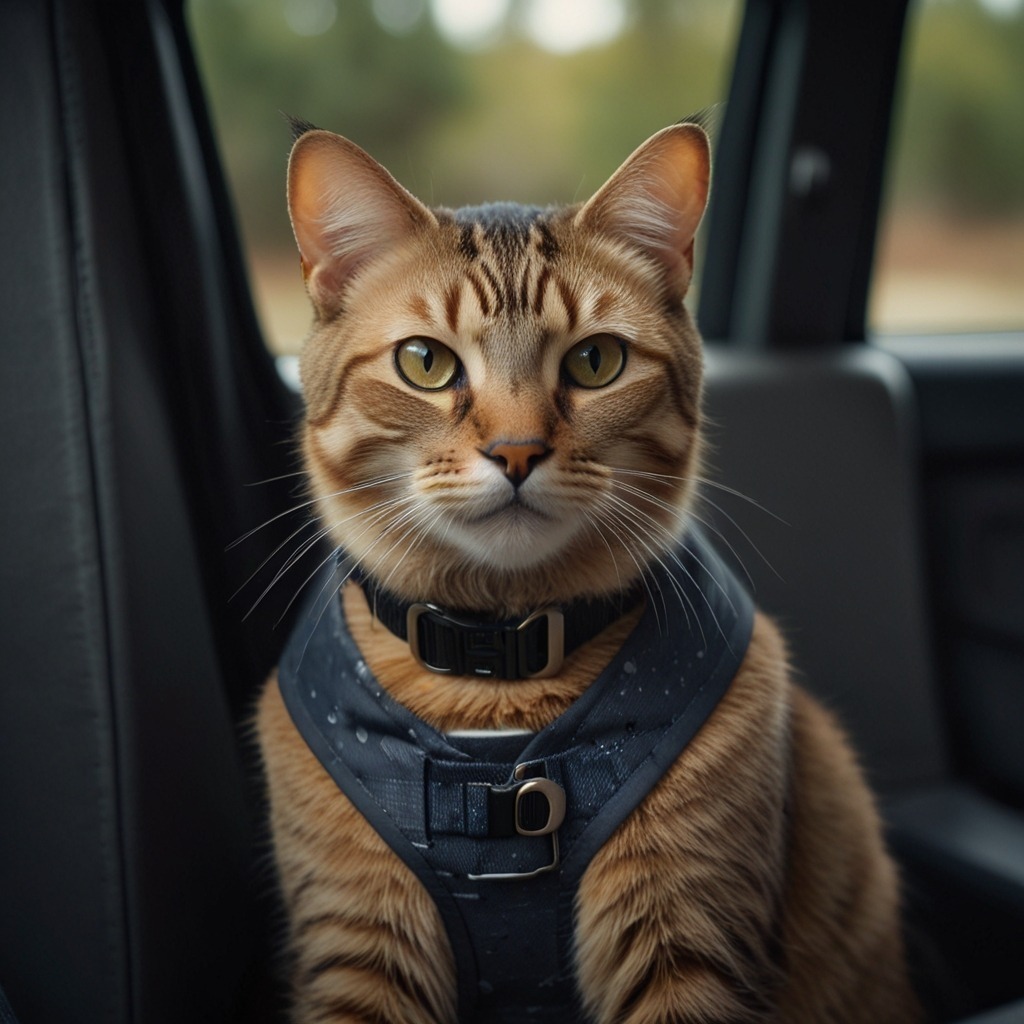
This is the part nobody wants to hear because it's inconvenient as heck. Once your cat is comfortable with the carrier (or at least not actively panicing), you need to do practice runs. Short ones. Comically short. I'm talking "put the cat in the carrier, walk out to the car, sit in the driver's seat for three minutes, go back inside, release the cat." Then do it again the next day. Then the day after that.
The goal isn't to go anywhere. The goal is to teach your cat that getting in the car doesn't always lead to something awful. Most cats have only experienced car rides that end at the vet, so they associate the car with the worst day of their life. You're rewriting that script, one boring parking lot sit at a time.
For the first few sessions, don't even start the engine. Just sit. Talk to them. Give treats through the carrier door. Let them hear birds outside, whatever. When they're not freaking out at that stage (and this mihgt take a week), start the engine but don't move. The rumble and vibration is a massive sensory trigger for a lot of cats. Let them process that while knowing they're safe and nothing bad is happening. The next stage: pull out of the driveway and drive around the block. Literally two minutes. Then home. Treats. Release. Repeat.
What "not freaking out" actually looks like
This is important, because I got it wrong for years. A cat who's quietly curled in a ball might look calm, but as I mentioned with Miso, that freeze response is actually severe stress. You want your cat alert but not panicked. Ears forward or slightly swiveling — that's curiosity, good. Ears flat back or rotating like satellite dishes while panting — bad. Eyes soft and blinking — good. Dilated pupils and a rogid body — your cat is terrified. Don't progress to the next stage until you see genuine relaxation, not just shutdown.
Some cats never fully relax in the car, and that's okay. You're not aining for a cat who loves road trips like a golden retriever with its head out the window. You're aiming for a cat who can tolerate the experience without a full-blown physiological crisis. Lower your expectations. A cat who's a little anxious but not vomiting or eliminating is a win.
The stuff that atcually helps (and the science behind it, sort of)
Alright, practical things. I'll break these into categories because there's a lot, and some are more useful than others depending on your cat's specific brand of anxiety.
Pheromone sprays and diffusers
Feliway is the big name here. It's a synthetic version of the feline facial pheromone — the one cats use when they rub their cheeks on things to mark territory as safe. The idea is that spraying it in the carrier or car tricks your cat's brain into thinking "oh, I've been here before and it was fine."
Does it work? Sometimes. I've had cats where it made a noticeable difference — less vocalizing, less frantic pawing at the carier door. I've had others where it did absolutely nothing. The key is using it correctly. Spray the carrier 15-20 minutes before putting your cat in — if you spray it immediately before, the alcohol carrier hasn't evaporated and it can be irritating. And don't just spray once. Do it consistently for every practice run and every real trip. It's not magic; it's a tool that works cumulatively for some cats.
They also make calming collars with similar pheromones. I'm wary of collars in general with cats (breakaway only, and even then I've had fosters get them caught on things), but if your cat tolerates a collar, it can provide a constant low-level dose. Just don't put one on for the first time right before a trip — let them wear it for a few days at home first so the sensation isn't another stressor.
Pressure wraps and Thundershirts
Yes, they make Thundershirts for catts. I was skeptical too, because cats generally hate being restrained, and a tight wrap sounds like restraint. But the theory — gentle, constant pressure triggering a calming nervous system response — has some backing. It's the same reason weighted blankets help anxious humans.
I tried a Thundershirt on Frankie (the build fail I mentioned). The first time I put it on, he froze and fell over sideays like a fainting goat. I laughed, then felt terrible, then took it off. The second time, I introduced it more slowly — let him sniff it, draped it over him without fastening, gave treats. Over a week, I worked up to actually securing it. The result? He didn't love it, but in the car, he was noticeably less frantic. Less scrambling in the carrier. He still yowled, but at a lower volume and with less desperation. I'll take it.
Not every cat tolerates a pressure wrap, and some will fight you so hard that the process of putting it on causes more stress than the car ride itself. You know your cat. If they're the type who barely tolerates being held, a wrap is probably not for them.
Natural supplements and treats
The market is flooded with "calming chews" for cats, most of which contain things like L-theanine, tryptophan, chamomile, or valerian root. L-theanine and tryptophan have some decent research behind them for reducing anxiety in animals, and I've had moderate success with chews that combine those with other calming ingredients. My current go-to brand is VetriScience Composure (the feline formula). It's not a sedative — it won't knock your cat out — but it can take the edge off.
Valerian root is an odd one. In cats, it can act sort of like catnip — some cats get playful and energetic rather than calm. Definitely test this at home before travel day, because a cat who's zooming around the carrier in a valerian-fueled frenzy is worse than a cat who's just scared. Ask me how I know.
Zylkene is another supplement I've used. It's a casein-derived peptide that's been stdied for stress reduction in dogs and cats. It's expensive, but I've had a couple fosters where it genuinely helped — specifically a senior cat named Pearl who was rehomed three times and had a panic response to any change in her environment. For her, Zylkene plus the pheromone spray was the combination that finally made vet visits possible without her shutting down for days afterward.
Prescription medications: when the natural stuff isn't enough
I held off on this section because I'm not a vet and I don't want anyone dosing their cat with anything without professional guidance. But I also know there's a weird stigma around giving anxious cats medication, as if using pharmaceuticals means you've failed somehow. Screw that narrative. Some cats have anxiety that's so biologically ingrained — genetics, early trauma, whatever — that no amount of carrier training and pheromone spray is going to keep them from a full-blown panic event during travel.
For those cats, talk to your vet about short-term anti-anxiety meds. Gabapentin is commonly prescribed for travel and vet visits. It reduces anxiety and has a mild sedative effect. I've used it with several fosters, and when dosed correctly (key phrase: DOSED CORRECTLY — don't wing it), it can be a big deal. The cat is still awake and aware, just… less convinced they're going to die.
There's also trazodone, which works well for some cats and makes others paradoxically more agitated. Beandryl is occasionally recommended, but in my experience it's unpredictable and can cause dry mouth, urinary retention, and general discomfort that adds to the stress. Your vet will know what's appropriate for your cat's specific health profile and level of anxiety.
If you go the medication route, do a trial run at home first. Give the prescribed dose on a regular day when you're not going anywhere and see how your cat responds. You don't want to discover in a moving vehicle that the medication makes your cat vomit or turns them into a confused, stumbling mess.
What to actually pack for a cat road trip (plus the things you'll forget)
If you're traveling more than an hour or two, you need a kit. I learned this after a 9-hour move from Ohio to Virginia with three cats and a dog crammed into my Honda Civic. I was 22 and stupid. The cats screamed almost the entire way, one of them escaepd the carrier and wedged herself behind the brake pedal, and I ended up crying in a McDonald's parking lot somewhere in West Virginia at 2am. So, learn from my disaster.
Your travel kit:
- A secure carrier — hard-sided, latched properly, with a blanket or towel that smells like hpme. I put a puppy pee pad under the blanket for easy cleanup.
- Extra pee pads and towels — because somethng will leak. It might be water, it might be urine, it might be vomit. Be prepared.
- A small litter box — I use a disposable aluminum roasting pan with a lid. Fill it with litter before you leave, and offer it during long stops. Most cats won't use it while the car is mvoing, but some will if you're stopped and they feel safe enough.
- Water and a travel bowl — stay hydrated. Dont' leave water in the carrier because it'll spill. Offer water at stops.
- Their regular food and treats — don't switch foods rihgt before travel; digestive upset is the last thing you need.
- Any medications or supplements — and a written list of doses and vet contact info, just in case.
- A recent photo and microchip info — if the worst happens and your cat escpes, you want to be able to identify them quickly.
- Calming spray or wipes — pre-treat the crarier and car before you load up.
- A copy of their medical records — especially if you're crossing state lones. Some states require health certificates.
- A quiet voice and a really chill playlist — cats pick up on your stress. If you're white-knuckling the steering wheel and cursing at traffic, they're going to feel it.
Tangent time: I once forgot to pack a cat's heart medication for a 4-day trip. We were 6 hours from home, it was a Sunday, no vet offices open. I spent $300 on an emergency vet visit just to get a few days' supply of the same medication that was sitting on my kitchen counter. Now I've a packing checklist taped to the inside of my suitcase. Don't be me.
That one time everything went wong and I still got through it
I need to tell you about Pumpkin. Pumpkin was a build kitten — maybe 4 months old — who I agreed to transport from my rescue to a partner shelter three hours away. I'd done this route a dozen times. No big deal. I'd prepped the carrier, done a few short practice drives, and Pumpkin seemed unbothered. A little car angel, I thought.
Twenty minutes in, Pumpkin started crying. Not the quiet, pitiful meow. A full-throated, earsplitting, "someone is murdering me" scream. Then came the diarrhea. I smelled it before I saw it — a hot, ungodly odor that filled the car and made my eyes water. Pumpkin was covered in it. The carrier was a biohazard. I was on a highway with no exit for miles.
I pulled over when I could, on the shoulder of a busy interstate, because I couldn't subject either of us to another minute of that. I got out, opened the carrier (cracking the door carefully because a panicked kitten on a highway shoulder is my nightmare), and Pumpkin promptly launched himself at my face. Not in aggression — in desperate, terrified clinginess. He stuck to my chest like a burr, claws embedded in my sweatshirt, shivering and filthy.
I stood there on the side of the road, holding a diarrhea-covered kitten, cars screaming past at 70 mph, and I just… laughed. Because what else can you do? I cleaned him up as best I could with wet wipes and paper towels from my emergency kit (thank god for that pee pad I'd put in the carrier, which contained most of the mess). I put him back in with a new towel, sat in the car for 20 minutes to let both of us calm down, and finished the drive at a crawl with frequent stops.
When I finally handed Pumpkin over to the shelter, he was clean, dry, and purring — because once the stresssor was gone, he bounced back immediately. Kittens are resilient. I, on the other hand, needed a hot shower and a stiff drink. The car smelled faintly of kitten shit for approximately three months.
I'm telling you this not to scare you off from traveling with cats, but to say: even when it all falls apart, you'll get through it. You'll improvise. You'll clean up messes you never imagined. And your cat will forgive you. Probably.
What to do 24 hours before the trip
The day before travel isn't the time to introduce anything new. No new foods, no new supplements, no new carrier, no new litter. Keep everything as normal and boring as possible. If your cat is on a daily anti-anxiety medication, give it as prescribed. If you're using a supplement, give a dose the night before so it's already in their system.
One thing I always do: fast my cats for 4-6 hours before a long drive. Not completely — I don't starve them — but I pick up food a few hours before we leave. Empty stomach means less vomiting, and many anxious cats will vomit whether they've eaten or not, but a stomach full of half-digested kibble is worse. Water is fine, but I pull that about an hour before departure.
I also spray the carrier with Feliway the night before and let it air out, then spray again about 20 minutes before loading. The double application seems to help, thugh I've no scientific proof beyond "my cats yell slightly less."
During the drive: what you can control and what you can't
You can't control traffic, road noise, or sudden bumps. You can control the environment inside the car. Keep the radio low or off — classical music at a very low volume works for some cats, but silence is safer if you're unsure. Talk to your cat in a calm, normal voice. Not a high-pitched "it's okay sweetie" voice, because they don't understand words and that tone can sometimes signal that something IS wrong. Just a steady, borig monologue about your grocery list or what you're going to have for dinner.
Temperature matters more than you'd think. Cats run hotter than we do and overheat easily. Keep the car cool but not cold. Don't place the carrier in direct sunlight — I usually put it on the floor behind the passenger seat, braced so it can't slide around. Seatbelt it if you can. A carrier that slides when you brake is terrifying for the cat inside.
Never, ever open the carrier while the car is moving or while doors are open. Even a cat who's never tried to escape might bolt in a panic. A loose cat in a moving car is dangerous for everyone. I learned that the hard way with my escape-artist cat wedged behind the brake pedal. Don't repeat my near-death experience.
If you're on a multi-hour drive, stop every 2-3 hours. Turn off the engine, lock the doors, and just sit for 15-20 minutes. Offer water. Let the stillness settle. Some cats will eat or use a litter box during these breaks; most won't. The break is more about giving their nervous system a chance to recalibrate than anything practical.
When you get to your destination: the decompression zone
You've arrived. Your cat survived — maybe a little worse for wear, but alive. Now what? The instinct is to immediately let them out of the carrier and show them their new room or hotel suitte or your mom's guest bedroom. Don't. Give it a minute. Or ten.
Set the carrier in a quiet, small room (a bathroom works perfectly) with the door closed. Open the carrier door but don't pull the cat out. Let them come out when they're ready. Some cats burst out immediately and start exploring. Others stay huddled in the back for hours. Both are normal. Just sit nearby, don't stare, and let them decompress at their own pace.
Make sure the room has everything they need: a litter box (away from the food and water), a water bowl, a little food, and a hiding spot — even a cardboard box turned on its side works. Leave them alone for a while. Trabel is overwhelming, and they need a quiet buffer before they're ready to deal with new people, new pets, new anything.
When none of this works and you need a vet behaviorist
Look, I've tried everything on some cats and still ended up with a screaming, thrashing, terror-stricken animal who needed heavy sedation just to make it through a 20-minute vet trip. That's not failure. That's just the hand you were dealt. Some cats have anxiety disorders that are as serious as any physical illness, and they deserve the same level of medical attention.
Veterinary behaviorists exist for a reason. If your cat can't travel without severe distress that lasts for hours or days after the event, ask for a referral. Medication might be necessary long-term, not just for travel. And that's okay. I've had a couple fosters on daily fluoxetine (Prozac for cats, essentially) who went from being unable to handle any change to living relatively normal lives. It's not giving up — it's giving them relief.
Six months afer the pee incident, Miso fell asleep in the car
I didn't keep Miso — he was adopted by a lovely older woman who had no other pets and all the patience in the world. She emailed me a few months latrr. She'd taken him to her vet, a 45-minute drive, and he'd curled up in his carrier, closed his eyes, and slept for most of the ride. She attached a photo. He looked peaceful. I cried a little.
Months of slow carrier training, pheromone spray, a low dose of gabapentin from the vet, and a lot of patience had gotten him there. He was never going to be a road trip cat, but he didn't have to be terrified anymore. That's the goal. Not perfection. Just less fear.
If your cat's currently howling in the backseat or shedding fur from stress or looking at you like you've betrayed them, I've been there. It gets better. Not overnight, and not without some messes, but it does.